




358 / February 22, 2026
How AI Will Finally Deliver the Promise SaaS Made | Samay Kohli: From Robots to Digital Workers
Samay Kohli spent 12 years at GreyOrange, scaling it to over $100 million in revenue and a $3 billion valuation at its peak, making it one of the world’s largest warehouse robotics companies. Two years ago, he started again with Budy, this time in the US senior care industry.
In this industry, decisions are emotional, sales cycles can run for years, and multiple stakeholders are involved. While the market sits at the intersection of real estate, healthcare, and hospitality, most sales still depend on manual follow-ups and scattered tools.
Budy builds digital workers for sales teams: AI teammates that handle follow-ups, scheduling, and lead management across CRMs, calendars, and inboxes. Instead of adding another layer of software, Budy went zero UI-UX and focused on enabling sales teams in an industry with 99% inbound leads to manage their cold leads better.
Today, Samay joins Siddhartha (Partner at Neon Fund, and a proud investor in Budy) and shares his journey from building robots to building digital teammates for a very non-traditional industry.
Watch all other episodes on The Neon Podcast – Neon
Or view it on our YouTube Channel at The Neon Show – YouTube
Siddhartha Ahluwalia 01:05
I’m Siddhartha Ahluwalia, host of the Neon Show podcast, managing partner at Neon Fund. We have invested in some of the best enterprise AI companies started by Indian diaspora folks globally, and specifically by second-time founders. For example, you built Grey Orange, right?
At its peak, took it to a 3 billion kind of market cap, right? 100 million plus revenues. And we are very proud to be in your next journey in Budy.
Samay Kohli 01:25
You’re so kind, Siddhartha. I think at the end of the day, I think from literally our first call, the depth of questions, the effort you really put in and what you bring is huge.
Siddhartha Ahluwalia 01:36
Thanks, Samay.
So the goal here is today, not just educate folks about your journey, but also what you’re building is Budy is so interesting because like one of the toughest industries a founder can choose to build in, right? And you had good initial success, product market fit in this industry, right? So just let me start with Budy solves a core problem in senior care living homes.
And a senior care living home is a very emotional decision for a parent or a grandparent to move in. It’s a long three to four year gestation period where multiple people are involved from the family decision making. So how does family make these decisions to move to a senior living home?
And what role does Budy play in this entire life cycle?
Samay Kohli 02:16
Senior living for a lot of people, including me for a couple of years ago, you knew the industry, right? But what is senior living? Senior living at the end of the day is age restricted living, right?
But it’s usually in the US, it’s 55 years plus age, which is where people move in. There is independent living, assisted living, memory care, those are all the fragments, right? Now, as you said, one thing I love about the industry is the fact that, you know, we’re all headed there, right?
So it’s like, we might be a couple of years away, decades away, it depends. But it’s a very, it’s something that we will all experience, right? And some of us are experiencing, you know, with our parents with our grandparents.
So it’s a, it is, as you said, it’s an emotional industry, but it’s also industry, which is emotionally connected to ourselves, you can connect with, why is this such a tough journey, right? Whereas, if you think about other enterprise businesses that you’re in, right, sometimes you can, like, you know, you might not connect with it as to, you know, somebody is buying software, or somebody is buying this thing you’re not buying there. So in this case, I love that about the industry, that it’s very connected to who we are, and we are going to go through this cycle in ourselves.
So specifically, on your question, it’s, it’s emotional at a lot of different levels, right? So let’s kind of start with, I would say, at the senior itself. So the person who’s going to move into a senior living, so for them, think of it as A, they’re usually living in their house for 20 to 30 years already, right?
This is a decision, which they never thought about, right? Like you think about it, if you’re living in your house for 15-20 years, right? You’re like, hey, I’m gonna, you know, like die here, right?
This is my place, right? So it’s not something you naturally plan for that, or I live here till I move to a senior living facility. So firstly, emotionally tormenting, right?
One of the biggest things for a senior is that usually in those years, right, you have a long life to go, right? Like senior living is not like you’re, you know, like, in the industry, we almost like saying it’s not the place you’re going to die, it’s a place you might might die. But But at the end of the day, you can live there for 10, 15, 20 years, we know seniors will live there for 30 years.
So it’s not like, my God, this is it. But it is connected to some a big milestone in your life. So that’s why it’s emotional.
And secondly, they’ve not taken a decision as big as this, right? Probably the last 15-20 years, because you’d stop changing things, you know, if it’s working, why why fix it. And last but not the least, a lot of this are people who are single by them, right?
They’ve lost a spouse. And as a result, that it becomes even tougher because you know, your partner, your soulmate is not there for like one of the biggest decisions you’re taking at that time. So obviously, A, it’s it’s tough for the senior, obviously, whether you’re a single or you’re deciding as a couple both ways, it’s tough.
Then just think about like you go to one generation down. So the adult child, right, the child of the senior, right, for them, you know, their average age is in the 55-60 years of age, right, they’re making this decision, it starts with first accepting, you know, that your parent now is reaching an age where they need to move into a senior living, right? So that’s, that’s itself acceptance, right?
Some of these seniors need, you know, like extra help, like assisted care or other things, right? And it goes through the emotional challenges of like, why can’t I provide this? Or why, you know, why is this happening?
Is it really needed? So you have all of that.
Siddhartha Ahluwalia 05:15
And if you can just talk about an economic sense, right? In the US, how, like, what’s the size of this market for senior living homes? And how many of the population, let’s say 300 million population do as they age, touch this industry?
Samay Kohli 05:28
Sure. So I’ll say, let’s go broad numbers, right? So I mean, I’ve, as industry, there are probably 30 to 40,000 senior living facilities.
And this is like, you know, at the minimum lower end, usually about one, one and a half percent of, you know, like the seniors were eligible in that age, end up moving into those facilities, right? So that’s kind of in terms of very less people. So we say that, obviously, it is expensive, right?
So we say that about 10% of seniors can afford it, right? And probably only 10% of that 10%. So about a percent or so actually make that jump, right?
The industry obviously has like senior living, then has home care, which is also getting help in your home, which is also part of the industry in the longer spectrum. So it is obviously the classic hundreds of billions, you know, size company, it is at the intersection of real estate, healthcare, and hospitality. That’s a very important thing to remember that you have all three of those things at play in the industry.
Siddhartha Ahluwalia 06:23
And, you know, now Budy comes on the tech part of it. So can you share like the journey of Budy when does it start playing a role?
Samay Kohli 06:29
Sure. So I like saying as Budy comes on the non-tech part, let me explain what that means, right? So if you think about as an industry, it’s a big industry, there are many facilities, there’s all of this going.
And so obviously, you know, SaaS is prevalent in the industry, right? So you have your CRMs for sales, you have your EHRs for your healthcare, electronic health records, you have your resident portals, you have your community, you know, you have software, right? Like there’s decent chunk of software.
It’s a mature industry in that sense, right? I think Budy comes in from the non-tech part. What that means is that, you know, while obviously, all of these SaaS tools have increased, and they’re important, and they’ve become very affordable, very easy to deploy, right?
If you go to the lives of actually the people, the executive director, which is the person who runs a facility, or you go to the salesperson at a facility, all of these people are really day in day out, like providing service to the seniors, right? So for them, these tools are good to have, they’re not really, you know, that integrated in their life. So that’s where Budy comes in.
Our vision is fairly simple. We are zero UI UX. What that means is we do not introduce another piece of software, right?
We’re just saying, hey, you’re using all the software you’re using, right? Can you actually use a digital teammate for you that goes in and stitches all of these softwares together and gets it easy for you to do, right? So that’s kind of how Budy comes in, in the place.
I can talk about use cases, but you can guide me where to go.
Siddhartha Ahluwalia 07:46
Yeah, I think let’s dive into the use cases.
Samay Kohli 07:50
So obviously, one of our biggest use case, right, is helping salespeople in these communities manage their cold or colder needs, right? What that means is that, so in some sense, the industry is, I like calling it an enterprise sale process. Why?
Because if you think about nowhere in consumer, do you have so many parties, so many people, so long a length of sale, right? Like, even if probably I think of the longest decision you take is probably buying a house or, you know, buying a car, right? Depending on those are probably the two.
These two decisions you take over a period of, you know, when you’re really going to decide, you’re going to, it’s a six month decision, three month decision, something like that. So one is that’s the time horizon. And the second horizon is, usually you’ll ask your friend and you’ll ask, you know, like somebody else about like, hey, which locality should I buy the house?
Or what’s your experience with that car? On both these tangents and the time, usually this decision can average three to four years, right? So it’s like five X longer than any decision that does.
And on the second end, it’s like, everybody’s involved in your family. You’re not moving in, right? Like, if you think about your tree, if any grandparent has told you, like, I have seven kids and I have 24 grandchildren, everybody knows that, you know, you’re moving in.
So they might not all be involved, but some way or the other people are involved. So that’s why I really think of it as an enterprise sale, although it’s called a consumer sale, right? So while it is enterprise, the biggest challenge for a salesperson is that on one tangent, you have length and you have all these people, but any salesperson is dealing with 500 to 1000 open leads, right?
And that’s where, you know, Budy comes in and says, Hey, you’ve got all of these people in your database. How, who’s the right person you should follow up with? When should you do?
How can I quickly do all the research? You know, like you would have done 20 calls with these people over the next two years. So that’s where, you know, the digital teammates that Budy builds comes in.
So the digital teammate very simply does this, which is sales starts at looks at your calendar. She says, Hey, you have some time here open. Let me go find people that you should reach out to goes digs through the database, finds the people, then doesn’t stop there, says, says, Okay, what is my best practices as a as a company, right?
Like, who are the people I can help at which stage they are, finds those people does research on all the calls transcripts that have been read for those people and comes back and says, Hey, here you go. And it’s the simplicity of it, you get an email which says, I found this time in your calendar this week. And I just set up a call.
If you find time, why don’t you give this person a call? Why don’t you do a home visit, whatever that is.
Siddhartha Ahluwalia 10:08
So basically, this AI teammates, you can say, act as a highly specialized here to each one of the salesperson.
Samay Kohli 10:16
Interesting. So we like calling it as a teammate more than assistant. And there’s very specific reasons for this, right?
So when you think of an assistant, assistant is something that a person can delegate tasks to, right? Our teammates actually work for the central like the head of sales or the regional sales heads. They work with the salesperson.
And so very thin space, because if you think about it, like what we can’t do with these digital teammates is you can’t as a salesperson, I can’t assign them tasks. It’s like, Hey, next week, I want you to do this, right? You can’t do that, right?
What these this is truly, you know, in the AI land, this is truly where a job function or role is defined for the digital worker, right? And they learn and become better, but they do that every week, right? So if you think about it, a salesperson has a role, same way this digital teammate has a role, hey, you’re supposed to research leads, and you’re supposed to assign them for salespeople.
That role does not change or evolve based on the salesperson. That’s why it’s not an assistant. It’s a teammate, right?
Who’s doing this bit and going back and forth.
Siddhartha Ahluwalia 11:14
Very well summarized, because as a salesperson, I cannot tell Budy what to do. The Budy does it because it has a role.
Samay Kohli 11:20
And you know, we have use cases where, for example, let’s say the digital teammate in their case, right? So every digital teammate that as you know, is unique to the to the operator, right? So we have operators where there’s the, there’s a joy, there’s a desire, there’s harmony, there is, you know, there are all digital workers who are unique to that operator, every digital worker, right there, there is that digital worker has a role, part of those roles could be helping the salesperson do certain tasks, right?
For example, hey, can you go research these things. But the way it works is when you ask a digital teammate, salesperson asks a digital teammate for help, the digital teammate is enabled to say, hey, I don’t know how to do that. So it’s not, you know, it’s not a system, it’s not a chatbot, right?
There’s no way to chat with it in that sense, right? You can go and you can email it, you can send a slack message, but it’s not live chatting, right? Like if you think about you don’t chat with a teammate, that’s where the difference comes.
Siddhartha Ahluwalia 12:08
So Budy exists right now, right?
But without Budy, how are these sales folks doing their work?
Samay Kohli 12:15
So I would say the way pre- Budy how sales people did their work was a lot of like task creation, right? So they’ll try to create reminders. So think of it as whenever a new lead will come in.
So the first couple of weeks, obviously, you interact with them, you’ll find out. But after that, you would set up a reminder for yourself that, hey, I need to call this person after three months. So as a result, what ends up happening a lot is then a salesperson usually has 100 to 200 overdue tasks.
And as I’m telling you the low numbers, but they’re just creating a lot of tasks in the future to be able to remember to call this person in and they’re moving that around. That’s kind of how I would say this use case of cold leads has been happened.
Siddhartha Ahluwalia 12:51
But do seniors come inbound in this industry? Let’s say for a grandparent, their kids or grandkids would call like five different senior homes visit those. And then there’s a almost like a year of follow up with these homes.
Or is it like more like the sales people are reaching outbound to these folks?
Samay Kohli 13:10
I mean, I would say 99% of the cases, it’s inbound, right that you’re doing right now, you might have cold, you don’t cold call at all. I think that’s, that’d be very rare. But you could send like postcards out and you could have ads out there.
So you know, people are warm, they might call in, but you definitely don’t call, you know, you’re barely able to keep up with the people who call in, right? So you don’t do the only thing I correct is like, as you said, it’s, it is like not a year, it’s like two, three years, right? So it’s like depends on you might come into the CRM, right?
And then you might have moved in in a year. But you could be looking at senior homes or researching them online for a couple of years, starting to think about it. So that’s kind of how how it comes in.
Siddhartha Ahluwalia 13:46
Understood. And for a senior, as we discussed earlier, the decision is not just like the social need, but also financially, because let’s say they are 60-61. And they’re now the age span is also increasing, right?
80 or 90 year old is a common thing. So they’re thinking say 100k per year, it’s almost like a two to $3 million decision for them if they’re going to live like for the next 20, 30 years.
Samay Kohli 14:05
Sure, that is I mean, so a touch with there’s lots of like, you know, some could have long term care insurance, which could cover it, some have savings, a lot of them also have to go through that, you know, they’ve saved for this for a long time, right? And obviously, you know, like, it depends on which part of the country you live at, like, if you’re on the coast, yeah, you’re probably in that price range. But there’s a lot of Midwest, there’s like, you know, there is like, you can start at 30, $40,000, also in terms of independent care.
But you know, interestingly, that what I’ve learned is that it’s usually cost neutral, right? It’s not like it’s necessarily costing you more, because you are already living in a house. So the house has equity value, right?
As a as a house of a certain size, you are paying lawn, you know, the lawn care, the pest control, the annual fire check, you know, like you have a lot of expenses, which go away, right? That cost includes like, you know, it’s funny how when people come into the industry, or inquire, seniors inquire, they usually start with like, okay, what all is included, and a lot of the providers are like, hey, let’s not talk about that. Let’s talk about what’s not included, right?
Because you have tons of stuff, which is you don’t like, you know, you don’t think about like how much groceries cost, how much does maintenance of the stuff costs, all that stuff is kind of part of it. So yeah, it is a financial decision, right? And not everybody can afford it.
But in some sense, it’s not something which is like, it’s not a luxury buy, I want to, you know, if you have a lot of money, you can, you know, live in an amazing cruise ship kind environments, you can spend up, but it is truly in this range of a lot people can afford it way more than people who move in today.
Siddhartha Ahluwalia 15:34
As a founder, how did you choose among the various problems that you could solve to only focus on this problem? And among the use cases that you could solve to focus on the sales use case?
Samay Kohli 15:43
Sure. I think, I mean, as you know, this is that I think for me, firstly, I’m a much more of interest of picking an industry where, you know, so I think industry comes first to pick then the problem, right? Because I think every industry, unless you invest the time, spend the time in the industry, you don’t find that you might have whatever opinions that this industry needs this, right?
So I would say, obviously, we pick the industry and we think senior living as at the intersection of hospitality, healthcare, and real estate, right, is was a good intersection and industry worth investing time in. On the use case, I’ll say, obviously, we had some going in theories of, you know, like, these would be use cases we understand and sales and marketing specifically, I think when it comes to enterprise sales and marketing problems, we I obviously experienced that at BudyArt myself, right? And going through that whole growth of, you know, doubling, literally doubling your revenue every quarter and doing all of that stuff, you get very deep into what kind of sales and marketing tools are there.
And, and that kind of got me convinced on the thought of like, even before the industry, that this problem is truly a problem, which needs to be solved for an organization, and you can’t solve it for an industry or, you know, for everybody. That’s why, you know, like, as, as you and I have talked about, I feel like this is not a problem that a CRM provider can solve. This is a problem because you want to build these solutions.
Every company operator is firstly unique in their tech stack, right? So it’s like, it’s easy to say, yes, everything integrates to each other. But there are nuances of like, you know, somebody uses some part of marketing software for something, something, you know, like you’re, you’re stitching together of your stack is truly unique.
That’s one. And the second thing is, every operators, like, you know, the head of sales, kind of like direction or marketing direction is very different. So you there’s not two people who are similar, but very different, right?
So, so I really, obviously, were, you know, like, had that experience of like, what are challenges in sales and marketing, but biggest experience I had was, what’s why it needs to be built for a particular operator. So we’ve always been operator focus, than or a user focus, than being an industry or a sole focus. That’s why, you know, when we like no UI UX, why did we pick that?
Because we said, okay, either we can build a UI UX for every company, right? Or we can choose to not build at all. And we felt like it’s so much better to not build anything, because then you don’t have to train people for how do you use this new piece of software.
Siddhartha Ahluwalia 17:55
And in your case, specifically, are you limited by what the digital worker, a digital teammate can do by the hygiene people have their in the CRM and related tools? Why?
Samay Kohli 18:10
I’ll tell you this, I feel like this is more coming out of experience then, because obviously, as all of us AI founders, right, we, we all have this theory going in and you know, but I would say the beauty with AI and I would say beauty with us was like, I mean, the results prove it that no, it’s okay, you don’t like, you know, you don’t need that higher hygiene, because see even what does even high hygiene mean, right?
Like, I mean, a lot of people talk about this, like, there’s this whole, I cannot tell you the number of times people quote the whole garbage in garbage out, right, all of that. So I mean, don’t get me wrong, it doesn’t mean that data should not be well maintained, and you didn’t, but like we’re living in the real world, right? In the real world, it is good software, you know, all your data is going to be convoluted generation and then they do a fabulous job at like, you know, and done.
And one thing we learned, which is, I would say, going in was a surprise in is once you start working, once you start working with digital workers, you actually start improving your data just naturally. So we have so many salespeople that go in and leave, like, you know, let’s say the digital worker is Harmony, and they’d be like, hey, how many I didn’t say this, but this is something additional, here are additional notes, because see, for decades, almost, I think now, leaders have said, hey, leave good notes in there, leave good stuff in it, right? But there was no incentive for this, the actual user to leave good data for themselves, right?
It was a long winded good benefit. And I’ll go on a tangent, it was almost like saying, eat healthy, it’s really important to eat healthy. Yeah, we all know that.
But like, there’s no like feedback loop on it, right? Once you have a digital teammate that you work along with, you directly start seeing the benefits of like, hey, if I leave a good note here, the teammate, she’ll come back and she’ll actually know more context, or she’ll help me with this. Right?
Siddhartha Ahluwalia 19:50
You are right.
But have you entered a scenario where there is zero CRM?
Samay Kohli 19:55
Yeah, I don’t think I think CRMs are core, like all the software are core, right? Some record keeping are core. So I don’t think there’s a scenario of zero CRM.
Siddhartha Ahluwalia 20:04
Like people should have invested some something in their digital tooling, for sure. For sure. It’s not like they’re maintaining their record on Excel.
Samay Kohli 20:11
No, and that’s where we don’t become applicable, right? But I think I can talk for the US for sure, right? Like, there are very few industries, like, you know, you still might have an industry where 20% is still on Excel and paperwork, but they are using some kind of like we shouldn’t from outside and we might think of it as like backward and this thing, but I don’t think there are any industries left where people are not, you know, like you can talk from obviously our industry, senior living, but you can talk about from a dentist, you know, front office, back office to you know, like your plumber to I mean, you can go through like any industry which you might think is like, Oh, that’ll be a very backward industry.
Everyone has invested because labor is very expensive. So you want to, you would invest in some tools to be able to make it.
Siddhartha Ahluwalia 20:50
So as a founder, how do you say that this industry you find your own founder market fit?
Samay Kohli 20:58
So I would say, so I’ve come across two kinds of founders, right? So and that’s why I would say all answers I give are on my archetype and I’ll explain those two, right? So there’s like two kinds of archetypes of founders.
Certain founders are of the archetype of they fall in love with the problem, right? And then they try to find the industry or industries where they can apply this. That’s one archetype.
And a second archetype are people who fall in love with the industry or, you know, like, like investing and learning about industry and spending time in it, right? So I am of the second archetype. And that’s why for me, I’m not that tied to the problem, I’ll tie it to the industry.
You know, and I always say, like, we’ve talked about this, that obviously, a successful founder has to pivot, if they don’t pivot, you know, then you’re dead in water anyways, right? Now, what you pivot on matters a lot, right? So the first archetype, when you’re tied on a problem, they will usually pivot through industries, right?
And I’m not that archetype. So I don’t even understand how they work. But I’m on the second archetype, where you pick an industry and you pivot on product all day long, right?
Like you don’t actually care, right? So, so to your question, and like, you know, I think I’ll go to use cases, I’ll talk to people like the customers, like, you know, they’re experts in their field, you don’t need to tell them what the problems are, you just need to discover, learn, have the empathy, to, you know, like, learn and care about their problems. That’s what I would say.
Siddhartha Ahluwalia 22:08
And one very, you know, interesting thing, especially in the AI world, many industries are fully human, like all these factories, right? And then they become tech enabled. And now these are becoming fully automated, let’s say today, dark factories in China, where there is no light, because machines don’t need light to function.
So do you think this senior care living industry is on that path? And how would Budy evolve along with it?
Samay Kohli 22:33
So, so that I mean, I, let me say this, it might be controversial, but I don’t believe in this world. Like, I don’t even believe that any industry is truly dark time out, right? And, and I think that’s where like, I have the credibility to say it with some, you know, like, we have 10s of 1000s of robots deployed.
So you know, like, and, and I will tell you, for years, people will tell me this thing of like, oh, lights out, you know, it’s like, it’s probably the pursuit of lights out. It’s a kind of the pursuit of that. But there is no scenario of like lights out, in any case, right?
So let’s talk about it, right? What it means is there are certainly certain use cases where it becomes so highly repetitive, right? Like you’re, I mean, a phone manufacturing is a good example, you’re like, same thing, you’re going to go make it.
But even in phone manufacturing, right, the model changes every two years, right? So you actually have a lot of human work that happens to set it up. And then short for six months, you know, it might turn dark.
But now in specifically in senior living, right? Every, it is a very high service touch, right? There are like, every senior’s life journey is unique, right?
The service provided to them is unique, right? There is like, these facilities have tons of people providing service, providing everything from food, cleaning, maintaining sales, all of that. So I don’t think senior living as an industry is headed towards, you know, like lights out facilities or so.
But having said that, I don’t think any industry, even in the industry I was in previously, which is supply chain, where everybody’s like, hey, lights out, there are a lot of human beings in there. And there’s no problem with that, right? If you think about it, we have all the AI craze right now of like, all jobs will be removed and everything will, I mean, sure, I mean, that’s what we all do as human beings every 20-30 years when a new tech comes in, right?
But it just means that, you know, there are parts of our workflow which, you know, become automated. If you think about like, you know, before computers come in, right? I don’t know how many people love doing mental maths, right?
Or like, oh, I’ll do mental maths on this, right? It was a big hindrance, very less people could do a lot of the jobs we do take for granted. We are like, because there’s a calculator.
So before, you know, like that came in. And then the computer and then the internet. So I feel like any industry, there are parts of the work that become repetitive, non-value added.
And the same is going to happen with AI, parts of the work will become repetitive, will become, you know, those. It’s just the industry goes and human beings have a lot of stuff to do in any industry.
Siddhartha Ahluwalia 24:50
And what did you underestimate about this market when you started it? I remember you going to a lot of conferences to discover this industry.
Samay Kohli 24:55
Sure. I would say the thing that I didn’t probably appreciate enough going in was how, so, you know, like this industry from outside, when you look at it, right? These are like, okay, you’re talking about a senior living house or home.
Somebody owns that facility or somebody owns that senior living apartment location. What I underestimated was the fact that there is like, on the backend, there’s a whole real estate angle of this, right? So there is a group of owners that own a a property.
So how unique every facility is, right? And actually I shouldn’t even use the word facility, but how unique every senior living location is. That probably I underestimated, right?
Of like, there are different owner groups. There’s different, everything is a rate. So there’s like multiple people who come in, they own that the operator might be different, but that’s there.
So that’s been a good journey of like, how do you, how do you maximize returns for the end owners are not the same people operating is probably the place to start thinking about and how every senior living home is unique in that sense.
Siddhartha Ahluwalia 25:59
And which are the largest name in this industry? Like in terms of, let’s say, if you think about hotel industry, you think about Marriott, you think about Hilton, you think about a few other names.
Samay Kohli 26:06
So, I mean, by size, you know, like you will have, you have the Brookdale’s of the world and you will have the Erikson’s of the home. So there’s that, but it’s a very, very long tail, you know, so obviously the Brookdale’s and those would be like 7,800 facilities or homes, but I would say it is a very long tail industry. So it’s not like, it’s definitely not like how hotel industry of like, Hey, Marriott or Hilton two or three have, have like consolidated that.
And that’s not necessarily a bad thing, by the way, I think there is value in standardizing and adding in, but there’s also value in, you know, like being much more, it’s a very high touch service industry.
Siddhartha Ahluwalia 26:42
So this is much more service than a hotel industry.
Samay Kohli 26:46
Massively.
Siddhartha Ahluwalia 26:48
When we started the podcast, we said it’s an intersection of three industries, hospitality, there is healthcare, and there was one more.
Samay Kohli 26:54
Hospitality, healthcare and real estate.
Siddhartha Ahluwalia 26:55
Real estate. And even in hospitality, like out of real estate and hospitality is common, but it doesn’t add healthcare.
Samay Kohli 27:03
Yeah, it’s a different. So, I mean, there are a lot of, you know, like 50% of the industry or 40% of the industry will not have any healthcare, by the way, in the, in the home. So it’s not, it’s intersection, but having said that it’s like hospitality also, but like, think of it as in a hotel, the, the restaurant is probably used by 5% of the people who live there.
Right. So it’s important to have, but the utilization is 5%, right. At the minimum, right.
One meal is everybody’s eating there.
Siddhartha Ahluwalia 27:30
Yeah. The breakfast is there.
Samay Kohli 27:31
Right. Like breakfast is there, right. Most likely, most facilities will average actually to two facilities, right.
So think from a chef and a cook point of view, you are always cooking food and wait, right. And then you go to a hotel, right. For like vacation on a holiday, this thing in, right.
You don’t actually, as a chef, you don’t have to care that much about like, are they eating healthy? Right. Am I taking care?
Are they getting variety? Is that good protein content to this thing? You know, so here the chef has to make sure people are happy with the food, right.
But he’s also taking care of like, Hey, I’m like, I’m, I control all the nutrition they’re getting, right. I have to make sure that they’re doing. So that’s, it’s not healthcare technically, right.
Like you’re taking care of what food your residents are eating, but it is healthcare, right. Because you are, you care and you want to make sure you are not overfeeding on, you know, desserts or doing, whereas what do you think a restaurant does? It’s like, they just put all the sugary items, all the high fat items.
We want them to spend their money here. Right here.
Siddhartha Ahluwalia 28:25
It’s that’s why it’s completely different, completely different, right.
Samay Kohli 28:29
And, and it’s like the jobs of chefs are way more complex. They’re much more senior positions. You know, like chef is probably one of the most key anchor, right.
And then think of the same thing as the activities director in this, right. Exactly same different in activity directors have to go through, you know, so right now, a lot of people who live in these homes are baby boomers, right. So now you have to go through like, okay, this is what baby boomers interests are.
This is what the next generation wants. I should do more, you know, karaoke classes, and I should do more pottery classes. They like doing more those things in, whereas some people needed more, you know, let’s do Bible service.
And so it’s, I mean, I can go on and on about it, but it’s a pretty, it’s intense.
Siddhartha Ahluwalia 29:08
The first company that you started, you almost spent 15 years building it. Am I right? 12-13 years building it.
You became like one point of time, one of the most valuable companies or the top 25 private companies in India, real companies to cross 100 million in revenues. And now you are what 37-38 or 40. So now what I get a feeling from you every time you are in this for a very long time.
So what excites you? Because you’re a founder that has already achieved massive success in a previous avatar. You could have created data centers.
Samay Kohli 29:40
I mean, firstly, I think I always like saying it to myself, it’s like, I did all of that stuff. But who cares? Like, what I mean by that is, see, at the end of the day, you have to find happiness every day as a human being, right?
So it’s like, yeah, I know, I’ve done all of that and but in some sense, you have to enjoy what you do on a day to day, right? I love the learning aspect of it. So obviously, on one end, AI is a lot of fun, right? But on the other end of like, how do you, you know, it’s senior living as an industry, it’s got all of its idiosyncrasies, uniqueness, you know, stuff that you learn. So I love it for the learning curve.
And I’m, I always, whenever, whether it was in supply chain logistics, and now it’s in senior living, I attach a lot with like, hey, treat your customer’s company as yours. And then automatically the customer will treat your company as theirs, right? So I really live and breathe that.
So I, like, with the customers I partner in, you know, whether it was at Grey Orange, it’s right now, I am probably more stringent on ROI than a lot of customers might be, right? And which is, like, the only way I operate. I’m like, why do we have to do that, right?
And sure, like, you know, some customers will be like, because I’m paying you money to do it. Yeah, sure, I’ll do it. But like, convince me why we need to do it.
So, so I think for me, that’s why I really enjoy. And that’s why you have to spend the time in the industry. So that’s, I mean.
Siddhartha Ahluwalia 30:53
Yeah. And as a founder, what I observed is, you took head-on two very difficult industries.
Samay Kohli 30:58
Yeah, I mean, unique. I don’t know. I mean, I don’t know.
Let me say this in a different way. So I don’t know what is easy, by the way. Like, you know, like, everything is tough, right?
Like, it’s like, when I talk to founders who ask me for advice on, like, you know, like, industry or this thing is like, I was like, if you want it easy, why are you starting? Like, you know, it’s like, you’re in the wrong, wrong profession, right? And I truly take entrepreneurship as a profession, right?
So that’s why I take that as a profession.
Siddhartha Ahluwalia 31:22
What do you mean by that?
Samay Kohli 31:24
I mean, I think you learning about an industry, you changing hats, you needing to not, you know, like, it’s just like any other job role, right? Like, if you have a job role where, you know, like, you’re going to do something, I think entrepreneurship is a job role of, like, you need to keep changing. I call it as, like, rabbit holes.
Like, sometimes you’re going to go into rabbit hole of, like, you know, HR rabbit holes to industry, to fundraising. So as a professional, you should be comfortable with ambiguity. You should be comfortable with learning a lot of stuff.
And I, you know, I feel like that’s what you learn. And I would say even in Grey Orange, when, you know, if you’re doing something, and that’s what I feel like the only reason they become successful is because you spend the time in doing. So it’s easy to say I spent 12 years in Grey Orange and there was one journey.
I’d say that was at least four journeys, right, for me. And I don’t even, by the way, like, a lot of people, like, who’ve done research on me might know this, but I don’t even call Grey Orange as my first startup. You know, I was building humanoid robots before that for four years, five years, which I call as my first startup.
Because, you know, imagine, like, this is 2003s-4s, we built the first humanoid robots in India. The world only had four or five teams building humanoid robots, right? So everything from how do you procure parts to fundraising, do it at, you know, in a college setting, you can’t don’t hire people you do.
So it’s like, I call that as my first startup. Then I’d say Grey Orange has probably definitely distinct three, three or four journeys, right? There’s the whole journey, which is pre-US journey.
And then we became US first. And then we became software first, right? So those are like massive journeys that you go through.
So I feel like that’s a profession. That’s what I mean by entrepreneurship being a profession. And it’s fair for people to, you know, like try it out, like to try any profession out.
But I feel like too many people come into the industry of like, hey, we are just going to come into this industry. And there’s the initial struggle we’ll go through to figure out the market industry. But then it’ll get used to the same corporate job I had before.
And at least I don’t think if you want to build a successful company, you’re always going through this loop, right? Like this problems of product market fit, you asked me right now or anything else, right? They’re not just problems that you face at like the first, you face it for the first million dollars ARRs, then you face it at the next 10 million.
Then you face it, you keep, it’s like, you’re always going, if you wake up, you know, we talk about this in the team, we just talk about it with a lot of people Grunge also like, it’s like, if you face problems, which are new, right? Congratulations, right? Like you did, you’re doing something, right?
That’s why you’re facing more and more problems. And you’ve earned the right to solve the next problem. So that’s how I take it as it’s, that is the journey of like, keep breaking stuff and keep figuring out new problems to solve.
Siddhartha Ahluwalia 33:50
I think your WhatsApp status also says that, you know, notifications are off. Do you love solving problems?
Samay Kohli 33:56
Yeah, it is solving problems, always solving, right? You have to, I mean, but that’s what I think genuinely is the profession of an entrepreneur, right? Like you are always solving problems.
Because see, the job is two parts, right? Like, it’s like every problem you solve creates a new problem. And then you go solve that problem, right?
So if you think, imagine like, what is growth? Growth, if you grow, if you’re solving the problem of like, how do I reach a million dollars in ARR, right? If you successfully solve that problem, you created a whole new set of problems of like, okay, firstly, you obviously have the problem of how do you now solve a million to 10 million.
But then you also solve of like, hey, how does the tech team scale? How does this, you know, like, so every time you solve a problem, you are creating another problem. And if you don’t like solving problems, it’s a long industry.
Like, so, you know, long story short, your question of like, it’s a tough industry, maybe. But it’s like, you choose your tough, right? So it’s like, that’s it.
Siddhartha Ahluwalia 34:46
And you feel for yourself that you want to spend the peak of your career, which is for an entrepreneur. You start, you’re a lifetime entrepreneur. You never did anything else than being an entrepreneur.
Samay Kohli 34:55
Actually, I never worked for anybody.
Siddhartha Ahluwalia 34:56
Yeah. So you want to spend your 40s to 50s building this industry?
Samay Kohli 35:01
Yeah. Actually, it’s funny thing. I learned this in the industry after I came in.
So there was an interview for a lady who was some age, and I’ll tell you the age later, but she was being interviewed, right? And she said, hey, I learned this something that somebody asked me my birthday, and I said, I’m 17. And since then, I’ve been 17, right?
So, and she was at that time, and the video was recorded, I think she was 88 or something. And she said, you know, I’m 17. So I truly believe I’m 27, and I’m going to stay there.
So I don’t believe I’m in all those age groups. And since I’m going to be in 27 for a very, very long time, like I have a lot of industries to do, and you know, like lots of 10 year decades to be spent in a lot of industries. So that’s kind of how I think about it.
Siddhartha Ahluwalia 35:38
And right now, let’s say from your previous journey, what have you unlearned as an entrepreneur? And what are you learning new right now?
Samay Kohli 35:47
Oh, so this thing happened to me, I would say a couple of years ago already, probably towards like your Grey Orange and Budy also, it’s like, I don’t take myself too seriously. So I think that’s a super important thing to learn. So that’s why in that sense, I don’t have a lot of like unlearning.
It doesn’t mean that you don’t unlearn. But what I mean is I don’t get attached anyways to like, this is how we did it. We solved that problem.
We are just going to rinse and repeat, do this, right? I strongly believe in the concept that our subconscious is getting trained every time we do solve a new problem. So you can’t even help like not learn from something.
So you don’t have to go about the journey of like, this work like that, click, click, click, click, right? So take everything at its face value because everything you don’t like can do. So in some sense, if you’re on that truly always learning curve and don’t take your earlier self too seriously, you don’t have to like, you know, there’s not that baggage of unlearning like you have to change something.
You say, maybe it should be like this or didn’t go that way. Okay, sounds good. Let’s try something different out.
So obviously that’s probably more this thing. I would say there’s one thing we as a team really talk about is I would say the first time when I was building Grey Orange for the first three, four years, I think I ended up building more. This is funny, but like, I think I was trying to build more of cooperation because I was like, oh, how will this structurally work?
How will that work, right? And becoming almost a thousand people large and you know, like we had what? We were present in 17, 20 countries, like, you know, like pretty global this thing.
I can tell you even all of that experience also now second time around, I should be probably more biased. I’m actually more less. I’m like, hey, we’ll solve all of those problems when they come.
You don’t need to actually, there’s a beauty and nimbleness that you can do when you’re small. So you just have to do more of that.
Siddhartha Ahluwalia 37:30
And I always love, you know, talking about that you have dog food at Budy.
Samay Kohli 37:35
Say more, what do you mean by that?
Siddhartha Ahluwalia 37:36
Yeah, like you said that the Budy internally, whenever I visited you in your office, the Budy is getting used internally in the system.
Samay Kohli 37:45
Yeah, I mean, I feel like I use the analogy, you know, like that. If you don’t drink your own Kool-Aid, right? Then you’re convincing other people to use your own.
Siddhartha Ahluwalia 37:53
For your own sales team and you, the Budy is placing tasks on your calendar.
Samay Kohli 37:57
So you have two digital workers inside Budy as a company. So we have Budy and we have Harmony, right? Harmony is actually our sales and marketing digital worker.
Budy is much more our implementation. So Budy actually builds the digital workers. So it helps us build our digital workers, manage our digital workers with us, right?
And Harmony actually comes into our sales and marketing motions. And Harmony and Budy have a handoff-ish motion. So we absolutely have our own digital workers.
And I mean, otherwise, like, you know, we’re kidding ourselves. If we don’t use digital workers for ourselves, how would we?
Siddhartha Ahluwalia 38:28
So can you dive in more? Because you talk about them so much like digital workers and you’re speaking about them as if they have the life of its own.
Samay Kohli 38:35
They do, yeah. But so just think about it. Like, you know, you start depending on somebody doing something, right?
That’s how we start becoming dependent on them to do something, right? So for example, you know, we’ll come off a call from a customer and we’ll talk a lot about implementing. Let’s say this is an existing customer and we’ve talked a lot about implementing.
Hey, let’s do this. Let’s change this workflow. Let’s do this motion or your digital worker should do this, right?
Budy has the first pass, right? So Budy like would come back after a couple of hours and say, hey, I’m thinking we need to modify these job roles. We need to do this thing for this digital worker, right?
So now if I didn’t have that, you get used to that, right? Like I can’t even think about, like if you ask Naveen, my co-founder and you say, you know, like Naveen, can you actually assume Budy is not there? I mean, he won’t be, he’d be like, no, I mean, no, sure.
Naveen trained Budy and, you know, like did all this, but that’s similar as anybody else you add on your team. You do the 90 day training and then do it. Or, you know, anybody in that sense, you get very used to digital workers.
So in some sense, they are roles they do for you and they repeatedly do for you and you get used to them. And there are a lot of things, by the way, which you get used to them and you don’t worry about them.
Siddhartha Ahluwalia 39:44
Dependability is a thing of consistency. Whereas in SaaS, you are the worker and you expect your team to work through these tools and get the outcome.
Samay Kohli 39:54
That is, I think that is the really unlock, right? I really feel, and we talked about this when you were thinking of investing. I feel like the next decade is to be spent.
If you, I might be controversial on this, but I feel like the original promise of SaaS was not delivered in the last decade, right?
Siddhartha Ahluwalia 40:09
Oh, yeah, not delivered? Why do you say that?
Samay Kohli 40:11
The original promise of SaaS was delivered, right? Let’s talk about it.
Siddhartha Ahluwalia 40:14
What was the original promise?
Samay Kohli 40:14
So the original promise of SaaS where we were used to buying CDs, right? Or enterprise software, right? So the original promise of SaaS was, hey, by the way, right now, you buy a new version of software from me every year, right?
Instead of you buying every one or two years and going through all of this new purchase doing, why don’t you just pay me a subscription fee, right? And you pay me that subscription fee, we’ll keep updating the software for you, right? Now, that was the original promise for SaaS, right?
That, and you’ve spent a decade in enterprise. That promise has not been true for enterprise. It might be true for consumer SaaS products, right?
Like, if you call Gmail a SaaS product or you call Zoom as a SaaS product, right? Sure, it’s true. But that’s not the bulk of the SaaS product market where people were even buying every year, right?
The core of people who are buying every year were the core enterprises, right? So for enterprises, right? Sure, the software, Salesforce updates the software every year.
But in terms of you actually using those new features, right? It’s like best of luck. It’s like millions, hundreds of millions spent in trying to use those new software, right?
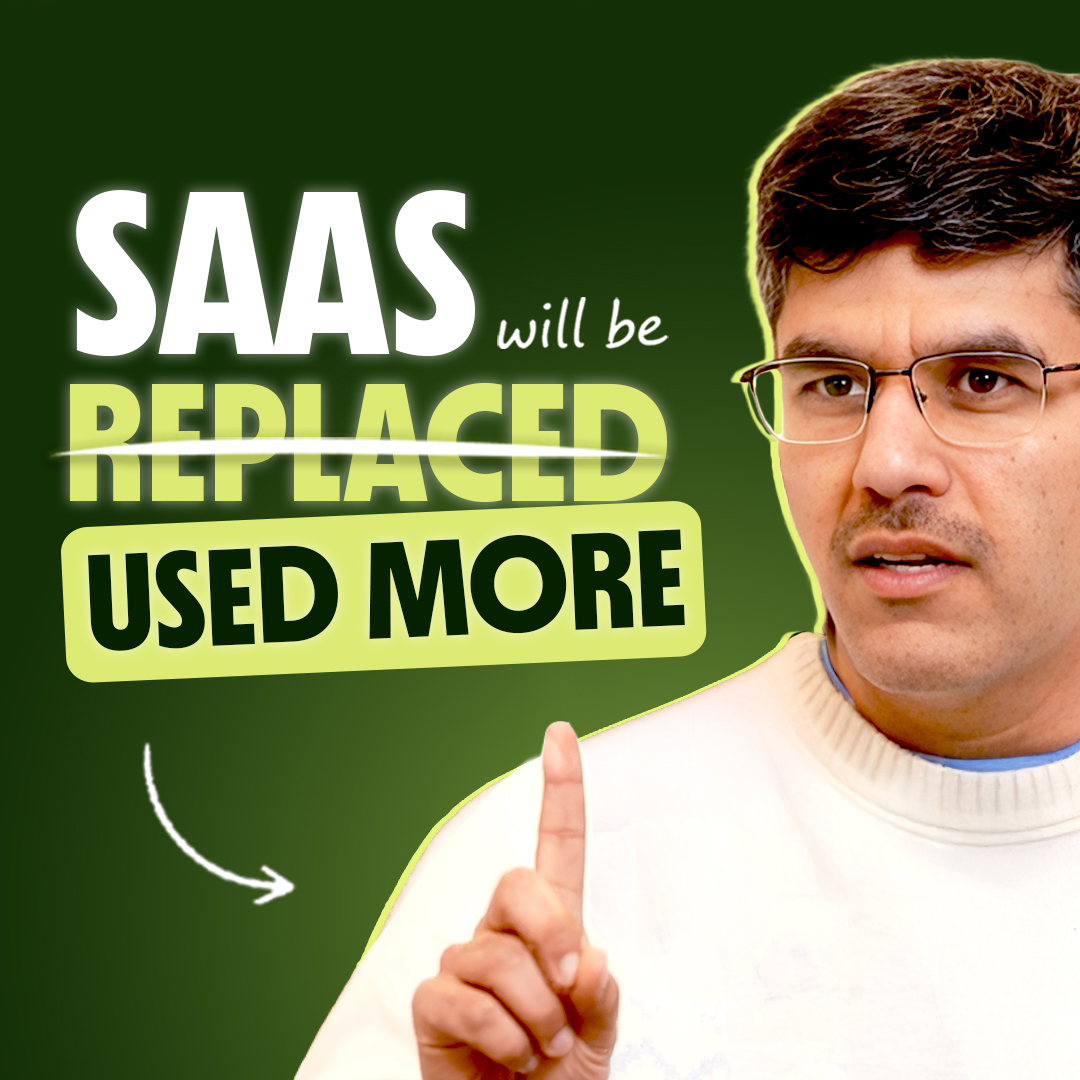
And also it’s like training costs, stuff like that. It’s through the roof. So I feel the next decade is not about replacing SaaS, which is what, you know, it’s actually using SaaS more, right?
How do you actually use SaaS to deliver that promise that a SaaS provider will continue to release new feature functionality? It’s going to get the learnings that it gets from industry, deliver it in the new software package that they deliver for an enterprise, right? And your digital worker will take care of adopting it, using it so the user’s lives cannot get that disrupted.
And they actually use those feature functionality. So that’s why I feel like the original promise of SaaS was not delivered. And the way we bandaged it was by service providers, enterprise software service provider.
But that was just like, you know, you threw more people at the problem, but it didn’t really solve the core problem of like, can I keep getting the latest and greatest that a software provides?
Siddhartha Ahluwalia 42:05
So you’re saying the next 10 years or 20 years is all about digital workers. They are kind of invisible, but you depend on them.
Samay Kohli 42:12
Yeah, literally. I mean, just think about it. Like at the end of the day, I don’t think the job roles are going away.
The job roles will stay. The salesperson will stay, you know, like whichever roles they are, right? All those roles stay.
But the core of it will be that we will not need them to become experts on the software package that that company is using. This is a super important thing. It doesn’t mean that a salesperson should not be trained on how to use a CRM.
But as we all know, three companies, all three using Salesforce, right? It’s completely different Salesforce. So a salesperson doesn’t learn Salesforce.
They’re like, oh, you use accounts for this. You use leads for this. Oh, I put this information here.
Your process is this. So a salesperson should not need to be learning all the idiosyncrasies of how Salesforce is set up for you or what do you do for marketing, right? So advocacy, I mean, no person in enterprise today is using one software.
Like they’re using minimum 10 to 15 softwares in their daily lives, right? So now just think about it. 10, 15 softwares.
Yes, you should know what their softwares do. That is important as a profession. But you don’t need to know in this company, this does this and this.
And by the way, IT changed this six months ago. And now this software does this. This software does this.
That is the layer which needs to get like almost eased out of saying a digital worker takes care of all of that stuff, right? So then when you do changes in the software packages or you do changes in the backend, right? So the people who should be consuming the letter from Salesforce, which comes every quarter, you know, like, hey, new features, new stuff.
That’s consumed by a digital worker. It’s like, hey, I consumed it. Now for my teammates who actually use the CRM, what do I need to change doing for them so that they get used to?
And they could write an email in their language saying, hey, Jim, by the way, I found a more Salesforce just came out with a new update. This will make our lives easier. So I’ll start doing this differently for you, right?
Just think like that’s the life we should get into rather than needing to learn every time or unlearn every time we are doing.
Siddhartha Ahluwalia 44:04
So what you’re trying to say is the digital worker as they work, they’ll move beyond LLMs because now they have a memory, they have a reasoning capability and certainly they can push back also.
Samay Kohli 44:14
For sure, right? So, I mean, our digital workers have short-term memory, long-term memory, communication modules, right? They talk to email and Slack.
So you have all of the stuff that you need to do. So it’s a full-fledged, you know, they have their email IDs, which you like salespeople can email in, we do ourselves, right? So for example, when a community for us says, hey, I want to do this differently with me, they would like between, the digital worker sets up a Google sheet with the community, right?
It’s like, okay, sounds good. Hey, by the way, you just told me this on this email. I went ahead and created this Google sheet for us to use commonly.
Feel free to update the Google sheet whenever you want to be able to do. So that’s why, you know, we truly embrace the no UI UX way. Like that’s how two people, like if you and I were doing something, right?
I’ll do an email once and twice, then you’ll be like, so let’s just put this on a Google sheet or let’s put this on a Microsoft Excel share drive, right? And then use that as a common, that’s the same exact thing that a digital worker does. It’s like, hey, let’s just put it there and then we can keep updating it there, right?
Or for example, you know, our digital workers generate a report at the end of the month. So they’ll send in and then people are like, by the way, like where is the background of this? It’s like, hey, here’s the Google sheet.
It’s there, go, it’s there. And that’s like how human beings would work with other workers.
Siddhartha Ahluwalia 45:24
Can you share the example again of the never split the difference at one of the senior care living homes?
Samay Kohli 45:29
So, you know, like our standard way of like doing any digital worker is we will go ask the CMO or the chief sales officer saying, hey, can you give us your sales manual, your best practices so that we can train the digital workers? So we usually take two weeks to train the digital worker in your best practices. So one of the, you know, leaders at this operator, he’s like, yeah, we have some, but our biggest sales manual is the book never split the difference, right?
So we’re like, okay, that was new for us. But really, that’s what we did. We trained the digital worker to say, hey, you know, like take the essence of the book.
And if you’ve read the book, it’s a very famous book. You know, I’m missing the author’s name, but he really comes out with solid concepts on, you know, like this is how you should do, this is how you should listen, this should do. We did so, you know, two weeks later when the digital worker went in, one of the advisor was giving somewhere, he basically said, hey, let’s label this.
And labeling is a very core concept that that book teaches, right? So let’s label this like this. And he just like, I remember this because we had a regional sales director.
She read this and she was looking at, you know, the sales leader, Adam in this case. And he’s like, she’s like, Adam, did you feed this the book? He’s like, yeah, I did.
I mean, I just did that. So that’s the beauty of having your digital workers.
Siddhartha Ahluwalia 46:38
This is unique culturally.
Samay Kohli 46:39
It’s unique. It’s completely, you know, like, and that’s, you know, how Adam wants to run. And it’s a super important thing.
We really remove, we’ve almost removed this human element from companies, right? If you think of it like a CRO, a sales leader, a CEO, you know, you have your decades and decades of experience. So you want to run a, you know, like you have limited resources.
It doesn’t matter, you know, like if you’re a $100 billion company or a $10 billion or a billion dollar company, resources are always going to be limited, right? Like what I mean by that is that as a sales leader, right? That comes into a job or does a job, you have certain things you want to focus on.
And you want all your people as the best thing you can do is get your entire org under you, right? Focused in on doing that. That’s literally what the digital worker helps doing.
So that’s why the digital worker has to be trained in what’s important to you, right? You as a leader. And let’s make sure we are doing that across the organization.
Siddhartha Ahluwalia 47:28
Which brings me to another, you know, thing that I want to discuss. Is Claude also like disrupting the software in your industry? Because the general narrative is the tools like Anthropic, you know, are coming after different, different kind of industries.
Samay Kohli 47:41
Sure. I don’t know..
Siddhartha Ahluwalia 47:44
If people are people creating their own software stack and senior care living using tools like Claude. Have you seen that happening? Or is it just a hype cycle that we are part of?
Samay Kohli 47:51
I mean, let me break this into two parts, right? So I think there is a lot of hype, I feel in it, right? What I mean by that is, so when you are building, like what people are really talking about today is like, hey, Claude could just build a CRM or it could build a monday.com, right?
I’m like, yeah, sure. Why I say yes, sure is because when a CRM vendor or somebody builds, right? They’re building for best practices that adopt across the industry, right?
So they are looking at not just what your needs are today, right? They already have customers who are 100 times bigger than you and smaller and middle. So they’re kind of trying to solve that best practices for all of that, right?
Like even Salesforce, which is like, you know, such a mature software, right? They themselves are building best practices for like, hey, how do we keep data security, right? And then you will become this, then you do.
So they’re doing all of that good stuff, right? So I think that’s the part that I don’t think a Claude comes in, even if it does, right? Imagine if you are a user and you’re like, hey, Claude, go build me a CRM.
Claude’s like, sure, I’ll build you a CRM. But by the way, it’ll cost you a million dollars because I have to take care of all the thousands of edge cases. You’re like, no, no, no, no, no, no.
I don’t want to spend a million dollars. I thought this is supposed to be cheap. I’ll just go buy Salesforce, right?
And that’s why I feel that part of it is the hype part, right? But for example, we, you know, Budy codes, right? What does Budy code on?
I mean, it runs on, you know, all the two big model providers, right? It runs on Anthropic, LLMs, runs on OpenAI as LLMs to actually write, reason, you know, do the integration. So it does write code, right?
Like we, and as a team, also tons of code. I can say what 70, 80% of our code is definitely written by LLMs at the minimum, right? So it’s not like it’s, the coding is not helpful, right?
But it’s not going out and building complete stacks in, right? So even ourselves, we intrinsically use a lot of, you know, like standard best practices, right, like code and libraries, right? And why would we want to like use LLMs to rewrite that stuff, right?
Which is already really so mature. So that’s kind of how we think about it.
Siddhartha Ahluwalia 49:40
So in your lifetime as an entrepreneur, now we are, you know, coming towards the last 20 minutes of conclusion for this podcast. You have built companies across India, New York and Bay Area, right? So what are the essential differences that you have, you know, seen across these three ecosystems?
What are the different ways that you have built these companies?
Samay Kohli 49:59
So actually I’ll correct that a little bit because I think in my journey, I’ve probably built, you know, like India for sure. I have done Japan. We were very, very deep in Japan, right?
I would say we were fairly deep in Europe, like especially Germany, dark, you know, German and English speaking part of Europe. And we were definitely pretty deep in Chile and Brazil, right? And then obviously US, right?
So I’d say for me, my experience is like those like going very deep and having a lot of employees doing tens of millions of revenue from all of those reasons. I feel my experience is people worry too much about like how unique every space is, right? So I think the thing is that you shouldn’t worry too much about that.
I think obviously Bay Area is beautiful at two levels, right? One is like personally as a person, you know, like it’s great weather, it’s outdoors, you get to have, you know, like amazing walks and talks. And obviously Bay Area is a concentration of number of people who come from so many different walks of life.
And if you talk about entrepreneurship as a profession, right? Then there are a lot of people who are, you know, done, right? So you can learn from people who are like, yeah, this is how we happened in the early days of chipmaking.
This is what, you know, and if you find the pattern, the pattern always keeps history repeats. I’m a strong believer in history repeats, right? So that way I would say Bay Area is amazing, right?
But having said that, I used to come to Bay Area probably a lot even then, right? But that’s got to do with the fact of like there are a lot of people who walk the walk. You’ll have way more concentration of everybody from, you know, entrepreneurs to seasoned executives to people, right?
And as you visit Bay Area a lot, I’m sure you see it in any coffee shop or anything. The only conversation having around the room is something about like some funding round happening or somebody going through, you know, like layoffs or growing. So obviously, that is a super advantage that you have in Bay Area.
But I would say you don’t have to, like in all these regions, the biggest, my turning, I remember like my first international country was Japan. And I remember like…
Siddhartha Ahluwalia 51:51
You lived in Japan.
Samay Kohli 51:52
Yeah, I lived in Japan. And I, you know, like we were going there. We built a Japanese, literally first big market for us.
And, you know, we didn’t do small, we didn’t work with small companies, right? Like at GreyOrange, we worked only with large companies. So we were working with the largest companies in there.
We worked with the Softbanks, the Nikkeis, you know, like humongous brands, right? And I remember this thing, which always brings me a smile, which, you know, Tomo-san, who is there, Tomo-san pulled me aside before our client meeting. And he said, Samay, Japanese like negotiating a lot, OK?
Don’t get, you know, too pulled in. They really like negotiating. And back of my mind, I was smiling because as a person who’s born and brought up in India, I like, we thought we negotiate a lot, right?
And, you know, he’s like, Samay-san, you have to be careful. They negotiate a lot. So I just smiled and I did.
And then for me over the years, I, you know, same thing in Germany. You know, we were very deep in Germany. You know, we were, I lived there for a couple of years.
We were working with the biggest providers there. And I remember like, they were like, this is how it’s done in signing a contract in Germany. And I’ll always remember this, that it was our first big contract there.
And we had done the negotiation and the terms were done. And we were like, you know, we just got up and we’re going to shake hands. Right.
And as I was about to shake hands, right, one of my mentors, like, just stopped my hand, like, hit it here. He’s like, hey, Samay, wait, wait, wait. I was like, what happened?
Wolfgang was his name. I was like, what happened, Wolfgang? He’s like, Samay, in Germany, handshakes are legally binding, right?
So I was like, ah, okay, sure. Like, you know, like, I mean, for me, they were legally binding in my mind, right? Like, and I always think they might not be legally binding in India or they might not be legally binding anywhere in there.
But think about it. If you handshake with somebody and if the person goes back on their word and then they change later, they come and haggle or do it, it’s better you don’t work with them anyways, right? So sure, it might not go to the court of law, right?
But for me, it was not like, oh, now I should be careful about what, like, you know, there’s a popular saying in enterprise, right? That if you actually go back to referring to the contract, what you signed, there are bigger problems you’re facing, right? So I feel like the reason I’m sharing all of these nuggets is just because I feel like we pay too much attention to this is how this place is unique and this is how this place is unique.
You have to learn from every place. There are so many unique things to learn, right? But, you know, like, just keep building.
Siddhartha Ahluwalia 54:08
So what I’ve observed over the last two years of relationships is that, you know, clearly you have an obsession for learning.
Samay Kohli 54:14
For sure, I love learning.
Siddhartha Ahluwalia 54:16
That’s what, you know, why you choose the profession of entrepreneurship.
Solving problems is one part, but it ultimately feeds you your innate curiosity for learning.
Samay Kohli 54:25
Curiosity because I think, see, I would say learning with adding value. I feel like these two things have to come hand in hand, right? Because yeah, I enjoy learning, but think of it like if I wanted learning, I could just like go read more books, become a professor.
I really think how do you utilize that learning as that curve, which is super important? How do you apply something in, you know, like, so, you know, like a couple of six months ago, I went deep into, you know, our infrastructure was scaling and we needed to get into Kubernetes. So we got deep into Kubernetes and we were learning, okay, this is how that did.
So obviously the learning of it was beautiful. But for me, the takeaway from that was also like, okay, this is how we solved it. You know, this is how the Kubernetes open source community came together and solve these problems, which by the way are problems which come in 10 other places in industry and life.
And we’ve solved it one way like this. Like, how do you use that to that, to that? That’s where I feel like is probably where I get my high and get my this thing off.
How do you actually utilize that learning is probably very, very unique.
Siddhartha Ahluwalia 55:21
One of the other things that I appreciated that how you build your cap table, you were very thoughtful of how you want to bring which investors. Can you share your mental model on that?
Samay Kohli 55:31
So see, I feel like, so, you know, I did my, as you know, I did my first journey, raised tons of money, hundreds of millions of dollars. And I would say first time around, you don’t have the luxury of like, you know, like really being thoughtful and you don’t experience any anyways going through all of your, you know, FOMOs and all your insecurities when you do it the first time around. Second time around, I was much more thoughtful of like, see, we, whether they like it or not, or I like it or not, we are going to be, you know, like living together for the next decade at least.
Because, you know, anyways, anybody who’s looking in for a short term, quick return, I mean, we’re anyways not jive well. So it’s like that’s an easy rejection in that sense, both for them and me. That, you know, hey, I’m not going to ride a wave and like, you know, let’s go get this in.
I’m not in the, in that line. But I think for me, the thoughtfulness is really about that. As you know, I was telling you at the start of today’s conversation that I really like that, you know, like even though your questions more inert of like, hey, how would you solve that?
How will you do that? There’s this curiosity. There is this work that has to be put in.
So for me, the cap table, like as I don’t know if you, the journey literally started with, I said, hey, I’m going to do something. I don’t know what I’m going to do, right? And I’m just going to, I’m looking if any angels, it was more a give back, right?
Because as you know, so that I could have just funded, you know, this myself, right? But the point was, I was like, hey, this journey is tough enough. It’s good to have people who I want to say friends, but it’s more friends at the level of the good friends, right?
The people who challenge you, who think with you, you learn from them, they learn from you. So that’s why I put out that LinkedIn post on like, hey, if anybody’s been, you know, like been attached to me in my journey so far, known me, if you want to, you know, like take part in the angel around period, I was obviously, I didn’t anticipate, like got a flood inbound. So in that, I was more looking for people who are, you know, like in it for that journey, you know, mutual learning.
I feel like the mutual learning is a very, very important part for me. And it is mutual in every sense, right? Like I love partnering with people who I can learn something from them.
And they are also looking to learn something from me. And that’s where, you know, like you have a good relationship. So I remember I was influenced by this.
I think it was a podcast or interview of Vinod Khosla somewhere where he said founders obsess so much time in hiring executives, but don’t spend the same time in, you know, getting people on the cap table or the board, right? Because he said it so beautifully. He said, you can fire executive, but you can’t fire a board member or a cap table holder.
So that’s why I feel like for me, I became much more. Over the years, I had built my expertise or whatever learnings on how to get what to look for when you hire people as executives. I probably use the same little bit of that on all the people.
Siddhartha Ahluwalia 58:03
And what are the qualification criteria that you’ve built or selection criteria?
Samay Kohli 58:07
I mean, if you’re down in the dumps, will you want to be with the person like this? It’s a super important one. I feel like you do it for executive all the time.
So like, hey, we’re going to have disagreements. We’re going to not do it. But when it’s, you know, like I always say it, and I say it by the way with my customers also, and probably that’s where it moved from customers to executives and moved from executives to investors, which is I tell my customers, I’m like, see, when things are all going well, you know, like we’ll be the best partners because it doesn’t cost anybody.
I want to make sure that when things are not going as per plan, like that’s when we can talk it out and we can sort it out. So I would say the most biggest criteria firstly is that only, right? And that’s how you do.
You have to be, you know, like go through that journey of like making sure that it’s not going to be like, you know, even in like at a Samsung when you zoom out Grey Orange, like it’s like, hey, zero to a hundred million. In the first three years, we went zero to 10 million, right? So it’s like, looks amazing, right?
I mean, yeah, it came through like two times. We were like, we didn’t have, I think we were almost four, 500 people. And if one order wouldn’t have come, we wouldn’t have had money to pay payroll too much.
So, you know, like I call it as near bankruptcy moments, twice of those, right? It’s often going. So it’s not nice and curvy at the ground level.
So just pick the people, you know, do it. And as you said it like, you know, life’s too short, right? So I really feel like for me, it’s like your investors, your employees, your board members, your customers, right?
Even the customers, right? You’d spend as much time with them as much you’ll spend with your family. So it’s like, just like, just pick people you want to be around.
Siddhartha Ahluwalia 59:31
One other thing, you know, I have been really curious about is in your first journey, right? You raised a ton of capital, right? And I think two thirds of it, as you mentioned earlier, was only in secondaries, money exchanging hands, right?
In this journey, you have been very deliberate about what brought about that change.
Samay Kohli 59:49
I think, so, you know, like there is this thing, which is, I think, I learned it the same way as every founder who will go through it, hopefully first time will learn, right? Is that we have this feeling of money solves all, you know, like money solves all problems, right? It is definitely an important ingredient in solving, right? So don’t take me wrong in like, you know, like I raise right now, we burn a lot of money, we do all of that stuff, right?
But it doesn’t solve all problems. That’s a super important thing to go through, right? And the more and more money you raise, right?
The problems that you have to solve with them become increasingly so. So I have just been more intentional, I would say, it’s the same thing with everything, just be intentional on what you’re using that money for and how much of that money you need. So that’s how I’ve been thinking about it.
And that’s how we’ve been living about it as we do. And I think you don’t have the luxury the first time you do it. And every founder, I think should have that in that you just do it.
And I would say both ends, by the way, I think one, we are super, super conscious about like what money we really need and what are problems that money can solve. And we will invest money in that. And there’s a ton of things as an entrepreneur that money, unfortunately cannot solve, right?
It’s just hard work and learning and all of that. So we don’t try using money there. But the second big thing is we as a team, right?
I think I completely screwed up on this one the first time around, right? Like I, it’s a long story, but like there was very late, I realized in Grey Orange’s journey that, you know, if you enable, especially tech and everybody in a company to start looking at the financial P&L of a company, understand what it is, right? Then you are in unison as a company, right?
And I think I had no idea of this. And I would say, forget about the team, I would say, even myself, I feel I was not a good CEO itself. And you know, entrepreneurs go through this journey, their first entrepreneurs, and then they learn how to become a CEO manager, you start managing people, blah, blah, blah, right?
So for me, I feel like that was the big unlock. So for example, as a team, we look at our entire P&L, it’s completely open, we review our P&L once a month, every month, right? And not just that, we’re a small team, and we want to be a small team, right?
So as a small team, the parts of the team, like people take care of like, hey, this is you are taking care of this part of P&L, you’re taking care of this part of P&L, this is done, even our accountant, you know, like, we’re early and he’s like, hey, like, why are you getting in so much sophistication in it? We’re like, you know, like, it’s not sophistication, obviously, you want to be careful. But as a team, as a group, we want to understand that we’re running a business, right?
This is not it is a business, right? So we need to know where is money coming? Where is it going?
How is it turning? So I think we’re way more intentional about, you know, money as a whole. And I think that also makes it fun.
Siddhartha Ahluwalia 01:02:17
And second, the last thing that I want to discuss about is how your view on growth has changed in the first time, as you mentioned, you are one of the real companies to scale to 10 million in three years, and 100 million happened this time, you are more intentional about growth.
Samay Kohli 01:02:30
I think on that front, I don’t think anything has changed. I’m just, I feel like, I think the growth part comes for me from the point of the learning curve bit, right? So it’s like, you, I’ll tell you two parts.
I’ll say one part is, I think in Grey Orange’s journey, I made too many three year, five year plans in the first five year of the company, right? And I always thought as an engineer, because, you know, I tried that journey as an engineer, I said, as an engineer, we need to plan that and focus on that, right? After like, rewriting those and touring and reflecting back and saying, so interestingly, we probably met or exceeded all of our four, five year goals from a financial point of view.
But none of the plan was at all anything we thought we would do. So I would say from a growth point of view, we plan lesser for five years and three year plans. In that sense, we are just crazy about growth.
And growth is a good, like, you know, it’s a good feedback on like, hey, you’re in a business, right? If your revenue is growing, right? Then that is a direct testament to your solving problems for people, right?
So your revenue should keep growing, your unit economics should keep getting better, right? And your margins, you know, like, so it’s like all three of those together, right? If their shape is directionally keep improving every quarter or quarter, year over year, that means you’re truly building a business and truly building a business means you’re solving customers real problem, right?
So that’s how we think about it. But in terms of like, I think the core tenement of growth, I remember like the first time we did, I remember the first time we hit a crore, like, you know, it was like in INR, it was like crazy, you’re like, hey, this, and then we moved it, like, I think we moved it from that to like, the first time we hit a million dollars, right? And then we hit a 10 million.
So it’s like you, you achieve it, then forget about it. So I always think about like, when you’re having a bad day, you look at like what you’ve achieved, right? Whenever you’re having a good day, only look about what you’ve not achieved.
So that’s how we probably balance.
Siddhartha Ahluwalia 01:04:13
And my last question today is, what’s your ambition for Budy as a company?
Samay Kohli 01:04:18
Build a really, really large company, have fun doing it. That’s, that’s what I’ll say.
Siddhartha Ahluwalia 01:04:22
Thank you so much. And I love this conversation.
Samay Kohli 01:04:24
Thank you so much for having me here.
Siddhartha Ahluwalia 01:04:25
It has been a pleasure and an honor knowing you over the last couple of years, building the relationship, but I think, you know, every conversation of ours is a two-way learning.


Know when new episodes are released. Subscribe to our newsletter!
Explore Playlist