



366 / April 16, 2026
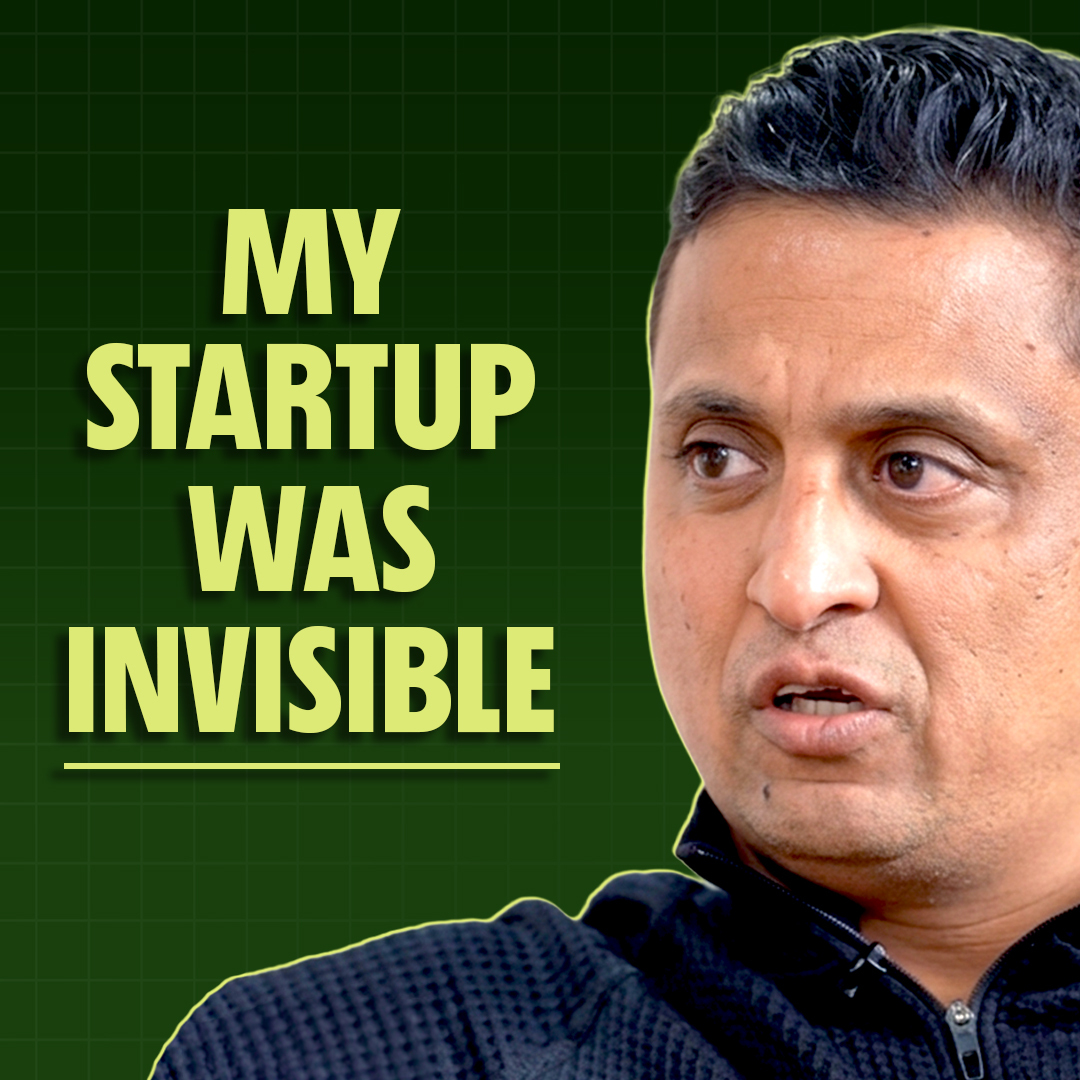
Internet Is Getting a Billion New Users. None Are Human | Sudheesh Nair, Thoughtspot, Nutanix & Tinyfish
From employee #16 to $1B ARR at Nutanix, then scaling ThoughtSpot to $150M ARR and a $4B+ valuation now building for a world where agents will drive the internet.
Sudheesh Nair joins the Neon Show.
The internet as we see it today was optimized around human strengths and weaknesses, using algorithms to monetize our greed and fear. But as agents take up more of the internet, that playbook starts to break. We are moving from a web of discovery to an outcome-driven internet, where agents care only about the destination, not the journey.
As an operator who has scaled companies, Sudheesh believes sales is a noble profession where there is no middle ground. You are either a hero or a zero. Sales is not a function at the edge of the company, it is the primary job of every employee in a company. When that happens, teams stop acting like mercenaries chasing targets and start behaving like missionaries focused on customer outcomes.
Beyond agents, we also discuss building companies and whether there are right or wrong reasons to start. Sudheesh’s view is simple. There are no right or wrong reasons, but you have to be brutally honest with yourself about why you are doing it.
This episode is one hour of clear thinking on agents, sales, and the realities of company building.
Watch all other episodes on The Neon Podcast – Neon
Or view it on our YouTube Channel at The Neon Show – YouTube
Siddhartha Ahluwalia 1:09
Hi, this is Siddhartha Ahluwalia, your host at Neon Show and Managing Partner at Neon Fund, a fund that has invested in pre-seed stages in the best of enterprise AI companies between US-India Corridor like Atomic Work, CloudSEK, and SpotDraft. Today I have someone who has lived enterprise in his career, Sudheesh, founder of TinyFish. Welcome on the Neon Show.
Sudheesh Nair 1:30
Thank you, Siddhartha. Thanks for having me here.
Siddhartha Ahluwalia 1:32
Sudheesh You are a legend in the India-US Corridor because you are the core pillar of the team that built Nutanix along with Dheeraj, Manoj, and then you were the one with Ajit who rebuilt ThoughtSpot. So coming on to the current change in the ecosystem that we are seeing, 90% of the web has completely transformed. Now the web is being built for agents. How is it today shopping is done by Amazon for humans. I think it will be built entirely for agents.
Sudheesh Nair 2:07
Web in itself is not being transformed and that is the beauty of it. So there is only going to be one web and the power, the innate power of internet or the web is that it is going to be always one in the sense that if there is a new paper that is published by IIT in Delhi, it should be immediately readable and researchable and augmentable in MIT. And a kid in Nicaragua or Nigeria should be able to pick up and work on it. That is the reason why internet is powerful because it removed silos of knowledge. So it should never bifurcate. Now the problem is that today internet is mostly built for human commerce, human understanding.
And I’ll be very honest with you. If you think of bot detection and cloud flare and all of these things that they talk about, like they sometimes go on soapbox and saying, we are guarding the internet. We are keeping the bots away.
It’s all bullshit because what they’re actually doing is preventing value creation for humans and focusing on dark patterns for merchants. So let me explain what I mean by that. Imagine you go to Amazon and try to buy something.
You work there. I’m pretty sure you studied this. If you search for anything today, I guarantee you the first 30 to 40 seconds of your time is trying to figure out how to not fall into a trap because you search for a soap and then you are trying to avoid which one is a sponsored product.
How do I not click on it? And then you see something that looks organic, but then you read the reviews and like, oh, dang, there’s a lot of reviews. This might be AI.
And then you are trying to figure out what is an organically good product for me here. That showed up really nicely. Why?
Because Amazon has completely optimized this thing for ads and value creation and whichever merchant is providing the most margin. Not about the user at all. And why is that?
It is because we as a species are kind of weak. We have fear, we have greed, we have all these emotions, and we have scientifically figured out how to exploit it. See, every time people say, I bought this, would you like insurance?
You’re going for travel. You just came to the US. I’m pretty sure the ticket people probably would say, would you like travel insurance?
Would you like health insurance? And you’re like, chances of me falling sick is pretty low, but my God, the US is crazy. I’d buy that.
And then if you buy a rental car, get a rental car, in the rental counter, they’ll say, Siddhartha, are you sure you don’t want fuel options? Because what if you forget? And you’re like, Dan, you’re right.
Because if I forget, or I don’t have time because I didn’t plan well, I will be paying a lot more for gas. Let me prepare. People who bought this also bought that.
These are all dark patterns. Now, imagine AI agents or robots interacting with the web. They don’t care about the journey.
They only care about the destination. And that’s a fundamentally different way of operating the web, right? But they have to get to the same web.
So now imagine this web as a uniform singular entity. There are two different kinds of users coming in, humans, which let’s say 4.4 billion users out of eight. The potential for between robots, devices, and agents, it is going to be trillions.
An order of magnitude more users are going to come to internet. They’re fundamentally different. This group is emotional.
They have greed and fear that web has figured out how to exploit. These are like that Terminator movie. They watch this internet like extreme efficiency.
They see ads. They see JavaScript. They see doms that are mutating.
And it will ignore everything that is noise and go to the signal. If it is trying to buy that soap, it knows exactly which soap to buy and will execute that task with extreme efficiency. You can’t treat them like humans.
For example, if you’re renting the car and say robot is renting the car, and if it says, would you like fuel option, the robot is like, why would I ever need that? Because I’ll never forget. I’ll know exactly what the mileage is, how much efficiency my car has, exactly how much time, what time the flight is leaving.
I will figure out exactly when to do that. It’s part of my plan. I will fill the gas and deliver it to you.
Unemotional. Perfectly built, right? This is where the challenge is.
And what we are doing at TinyFish is we think there has to be an abstraction layer built for the same web. But this only has one persona to think of, which is how do agents, robots, and devices will interact with? How do they need an operational internet that is outcome driven?
They won’t watch cat videos because they’re bored. They won’t pre-buy or extra buy soap because they feel like they’re going to Costco and might as well buy a large bundle. They are going to be extremely efficient.
So it’s all starting by the way. There is no idea how this is going to play out. But one thing is for sure, the web will be used by trillions of users like these, and they will not want the same abstraction layer.
It has to be something new and we are trying to figure it out.
Siddhartha Ahluwalia 7:18
And let’s say, you are talking about the web being built for agents. So for today, customers don’t have their own agents, right? So who are you building it for?
Sudheesh Nair 7:28
You know, customers don’t have agents is true, but it is also not true. Let me explain what I mean by that. We are focused on two kinds of users, the enterprise business users. So an insurance company, claims management specialist potentially, or a supply chain specialist in a manufacturing company. Two years ago, an enterprise buyer like that, if they want something, you know what happened? They will call Accenture or McKinsey and they will do a consulting session.
Today, what has changed is that this buyer either will tell their data science people or a machine learning team or their BI team, hey, we have this unique problem. We need fresh data. And can you help us?
And they don’t pick up the phone and call a BI company or a large consultant company. What they usually do now is open up a cloud code or some other tool like that and say, let me see if I can do something here. And they will say, I want to have an extremely complex workflow automated.
Like I want to know my competitors pricing at checkout. And I want to know that on all 50 states at different zip codes. So I want to run 300 sessions in parallel on my competitor’s website.
I want to buy from Kansas, this box and from Florida, the same box. And I want you to pick all color options and then tell me when pink color is not showing up as available in Florida, because I have a bunch of pink stuff, and if it is out of stock for them then I want to push and get a promo before the replenish. That claude code now will say, let me find out how to do that.
And one of the things that will do is actually spin off a bunch of agents. And they are going to say, I want to know how to run this in parallel. So I need serverless computing browser infrastructure.
And then I’ll say I need human like navigational skill because my competitor will never open up an API and give me the data. I need to navigate and find it. Then it’ll say, Oh, it’s going to have infrastructure problems like bot detection and proxying and stuff like that.
And what we have done a Tinyfish is we turned all of that into an API. So even though the user themselves may not know that they’re actually creating agents through chat interface, they are actually spinning off hundreds, if not tens of thousands of agents. And these agents are coming to your website.
So yes, they’re not directly running agents, but agents are approximately 28. By some counts, approximately 43% of the internet traffic right now are agents.
Siddhartha Ahluwalia 10:12
Wow. I didn’t realize that 43% of the internet traffic is already agents.
Sudheesh Nair 10:16
28 to 43. It’s a range depending on how you like, depending on which data source you’re looking for, but it is happening so much. And you are getting spun up by these models.
Siddhartha Ahluwalia 10:24
And you mentioned there will be a world, there will be trillions of agents. How far are we?
Sudheesh Nair 10:29
So this is the thing, like you are here in San Francisco. I’m sure you took a Waymo, right? Yeah.
I’m pretty sure you took a Waymo a few years ago as well. Two years ago, Waymo would have been science fiction. And today, first time I’m sure of this, when you got into the Waymo, you probably had an iPhone.
Siddhartha Ahluwalia 10:44
Probably scared, right? You can’t relax because…
Sudheesh Nair 10:47
You’re excited and you probably have your phone out and you probably looked at, took a video of the steering wheel automatically turning and the gear paired. But after second or third, I’m pretty sure…
Siddhartha Ahluwalia 10:55
You’re used to it.
Sudheesh Nair 10:56
Yeah. You took your iPad and then, okay, what am I going to do? Let me do some research.
That is something to remember. Things are happening faster than we think. And this industry, this space is moving so fast.
I hate to make predictions, but I do not think we are talking about multiple years, probably two years. But in the next 12 to 24 months, there will be significant movements in autonomous robots. I mean, the amount of work that is being done here.
And one of the first use cases that will go viral is domestic chores. And we already know, I mean, these are some fascinating stories. Some of the global 2000 companies we’re talking to, they did some research.
And you know what is the number one thing people want to automate? It’s not cooking. It’s the laundry.
So people still like cooking. Some people, no one likes laundry. No one likes laundry.
So I do think from autonomous car, which is nothing but an agent that will be making calls to the web every time it says, I need to go find a coffee shop versus order something. These are all going to be agentic transactions to home robots, to everybody using and building apps. I mean, software, it’s not going to be something that we think of today.
Today’s software is built and hosted in cloud, Salesforce, ServiceNow. Then we all go to it. Software will be something like American Constitution and built by a few, for a few, for a few times.
You will build a software app that you and your wife and your family might use three times. And that’s it. You never use again because the cost of building software will be so close to zero, which means that the process of building software also will be done by agents.
Now multiply that with a billion ChatGPT users. You can already see, we will pretty much reach the kind of scale that I’m talking about within months, if not a couple of years.
Siddhartha Ahluwalia 12:47
And you earlier mentioned that the web is not ready for it. Why do you think?
Sudheesh Nair 12:53
Web is not ready, not because of infrastructure. Of course, there are infrastructure problems and we will talk about it. I think the primary reason is because commerce is broken then.
Because you remember, I just talked about the detergent equation. If you take one of the largest, in the US, one of the largest is Procter & Gamble, and they make amazingly beautiful smelling, beautiful color detergent, Tide and others. They spend a lot of money on that brand and they spend even more money on digital shelf.
So it shows up in the right place with the right color, with the right vanilla fragments and all that. And it’s all built for humans because we like the color. If it is not in the right eye level, when you walk into Walmart, you will not see it.
So they fight to make sure that it’s properly placed. Again, coming from Amazon, you know all that game. Now imagine that robot that did the laundry is making that decision.
It will say, Siddhartha and Nansi like organic detergent. They like vanilla fragrance, but it should not have any toxins because Kabir is small. And it takes that and break that detergent into molecular level.
And it will understand exactly the components required and then say, okay, this is what I need to buy. I don’t care at all about the color or the branding or all of that stuff. I’m going to be unemotional about finding that exact composition across a thousand websites.
And I will never get tired. I will never get bored. And it doesn’t matter if it’s on the 50th page or 100th page, I’m going to click on all of them.
And then I’ll only buy when I know exactly it will be over. I won’t buy pre-buy and keep it next to me like stupid humans do. And by the way, when I buy it, it will be the best deal for my family.
Now think about the implications on commerce, branding, web. Companies where brand itself is the entire business, all of that vanishes. So when I say the web isn’t ready, it is not because of technology.
Companies like Tinyfish now, we can actually solve some of these problems, but the commerce behind that is going to be the thing. And by the way, these things will happen so fast and it is going to disrupt a whole series of business models.
Siddhartha Ahluwalia 15:16
But do you think today, are we there where agents are shopping on behalf of Siddhartha?
Sudheesh Nair 15:24
Not as much as you think. And I’ll tell you there is a reason. So for example, automation, when we do automation, the primary reason people automate is because it’s more efficient and frees me up and it does faster than I can.
If car is slower than walking, you will never take a car essentially. If you look at when you think of web specifically, you think of like OpenAI Atlas or Perplexity Comet and all of that. It’s sort of like that Waymo example the first time because first time watching this mouse move is kind of fun.
But when you are trying to book a hotel and it is hovering over the calendar for three minutes and thinking and it’s not clicking properly, you will just cancel and say, I’m going to do it myself. That’s the problem. The reason why consumer-based agents are not ready to go is because it still assumes humans are watching and human will correct.
For example, book me the next hotel in Palo Alto and it booked four seasons. Maybe you don’t want four seasons, right? So you’re afraid of that.
That is right. But where it has changed is on industrial size for enterprise. So for example, one of our client is a very large insurance company.
And this insurance company wants to make sure that there is something called pre-authorization. In the US, health insurance is so kind of complicated where if your primary care doctor said, Siddhartha, you got to go see a specialist. The insurance company now has a clock running because before Siddhartha get pissed off, I need to make sure that the doctor specialist that your primary care asked to see, he or she, are they in the network? Are they available? Are they the right kind of frame? Do we have a new contract?
Are the accreditation is proper and all of that stuff? This is a lot of paperwork involved in the back. It’s all in the internet, but it requires a lot of work and it can’t have failure.
And there are hundreds and thousands of these things happening in parallel. And usually what happens is it takes a few days. And let’s say somebody wants a scan done and after getting that scan only, I will have peace of mind because it could be really bad or not bad at all.
And the patient is like hands-written and backend is holding everything back. These are the kinds of places where agents are already making a difference because imagine taking 10,000 of this parallel transaction and the entire workflow around pre-authorization is deterministically executed. And that is important because it can’t have errors.
It has to be reliable. It has to be deterministic. And it has to be done with the kind of scale and cost that it delivers as opposed to the slower moving.
So agentic transactions built for this kind of use case is working. That is why we have focused only on that. We don’t want to book your hotel.
But if the tour company, the Expedia or booking.com wants to compare 10,000 hotels at the same time, we are there for them.
Siddhartha Ahluwalia 18:29
And that’s why you are trying to solve it from enterprise point of view to make enterprise ready and enterprise preparedness ready from an agent point of view.
Sudheesh Nair 18:38
That but look, consumer is a freaking hard game, Siddhartha. I mean, like there was a period where I was thinking what should I do and I thought maybe consumer sounds good. In fact, a friend of mine and I, we tried to even do something in the world of sports.
But I quickly hit a reality that when you think of companies like MyFitnessPal and all of this, Duolingo and others, the way they do demand and then constantly keep feeding the top of the funnel is unbelievable science. Like growth business that they do will put all enterprise into shame. It is a very different type of skill and science.
I don’t have the skill for that. Because one of the things with consumer businesses, they keep dropping. People sign up and drop, sign up and drop, sign up and drop, which means that the bucket has a lot of holes, which means you better have a huge demand chain pipeline.
What these people do is so data driven, so unbelievably good and so scale and every message, every pixel is perfectly built. I have a lot of respect for them. So partly, like I said, it’s easy, but otherwise, like this is not something I can do. I mean, quickly realized that.
Siddhartha Ahluwalia 19:48
So I believe, you know, and you have shared in your learnings on internet that sales, you treat it as a very noble profession throughout your life and you are not afraid to, you know, run a marathon for your customer.
Sudheesh Nair 20:04
Yeah. So look, I think sales is always had this bad rap. And it is true. It deserves bad rap because sales is like a mercenary profession. It’s one of those jobs where you hire people and fire them every 90 days if they don’t produce. And there is no place to hide. Like if your software code didn’t release on February 1st and slipped by a week, nobody gets fired, you know, because it is considered to be artistic profession. Whereas sales, March 31st comes, the quarter ends and you’re a hero or a zero, there is no place to hide. If you say like the product failed or support wasn’t good, nobody cares.
So first of all, it starts with different types of mentality. And I say that in the trenches, there are no board seats. Like let’s say you’re in World War I and there is trench building and bullets are flying.
There are no board rooms or discussion going on. The only word is to survive. Often enterprise sales, sales teams feels like they are in the trenches and they don’t have a lot of appeal.
I mean, they could finish a quarter, come back into a QBR and say, hey, the product sucked. But that is an excuse post facto. What makes it noble in my mind is those companies where they feel like the sales team feels like they’re not alone in the trenches.
When the bullets are flying, the competition is trying to kill them. The product team is with them. The engineering is with them.
The support, the marketing, the CEO, they’re all in the trenches. They are learning from wins, learning from losses, losing opportunities. But at the end of it, the accountability is squarely with the sales organization.
And if you can properly do that, what happens is that this sales team will be so directly focused on customer outcomes, as opposed to figuring out how to report backup to the management so they won’t get fired. So organizations where the sales teams feel like they have transitioned from being mercenaries to missionaries, sales is a noble profession. And you can clearly see the difference.
Customers will see that, sense that. And that’s the kind of sales organizations that I like to engage with, I like to build, and I guarantee your customers like to interact with.
Siddhartha Ahluwalia 22:15
And today, enterprises, are they actively engaging in conversations on what agents can do for them? Or are they still like clacking behind?
Sudheesh Nair 22:26
I’ll tell you, Europe is pretty slow. But US, absolutely. And but here’s the thing, though.
If you’re an AI company, there’s a good chance that pretty much every, if you’re a decent AI company with a good team and good funding, chances are pretty much every large enterprise will do a free POC or maybe even do a paid pilot. But do not think that that means you’re landed. I mean, we talk about ARR and all that very loosey-goosey right now.
You absolutely will get the attention and you might even actually get a few dollars for pilot. But unless you are able to really deliver value, not just deliver value, but deliver value at very low risk. So the numerator, the value has to be so high and the denominator has to be so low that you deliver the value without saying, you know, we’re going to be here for 10 years.
Because remember, this industry is so crazy. No one knows what two years from now looks like. So if you do that, enterprises are definitely converting into production.
And that’s one of the reasons Tinyfish, we have decided to focus only on internet today. Because of course, we can actuate any browser, which means we can easily go into intranet. We can use CRM systems, ITSM systems, because they’re all browser-based applications and we can do anything, payment processing, working capital, any of that.
But the moment you go inside, then you have to deal with data quality, security, audit governance, and all that. What we have done is we just focus on internet, but within internet, imagine focus on freshness of data. If freshness is value, we can quickly deliver.
So morning, we have the meeting and usually in our first call itself, we show something that they should see. And then if they like something by afternoon, we have finished the pilot or the POC part of it. And then we go into a paid pilot.
And from there, we can move. So this ability to move means you have to show high value. And then the low risk part is, let’s say Tinyfish stops existing tomorrow, they ask us that question, we’ll say, you will just go back to the way things were.
And it’ll be slower and probably not the highest quality data, but you didn’t break anything. So if you apply that kind of sort of extremely scientific way of thinking on behalf of customers, you can absolutely crack into enterprise.
Siddhartha Ahluwalia 24:43
How did you build this muscle? Of which one? Thinking on behalf of the customer, starting a conversation morning, by afternoon, do a POC by evening, sign a contract.
Sudheesh Nair 24:54
We got to take a step back then because sales, if you think of it, I said it’s a noble profession. If you really boil everything down to why people buy it, buy three things. They buy time, they buy money, and they buy promotions.
It’s that simple. I don’t need to explain, but I’ll tell you again, you will buy a product if it gives you more time to spend with Kabir. You are not in an organization, so you don’t care about promotions and all of that, but in large organizations, that matters.
People want to get promoted. There used to be a saying, you don’t get fired for buying IBM. The simplest thing is you also don’t get promoted for buying IBM.
This is the same thing applied to Salesforce and all of these companies now. They’re all like safe choices. Sometimes you have to step out and if you do it right, you’ll get, and that’s the second.
Money is the third one, which is, I mean, there is a social angle to AI, which I’m not qualified to speak about, but there is going to be significant transformation in the workforce and labor. There is going to be a lot of disruption to white-collar jobs, but as organizations go through that, there will be dark days, so they have to make sure that cash flow and operational efficiency of the business is increasing.
Siddhartha Ahluwalia 26:12
But in fact, within one and a half year of building, of starting Tinyfish, you have some of the largest companies in Fortune 500 as customers. So you have a track record, Nutanix, Hubspot, but leaving that aside, what helped you get these customers on day zero when they asked you, you’re only a one-year-old startup?
Sudheesh Nair 26:33
I wish I could say that it’s the quality of the tech and science itself, but the reality of our industry is that experience and network really does matter. I’ve been fortunate enough to work with two co-founders. They were exceptional people.
One is Shuhao Zhang, and the other one is Keith Zhai . They both came from different life experiences. So between three of us, we have non-overlapping network.
We also jokingly say between India and China and US, now we’re connected like more than half of the world. But seriously though, this is one of the I think Siddhartha, you know this when I and others reached out, I was hesitating, but then you reached out to Vijay and Vijay is a dear friend. And when Vijay says, Sudheesh, you should do this, I’m like doing it.
And that is the example of everything that is. So what are the lessons? Number one, this might sound philosophy, which I try not to do, but you have to ask why are you starting a company?
And sometimes people say, oh, start for the right reason, don’t start for the wrong reason. I actually have a contrarian view there. If you want to start a company, do it.
Whether it is the right reason or wrong reason, I don’t care. Like quote unquote, what is the right and wrong reason? The right reason could be, I want to make the world better.
I see a problem. I feel like nobody’s solving. I have to solve it.
These are all the things that we tell others. But the wrong reason, which are truly sometimes the reason is because I think I can raise money. Somebody is giving me money. I know Siddhartha, I’m sure they will fund me the pre-seed. So I might as well start something. Or worst case, sometimes it’s like I went to the Diwali party. All my friends started, I better start. Or you come home and your spouse is telling you, hey, you went to MIT. See, the other person started all of them, right? Or they’re thinking, oh God, everybody’s making money. I don’t want to work for somebody. Or you had a bad day, your boss yelled at them, like screw this, I’m going to start my own company. My advice is, we are living in such a beautiful age for us in this bubble. If you want to start a company, no matter what the reason, give it a shot. However, you take some time to think honestly like the why.
Just be truly, brutally honest with yourself about that reason and say, this is why I’m doing it. I want to never work for anybody else. I want to make a shit ton of money so that I don’t have to worry about your money.
I just want to quickly do something so that when I go to my next college reunion, I don’t look like a loser. Doesn’t matter. And you don’t have to show anyone. Put that and say, this is why I’m doing it. But then realize and say, for us to be a company, this is not enough. So I need the missing pieces.
One of them could be like a good company can never be built by one person who is so intensely focused on what they want. There has to be a better equation. And no one overnight is going to become enlightened about all of this stuff, which means that I say, I do need somebody who really is maniacally focused on solving this problem for the right reasons.
And I’m going to bring that person. And then I need one more person who genuinely think like they can easily raise money. Now what happens is you have a team.
This is an honest approach. It is such a fascinating time to start companies because it actually offers opportunity. But here’s the thing though, 92% of AI companies are failing.
So when you open up LinkedIn and Twitter, you will see cursor is here, elevenlabs is there. And you’re like, dang it, investors are coming and saying, why are not a hundred million in the first year? It is important to know that you are watching the shows that others have put out.
Like I’m sitting here and putting out a show and you’re probably on the other end watching it. You will never get to see the backstage of my company, which is mess. But I go and see the best every day.
And then what happens is this contrast that building. I get one backstage pass and a bunch of front row seats. And all the front row seats are amazing performances. And then I’m comparing that with my backstage. If you do these few things, what happens is you’re built and calibrated in a way that actually makes you feel like I know what I want. I know why I’m doing it. And I’m willing to grit through it because I guarantee you, no matter how good the story is, like Cursor, one of the biggest success stories. My company used to have around 83% of the company engineers were Cursor. Today it is like less than single digit.
I’m not saying that it means Cursor is doomed or any of that stuff but the reality is nobody is safe.
Siddhartha Ahluwalia 31:20
The cloud took away everything that Cursor built.
Sudheesh Nair 31:22
And Codex is now trying to get better at that. What is your view on that Cursor versus Codex and developers and all of that?
Siddhartha Ahluwalia 31:29
I think if you understand the customer the customer developer is an individual customer. They are really fickle. Wherever they get the maximum value for the buck, whichever helps them write the most accurate amount of code for the least amount of cost, they’ll go for that tool.
Sudheesh Nair 31:45
100%. I always say developers are the most disloyal users there are. And they’re also constantly trying to see if any product tried to keep them without portability they will also not use that. So yeah this is the thing. So every company will have dark days. The question is in the old days it used to be like I’m on the top of the world. I’m like holy shit nothing is working. It was probably every three months. And today it’s happening three times a day.
Siddhartha Ahluwalia 32:10
Yeah.
Sudheesh Nair 32:10
That’s it.
Siddhartha Ahluwalia 32:12
And I think the news are also too high and too low. Like 50% to 80% of the SaaS stocks are down.
Sudheesh Nair 32:18
Yeah.
Siddhartha Ahluwalia 32:19
Because Claude launched one upgrade.
Sudheesh Nair 32:22
Those are like, look I think that we have been through a couple of cycles. What I like is, you know, I think Salesforce which is one of those stocks that is currently taking a hit. It went public. I’m not quite sure but it’s close to 100 million in revenue. 100 million. Okay.
They have been through ups and downs and every time they get punched in the face they get up. Yeah. So if you think you can be a company that doesn’t take a punch and somehow succeed, you’re dreaming.
Like you’ve been, you’ve started a couple of companies.
Siddhartha Ahluwalia 32:55
You get punches daily, right?
Sudheesh Nair 32:57
Exactly. And this is another startup for you.
Siddhartha Ahluwalia 33:00
Yeah, this is another startup.
Sudheesh Nair 33:01
And I can’t imagine like the pace and the relentless speed which you’re creating content. There are days where it’s like what am I doing? So if you go through enough of this and then you sort of take a step back and say I’m not going to zoom too much into the stock so to speak. Like metaphorically speaking, the ups and downs. You want to take a step back. Now it’s very easy to say. Okay. This is where I think having a good partner at home and co-founders at work will help. And when I say co-founders, it doesn’t have to be co-founders. It’s a good team around here.
And if you have, like I said, if you did that initial jigsaw puzzle really well, then hopefully all of you are not having the same amount of downtime all the time. And so somebody’s down, somebody lifts you up. And when someone is, other person is down, you are able to lift them up. It’s a long game. 10 years from now, how many of these companies will be around? 92% are failing right now.
And it is only going to get worse because more companies are getting founded. Rate of change is increasing and frontier models are coming and just swallowing. And SaaS companies are going to lie down and take it, which means that there will be, the delta is only going to increase. So a lot of us are going to fail. And what does that mean? What is failure? In our world, startup, we are so lucky because there is no real failure because we are absolutely burning somebody else’s money. People like you go get LP dollars and invest in us. And even if you sort of quote unquote fail, you would invest in a failed founder much easier than a fresh founder sometimes, right?
Siddhartha Ahluwalia 34:40
Because the hunger is much more.
Sudheesh Nair 34:42
And they know. So what is failure? So we sometimes over-rotate on failure. And the real cost of failure is to our ego. Like, oh my God, I failed. And that’s the one thing Bay Area does very well.
I hope that the rest of the world catch up. Here, failure has no stigma. Failure is like, I failed two companies. Started two companies, both failed. Give me more money. And this is like, here it is.
Siddhartha Ahluwalia 35:06
So again, you know, coming back to one critical question, I think our audience would love to understand. Within one year, the customer started caring about you, right? So what are the things you did right?
Obviously, you mentioned one thing, you didn’t went into internal system. You just touched the internet for them. So because you’re not risking anything.
That is one thing. But what are the other things that customer cared about you? Because today, the AI noise is so much that every enterprise that any company goes to, Microsoft is trying to shove their AI to it.
Salesforce is trying to shove their AI to the CXO. So the top-down motion has become very heavy, right? Because every CXO is getting bombarded with demos, pilots, even from the largest of largest enterprises.
Sudheesh Nair 35:52
I’ll give you three things. The first is, I already mentioned this, which is, it is our job to figure out the equation that is really heavy on the side of numerator. So value to risk ratio should be like over the top.
If it was let’s say four years ago for a startup, it is probably 40 now. You really have to think that is when the customer asks you, how do I know you’re going to be around two years from now? Don’t try to fight it.
I would rather say like someone asked me like, the reality of AI spaces, if let’s say you are very successful, there’s a really good chance somebody could buy you and kill you. If you’re not, you’ll run out of money. So instead of trying to prove that no, no, no, I’m going to be around 10 years from now, you will say, okay, let’s think about that.
If we fail, what happens to this project? So it is our job to explain instead of fighting, right? So that’s the high value, low risk.
The second is quick realization of value, but it is not just value delivery, but value realization and then continuous value delivery. Value realization is if the cost of acquiring a customer is reduced because of my product and it turned into something better in terms of value, let’s say their stock is actually impacted as an extreme case, that is realization, right? Even that’s not enough.
Now you got to think about continuous value realization. What does that mean? It means that you have wired that into the business logic in such a way that it is not starting to produce results for others.
So it is self-sustaining. This is sort of sounds like, oh my God, it is very difficult. I guarantee you if you’re in enterprise, if you think you are not have to do all of that, that is because you’re not doing it.
Somebody else is doing it. The problem, the risk on today’s world is if the customer is doing it on behalf of you, another vendor could go and do that and take your business away, right? So that is the second part of it.
You have to think through this inside out framework and then apply that methodology. And the third thing is that the cycle of disruption is you have to assume it is significantly short, which means that you have to run this life cycle that I just talked about in probably months, maybe like a month or two months. That is procurement cycle itself for enterprise is sometimes three to six months.
You can’t live with that. So you have to say, if a procurement person comes in and says, your legal contract and HIPAA governance and the PII thing is going to take you six months, you should not lie down and take it. You got to figure out how to take it and go back to the case and say, six months, are you like seriously, like go to the business champion and say, do you know what the world is going to look like six months from your competitor might be in production and taken all your customers.
So your engineering team, your data team have really modernized, but your procurement team is holding you back and this is going to fail. So the answer is not to say, ignore, we are a global 2000 company. No, the answer is, let’s go through that and we will take your paper, but I want you to remove the boilerplate stuff that doesn’t apply to us.
And here are the things that apply and here is how we can remedy that so that we can compress it. So compressing the entire sales cycle is important because without that you won’t get to continuous value realization. So that’s the third thing.
What we have done and we can do a better job, but what we have done well is we’ve been intentional about all of this. And the last thing I’ll say is that in the old world, everything I just said is on people. It’s on the salespeople and the delivery of customer success people.
I do not accept that in the new world. Everything should be a product problem. You show me a problem in a company, I will tell you how it is a product problem.
Your customer side is wrong, product problem. If your marketing branding is wrong, it’s a product problem. Everything is a product problem.
Why do I think like that? Because product problems have high leverage. If I fix it, I can get that 100,000 people immediately affected.
But if I train a salesperson and they are good, I cannot ever hire 100,000 good salespeople or customer support people. So you got to wire all of them in the product so that the product is learning from the interactions and getting better.
Siddhartha Ahluwalia 39:59
The other thing in today’s world is your product market fit has to be proven daily. For example, like chatGPT was so ahead in the race, Gemini caught up. And Gemini is part of your Google suit today.
And similarly, what Claude built. So what I’m listening from enterprises is now they’re reconsidering the agreements that they signed with OpenAI kind of thing. So the world is changing so fast, even at that scale.
What product market fit you had today, yesterday is not valid today.
Sudheesh Nair 40:36
This is such a good point, by the way. So I, inside the company, Shuhab and I, we talk about product market fit doesn’t fall from the sky. Product market fit is something you have to earn every day.
So what I like to think of it is as we are building a company that hopefully last many decades. But the problem that we are solving is a moving target. So when I think of product market fit, I think of as I’ve earned the right to live six months.
So six months is a decent time frame because even in today’s world, if you don’t think six months, it’s a really difficult thing. So I think of it like, have I earned the right for the next six months with this customer? And if the answer is yes, in that six months, can I go earn the right for another six months?
Now, there are two different sort of fabric in the point that you made about OpenAI and others. One is the foundation models are getting commoditized. There is no question like in our product, for example, one of the reason we took web is because web is dynamic and it is not something where you can just throw LLMs at it.
Because if you ask LLM the same question three times and prompted differently, it’ll give you different answers. And web is constantly changing dynamic. That is why you can’t apply the LLM directly.
What we have done is we used LLM and abstracted out and codified and executes in a deterministic fashion. So that’s our IP. But from a product market fit point of view, what we have done is we look at this and say, one day it is Grok that delivers better.
And then we have built our own benchmark and we might say, Gemini 2.5 flash is better. And then when 3 came out, we actually did benchmark for our use case. We found that even though 3 is supposed to be better for our use cases, 2.5 preview September was the better use. So we just use that. Why? Because all of this are commoditized.
But within that, you can now start seeing that there are channels being built. For example, coding, Anthropic has gotten the best model. Now OpenAI is trying to catch up.
But when it comes reasoning, definitely OpenAI models and Google models are better. Imaging like Anthropic sucks. Grok is actually getting better and NanoBanana and others are actually getting better.
So developers are going to think just like CPUs used to be like so Intel inside and now nobody cares. I think models will become that. This is where Google and Anthropic, I think have taken a different track, which I think is going to be good because Google definitely have the enterprise bandwidth and mind share.
So they have built ecosystem around it, which means that they get wired into G apps. Anthropic from the beginning understood coding is going to be the infiltration point and they’ve done it very well. And now they are applying vertical AI inside the enterprise.
OpenAI though, you’ll never write them off because they missed all of this. However, the model that there’s a framework that they built called Frontier. That Frontier framework is to me one of the most exciting framework for the intranet because it actually talks about context and semantic layer in a way that if get it right, it’ll wipe out a whole suite of products out there because it is the best architecture to understand the semantic model of an organization.
And this is something that I struggle with in BI because there are BI companies trying to do semantic model for a long time. And the reason why it doesn’t work is every company’s semantic is different. How you recognize revenue is different from how he recognized revenue.
If you are wired in with this level of intelligence inside the organization, you fundamentally change. What will happen is these are all smart companies with amazingly gritty leaders. They will evolve.
And the way they will evolve is they will become more proprietary about their models and they’ll keep holding back. Post-training and rag is going even pre-training will become more important. And then they will stand up verticalized apps.
And then what happens is there will be a fight for data, proprietary data within the enterprise. All three are massively capable. And in that context, I would say open AI and Google are more capable.
And then if they have the verticalized apps and access to data with this kind of a frontier kind of an architecture, that will become sticky. And because the apps are the models will become sticky. Otherwise it’ll all change.
Siddhartha Ahluwalia 45:23
So for founders, quite a lot to process and to survive.
Sudheesh Nair 45:26
Oh my God. It’s like every day, go to school. I love it, but it’s pretty scary.
Siddhartha Ahluwalia 45:31
Yeah, it’s pretty scary. So for example, what you built 10 years ago to say for the process, the systems, the architecture would not sustain today from a technology.
Sudheesh Nair 45:43
Yeah, absolutely. Even sales and all of that. But there are things to learn.
Of course. I mean, there are things that doesn’t change. For example, a flat organization, an organization with the drivers, no passengers.
It’s a really difficult thing to do. So for example, at Nutanix, we did a decent job. And I left, we were over like 5,000 or so people, but we didn’t have a lot of passengers in the sense that we all rolled up the sleeves and do whatever it take.
Obviously, we had a lot more people. We don’t need as many people, but that structure of learning and figuring out how to respect every leaf node, every root node in the company, that matters. And with the smaller company, there will be a lot more ego, a lot more shoulder punching happening, how to resolve conflicts.
And it’s really easy to resolve conflict when everything is going well. But when things start going not so well, the first reaction would be to point fingers. And when the companies are small and people start pointing fingers, there is no place to hide. There is no redundancy. There is no contingency plan. How do you manage through all that?
People equation is always going to be challenging. And then last is customers. Like I said, how do you react to customers? How do you treat customers? How do you build with respect? Those things are also fundamental.
They haven’t changed. And how do you build a company and calibrate them for the long arc? Not get carried away by, oh, first year should be 100 million or you’re doomed kind of thing. How do you change that? So experience definitely matters, but you should also assume that the experience is not blinding you. They are not blinders.
They’re like guardrails. If you go away, you’re going to fall, but don’t assume that things didn’t work in the past will not work now.
Siddhartha Ahluwalia 47:29
So in your journey, you would have seen a lot of ups and downs. Like, for example, in Nutanix, first of all, you were the challenger. And then as you grow over a period of time, stock took multiple hits during the course.
Similarly, at ThoughtSpot when you joined, first you had to fire people multiple times, which is much more difficult as a leader, because you don’t expect as soon as you join, you are given the responsibility to cut the organization by 25% or 50%. So during this dynamic landscape that you saw over 15 years, you know, sales is obviously the muscle that you build leading sales. What are the other muscles that you build now that you are using at Tinyfish?
Sudheesh Nair 48:16
I think first is I’ve become better at communicating directly in the sense that I’ve realized that if I give off 10% vagueness in my communication, by the time it actually get to action, that is probably augmented itself to 50% lack of clarity. So I become very intentional in what I say. Of course, I have problem when it comes to writing.
I keep writing long stuff and speaking as you can tell, I go all over the place. But I intentionally, when it matters, I break it down so there is no lack of clarity in what I’m saying. That is, if I say no, I will explain clearly, it is no, and we will not do that.
And that is something it took me a while to learn because there is this, inside all of us, people might say, oh, they are not like that, but all of us want to be liked. And there’s nothing wrong with that. You know, you have to be like a sociopath if you feel like you don’t want to be liked.
And there are some people who just act like the opposite of it. Like my job is to act like, you know, I’m the boss so nobody should fear me. That’s BS.
In our industry, knowledge industry, people work because they want to work, not because they have to. So one thing I learned is like you have to have the clarity of communication that is not burdened by the need for liking, being liked. If you can get that right balance, it will really help.
And it’s not just for every communication. You need to know where I’m saying something and we get caught up in the moment, a Slack message shows up, WhatsApp comes up and you’re just responding. And that is how it should be. I’m really fast at responding. But when it comes to something that you know it requires your attention, you should take a pause and say, am I going to send this message with extreme clarity? And will that help or hurt? And is that being shaped because of my ego or vanity or my need to be liked? And if the answer is all good, then send it out. So that’s something that I’ve gotten good at.
Second is I’ve become a lot more passionate about product building in the sense that growing up in sales, early days of sales, it was always like product people don’t know what they’re doing. It sucks. Like I can’t close the deal because it’s made in ship.
And if they ship, it is poor quality. If it is poor quality, then the support is bad, like flame throwing everywhere. Why?
Because don’t you understand we have to close the deal. And that’s a pretty bad place to be in because building software out of nothing, building things that doesn’t exist, maintaining things, it’s a hard job. So I’ve learned a lot.
I’ve actually built a lot more empathy for engineering and products and resource management and even back office. I mean, resource management, going through multiple rounds of layout, for example, really sort of inculcates you that you don’t want to do this. And if you don’t want to do this, the first thing to do is to not hire.
Like don’t hire unless you feel like you are in a place where you need to have four people and just going to hire one person. And this person is the best person. And he or she is going to be a needle mover.
In smaller companies, you can do that. In larger companies, sometimes you end up hiring for masses. So that is important to back office. So I thought of like every function in my mind deserves so much respect. And I’ve actually come to empathize with that. Third and probably the final thing I’ll say is that I have fundamentally internalized that marketing has changed. I genuinely believe that marketing is the hardest thing to do in today’s world. And it is probably going to be one of the highest in demand skill. And there’ll be a lot of marketers. The entire social media world has completely perverted the incentive structure from Twitter to YouTube. They all are algorithmic optimization for clicks and views. Nobody pays attention to anything.
Nobody reads books. I’m even surprised that we are doing this because I don’t know how many people will watch this. And if they watch, it will be like 7X speed or they will summarize it. So it’s a very weird world, right? If people – I mean, one of the books that I was reading in J. K. Rowling, she has a pen name called Robert Galbraith and she writes a lot of books in it. And this is pattern that always stuck with me. The world’s biggest problem right now is there are more writers than readers. There are more publishers than listeners. There are people like you and me sitting making more content than actually people sitting and watching the whole thing. And the problem is that the signal to noise is very difficult to find.
And marketing is not about adding to the noise anymore. Marketing is to identify how to get the right signal in the noise to stand out through the right channels. And you can see clearly paid influencers and non-user-generated content. It is a challenge. So that is probably the last thing that I’m learning. And the last part, it’s a work in progress. I have really no idea. Like part of the reason I’m here, like I said, is Vijay. But the other part is I’m experimenting with this because I didn’t do a lot of these.
Now I’m trying to figure out does this work? Because if you don’t put yourself out there. If you don’t figure this out, I could have the best product, but no one will know.
Siddhartha Ahluwalia 53:58
Sudheesh, can you share, how did you take it? I know it’s too short a conversation to get the summary. How did you take Nutanix from zero to 1 billion in revenue while you were there?
Sudheesh Nair 54:11
Yeah. I have no idea. And that is the honest answer. What I can tell you is that I lived 26 quarters. And I loved thinking that way. So I’ll give an example. So we did our IPO in September 2016. And we were in New York, NASDAQ. And we finished the IPO. And I still remember Viraj and I, we had this emotional thing like, oh, we are going to feel amazing. I did not feel amazing. I was like, oh, now we are a public company. And if we drop a quarter, that will be a problem. So from New York, I flew to Tokyo directly. Because I wanted to make sure that the deal happens. I was intensely focused on every quarter. And some people say that people who live in history will never realize they are actually doing it. I don’t try to aggrandize the whole thing. But my point is, there used to be a guy that I used to work with called Bob Wallace. He had this thing where you remember, he said, so these are the good old days. And I didn’t understand what he meant.
But after I left, I realized because you are thinking about what’s not working. And one of the best thing about highly accomplished people is that they’re always really good at looking at why things are not working, but they never think too much about why things are working. If I were to tell you, Siddhartha, you’re a very high accomplished guy, I say that, here are the 10 things that you do well. But this one thing you’re not doing well, I guarantee you there’s a good chance you’ll forget those 10 things and you’ll never forget the last thing I told you, right? That is why you’re good. However, that also can be a bad thing. So when you build companies like that, we are very myopic in our actions. But if you don’t think about that, you will never improve. However, but if you only think about myopic things, you forget that these are the good old days.
So going back to your question about Nutanix, one is we never thought about a quarter after. But it is very critical to know that we were never myopic in our vision and ambition. For example, when we built a company, very beginning, it was all on VMware. The product was built on VMware. The sales motion was completely on VMware. The use case was VDI, which was on VMware.
Our demand gen was VMware. Our conference was VMware. And then I still remember standing on all hands when we heard the news that VMware is going to compete with us directly.
Of course, we were freaked out. But after the initial freak out, you know, Dheeraj made the decision that, okay, here is what we’re going to do. We’re going to compete with VMware.
And first instance, like, what do you mean? Like, we’re going to compete against them on the vSAN and the hypervisor? No, we’re going to compete them on hypervisor because our product was sitting on their core product.
If they’re going to compete with us on the app, we can’t be on their infrastructure. Imagining thinking that we’re going to build our own hypervisor would be like saying, I’m going to build my own frontier model today. Yeah.
That sounds really ridiculous. But you know what, that’s what Elon Musk did. Now, of course, Elon Musk has advantages that more mere mortals don’t have.
But what he did do is stand up an entire data center and, you know, work with NVIDIA and get all the chipsets necessary to go stand up something in eight months, which Mark Zuckerberg himself said that he thought it’ll take three years. People are doing unbelievably impossible things every day. You may not feel like it is doable, but you have to be able to do that.
So in our case, we always are ambition that is unencumbered by realities. So we always think like, we want to build a large company from a culture, from a vision, from an aspiration, from an ambition point of view will never shortchange. However, from an execution point of view, we will be very realistic.
And Dheeraj has this way of looking around the corner, seeing around the curve, like no other human being that I have come across. However…
Siddhartha Ahluwalia 58:14
What do you mean by that?
Sudheesh Nair 58:15
So he can see the dots before I could see it in the sense that he could connect 10 dots out. He’s like a chess master who plays his chess in his own mind. The problem sometimes is that he’ll checkmate himself.
I have none of that problem because I’m not as intelligent as him, but I’m clearly seeing. So he has this extreme charisma and vision, and I have this intensity and execution focus. That is a good combo.
Siddhartha Ahluwalia 58:38
Can you give an example, for example, to close a large deal or $100 million?
Sudheesh Nair 58:41
This example that I just told you about competing them on Hypervisor, that was an amazingly gutsy call. We said we are going to Today, Nutanix will be nothing if he did not make that decision early on, that we will build our entire product on the Hypervisor. And the guy who, by the way, took that chance, Dheeraj had this idea, which sounded crazy.
And the guy who made that is Manoj. Now they’re building a company together. And Manoj said, it sounds crazy, but I know Dheeraj well.
If you think he can do it, I’m going to… And he did it. I don’t think Dheeraj could do what Manoj does, but Manoj could never do what Dheeraj does.
That’s why they’re a good combo at DevRev. So that’s a good way of thinking. So my way is like, I am really paranoid and passionate about sales and delivering numbers.
And I didn’t have as much respect and understanding on the product side, which I developed later. So this kind of combination worked very well there. The third thing I’ll say is that we never… I personally will say that I never believed that talent is centered in the US or in the Bay Area. I always believed that talent is universal, opportunities are not. Which means that we got to be everywhere all the time.
And this turned out to be one of the best things we did at Nutanix.
Siddhartha Ahluwalia 59:56
What do you mean by that? Everywhere all the time?
Sudheesh Nair 59:57
Yeah. So I remember… So we released our product, the first quarter.
The product didn’t work. It only had support for like some ISCUS or something which didn’t work really well at all for locking and all. And it was down more than up.
It had hardware lock and you’re running on Supermicro and all of that mess. But I get this email from a guy from Sydney saying, hey, your idea is pretty good. And if it ever works, and if you’re ever coming in the next few years to Australia, we would love to do it. And I’m like, oh my God, are you serious? And the guy says, yes. Within a matter of seconds, he says, yes. I said, okay, I’ll come. Like when? Like now. Yeah, now. So I flew to Sydney. And first of all, this guy is like, what the hell, right?
I mean, I’m not sure that I’m ready to buy from a company with no product and no personnel here. And he’s like, I’m like, no, no, I’m serious. We do it. Long story short, not only we sold, he actually joined the company. His name is Cam Stockwell. And he ended up being one of our best employees. He moved here and then he moved back there. We sold, but we turned him into a reference. A lot of, a large portion of our business came from ASEAN, Malaysia, Singapore, Thailand, Indonesia, Cambodia. Why? Because we hired a really good leader PK and team around them. It’s a guy called Matt Young. He knew how to run Asia. Europe.
There are quarters where Europe outperformed us better than anywhere else. South America, Mexico, all of these places, right? And the advantage is smart people want the same technology that US or Bay Area or Bangalore using anywhere in the world. It is just that we do not think of them until we exhaust everything else. And the problem is here. It’s such a red ocean. Everybody’s selling. Thailand, pound for pound, happened to be one of the most profitable regions for us. Why?
Because cost of living and cost of doing business is low and people are willing to spend. There are amazingly large banks and stock markets and other institutions out there and they want the same tech. Cloud has fundamentally sort of, at that time, evened out the playing ground.
Now AI has done the same thing. So if you are thinking that you will never make a company unless you come to US, you’re making a mistake. Middle East was a booming market for us.
We found amazingly good teams around them. We hired ownership mindset people with agency. And one of the things that we made very well was we did a really good distribution system.
We had resellers and the resellers were just part of the company. They will criticize, they will file bug, they will come to our kickoffs, internals meetings. They will tell us what’s working.
They will absolutely tell us when our product is failing them and their customers. So it takes a lot of back office effort. But instead of waiting, we just went everywhere, like federal. Federal is not something that most startups think that they should go there. Nutanix, we were there in the first year. International, our first quarter, first or second quarter, our business came from UK, federal, Australia. It was nuts. And once you see it, we just expand. And people are grateful. They’re very smart and they pay. Japan was a massive market for us. So these three things that I just described, if you apply that playbook, they all apply even today.
I’m going to be in Japan next week. Actually, no, tomorrow I’m leaving for Japan. And the reason is because AI is hard. Japanese society is aging and they always believe AI and robotics to be answers. They have a very high bar for quality. They have a very high bar for user delight. But that’s not a bad problem to solve for. So I apply the same playbook when it comes to respect for the entire universe, be anywhere, talk to people, show up, make sure that you’re absolutely ambitious and unafraid to imagine the impossible, but at the same time, balance it with the realities of not delivering a quarter means it is actually bad. And then rally the entire company. I never thought of Nutanix as any function as not my function. Everybody believed that sales is what they’re doing. I told them that the job that you’re hired to do is the second job. The first job is sales. And that really inculcated in the company, a sense of pride in winning and losing.
Siddhartha Ahluwalia 1:04:19
Are you applying the same principles that you are global from day zero?
Sudheesh Nair 1:04:22
Trying to. So it’s one of those things where I remember saying this once in an all hand somewhere that nothing of values ever created until it is sold. I mean, it’s such an important thing.
You could be a profit or non-profit company. I don’t care. You are selling. And any engineer who thinks selling is beneath them, any marketer who thinks my job is top of the funnel and demand gen is completely delusional. The point is, selling is everyone’s job. If you are designing something, you need to make sure, is it going to help me sell? And if it is helping sell, does it expand? Does it expand? Does it cross sell?
If it cross sell, does it upsell? A product manager who doesn’t think that is useless in today’s world. Engineers who are fixing something without thinking about, is that going to make it easier for sellers to sell as well? And a salesperson who doesn’t think I’m selling this, but will the product itself expand is not doing a service to the product. So if you create the vibrance inside the company that we are going to measure ourselves against sales matters. Now, it is important to guardrail that with the idea that we are a failure if we don’t make the number.
That’s not the point because sales is going to be painful. There will be good quarters, bad quarters. We are going to be a good company whether a quarter is good or bad.
We will learn what we made mistakes from, but we’ll improve on that. But entire companies should care. And trust me on this, Siddhartha, it is really difficult because a lot of people want to celebrate good quarters, but they want to run away and blame sales for bad quarters. Sales want to blame the engineering for bad quarters. So blame, no parents. Successful quarters, a lot of parents. So you have to surgically remove that fear and then make everyone come together, good quarters or bad quarters.
Siddhartha Ahluwalia 1:06:08
Are you still following the same aggressiveness in sales today? A hundred percent, yeah.
Sudheesh Nair 1:06:13
In fact, probably worse now. The point is intensity that I have sometimes can be a problem. But people, once they get to know me, they realize that I’m very passionate about value-creating in the sense that there are three constituents that I think about as a company responsible for running a company. One is employees. The other are customers. The third are investors. You have to think about all three equally. The VC money that we raise is not coming from fat cats. It is pension funds. It is university. It is teacher’s union. These are 401ks. So it is our responsibility. This is not like money that we just burn and then no blame. So that is important.
But if you over-rotate on that, you might not deliver. People who invest in early stage, they want 100x return, 10x returns, not like 2x, 3x. They can do that from safer investment vehicles.
So employees, what do they want? The reality is most employees never have to work for money.
Siddhartha Ahluwalia 1:07:20
That’s what they want. They want to create generational wealth in that one job.
Sudheesh Nair 1:07:24
100%. And then, oh my God, I just want to work because I don’t have to work. And then customers, what do they want?
Like I said, they want to make time, money or get promoted. So when you put this thing together, life becomes very simple. What I’m doing right now, am I passionate about all of them?
Everything I’m doing, is it moving the needles on all of them? And when you go through an exit like Nutanix in terms of IPO or hopefully ThoughtSpot soon like that as well, something of that magnitude hopefully, the most profoundly moving thing that happens is like somebody who just joined the company fresh out of school will send you a note out of this house we paid for. Nutanix paid for that.
It is just massively gratifying. Unless you are like a sociopath or a psychopath, this is why you do it. And if you’re not passionate about it, there are a lot of other jobs to do.
But startup is like a freaking hard thing to do. Don’t ever get into it thinking this is going to be easy. And don’t ever get into things like, oh, others have done it and that’s very easy.
Even if you do everything right, there are two things that’s out of your control, luck and timing. Every successful company had luck and timing on their side. And you could do everything right and one of them could completely come and shaft you in the back.
And if that happens, you will be nothing. So it’s not for everybody. And the important thing to realize is whether starting or joining a startup, really think hard.
Are you signed up for this? Is your family aware of what it is going to take to do that? And if the answer is no, think hard.
Siddhartha Ahluwalia 1:09:02
Thank you so much, Sudheesh. It’s been an amazing conversation with you.
Sudheesh Nair 1:09:06
I truly enjoyed it. I mean, you’re such an easy person to talk to. I can see that.
I’ll say one more last thing, which is that professionals, the difference between professionals and amateurs, they make it look easy. You make it look so easy. So I genuinely enjoyed it. Thank you.
Siddhartha Ahluwalia 1:09:18
I’m grateful to you for having this conversation with you in person. It’s like, yeah, I cannot describe it.
Sudheesh Nair 1:09:24
This is my longest conversation. I’ve never had such a long conversation ever. So I appreciate it.
Siddhartha Ahluwalia 1:09:30
Truly means a lot and would love to do someday part two of it because I had so many, many more questions. There were so many more curiosities.
Sudheesh Nair 1:09:38
I don’t think I have more answers.
Siddhartha Ahluwalia 1:09:40
But I think we brainstormed a lot of things together.
Sudheesh Nair 1:09:43
Yeah.
Siddhartha Ahluwalia 1:09:44
I learned from you a lot. And I was constantly thinking what you were saying about and what my past experience could relate to.
Sudheesh Nair 1:09:53
I appreciate it. Thank you.


Know when new episodes are released. Subscribe to our newsletter!
Explore Playlist
Why OpenAI Has No Moat & LLM Prices Will Collapse |Avinash Lakshman,Weilliptic

The Big Problem with GPUs and How To Solve It | Randolph and Kandan, MantisGrid AI
Why The Next $100B AI Opportunity Is Context Engine| Prukalpa Sankar, Atlan