



361 / March 12, 2026
The Anti-Quick Commerce Startup That Just Raised $50M | Ayyappan , Founder of FirstClub
Is the best grocery platform one that decides what it WON’T sell?
That is the bet Ayyappan is making with FirstClub. Fewer products. Stricter rules. While most quick commerce apps are trying to deliver orders faster, he is asking a different question. What if consumers need not “faster or cheaper”, but a retail platform where they can trust every item listed on it?
A place where you do not have to read every label, check multiple reviews, or wonder if the top result is there because a brand paid for it. FirstClub is trying to solve a harder problem. It is trying to define what “quality” means for everyday products we consume, starting with groceries.
India has received the highest quick commerce funding of any country in the world, at $9.24B over the last 10 years. Yet only 1% of Indians use quick commerce services today. With a large market still open for expansion and the possibility of better unit economics over time, FirstClub is building a countertrend to the hype around Indian quick commerce.
Ayyappan brings eleven years of experience at Flipkart, and has also served as SVP at Myntra and CEO of Cleartrip. FirstClub also just raised a $50 million round and doubled its valuation in under six months. This episode is the story till here and the plans ahead for Firstclub.
Watch all other episodes on The Neon Podcast – Neon
Or view it on our YouTube Channel at The Neon Show – YouTube
Nansi Mishra 1:02
So, I am very curious about the first question that I am going to ask. So, why is Costco Charlie Munger’s favorite company and why do you call Firstclub Costco of quick commerce?
Ayyappan Rajagopal 1:15
Yeah. Firstly, the reason why I spoke about Costco initially and in certain forums I have discussed about it is because I wanted to get people’s attention and saying that you know what how easily I can explain what we are trying to build otherwise it gets too difficult for people to understand especially when you are not talking about pricing, especially when you are not talking about speed.
How do you communicate like I stand for quality? So, Costco is one of the very early pioneers when it comes to a very differentiated detail format. What Costco did was and I think even before Costco, even after Costco I do not think there is anybody who tells you that you can enter my store only after paying a membership fee right.
It is so unintuitive because retail is all about like walk-ins. You need to come in, you need to see the products, you like my product, you buy it. This is what the retail flow is right and here comes one new retail format which comes in and says that you know what I am going to charge you money just to enter my store and that is like unheard of and the reason for them to do that was if I get somebody into my store and if they do not like my products right obviously they will say bad things about it and why would they not like about the selection I have because I have the clarity that I am building for a specific set of US audience. In US the median sort of income is around say 50-60k US dollars that is what Walmart is catering to, Costco is catering to 80,000 to 90,000 sort of USD per capita income.
So, I am very clearly catering to the audience who are little more savvy, whose discretionary spend is little higher because their discretionary income is higher. Now I want only them to come in. Now how do I go and tell them only you are supposed to come in?
My way of doing that is through a membership fee construct. Now that I have got the right set of audience in, now I can build a selection just catering to that audience. Now because I am able to put in that selection which is very limited like I do not have like 40,000 SKUs but I have 4000 SKUs, I work with limited set of brands and I work with them so closely that it is integrated till their factory and till their warehouse that there is no other distributor that needs to come in.
So, this way building literally a sort of a pipeline between the high discretionary income households on one end of the pipe, on the other end of the pipe you are able to get in all the relevant brands who are able to make such quality products and the business model has been built in a way that because of the membership fee my gross profit is going to come from the membership fee and hence the per unit I can charge a very less gross margin.
So, retail, Walmart and everybody would be charging 21, 22 percent gross margin. Costco operates at 11, 12 percent gross margin. Now try breaking that like how do you sell something at that quality, at that price compared to what Costco is selling.
That is why I think Charlie Munger also says that you know what it is once in a generation company and very difficult to sort of replicate.
Nansi Mishra 4:11
And there is no member fee for Firstclub?
Ayyappan Rajagopal 4:14
Not at this point of time, but very soon.
Nansi Mishra 4:16
Because I am one of the customers.
Ayyappan Rajagopal 4:18
Thank you so much. We will, I am sure you would get into our membership program as well.
Nansi Mishra 4:22
I really like the packaging, how the methi leaves came, wrapped in leaves and usually the vegetables are you know tightly packed in those you know plastic nets. And it is said that for every trend there is a counter trend.
So, Firstclub is a trend or counter trend, how do you see it?
Ayyappan Rajagopal 4:42
Very clearly a counter trend, because everybody has been talking about price. You go and look at the one line tagline of all the platforms, at least now with the latest regulation and all of that people cannot speak about 10 minutes, but otherwise just try differentiating right. If you take the color off, you cannot differentiate one app over the other.
So, everybody was so obsessed with like delivery in 10 minutes, last minute app and I am here for your urgency. So, it was all about that. So, we flipped it and we said like yeah we understand speed is important for the consumers and it is changing the world post quick commerce versus the world pre quick commerce are two different worlds that we are living in, but that cannot be the reason why consumers should be shopping from you.
So, for us multiple things we questioned by the way right. So, it is not just about the speed, I will start with the selection itself. We do not have like 10,000, 12,000 products, we have 4,000 to 5,000 products on the platform right number one.
Number two in any product you take there are maximum of 2 or 3 brands, you would not find like 20 options for the consumers to come and shop. We do not have reviews and ratings on the platform right and ours is the only platform which tells the consumers that less than 199 you cannot check out, you need to add minimum a cart value of 199 rupees. So, on every possible way I am actually telling the consumers that you need to do something very different from what you are used to.
So, fundamentally it is a counter thesis to.
Nansi Mishra 6:02
Is it to build a loyal audience?
Ayyappan Rajagopal 6:04
It is to get the right set of audience and build the right unit economics, so that you are building not just the frothy top line, but build the business in the structurally the right way that it can be making money in the mid to long term and without foregoing the quality that you want to offer to the consumers.
Nansi Mishra 6:21
And what are, what does it take to build these type of counter trend companies like Apple, you said somewhere that Apple is one of those companies and like if you can just break it down.
Ayyappan Rajagopal 6:33
Yeah.
Nansi Mishra 6:34
Like how they challenged everyone’s notion.
Ayyappan Rajagopal 6:37
Yeah, yeah, yeah, no good question. The starting point if I think about it right, it is about what consumers say versus what consumers want. If you are giving consumers what they say, you would always be behind the sort of hey you know what how do I build the business, how do I make it profitable, how do I retain the customer because consumer would ask for everything right and when you put everything into a product, the product will not look like the product that it is supposed to right.
So, everybody exactly like Apple right, if the consumers that time used to be asking for I want a keypad because the largely it was a business smartphone that is what it used to be called as right when Nokia’s and the Windows used to exist, Blackberry’s used to exist. He went and said I do not want a keypad because what consumers want is like the very easy user interface to sort of call and that is a single biggest use case. Second use case is basically they should be able to sort of take pictures and all of that, third is use it as a music player.
So, these were the larger need states of the consumer, then you figure out like what the right product has to be. So, in our case very similar to that, we did not start with asking the consumers like what all products you want to see right. We understood the pain point was how do I trust one platform to take the decisions of all the grocery shopping for me and whatever you have on the platform, I should be able to believe, I do not need to second guess you, hey is the product quality good, what are the ingredients, is the taste good, is the pricing good enough for me.
So, net net you are trying to build a layer of trust and you can build that only if you are able to get the clarity that how am I sort of going to solve the problem. So, we then went back and then we said like if it is fruit, then nobody in the country has ever tested the sweetness count of a fruit and I will be able to happily put it out on to the consumer saying that this is the sweetness count and the fruit that you would get from Firstclub is going to be much sweeter. Same with the vegetables when it comes to the freshness, third when it comes to atta, it has to be freshly ground and stone ground.
You go back like 20 years back, I am sure where did you or in your early days or your parents would have shopped atta from, did they buy a brand of atta or like. Exactly right, they would have gone to a chakki, they would have ground it and all of that. Now during our times probably in our generation, we would have started going to certain brands and all of that.
The next generation or even us as we sort of get evolved with respect to our purchase pattern and all of that, we want to go back to that trend. We are saying like now I have money, I am okay to go to the freshly made atta, that is when I know that the nutrition is intact and it is not done through machines where at high temperature it loses the nutrition right. So, all of these very fundamentals of food was getting lost, but if you go and ask consumer what do you need, I need atta in 10 minutes.
Now go and ask the same consumer, do you need it in 10 minutes or 5 minutes, they will say I need it in 5 minutes. If you ask them 1 minute, they will say yes I need it in 1 minute. So, you cannot ask the consumer what do you want, rather like why do they shop atta, what is that they are looking for when it comes to atta as a product, what is that they are looking for snacks, what is that they are looking for ghee, that understanding led us to get lot more detail into the product rather than the speed of delivery as a motor.
Nansi Mishra 9:43
But India is also a low trust market, whenever anyone sells us anything, we do not you know trust them in one go right, it takes time.
Ayyappan Rajagopal 9:53
Correct.
Nansi Mishra 9:53
So, how are you, how are you building for that market, because my parent would trust that chakkiwala.
Ayyappan Rajagopal 9:59
Yeah, yeah, absolutely and it is very difficult to break that.
Nansi Mishra 10:02
Maybe the chakkiwala did not put any effort, my grandparents were buying from that same chakki shop right.
Ayyappan Rajagopal 10:08
Yeah. Traditionally, I think when a brand builds for trust, it is done through two ways. One is, I give something consistent over and over again that I know that this is a repeatable pattern, I know that when I go for this brand, this is the same experience I am going to get every single time and then over a period of time you build the trust, this is trust number one.
Trust number two gets built when you keep seeing a celebrity and the celebrity keeps coming and talking about it, because you probably trust the celebrity right. We have seen in the recent times, the second lever is broken, you cannot say that oh I put a big celebrity, they will do the song and dance and then people will start trusting your brand. I think those days are over in India right.
If any of the old consumer brands are doing it, I do not think they will be able to build a massive business in the decades to come right. So, it is largely about the first point. Now, the first point is and hence I can come down and say that I will take 20-30 years, I want to keep giving a better experience and do it or what is the way in which I can communicate to them that I am trustworthy than anybody else.
That is where we took a very hard decision of saying that I will ban 200 ingredients on the platform right. Nobody has ever done that right. Sitting here nobody would be able to say that I am building a retail platform without artificial preservatives, artificial colors, sodium benzoate, palm oil, I need to use in some product or the other.
Go and look at any biscuit brand, big, medium, small, every single biscuit brand will have palm oil in it.
Nansi Mishra 11:37
Yeah.
Ayyappan Rajagopal 11:37
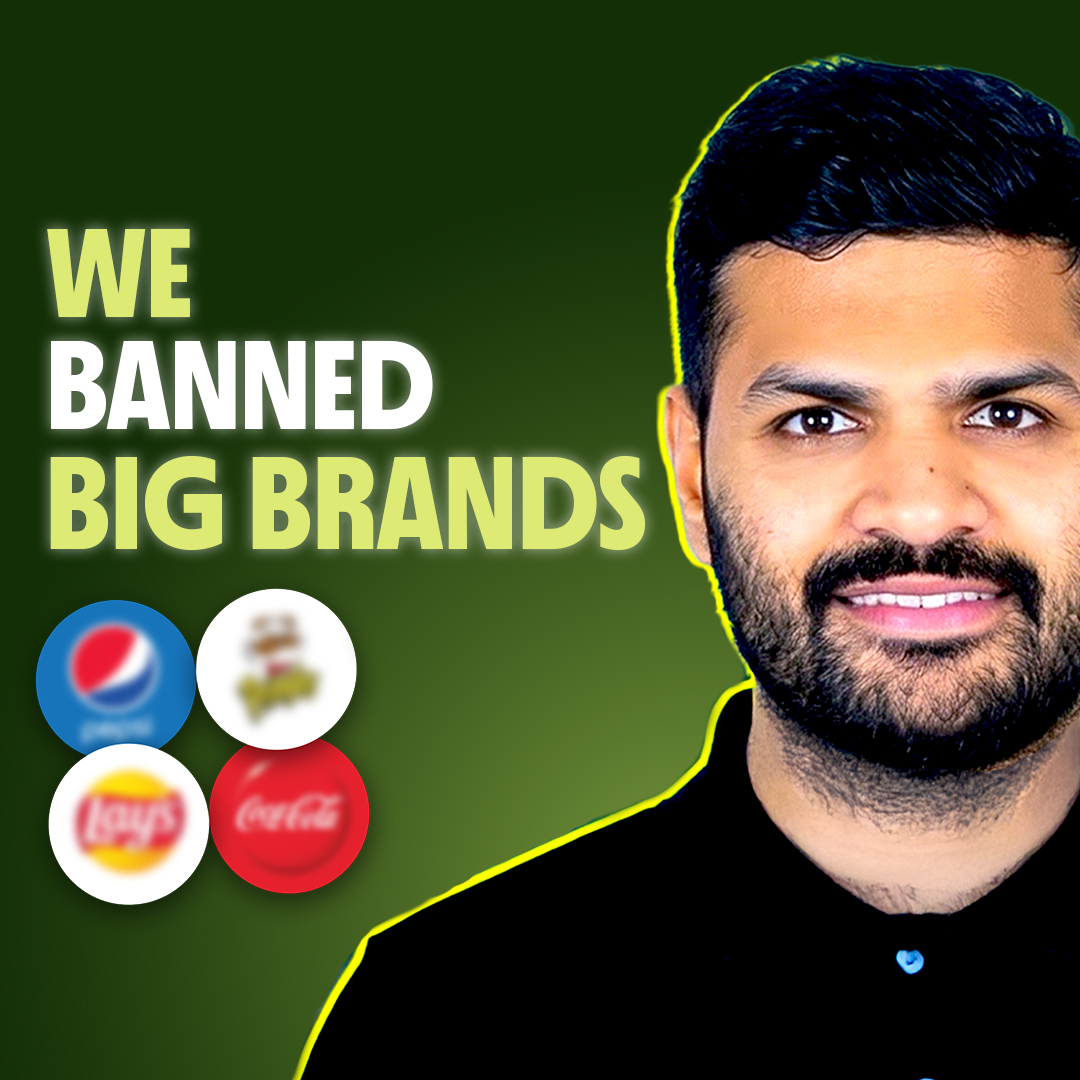
Same with the sodium benzoate, same with the preservative right. So, we are the only platform, we do not sell Pepsi and Coke, we do not sell Lays and Bingos of the world, we do not sell the big biscuit brands in the country right. And this is like saying that oh my god ok, these guys are actually walking the talk saying that I am not going to sell, even though it might be giving them the short term business, profit all of that right.
So, that is the way we started saying that I am different and I am going to earn your trust by doing things which are going to be very tough for any retailer to do it and that is our starting point. Second, we are the only platform to say that I will lab test every single product and put the reports for you to see and I am a platform, I am not a brand, if I am a brand people will say that oh obviously you will say this. I am saying like this is my elimination criteria, this is not my selection criteria, this is my elimination criteria.
If any of the brands go through the test and fails, they are out of the platform and you would not believe the big brands have failed the test right?
Nansi Mishra 12:36
And why do you think that all these other big players building in quick commerce, they can’t solve the same problem, why can’t like maybe there will be a day they would also start claiming the same thing that.
Ayyappan Rajagopal 12:50
I challenge anybody to say that let them ban 200 ingredients and say that I will take all the big brands out of the platform. For them 60 to 70% of the business are coming from products which have these ingredients. So to gain something you need to lose something, are you okay to lose that?
Nansi Mishra 13:07
Yeah, everyone has a long way to go.
Ayyappan Rajagopal 13:11
So yeah and I am under boiling, in biscuits 95% of the products that are sold in the country have these ingredients.
Nansi Mishra 13:18
So we don’t have any biscuits in Firstclub?
Ayyappan Rajagopal 13:20
We have, which don’t have any of these ingredients. So freshly made cookies without preservatives.
Nansi Mishra 13:26
And I also like it a lot that there are so many Indian founders starting consumer brands and they know like what kind of weathers we have in different cities in India and what are the problems we as Indians are having health problems and they are trying to solve those problems and like we like consuming ghee. So we have, I think Two Brothers is one company I really like.
Ayyappan Rajagopal 13:51
Yeah, yeah. No, I think there are small, medium, big, there are at multiple scale, the kind of brands who are coming into the ecosystem is crazy. 10 years back, I don’t think this platform could have been built because you need supply.
End of the day, what are we trying to do? We felt overall Indian’s income and sort of ability to spend and understanding and awareness to spend all of that has been going up. Post COVID, it clicked the flip for everybody.
You know what, now I’m not going to focus only on like saving. I’m going to spend as well and I want to spend on my health, I want to spend on my family and so on and so forth. So when that happens, you immediately start thinking that, okay, I want to buy better.
I want to spend better. I want to travel better. Everything gets better.
That better thing sort of starts ringing in your ears. Now for that to happen, the available places or the accessibility to such selection itself was way too limited. Or if you need to get a good quality, traditionally we’ve always seen that it has to be expensive.
Then you cannot build a product which can be democratized to multiple millions of the Indian households. For that to happen, you need the price point also to be sharper. For that to happen, you need good enough supply as well.
Only then the supply at the right price creates and unlocks that sort of demand. So for us, that happens through so many need to see brands, so many founders, so many intelligent minds coming in and saying that I am going to create a category and which is going to be very different from the existing ones, right? So whether we take dairy, whether we take bread, whether we take eggs, whether we take snacks, the number of products, the number of brands, the number of categories we are seeing today who are able to make a much better quality product with much better ingredients are so good today.
But they are lacking a platform. Now they know that, okay, I can create a product. I know how to do this.
I know that this is a white space that exists in the market and I want to do this. Now after this, what do I sell? Where do I sell?
Now if I sell in this platform, I need to pay X percentage commission, Y percentage monetization and ads. So net net, all the price itself gets my margin to be wafer thin, which means that I need to spike my price, which is making unaffordable for the consumers. That is what we are trying to break.
So it’s not just about one or two brands. I mean, Cosmix was a brilliant example. The plant protein company, right, while Whole Truth is also doing an amazing job.
Cosmix came in and made like, they iterated so much before landing on the final product when it comes to plant protein and it’s so good, right? And it’s so easy to digest all of that and who would have thought 10 years back India would be able to create such products, right? So this is happening category after category.
The cookies we have, a very small baker, so she bakes like one or two cookies within one pack and then sells in a pack of one or two. The sort of demand that we have started seeing and the repeat that’s happening is crazy. So it’s called Lil Miss Cookies.
So this story goes like in category after category. Now it’s about like giving them a platform to them so that they can continue to focus on what they are good at, which is creating product.
Nansi Mishra 17:01
So you are saying that the, for them the platform fee is also much lower than other platforms.
Ayyappan Rajagopal 17:08
Correct. Yes. What we tell them is that if the brand is liked and loved by consumers, if your acquisition cost and your retention costs are going to be lower, then fundamentally you can pass on that pricing to the consumer.
Then more consumers can use it. With more consumers using it, your scale of production is going to get better. Again you are going to get cost goodness, pass it on again to the consumers.
So we are happy to work on a lower margin. You should be okay to work on a lower margin as well because you are not going to invest in other places. It’s not like I’m asking you to work on a net margin at a lower level, right?
This way it creates a very different sort of an equation.
Nansi Mishra 17:45
Other brands if you can name.
Ayyappan Rajagopal 17:47
Few more brands like this, okay. In Atta there is GoSwasthya, there is Mill Story. These are the two brands I could think of.
Then in snacks we had this Origin who makes like amazing chips across multiple categories. Then NoCap is another interesting brand. And we have our own brand.
Nansi Mishra 18:07
NoCap, what do they do?
Ayyappan Rajagopal 18:08
So they are into snacking, very different flavors, jalapeno and these are made without palm oil. So kids love it. So in my community, for example, it’s a rage about NoCap.
So like every kid talks about like, I’ve tried these three flavors, now I want to try the fourth flavor. It’s more like that. So the taste profile, the flavor profile, all of that is very differentiated.
In Staples, there is a brand called L World, which is a US FDA certified brand. They are one of the very few brands who exports Staples rice from India to US. And we found them without preservative and without all the fumigation and all of that, they were able to get a very good quality Staples here.
So they are another interesting brand. So it’s like category, Provilac is another brilliant example, high protein milk. The number of products which have high protein with low calorie with no sugar is very limited.
So they have been able to crack that product by ultra-filtration process. So you can see that product after product, there is an innovation at the product level, which is enabling them to create a much better quality product. And that’s the way we have been able to select.
Nansi Mishra 19:26
And Ayyappan, for quality, do you think access is the problem or income is the problem?
Ayyappan Rajagopal 19:32
I would say firstly, the awareness is the most important thing, even more than access and income. Right? If I don’t even know what does quality mean, then how do I seek through access or income?
Right? If, for example, you drive an auto car or a manual car, whenever you drive.
Nansi Mishra 19:53
Auto, not auto car.
Ayyappan Rajagopal 19:58
But largely, people around you are driving an auto gear car, right? 20 years back, if you had asked a manual driving car person, like what is quality of driving for you? They wouldn’t have even said it’s auto because they don’t know what does auto car mean.
Auto car as a technology did not come in. Same thing that’s happening for self-driven cars from Tesla and so on and so forth. Right?
So the awareness of the quality itself is a huge problem, especially in a country like India. We have gotten so used to regular products, we think that is quality. If a brand name is there, we believe that is quality.
So that is changing now. People are questioning. People are reading the ingredients.
People are saying that, oh, it has to be tasting better. So that questioning part is the most important piece and hence I would put awareness first. The second part, I would say, it’s the accessibility more from availability point of view and also the right pricing.
That also makes it accessible. And hence, it’s a problem that you need to solve together. But if you need to have a very hard question between access and the income, I would say access.
Yeah.
Nansi Mishra 21:03
That’s how you have also priced your products in Firstclub that the milk that is premium in quality is not double its price.
Ayyappan Rajagopal 21:11
Exactly. Exactly. A single origin milk which is without growth hormone and antibiotic need not be 40 rupees for half a litre.
It can be available at 28 rupees for half a litre. Organic milk doesn’t have to be 45 rupees for half a litre. Organic milk can be 38 rupees for half a litre.
So then you make it accessible. Firstly, you are creating those products and putting it out there and then yes, of course, the pricing also can come as an impact.
Nansi Mishra 21:33
And you are saying that you are building Firstclub for 20 million customers. So are these 20 million customers educated or this is the job that you will be doing as part of?
Ayyappan Rajagopal 21:43
It’s part. I think there are two cohorts of consumers. One who are very well aware.
They can teach us what are the right ingredients to have and not have, right. They are super highly involved and we learn a lot from the consumers when they speak about like, hey, you know what, these are the things and you should not be looking at this, you should be looking at that. So we have learnt a lot as well from this customer cohort.
But the bulk of the consumers, they don’t know, they are not aware. So and hence the awareness creation is going to play a larger role with respect to how we create this base itself. But that is also changing by age group.
I will give a very simple example and explain that. Sitting here we will be thinking, yeah, bread consumption will be XYZ in the country and out of that probably people would be moving from a maida bread to a whole wheat bread, right. And at a country level if you look at it, not more than 5% of bread sold is sourdough breads.
How many Indian consumers know sourdough, then know how to use a sourdough. What do you do with a sourdough? You can’t take a sourdough and put a butter and jam and consume, right.
In our platform, one third of the breads that we consume is sourdough breads and that is because of not just the income level, not just because they are travelling, it is the age group that is shopping also. The 20 to 30 need not be taught with respect to what is a sourdough bread. They watch K-drama, they watch international movies, they go, they don’t understand domestic vacation, they do only international vacations, even if it is a Southeast Asia, doesn’t matter, right.
So, the age group is unlocking a very different awareness cross exposure which is enabling the understanding of the quality in a bigger way.
Nansi Mishra 23:14
But this 20 million is like, you have built this category by income they are earning, right. So, half of them maybe they are educated, but half of them are not educated, but they are, they can spend more on healthy items.
Ayyappan Rajagopal 23:32
Correct. I think the awareness with 20-30% of this base would already be aware, the 70% needs that awareness, but I know that in one category they understand what does quality mean, then they don’t need to be educated across multiple other categories, then they start trusting the brand and that brand is Firstclub. So, for them, okay, they would have done all these checks, I don’t need to break my head, keep it, make it simple for me, that is what I want.
Nansi Mishra 23:57
Yeah.
Ayyappan Rajagopal 23:57
So, any big brand, whether it is an electronic of Apple or Tesla or a very very simple product, anything in life you look at it, if it has to be scaled up, it has to be simple. Don’t complicate, don’t confuse the customers, don’t say that I have gotten everything, now you decide. More information confuses the consumers.
Nansi Mishra 24:16
That’s one of the principles for Firstclub. And 1% of India shops groceries on QuickCommerce, right? Still like founders, investors are just so excited about QuickCommerce, like how do you see that?
Ayyappan Rajagopal 24:34
Yeah.
Nansi Mishra 24:35
It’s still a very small…
Ayyappan Rajagopal 24:37
It’s a, yeah, yeah, I agree, retail is a 1 trillion market, out of that, if I’m not wrong, 55-60% is the grocery, right? It’s such a massive space, 600 billion dollar every year getting spent in the country on grocery, right? Now, most of the startups which have a very large sized outcomes, you should be able to show that I have a massive headroom to grow.
So, that applies naturally to QuickCommerce. It is still only 1% of the penetration. Second, there is a scale benefit that is going to come in, which is going to enable from a cost, efficiency, and the way your dark stores are being set up, the density is going to help your cost structures, all of that put together.
So, and hence it’s a combination of what is the total addressable market, you are looking at a massive market firstly, and food as a space is going to continue to grow. There is like anything else can come down with AI, but one thing that will never come down is the grocery spend at home, right? So, hence it’s always okay to take bets on these categories, which is going to see that sort of consumption.
And to me, grocery is just one category of what QuickCommerce as a channel is going to solve for, right? Already we are seeing like multiple categories getting disrupted. Even for us, grocery is a starting point, that’s not the destination, right?
We want to launch home, we want to launch beauty, personal care, why not buy an insurance plan on us? So everything, net net, you should trust us that we’ve got the best in the market at the best price. And if you’re able to do that, then the market size is so massive.
Nansi Mishra 26:08
What are the other gaps that you’re seeing? Like people are very used to of ordering grocery online, especially in tier one cities. They are now also very used to of receiving it in 10 minutes, 15 minutes.
So you, you know, notice this gap that people care about delivery time, they care about, you know, getting it online, they don’t want to visit the offline stores, but quality is still one factor that they care about, or they should be caring about when they get educated, right? As you said, what are the other gaps that you’re seeing? Because grocery is a large category.
Ayyappan Rajagopal 26:49
Yeah, yeah.
Nansi Mishra 26:51
Like before starting Firstclub, I’m sure you would have thought about a lot of these gaps.
Ayyappan Rajagopal 26:56
Correct. Yeah. So to me, firstly, the defining the quality was the single biggest problem statement.
Because quality is a very abstract word. Will any brand say that I am a low quality brand? Everybody is going to say that I’m a high quality brand.
So for us, the larger problem statement was, how do you bring in quality as a definition and quality as a talking point amongst the households, where what you’re buying today has become normalized, right? Same thing you’re buying. Did it change from the mom and pop store to a supermarket, to e-commerce, to quick commerce?
Have you changed your grocery brands? It will be the same set of brands that you’d have purchased, right? The channel shifted.
So most of them are taking share from the other channel. In our case, the starting point was like, no, this is not something that we want to sell to the consumers. We want to define quality.
We want to ensure in each category, we have a very sharp definition of what quality is going to stand for. So in atta, what is that quality going to be? In snacks, what is the quality going to be?
Now with grocery sort of fairly clear in our head, now we are thinking in beauty and personal care, when it comes to cosmetics, when it comes to personal care, when it comes to moisturizer, when it comes to sunscreen, how the quality has to be defined. In home and kitchen, we are thinking about, in the chopping board, what is better quality. Is any wooden chopping board better? No. It is actually only bamboo which is of a good quality, any other wooden board is not of good quality.
But 95% of the Indian consumer households will not even use wooden, they will use that white plastic thing which has microplastics coming in. So, this definition itself is such a large problem statement across multiple categories. So, this is one as a gap I see.
Second is how do we get these products at a price that we believe that everybody can start using it and that is where the democratization is going to happen. So, working with the manufacturers, working with the farmers, working with people who understand quality at the source level, we want to be super integrated with them. That enables the again the discovery of the quality and the price together.
So, to me when I see as gaps, it is about gap when it comes to understanding of quality, making the quality accessible and making accessible not just from the availability point of view, but from the pricing point of view also. These are the gaps. Now, the same meta definition can be applied to any category and I would see the same gaps existing everywhere.
Nansi Mishra 29:21
But do you think it is going to be even more challenging for you guys in the coming time because first problem is getting all these customers who know how to order online or how much time will take to Firstclub and then once they are there on the app, they are not seeing the regular brands. Like if you type Dhaniya, you know that these are the three brands that would come and maybe there is no difference, but you know that which brand, which company you would want to click on.
Maybe it is Aashirvaad or MDH or and soap category maybe people would not even write soap. They would write Dove. They would write Pears.
So, like first problem is like getting them to the platform and then once they are on the platform and they are searching for any particular item, when they see these new brands.
Because if anything that is not familiar, creating trust for that one product is challenging.
Ayyappan Rajagopal 30:20
No, very, very fair question and very good question. That is why we keep saying that we are not building a platform. We are building a brand.
Here before you come into the Firstclub itself, you should know that you should start thinking and believing that, okay, whatever I am going to buy, these guys will have the good brands. If the brand that I am used to is not there, then there would be a reason why is it not available there, right? And that sort of takes time to build.
In certain cases, we have been able to build. In certain cases, it’s a work in progress. We are still a nine-month-old brand from that perspective.
But the important aspect is consumers, we have all hardwired them into thinking that if I think Lux and Dove are the good quality soaps, they will not shift. Or this is what they bought like 10 years back, and this is what they will continue to use for the next 20, 30 years. So you need to explain to them what is the best way in which I can offer a better quality soap for you.
I’m not saying Dove is a low quality or a high quality, by the way. I’m saying that for any search, for any brand-related search, if you’re able to showcase that there is a much better quality brand available and at this price, consumers would be okay to build. This starts from the fact that, think about it.
Now when you go into a mall, before you step into Levi’s, you know that you are planning to buy a denim jean for you. Most of the times, we make the decision beforehand. In most other commerce platforms, the decision to buy the product comes after going into the app and say, or I would be thinking, oh, I want to buy this toor dal, and then I will go exactly search the toor dal, and then I’ll get it, and then I’ll buy.
This is my purchase pattern. When it comes to Firstclub, people browse a lot. People order 10 to 11 items in a basket.
And the reason why it’s happening is people spend a lot of time on the app. And that reason is again like, you know what, there are like so many good products. There are so many good brands.
Let me browse, let me discover, right? The idea itself is to break. Grocery is not a chore.
Grocery is the thing. End of the day, you’re putting it inside your body. Whatever you as an amazing gadget, living in a house, all of that is good.
But what you put inside your body, you need to be super conscious about. That is what you’re going to become. Maybe you were getting aware now, or 10 years later, or 30 years.
Nobody can escape that sort of a journey.
Nansi Mishra 32:38
So initially, they’re coming on Firstclub, they’re browsing, like what are the other brands we have? And maybe out of these 20 million, 5 million people will be the early adopters who will be spending a lot of time reading about different products in the same category.
Ayyappan Rajagopal 32:55
Correct, yes.
Nansi Mishra 32:56
And then next time when they are there on the app, they know which one they want to buy. So they’re developing a similar familiarity in that category that they had earlier for other traditional brands.
Ayyappan Rajagopal 33:08
Exactly, and all of this drives trust, right? Now you go to any other platform, any platform, right? Whether it is Amazon, Flipkart, or QuickCommerce, right?
You go and search. What are the top two products you get on the platform? On what basis do you think it comes?
The top two products that you see.
Nansi Mishra 33:24
Maybe most, like…
Ayyappan Rajagopal 33:26
No.
Nansi Mishra 33:28
Most liked.
Ayyappan Rajagopal 33:29
No.
Nansi Mishra 33:31
Sponsored.
Ayyappan Rajagopal 33:32
Exactly, right? Everywhere you would go and see that there is an ad written on that, and that is where most of the platforms are moving towards. Why?
Because they are not able to make money from selling the brands. They need to start monetizing. It is a load for the brand, it is a load for the consumer, but net-net, will you start trusting the platform that, oh, whatever they show as the top two are going to be there?
That’s the exact point. In our platform, for example, it is going to be a zero PLA platform. No product level ads at all.
Nansi Mishra 34:00
But going forward, do you see that as a challenge in monetization?
Ayyappan Rajagopal 34:05
We can do monetization in other ways. We can do sampling for consumers. You have bought one particular biscuit packet.
I’m offering you another brand. That is also monetization. You come into my platform, I sell an insurance.
That is also monetization, right? And if you are a brand, for example, Akshayakalpa, right? You have launched a new buttermilk, this one.
You want to run a video ad saying that, why I launched buttermilk on the platform. That is also monetization, but that is not product level ad. When a consumer trusts a platform and says that I am typing this, and that uninformed consumer will not even know.
You are so informed and you are so aware of the startups, everything, and the first thing you are thinking is most liked, right? Which is not the case, right? Scientifically, just go and look at it.
You do any search, the top two will always be the ad products, right? Just goes on to show that over a period of time, you can build the trust, but you need to stay true to that trust to gain the trust from the consumers.
Nansi Mishra 35:00
And Ayyappan, also tell us about different consumer habits that you got to learn about before building FirstClub because you led large scale businesses. You were chief business officer of Myntra. You led Cleartrip, a lot of like you have served across categories, electronics, FMCG, consumer, travel, like how same set of consumers behave differently while buying different products.
Ayyappan Rajagopal 35:30
Yeah, good question. You cannot put consumer as mass, mass premium and premium. That’s a very, I would say unintelligent way of putting the consumers into that.
There are only use cases you can put it that way, right? For me, I want to buy electronics and for me, Apple sort of an ecosystem is needed and I’m connected across my devices. So I was important.
So there I will not sort of compromise, right? And there I would buy, say an Apple. The moment I go into a T-shirt, I’m like, I’m okay.
I’m okay with Decathlon, good quality, 800, 900 rupees T-shirt they’re giving and it’s good. But I can also say that, oh, I’ll go to Lululemon and I’ll buy a 5,000 rupees worth T-shirt also. But I’m not thinking like that, right?
So the use cases of the consumer is a lot more important in determining what is the driving point or what is the consumer insight that as a consumer I am looking for when I purchase that category. So understanding that nuance is going to be super important, number one. Number two, in any category that you build, you can think the category as a market creation opportunity or a market share opportunity.
What do I mean by market share opportunity? Like I told you earlier, like people will move from one channel to the other buying same products, that is just a market share opportunity, right? But the market creation opportunity is, I’ll give an example in what we did in smartphones in Flipkart.
So we felt like, oh, most of the Indian brands are getting cheap phones from China, putting their label and selling it for under 10,000 rupees. And then the good brands like Samsung, Apple are selling products at upwards of 20,000, 25,000 rupees. We felt, oh my God, no.
We believe that India would love to shop between 10,000 to 15,000 rupees smartphone, but there are no options available, good options available. So we brought brands into the country like Xiaomi to Motorola to Realme to Asus and all of these brands. And we told the brand that you don’t have a distribution cost, pass on the cost to the consumer.
We’ll also operate at an X percentage margin. So that way you’re able to give, create that accessibility to the consumers and the market itself got created in 10 to 15,000. Today, if you go and look at IDC data, which is a smartphone share data, the single largest segment in the country is 10 to 15,000 rupees.
So that was the case two, three years back. I don’t know whether it is now 15 to 20,000 or whatever. But the point is consumers buying pattern will evolve and it changes from category to category.
You should go deeper in understanding like what is the reason why they’re buying something. If you’re able to create that aspiration and make it accessible, a very different industry and market can be created.
Nansi Mishra 38:01
Any interesting learning that amazed you, like how India truly behaves when it comes to buying smartphones or buying fashion. Because these categories are totally different because people would stick to one category and they’ll switch companies. But for you, it was travel, consumer, fashion or electronics and fashion.
Ayyappan Rajagopal 38:23
So it is, I think in the fundamental behavior that changes from category to category are different. Smartphones is a very search and buy sort of a category. People would know that either I want this particular model because I saw my friend using it and then I would want that.
Or I want an amazing camera phone and all that I want to optimize was for camera. At some point of time, there was like every smartphone brand in the country we talk about, I have one camera, I have two camera, I have three camera. There were, I think four cameras, if I’m not wrong, that came in also.
So everybody started saying that, but by putting four cameras is going to make the images better, probably not. But all that they cared for like, okay, you know what? Four cameras in there, my phone has four cameras.
And that is what the talking point was. So there are like informed and uninformed consumers in every category. And if you’re able to sort of build for both the sets of audiences, it’s important.
End of the day, the consumers know better what they want. And then you will be able to build very different portfolio, supply, selection, everything changes. Fashion, I’ll tell you, right?
Amazon and Flipkart have always been selling fashion. Myntra is a very different fashion platform. Myntra did not have a very large selection compared to Amazon and Flipkart, the number of products.
Same with pricing. Myntra did not sell it for a cheap price. Myntra did not give a faster delivery.
In spite of that, Myntra is a much larger brand when it comes to fashion, right? Of course, it’s part of Flipkart group, but Myntra as a brand is a much more powerful brand when it comes to fashion. And the reason is like, you need to talk to the consumers when it comes to about the category in the true sense and not commoditize it.
Whenever you are able to sort of make it from a commodity to a brand, then the brand lasts and gets built over a long period of time. So that is super important. And this pattern you would see across multiple platforms, categories, wherever the browsing happens, you know that people love the app, people love the platform, people love the brand.
If it is just a search, it’s a very transactional relationship. If this company shuts tomorrow, probably, yeah, instead of this, I’ll move to somebody else. But if the browsing is happening, I’m giving my time, which is even more expensive compared to the price.
So that is what I see.
Nansi Mishra 40:45
You said Myntra is more powerful than Amazon when it comes to apparel category. How do you define a brand? Like if it is successful, what are the characteristics?
Ayyappan Rajagopal 40:57
So the one line summary for me is if that brand doesn’t exist tomorrow, will the consumer like cry or care about it? If that happens, then you have built a brand. If not, you’re easily replaceable.
So that’s like one line summary for me. But when it comes to the traits, if I’m opening multiple apps and then comparing something, the comparison could be on the price, the comparison could be on delivery time, the comparison could be on the ratings and reviews, then I know that I am one of the multiple options and I’m not a brand. So whichever platform has been able to build that, they have been able to command a better brand ownership.
Nansi Mishra 41:38
And you said building a marketplace is easier than building a brand. I think in initial, when we started the conversation.
Ayyappan Rajagopal 41:45
Yeah, yeah. Because see, until you build the marketplace as a platform, it is tougher. The moment that marketplace platform is built, then the engine is set.
You can keep feeding selection into it, pricing will get automatically discovered because all the sellers will be fighting with each other to get the cheapest price on the same product, consumers benefit, so that flywheel sets in. But brand, day in and day out, you need to stay true to the promise that you made to the consumer, that this is what I’m going to stand for. And the moment you drop that, consumers will come very hard on you and your core loyal consumers will come hard on you.
And when that starts happening, then you again become like an everything store, you are not standing sharper for anybody.
Nansi Mishra 42:29
And Ayyappan across consumer fashion, electronics, travel, what category excited you the most? Like, you loved working on one of these categories. But, and, you started in Quickcommerce.
The question has two parts.
Ayyappan Rajagopal 42:49
Yeah, so personally, I love electronics. As a kid, I’ve always loved electronics. So that is the reason, one of the reason why I wanted to manage a gadget category.
So I get fascinated, even today, if some new gadget is in the town, I’ll be the first one to go and get it and sort of use it. I just love gadgets. So because of that, electronics, smartphones, laptops, whatever I’ve sold in the past is very close to my heart from a personal perspective.
But I learned a lot by selling fashion. Because fashion has a very different level of complexity when it comes to consumer preference, consumer understanding.
Nansi Mishra 43:24
It’s more emotional than…
Ayyappan Rajagopal 43:26
Exactly, it is not a quantifiable proposition. You cannot convince a consumer. The moment they don’t like a dress, you can’t convince, hey, you know what, this dress is costing 100 rupees less.
They’re not going to get convinced because of that. So, and hence, any non-functional category is always tougher to sell. But that’s where the challenge also is.
That’s what is even more exciting. So hence, for me, Myntra is very close to my heart or fashion is close to my heart from that perspective. But, yeah.
Nansi Mishra 43:54
From a learning point of view.
Ayyappan Rajagopal 43:55
From a learning point of view and the challenge sort of a point of view.
Nansi Mishra 43:59
Maybe what you learned in all these companies, you had to unlearn when you…
Ayyappan Rajagopal 44:04
Moved into Quickcommerce. It’s part, I’m a big believer that…
Nansi Mishra 44:10
Or maybe it’s men versus women category because fashion particularly, I have seen more women using Myntra than men.
Ayyappan Rajagopal 44:20
Of course. So more than 65% of the consumer are women in Myntra and in Flipkart, you would see it to be the other way around. So it’s very clearly the pattern, you’re right.
But see, I’m a big believer that you are your choices end of the day. And whatever you’re doing today, you will be able to understand a lot of things in life by only looking backward, connecting the dots, looking backward, right? So if you pinpoint and ask me that, you know what, what has enabled you to do this?
It’ll be very tough to say. You know what? I started my career with selling grocery, cigarettes on a hawker cycle.
That’s the training ITC makes you to go through, right? Then you become a supervisor, then you manage a smaller territory, then you manage a larger territory, you’ve been selling grocery. Then you move on, sell smartphone, furniture, fashion, travel, all of that.
Then it’s sort of you come into a very different platform idea that, you know what, I want to build something like this. You are an amalgamation of all the learnings and experiences that you’ve gone through. And you’re going to take the best part of everything that you have seen and staying true to the cause that this is what I want to build on.
So if I need to sort of put down like two things which have enabled me to building the platform that we are trying to build today, the brand we are trying to build today. One is the love the consumers have for Myntra is unprecedented. I have never seen, right?
And that’s so tough to gain, especially in an online platform because you don’t have a physical sort of an interaction.
Nansi Mishra 46:09
Because I remember a lot of other brands also tried the same category, same thing. But I think I can’t even remember the name.
Ayyappan Rajagopal 46:18
Exactly, exactly. There are like, at least, we used to do that count sometime back, 25 to 30 online fashion platforms have been tried in the country.
Nansi Mishra 46:26
And one of the brand was started by a large group as well.
Ayyappan Rajagopal 46:30
Exactly, right? So in spite of that, building that love without having a physical presence, without having any human interaction, how do you generate that love, right? And that was something like a huge eye-opener for me when I was part of Myntra.
Nansi Mishra 46:47
I just focused on this. I never thought about it. When I opened Nykaa, I would see a lot of celebrities.
Like on one, on the homepage only, five products, five celebrities. Can’t think of any other app. Grocery, I have never seen any celebrity, but Orange Health, very nice, amazing company.
I’ve recently started using. Ayushman Khurana, right in front of you when you open the app. But in Myntra, I don’t remember seeing any.
Ayyappan Rajagopal 47:18
Yeah, yeah. That is where I think the brand itself.
Nansi Mishra 47:22
I think something what you said initially.
Ayyappan Rajagopal 47:24
Correct, exactly. I think the days are over where you need to use a celebrity to drive the trust on the platform. Of course, good talkability and all of that, but beyond that, I don’t think that you use a celebrity and then you start gaining the trust.
So going back to the point, one is the consumer love. And especially when you’re building something for women. For us also, 70% of our consumers are women.
We know that if we have entered into the household through women, then we are here to stay. Because they take a lot more time to, it’s a personal belief also that women are a lot more loyal compared to men. So it’s a very consumer behavior thing.
So if you are able to convince a woman, they’ll be able to stay true to the platform for a long time. And Flipkart learning was, you know what, how do you get the product at the price by having efficiencies built in every single node and build a power which comes in these two together, right? A brand which can build something amazing with respect to quality and all of that.
And if you’re able to get at the price that you can, then it’s sort of killer.
Nansi Mishra 48:22
So you’re trying to amplify both the learnings.
Ayyappan Rajagopal 48:27
Yes.
Nansi Mishra 48:28
Interesting. But it’s been some time since you’ve worked with Flipkart. Flipkart was latest?
Ayyappan Rajagopal 48:35
Yeah, the entire Flipkart group, 11 and a half years, was with Flipkart.
Nansi Mishra 48:39
But India has evolved a lot in the last five years. A new founder starting new companies, consumer behavior is also changing. So not across categories, but broadly how Indian consumers have changed.
Like how were they shopping five years back and how are they shopping now? Mota mota if you can just…
Ayyappan Rajagopal 49:01
Yeah, yeah. One, I think very highly experimental. They’re okay to try new things, new stuff, new products, new categories, new brands, right?
You just go tell them that this is available, they would be happy to try. Which is very unheard of sort of a phenomenon till a few years back. So new novelty, experimental nature, all of that is like a big trend in anything.
I’ll give you one example. In Cleartrip, suddenly we started seeing a spike in one of the countries when it comes to search and people starting to travel. We were like, where did this come from?
We did not, usually there will be like sort of US, Europe, Thailand, all of these are known ones, right? There was this, Vietnam started seeing, the packages on Vietnam was going crazy because, hey, you know what? Vietnam is a new thing and nobody is going to Vietnam.
Nansi Mishra 49:50
Instagram effect maybe.
Ayyappan Rajagopal 49:51
Exactly, right? Turkey started happening, Egypt started happening. I’m saying all of these are unheard of.
And if you are happy to sort of go and do that for in a country, like a travel to a country where the food may not be same as what your preference is and all of that, then everything else you would be okay to try. So I think experimental as a nature has gone up, one. Second, living for today versus tomorrow.
Our previous generation always thought of like, Living for tomorrow. Save this, then you will figure out like what to do, right? The living was always through the kids.
Living was through the grandkids. It’s like my life will get sort of fulfilled when my kids do this. Now it’s like, yeah, without guilt, I can say that I also want to live a good life.
Of course, I want to enable my kids, but I want to live a good life as well. So that is, again, massive sort of insight, second. Third, the self-care, self-love, spending time for themselves, spending on health, their own health, right?
All of that is a massive trend. The gym, the physical fitness, the protein, all of that, the reason why it’s becoming big is because like, you know what? Yeah, now I want to take care of myself and I want to look better and I want to be unapologetic about it.
So that is, again, another massive thing.
Nansi Mishra 51:05
How it happened, like across categories, is quality, when it comes to quality, is India one India or we have different layers, quality?
Ayyappan Rajagopal 51:21
The understanding of quality would be very different for different sets of people. For somebody who has never used a cream biscuit, for example, I have just lived on the Parle-G glucose biscuit. For that kid, you go and ask, what is a better quality product?
They’ll say that Dark Fantasy Choco Fills or Milano or something like that, right? For a consumer who is like, I’ve used all of this, but for me, a biscuit which is without maida, without sugar, without artificial preservative, palm oil, this is what is good quality biscuit for me, right? The third one will say that, no, I have experience like international products, local products, everything, the aftertaste needs to be very different.
So the cohorts of quality understanding is going to be different. It will not be one size fit all sort of a philosophy. When it comes to certain categories like fruits and vegetables, sweetness is sweetness for everybody.
The quality parameter is exactly the same. Freshness of vegetables is the same. Dry fruit, when you have almond or cashew, it needs to be crunchy, it needs to be bigger.
It is not going to change from, I will not say, oh, I need lesser crunchy versus you telling have better crunchiness, right? So that I would put it as like commoditized categories. Quality is fairly homogeneous.
With respect to other categories, the quality parameter is different. Base is the exposure that I’ve got so far.
Nansi Mishra 52:45
So we have different layers.
Ayyappan Rajagopal 52:47
Different layers.
Nansi Mishra 52:48
So I saw this very interesting post on FirstClub’s LinkedIn page where you guys were talking about one of the team members, Manu Sasidharan. I found it quite interesting that you guys showed him as a product. That for origin, it said he’s from Kochi.
For ingredients, it talked about his qualities. And for allergens, it says that he’s highly, severely allergic to procrastination. I loved it.
Very clever post. How would you define yourself as a product?
Ayyappan Rajagopal 53:28
As a product? Okay, I didn’t expect that.
Nansi Mishra 53:30
Origin?
Ayyappan Rajagopal 53:31
I didn’t see that coming.
Nansi Mishra 53:33
We will start from origin.
Ayyappan Rajagopal 53:34
Origin, okay. Origin, Chennai.
Nansi Mishra 53:39
Okay. Ingredients?
Ayyappan Rajagopal 53:39
Ingredients. Ingredients, highly impatient.
Nansi Mishra 53:46
High bias for action.
Ayyappan Rajagopal 53:47
Yeah, high bias for action. Don’t want to settle down for anything. So I want to keep pushing the bar.
And anything is possible is the strong belief I have when it comes to doing anything in life. And I love variety, whether it comes to eating, sports, watching, whatever it might be. I love variety in life.
So that’s another ingredient I can talk about. What else?
Nansi Mishra 54:15
Allergens
Ayyappan Rajagopal 54:15
Allergens, okay.
Allergens, I don’t know whether I can use the word, but I can use the acronym. BS, I can’t take BS. People sort of coming and talking about things more than what they do is something that I can’t take.
And I believe like most of the times.
Nansi Mishra 54:35
What’s your immediate reaction?
Ayyappan Rajagopal 54:36
Stop BSing. Let’s get to work. And largely I’ve ensured like people who work with me for a longer period of time, they don’t do that.
So yeah, so I think that way, that also comes from the impatience also, yeah.
Nansi Mishra 54:51
Very interesting. The last question is, what’s the hardest belief that you’ve had to defend while building Firstclub?
Ayyappan Rajagopal 55:00
It’s the, for the entire company that we are building, it’s for all employees that initially people thought the market will be too small if we are trying to eliminate so many products and so many brands. Day in and day out, I used to get the questions from, not just from the company, from investors who passed on us, right? Thinking that, hey, you know what?
This is going to be a very small sort of a segment. You are trying to build for a very niche sort of a set of people. And especially if you eliminate all these brands, like how many consumers would come and shop and all of that.
But I believe very, very strongly that if you’re true to what you’re trying to build, if you’re building for the next 10, 20 years, and if you believe this is where the larger part of India is going to move, this will create the market. And this will show a very different consumption pattern will happen in the country. And that way it solves a lot for the consumers, a lot for the brands who are trying to build amazing products, and the people who are building it to believe that many more such platforms and things can be built by taking very hard decisions.
Even though you don’t have big brands on your platform, you can still build a massive consumption from the consumers, their love, all of that is possible. If you’re very genuine and honest about what you’re trying to build.
Nansi Mishra 56:34
And then what are the consumer brands or platforms, companies that you really like for the same reason? Like who have literally set the example across categories?
Ayyappan Rajagopal 56:44
Yeah, yeah.
Nansi Mishra 56:44
Geographies.
Ayyappan Rajagopal 56:46
The first example that comes to my mind is Akshayakalpa.
Nansi Mishra 56:49
I love them.
Ayyappan Rajagopal 56:49
Yeah.
Nansi Mishra 56:50
How Shashi is building it.
Ayyappan Rajagopal 56:51
Shashi and team has been at it for almost two decades, and they’ve been at it, and it’s one of the most toughest categories to build, because you’re trying to change things at the source level. He’s educating the farms, the farmers, like what needs to be fed to the cattle. So it is a change at an origin level, and then trying to percolate that difference across.
So brands like Akshayakalpa is a massive sort of an inspiration. The recent example being hold to Shashank and team, what they’ve been trying to build, right? So I think two different kinds of people, I’ve interacted with both of them.
Both are very different types of people, different generations, different thought process, everything. But from a vision point of view, they’re- Different backgrounds. Very different backgrounds, exactly.
Very, very different backgrounds.
Nansi Mishra 57:39
Shashi comes from tech background, Shashank comes from Unilever marketing background.
Ayyappan Rajagopal 57:43
Exactly, right? But the goal is very similar for them, to ensure like put in the honesty and integrity back into the brand. So I think all of these people are doing amazing stuff.
Nansi Mishra 57:55
Maybe I’ll try to answer this question, because I’ve seen few interviews, and in one of the interviews, interviewer kept, you know, calling Firstclub niche brand. And I could literally sense the frustration in you. That you know what, we are not a niche brand, we are a premium brand.
Ayyappan Rajagopal 58:16
Yeah, it’s a…
Nansi Mishra 58:17
Maybe, maybe something people, people tried to label first brand, Firstclub.
Ayyappan Rajagopal 58:22
Yeah, yeah. See, when, life in general, like when you don’t understand something, what do you try to do? You try to label something saying that nahin, yeh misfit hai, yeh niche hai, yeh premium hai, because that is all the understanding that I have got.
What is that they are trying to truly build, you need to have that sort of vision to understand that okay, this is what they are trying to build, which is fine, I mean, I don’t expect everybody to understand everything on day one. If that is the case, then, and all large outcomes in the world have been built from antithesis and not from thesis. So, when you question like this is the way things happen, people will brand you as like you are the niche and all of that, but when this becomes the norm, the other one will become the exception.
Nansi Mishra 59:01
Yeah. Thank you Ayyappan, it was great chatting with you. I learned a lot about different categories and time frame, how India used to shop five years ago and now how do we shop and lot of other things and I am going to use Firstclub lot more.
I have just joined. So, I really love the packaging and the note that you guys send. So, we will be more regular, not because I hosted your podcast.
Thank you so much for your time.
Ayyappan Rajagopal 59:30
No, thanks Nansi for having me. It was a very good discussion. I enjoyed it thoroughly and all the best to you and the team.
Nansi Mishra 59:37
Thank you.
Ayyappan Rajagopal 59:38
Thank you.


Know when new episodes are released. Subscribe to our newsletter!
Explore Playlist

How Anjali Sardana Built a $200M Company in 1 Year

What Went Wrong Before iD Fresh Worked | For the First Time Co-Founders Tell Their Story