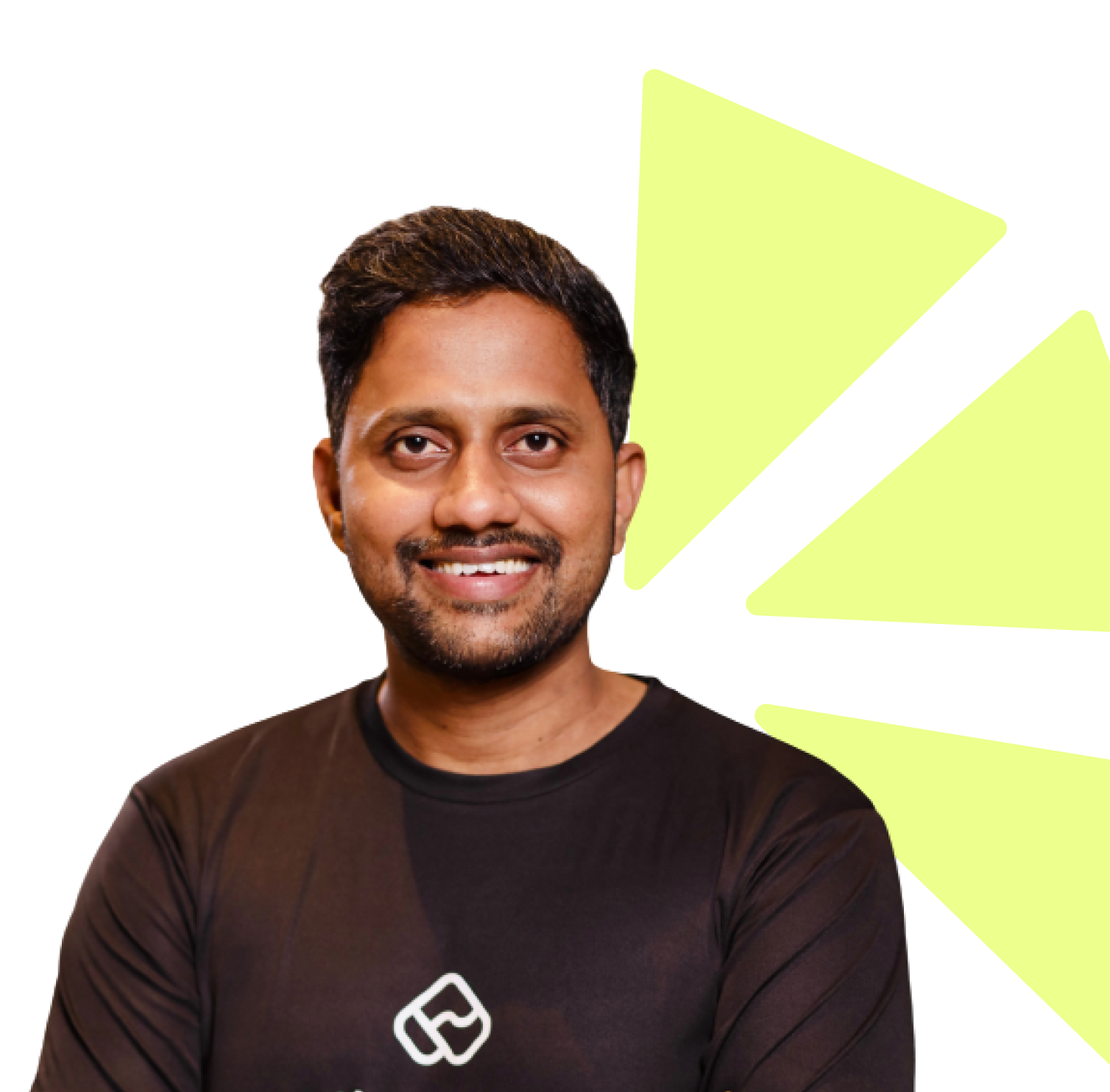
Kandan’s son was born, and his pager went off.
“I carried a pager for decades. When my son was born, I received a pager alert. I thought it was from the hospital, but it was a production outage that lasted three days. Instead of spending those first three days with my newborn son, I spent them troubleshooting the outage,” Kandan, Founder and CEO at MantisGrid AI.
He tells it without drama, which is the part that should worry you. That is not one bad night. It is an operating model the industry accepted as normal and never revisited. Twenty years later, we are building AI factories on top of it.
Everyone talks about an agentic world. The infrastructure underneath those agents is still dashboards and 3 AM pages.
At Neon, we look for founders whose scar tissue is the thesis.
The Rule That Just Broke
The hyperscalers taught the industry a rule: buy cheap machines, assume they fail, write stateless software that shrugs it off. That idea built the modern cloud.
AI broke it. GPUs are ruinously expensive again, and the workloads on them are deeply stateful. Lose one GPU in a run spanning thousands, and the entire run fails. When Meta trained Llama 3’s 405B model on 16,384 H100s, the job hit 466 interruptions in 54 days. 419 were unexpected, and roughly 78% of those were traced to hardware. A failure every three hours.
Observability got very good at collection, and collection produces volume no SRE team can digest. It tells you signals were gathered. It cannot tell you why, and it cannot act.
Knowing why a fourteen-day training run died does not give you back the fourteen days.
The Tension Nobody Is Pricing
Neoclouds have committed billions to scarce GPUs, and their model depends on selling that capacity fast and keeping it utilised. But failure rates are high, visibility is poor, and every hour a dead node spends coming back is unsold inventory. They cover it the only way they can: by pricing failure risk into what they charge.
Enterprises are deploying agentic AI at a cost that must survive a budget review. Inference costs will keep falling. What they underestimate is that their total cost is increasingly set by hardware efficiency they neither see nor control.
Both sides are paying for the same unreliability. Twice.
MantisGrid sits on that seam. Predict failure and raise utilisation, and the neocloud’s margin improves. Automate recovery, and the enterprise gets reliability at lower cost. It sells to the buyer and the seller of the same scarce resource.
Scale forces it. You can staff a thousand GPUs with humans. You cannot staff a hundred thousand.
Why They Built Their Own Models
Every company in this category now claims an AI-SRE. Most wrapped an LLM around a log stream.
MantisGrid tried that first, then stopped. Token economics do not survive contact with telemetry. Enterprises will not send infrastructure data to an external lab. And there is a deeper objection still.
“You cannot run a nondeterministic probabilistic model on deterministic production infrastructure without risking catastrophic failures,” Kandan, Founder and CEO at MantisGrid AI.
So they built their own, with proprietary world models and graph neural networks. A graph is the honest instrument here, because infrastructure is one. A GPU’s thermal drift, a network retransmit, and a scheduler decision are not three events. They are three nodes on one path to the same outage. A text model was never built to see that path.
Best in Class Team
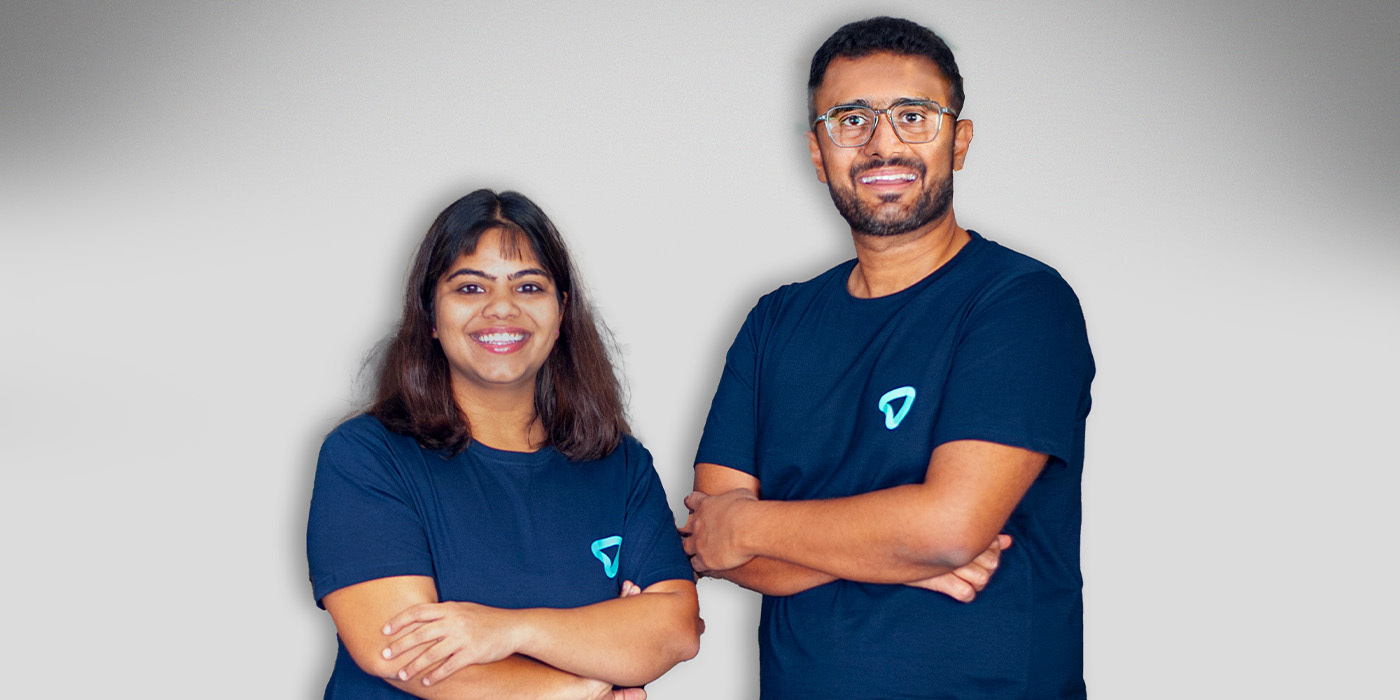
Kandan spent fourteen years at AT&T and four at Google, building the infrastructure underneath 4G and 5G networks and then Google Distributed Cloud. Telecom is where reliability is a regulatory obligation rather than a KPI. Alongside the day job he built Akraino, the LF Edge project whose technical steering committee he chaired, and founded Nephio, the automation project he grew to 65+ companies and 300+ contributors.
Randolph Chung, Co-Founder & CTO, spent nearly a decade at Google, where he co-founded the Carrier Services Platform and built an LTE packet core serving tens of millions of subscribers at a tier-1 operator. His team drove Nephio from the engineering side while Kandan drove it from product. They are not two strangers who met at a conference. He was most recently VP of Engineering at Aviatrix, and argues the case for Kubernetes reliability in the AI era with John Belamaric, one of three co-chairs of Kubernetes SIG Architecture.
But the hardest thing to replicate is not the résumés. It is the room they can fill. In September 2026, MantisGrid AI organised the first Hackathon & Summit in Palo Alto, with a panel drawn from Microsoft, NVIDIA, Intel and Arista, and 200 builders participated.
Infrastructure categories are won by the company the ecosystem organises itself around. That cannot be bought.
Proud to Partner with MantisGrid AI
Gartner projects the AI cloud market at $267 billion by 2030, with neoclouds taking roughly 20% of it. The number underneath matters more: enterprises are buying accelerated compute at unprecedented cost and realising a fraction of the utilisation, because the only rational hedge against unpredictable failure is to over-provision. Fear is expensive.
Reliability software has historically been sold as insurance. In AI infrastructure, it sells as yield.
The largest infrastructure investment of our lifetimes is being run with tools built for a previous era. Kandan and Randolph have the depth, the scars, and the credibility to build what replaces them.
We participated in the pre-seed round at MantisGrid AI, and we’re excited to back them on the journey to become the reliability layer for the entire AI stack.
Prasanth Garapati
Prasanth Garapati leads the Neon Fund’s U.S. efforts. He was previously the CEO of Commut (acquired by Careem, an Uber subsidiary). He later co-founded two B2B AI startups, flux.chat and Weka. He also led U.S. and European mid-market GTM at Ema, an Enterprise AI company that has raised $160M. He brings a decade of experience across the founder, operator, and investor seats. His investments at Neon include Hopper Inference, MantisGrid AI, and Humpback AI.