




340 / October 31, 2025
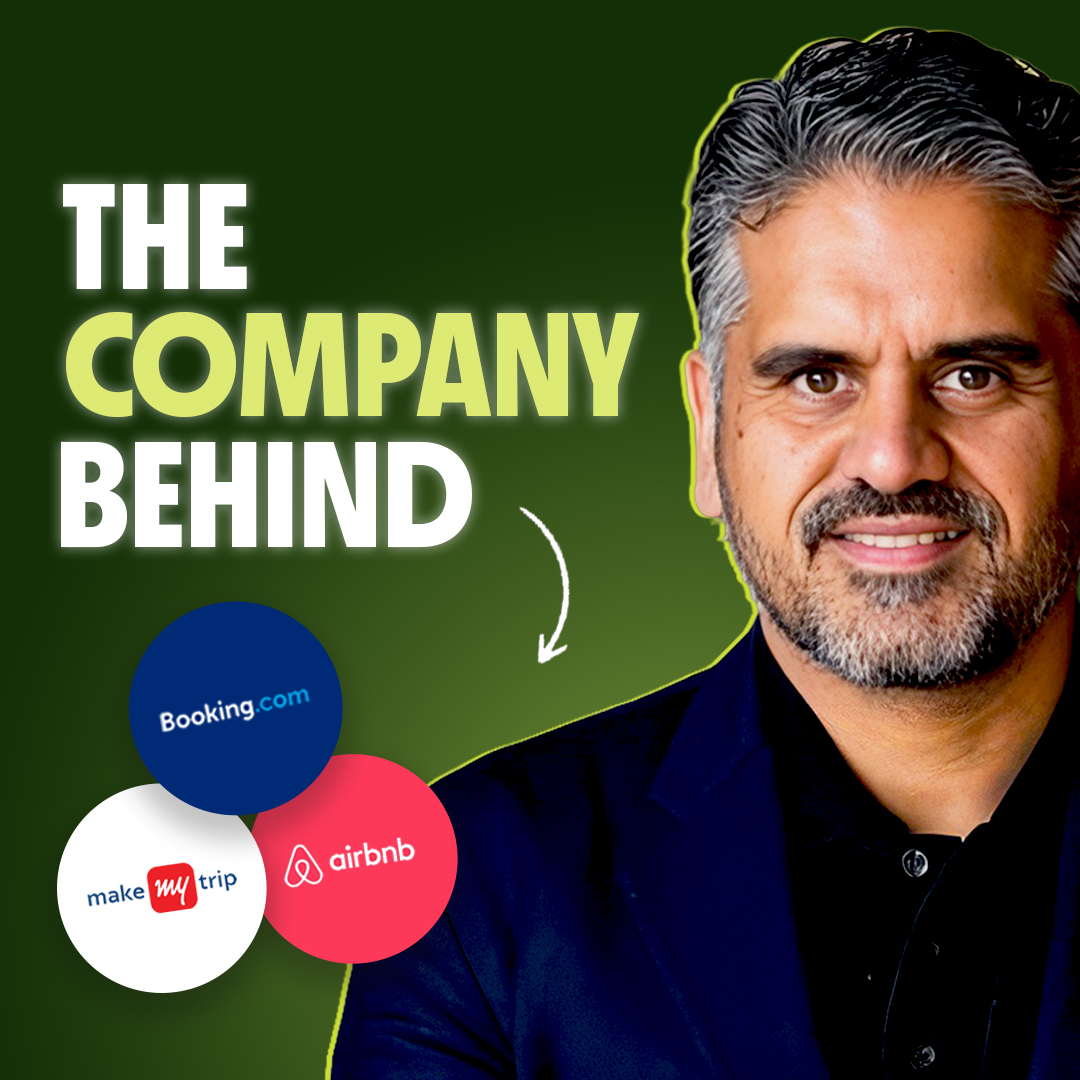
How One Indian Company Powers the World’s Hotels & Airlines | Bhanu Chopra, RateGain
When RateGain went public, it made history as India’s first SaaS listing
Founder Bhanu Chopra talks about what went into that call, how investors saw it, and what it revealed about the Indian capital market. He shares how RateGain built its global presence before turning to India, and why he bet big on a $250 million acquisition.
Today, travel is changing faster than ever with travellers planning differently, hotels pricing dynamically, and APAC leading the global recovery. Bhanu breaks down how RateGain powers this, from AI that talks directly to hotels and travellers, to India’s hospitality industry that aims to grow 100% every year.
Valued at nearly $1Billion with over $120 million in annual revenue, RateGain counts some of the biggest names in travel among its customers including Airbnb, makemytrip, Marriott, Hyatt, IHG, Expedia, and Booking.com.
From taking RateGain from zero to IPO and growing revenue tenfold in a decade, Bhanu’s journey offers a grounded view of what it takes to build companies that last. This episode is about more than travel or tech, it’s about how India’s next generation of founders can think global.
Watch all other episodes on The Neon Podcast – Neon
Or view it on our YouTube Channel at The Neon Show – YouTube
Siddhartha Ahluwalia 01:01
Hi everyone, this is Siddhartha Ahluwalia, your host at Neon Show and Managing Partner of Neon Fund, a fund that invests in the best of enterprise software and AI companies between the US and India Corridor, specifically built by second-time founders like Zencastr, Atomicwork, SpotDraft, CloudSEK. Today I have with me one of the entrepreneurs who took the first SaaS company public in India. Welcome Bhanu Chopra, founder of RateGain.
Bhanu, so excited to have you today and looking forward to discuss some amazing things, insanely awesome things as you said on the podcast.
Bhanu Chopra 01:36
Yeah, thanks, thanks Siddhartha for having me, really looking forward to our chat, happy to be here.
Siddhartha Ahluwalia 01:43
Bhanu, would love to start by, you know, little forward in the journey and then I’ll play it backward. So, the call to take the company public in the midst of COVID was quite daring, right? And you were the first company to test the waters, like India doesn’t have technology companies listed in India, right?
Either we have services companies, manufacturing companies or consumer companies. So, what did it take to take that call, convince the stakeholders and the first few years were rough.
Bhanu Chopra 02:20
Yeah, so, it wasn’t really a Eureka moment or anything. I think one of the things that I say about RateGain, as well as I say to founders is that it’s important to get the timing right, right. And especially when it comes to raising capital, I think it’s important to know when to raise capital, because we all go through peaks and valleys in capital raising, whether it’s private markets or public markets.
And frankly, I noticed, back in 2021, I noticed that, because you may recall, because of COVID, everybody was home. The markets actually were doing extremely well, because everybody was investing in the markets. And there was a company called EaseMyTrip in our industry.
So, they’re more of an OTA, not really travel tech. And I think it was March 2021, which was like in the midst of COVID, when everything was shut down, they took the company public and the stock did extremely well. And I was scratching my head, how did that occur?
And it just pointed to, you know, being in that cycle of where public markets were really rewarding. And that kind of gave me the motivation. First motivation was that.
And the second thing that happened was, this was June of 2021. And it was, I think it was called Delta, the Delta wave, which was lethal. And I lost, obviously, all of us lost people and I lost my, my aunt.
And, and while we were going through the process, I also got COVID and the Delta wave, the more lethal one. And so did my son. And so my wife asked us to go live separately.
And we were living in a separate house I have around Delhi. And my son at that time, made a presentation to me on how we should move out of India because of the situation here and move to UK. And I was like, you know, that’s not gonna happen.
And then the next day, he makes a presentation to me to allow him to go to boarding school in UK, if we are not going to move as a family, but he should at least move. So the whole experience of this, why I’m sharing this, this personal anecdote with you is that I felt like my son is like, so daring, you can think of these big bold moves. Despite, you know, us like, being in this whole Delta wave of COVID and really fighting it out each day.
And, and, you know, those moments happen when you start connecting the dots. And it was motivation one was, look, their company is going public in the midst of this, this is the right timing. And, and being bold, getting inspired from my son.
And then, and then I called my CFO, who was literally in, he was in the hospital, he was fighting for his life, right. And he was just about to about getting better. And I called him and I said, Tanmay, I want to do an IPO.
And he thought I’d lost my mind also. And somehow, I convinced him. And a week later, we signed up merchant bankers.
And I think it was a record time in six months, we actually listed the company. So net net, the story is that got inspired by things we saw, the capital markets were seeming absolutely right. And then when we went on the road, started doing roadshows, etc, there was a little bit of education required at the investor community, because they hadn’t seen a company like us.
But as you know, enterprise software, the SaaS model is very, very compelling, because of the predictable nature of the revenue, and how at scale you have operating leverage, etc. So it took us a little bit of time. But in hindsight, I would say I would do it again.
And it was a fantastic IPO as well. So very, very happy that we were able to see that opportunity and capitalize on it. And the investors, the reception was really good as well.
Siddhartha Ahluwalia 07:32
And tell us about the recent like you did a $250 million acquisition, almost 25% of the market cap, I would say this would be the boldest move post the IPO.
Bhanu Chopra 07:45
Yeah, yeah. So yeah, it might appear from the headline numbers that it’s a big bold move. But this is a business that we really, really understand.
So Siddhartha we have three lines of businesses, we have what we call DASH, that data as a service distribution, and then MarTech. MarTech is all around, really around digital marketing. And our overall vision is to become the Shopify for hotels, where we allow them to do guest acquisition, guest retention, engagement and guest wallet share expansion.
So this acquisition is part of our MarTech business line. And we understand this business quite well. And we were actually also competing with this company, the name of the company Sojourn.
So we recognize them and there is, you know, from a geographic footprint, they are stronger in certain geographies, they’re stronger in the US, we are very strong in Asia and Europe, in terms of the capability set that they go after, from a MarTech perspective, they focus a lot on the display and programmatic channel, we are very strong on what in our industry is referred to the meta search channel. So, you know, from a, and then, you know, they are, they sell to destination management companies, big hotel chains, car rental companies, we sell to those also, and they have some data partnerships.
We also have data partnerships that we use as a secret sauce to do this precision based marketing. And it just made a whole bunch of sense to bring these companies, you know, this, these companies together, and really, we see a lot of synergistic value. So it feels from the price tag, it’s a big bold move.
But it’s something that we’ve been doing, we know very well, we know the team very well. You know, in my head, the integration should not be a challenge at all, given, we understand the ecosystem, given we understand the customer set we are going after. So I see a huge opportunity ahead of us.
It puts us in a in a in a different league, in a very scaled league, combined revenues of the company will be over 310 million, combined EBITDA is 50 million. This is without any synergies. But as the synergies kick in, I think our goal ultimately is to get to a billion in revenue.
And it advances that, that vision. And as I said, we want to be that one integrated platform that allows our customers to acquire guests, retain and engage them and have a world share expansion.
Siddhartha Ahluwalia 10:57
So this is the second time you’re you have shown like Indian entrepreneurs a new playbook. The first one was like, you can take a SaaS company public in India at 40-50 million ARR, listed at 300. And let’s let’s the investors in the market do its magic post that, let the compounding take care of itself, right.
And now many companies are following your playbook, like they are reverse flipping from the US, like CleverTap, MoEngage, Capillary and so many other companies that we’ll hear about that go public in the next 12 to 18 months. And the second is, US doesn’t respect companies which stop growing post 100 million ARR or 120 million ARR, right. So their PE multiples, you know, they would be getting acquired for by PE for 250-300 million.
But in India, because such a new thing in a retail investors and institutional investors are hungry on the public markets for enterprise software and enterprise technology. Indian companies can acquire these US based companies which are low multiples, but sitting at large revenue for last 20-25 years, right. Their only choices get acquired by a PE and we know how PE like usually cut and trim the business, right.
So for these companies also getting a stock of a Indian company, which combined they can also win at. And for Indian entrepreneurs, once you have taken a company public at 50 million ARR, you don’t need to, you know, show that I’ll only do organic, you can do this kind of inorganic acquisitions and probably grow to a 500 million ARR company, where in the US, the pressure is directly go to 500 million ARR at an individual company and then list.
Bhanu Chopra 12:49
Yeah, no, you’re absolutely right, Siddhartha. The advantage of listing in India has also been that, as you noted in your opening comments, there are not too many companies. We were the first one, there are a couple that have followed, but still, even if you look at the pipeline in the next two years, we may get to maybe a dozen that are listed.
And in the US in comparison, there are hundreds of them. So the opportunity to invest in enterprise software and SaaS is far limited. And so we do get some novelty value as a result of that.
To your point about, you know, I mean, we’re not thinking of being frontiers of any trend. But now that you say, maybe we are. But we, the way we see it is, we have a mission that we want to accomplish.
And we look at every capability and opportunity from a perspective of build, buy or partner. And if we get opportunities that are, you know, that make financial sense to us and are value creative, then we are very much willing to buy irrespective of where the company is. So we’ve done most of our acquisitions in the US.
But we have bought a company in Europe as well. And we continue to look at, you know, companies inorganically, that can help us advance our mission and help us build capability or help us build regional focus. We are, as a matter of fact, very, very focused.
We’re actually doing everything in reverse order. Most companies in India start in India and go global. Yeah, we went global.
And part of that reason would also be because my experience was always in the US, I studied their work there. So when I started RateGain, our focus actually started with the US. And even till date, most of our revenue comes from the US.
But if you ask me, in terms of geographic focus and investment, travel is booming in the back in Middle East, right? It’s the fastest growth when you look at new hotel developments, etc. So we are investing quite heavily in building up this market as well, in terms of our go-to market motion.
Siddhartha Ahluwalia 15:32
And for our listeners, you know, if you have to explain simply, you know, because enterprise software doesn’t come intuitively to everyone who is outside this domain, what can RateGain do today for a hotel from a small hotel to a large chain?
Bhanu Chopra 15:51
Yeah. So I will try to explain it from a perspective of a traveller. Let’s say, you know, Siddhartha, where are you planning to travel next?
Siddhartha Ahluwalia 16:07
I’m going to Dubai on 13th.
Bhanu Chopra 16:09
Okay. So let’s say Siddhartha wants to go to Dubai and I’m imagining you shop and you buy travel online. So you would go and go on Google and say, you know, I want to look for some Dubai hotels in the Jumeirah area, right?
And you get a list of hotels. Let’s say you start your journey on still start your journey on Google or maybe even on on on ChatGPT. So when you see paid ads on Google, those are being run by us, right?
So we would run that on behalf of the hotel. Let’s say you do some research, you click around and then you land up on booking.com and it shows you a bunch of hotels on in Dubai. So as you’re browsing, you get you see a lot of content and you get see you can see the rates and you can see the different room types each of these hotels have.
So RateGain would power the connectivity between the hotel system and these OTAs so that you can see all the real time rates, etc. Then you also may go to the hotels, you might do some price comparison, you know, let’s say you have picked the JW Marriott in in Downtown area, and you go to the hotel’s website. So that could potentially be be powered by RateGain also.
So and then you see the prices, the next day you will go and use find the prices have gone up. So that that’s called basically revenue management for our hotel. So we, you know, think of it as how Uber has this concept of search pricing.
Right? So we do search pricing enablement for hotels also by, you know, looking at demand patterns and looking at what other hotels are doing in terms of pricing. And then you do your research for a couple of days.
And then you’re on your Insta or your Facebook and you start seeing ads on Dubai hotels from different providers. Those are also being powered by RateGain. So from a guest journey, I’ve, you know, hopefully given you a sense that we’re really participating in marketing the hotel, helping them in their pricing, and also helping them in their connectivity to these different OTAs where their real time rates are visible.
What what we’ve also now built are some because I know you’re focused on AI. So I have to talk about AI. So we have built an AI agent also.
So the AI agent works in two ways. One, it can speak with consumer AI agents. So let’s say you are using an AI agent and you trust the AI agent to make all the bookings, it can actually go and talk to our hotels AI agent and answer questions and facilitate so that that’s machine to machine.
But we also have an AI agent to address if you were to call the hotel. So let’s say you decide on the Marriott Hotel and you want to know what kind of restaurants they have. You know, you need to know some shops, how close are those shops, etc.
And for whatever question you may have about the hotel, or you want to upgrade your room, or you want connecting rooms, because you’re going with your family, you would be able to call the hotel and having to wait, instead of having to wait, our AI agent will answer all your questions. That’s pretty phenomenal, because it sounds like a human. And it can also upgrade your rooms or do the connected rooms, etc.
And one other thing that we’re doing with this AI agent, it can be either voice or chat base that when once you arrive at the property, it would start your basis, your profile, etc. It says Siddhartha now you have a couple of hours. Tomorrow, you can check in into our spa.
And here’s a voucher for that. So we are constantly enabling the hotel to expand the wallet share by selling ancillary services while you’re at the property.
Siddhartha Ahluwalia 20:58
So do you also plan to get into the internals working of a hotel, like managing rooms, managing inventory management of the entire operation of staff or training of staff?
Bhanu Chopra 21:10
Yeah, it’s a, it’s a huge opportunity in terms of what AI can do, because one of the big challenges in hospitality today is attrition, it runs over 100%. And so you’re having to constantly train and retrain, you know, as the rollover happens. And it’s a huge opportunity, we are, we’re thinking about it.
But right now, our focus is largely on the front office side, meaning, you know, everything to do with acquiring the customer, retaining and engaging with them and wallet share expansion. But the AI opportunity is quite large in what you’re referring to, what we call as the mid office and back office software. There is a huge opportunity there.
But it does feel like our hands are full. But ultimately Siddhartha, that’s our vision. You know, our vision is that we are the digital enabler for everything that our hotel does, right?
I mean, that’s our playbook that we work, we and we are very, very vertically focused, we want to be everything digital for a hotel and not just a hotel, because we do work with airlines and car rental companies and OTAs and destination management companies. And now, with Sojourn’s acquisition, we’ve also got into attractions. So there’s a huge opportunity and we do intend to, you know, go step by step.
That’s why, you know, the dream of getting to a billion in revenue is very, you know, very, very much possible.
Siddhartha Ahluwalia 23:03
Yeah. And if you think about like, the current narrative today in the market, is these large AI companies and LLMs will are trying to replace SaaS, because they want to increase their market share. Do you see that happening in near time future?
Or you think that the vertical winners will keep on just compounding and these players would not have like, for example, Open AI and trying to enter into hospitality, or Anthropic trying to enter into?
Bhanu Chopra 23:34
See, I can’t comment about other industries, the kind of impact that they could have.
Siddhartha Ahluwalia 23:40
Your industry, basically the hotel.
Bhanu Chopra 23:41
Yeah. So I am not worried. The reason I’m not worried is, I do see us partnering up with these companies, because I do feel like these are more in the AI world, the infrastructure companies, and we will be utilizing this infrastructure to build, you know, applications or wrappers on top.
Can it enable us to do things in a different way than historically how it has been done? Yes. The reason I am not so concerned about it impacting us is because there is a lot of nuance and complexity in the ecosystem, the tech ecosystem that currently sits.
And that’s a challenge that we’ve had to deal with. So I would say, if a lot of technology and innovation and capability is there, but the adoption is far from it. And the adoption is maybe 10% of what is available.
And the reason for that is the fragmentation nature of the tech ecosystem. And I don’t think that will be overcome anytime soon. And just the risk averse nature of the buyer.
It has gotten a lot better since the last two decades that have been in the industry. But I think that’s going to take a bunch of time. So I don’t see them as a threat.
I see them as a partner. As a matter of fact, we are also using a lot of the LLMs capabilities and building applications on top of that. At some point, we’d like to get, as we get more scale, become more formal partners with some of these guys.
Siddhartha Ahluwalia 25:42
And specifically in your industry, right? How much global market share would RateGain have today? And how much India market share would RateGain have today?
Bhanu Chopra 25:52
It’s very small.
So if I look at the TAM, so overall travel tech spend is about 90 billion. And we don’t do everything to address that tab. So currently, we only serve a subset of that TAM, which is about seven and a half billion in these lines of businesses that we have, which are Dash Distribution and MarTech.
So on seven and a half billion, we are doing like 300 million. So what is it like 4% or something? And in India, I don’t have the numbers, but our overall India revenue is quite small.
And like I was saying to you earlier, but our focus now, given the rising middle class and the discretionary spending in Indians now is so massive. I mean, I was just at a conference a week ago, two weeks ago, in Bangalore. And I’m just amazed with the appetite of hoteliers on how they are looking to expand.
I mean, every group that I met, you know, which has five to 10 to 20 hotels is not looking to incrementally build more, they are looking all to double. Because if you think about our experiences, also, the number of options that we have, when we want to travel, it’s largely Goa or Kerala, you know, so there is a huge opportunity to build those, the experiential travel in India itself. So we see a very, very large opportunity here.
And hopefully, we will be one of the more dominant players in enabling the hotel ecosystem.
Siddhartha Ahluwalia 27:36
For the largest part of narrative, like since you have been an entrepreneur, India has not been considered as a market for buying enterprise software. And what I get hints from you is that is changing, like that Indian enterprises or big market today has the appetite to pay in a fair manner. Is that so?
Bhanu Chopra 27:59
Yeah, I do think that has changed significantly. And that’s why we were also quite hesitant early on to devote energy in India versus in, you know, going westward, because we felt like the subscription price was much higher in Western markets versus India. But if you look at our, it’s also a function of what the hotels are charging.
And if you look at the average daily rate, at a four to five star in India, it’s quite comparable now to international markets. So given the fact that they’re earning more, there is more ability to spend more here, as well on software. So yes, it has dramatically changed over the last, I would say, couple of years.
It’s also a function of, you know, like I said, when if you’re going after a market, where they’re doing well, we are enablers of that market. So we benefit as well. So overall travel market in India is booming, both inbound and outbound, especially outbound.
And people are looking for options. Hoteliers are doing well. I mean, if you look at the hotel stocks in India, they’re just killing it compared to international hotel chains and their multiples.
The reason being, India is such a growth story. So yeah.
Siddhartha Ahluwalia 29:40
And early in the podcast, you mentioned about some travel trends, right? And I believe there would be no other better person better than you to give out what’s happening right now in 2025, in terms of global travel, in terms of Asia travel.
Bhanu Chopra 29:54
Yeah. So let me talk about it from a perspective of demand and supply. So when we talk about supply, which is building out more tourist attractions and more hotels, so clearly that in the US has has stabilized.
So there isn’t net new growth in supply as much. And it’s actually slowed down a little bit. In Europe, it’s kind of similar.
We are seeing similar trends, but slightly better than the US. In APAC is where all the action is. I mean, just to give you another anecdote around this Siddhartha, I travel the world and, you know, we attend and participate in a lot of conferences and what is amazing to me is in India and especially in India, every conference I go to, I see all the hotel chain CEOs, international hotel chain CEOs. I don’t see them on at the international events. So that gives you a sense on how bullish are people about India in particular.
So there’s a lot of activity in Middle East and APAC in terms of new developments. And as I was saying to you this last conference, everybody’s talking about doubling their supply in India especially. When I talk about demand, demand domestically in the US is, I would say static.
But internationally, there has been a slowdown in terms of traffic into the US because of this whole tariff situation, etc. Europe is again, holding steady. And again, even from a demand perspective, it’s really booming from India and the APAC and Middle Eastern corridors.
So that’s where we see from a demand perspective also, continued growth. But one sort of secular trend that we see post COVID is humans, the humankind, their behavior to life and travel has changed. So if I ask you, Siddhartha, what is it that you would like to do?
And I’m sure you would, well, what do you enjoy, I’m sure, in your top three wish list, it’ll be one of them would be travel. And then that would be pervasive. I would say across anyone you ask.
I mean, I do this induction with our new joinees and ask them this question. And inevitably, I always hear people say, it’s travel that they want to do. So I think this whole change in attitude where people want to live life, have experiences, travel is a big, big beneficiary.
So it’s a very exciting time for us to be in this industry, and be at the forefront of innovation on how we enable the industry.
Siddhartha Ahluwalia 33:35
And another thing, you know Bhanu, I would say is, you built a company for 17 years before taking it public. And I would call it third playbook by Bhanu. So if you have to write a book, you know whom to partner with, I can write a good book along with you.
But the third playbook is you stepped away from day to day operational role to focus on growth, which is very hard for founder CEOs to do. And as a CEO, you’re following daily files or doing stakeholder management from one, you know, quarterly call to another quarterly call. That’s quite an amazing move.
Now we’ll look back and connect all the dots in hindsight.
Bhanu Chopra 34:23
Yeah, I think it’s very, very important to recognize the stage of company that you are in, and understand where you add the most amount of value. So when you are, let’s say, in that journey of zero to 10 million, you have to do everything. Including, you know, sweep the floors, right.
So and I think at that, in that stage is extremely important to be the especially in enterprise software to be the sales guy, which is the role that I played. So pretty much all the earlier deals that we did at RateGain, you know, were done by me personally. And you have to sell to not just customers, you have to sell to a team, you know, trying to acquire the right talent, etc.
A lot of selling happens to all stakeholders, and then investors, etc. And then when you go to from from that 10 to 100 million, it becomes a lot about building the right processes, again, finding the right talent, etc. And, and now at this stage, I think you’re absolutely right.
My view is that I need to be just spending time figuring out how does the world look like in the world of travel in the next three to five years? And how do we position ourselves to ensure that when that moment arrives in the next three to five years on how the world changes, you know, we are there to capitalize on it. And everything other than that needs to be delegated.
So I spend a lot of time doing both primary and secondary research just to hone in on that vision of where the world will be. It requires, you know, talking to a lot of people getting the pulse of what people are thinking. But also building your own imagination and connecting the dots on where, where you think the industry is moving.
Like for instance, I strongly believe AI is going to have a huge impact on how travel is purchased. Especially with consumer AI agents, and a lot of business models will get disrupted. And we want to, so it is both a threat and opportunity, but we want to position the company that we’re sitting on it as an opportunity.
And that’s why we are, we were the only ones when I talked about having launched the MCB server on our booking engine. And to put it simply in simple English, you know, we build the consumer, we build the hotel AI agent to talk to any consumer AI agent to facilitate discovery as well as booking. So, so those are some of the kind of bets that we are taking to position ourselves and be future proof.
Siddhartha Ahluwalia 37:58
And the last thing, Bhanu, before we complete the podcast, the fourth thing that I have learned from you is, like there’s no playbook for entrepreneurship and how growth would look like. It took RateGain almost 17 years to reach like 40 mill ARR. And almost in the last three years, you have 10x the revenue, like literally to like 300 mill ARR.
Similarly, like a company Zencastr, which we recording the podcast right now. For the first three years since our investment, the company was already only at three and a half million revenue. But within one year, as I shared with you, it jumped from three and a half to 42 million ARR.
And by the year end, you know, they’re looking to grow that 100. So you cannot let external investors or market define what growth looks like for you as an entrepreneur. That’s what I’ve learned from you.
Bhanu Chopra 38:46
Yeah, Siddhartha, I would put it a bit differently. You know, these moments come for everyone. And what I feel is that what you can do is not attach yourself to the output or outcomes, but attach yourself to the inputs.
So as long as there is consistent rigor and input, they will be these events that can be game changer events for you. I’ve seen this happen in the RateGain journey. But one example I used to take off quite fondly when I’ve done these kinds of podcasts or conversations is give the Apple example.
Apple was nowhere for the first 25 years. I mean, of course, it was Steve Jobs coming in and out. And for 25 years, they didn’t do much.
And then it was the culmination of all the knowledge, you know, everything that they had done up until that point, that it ultimately clicked. And I think that happens with every company, as long as they are consistent, focused, and believe in the vision. So I think that’s what’s ultimately served us very well.
Siddhartha Ahluwalia 40:20
Thank you so much, Bhanu. Appreciate this conversation. I learned a lot from you and look forward to do a longest conversation on your philosophy of life in person.
Bhanu Chopra 40:31
That sounds great. Thank you Siddhartha. Thanks.
Siddhartha Ahluwalia 40:32
Thank you so much, Bhanu.


Know when new episodes are released. Subscribe to our newsletter!
Explore Playlist
94% CAGR: What the Inference Boom means for your AI costs | Vamshi Ambati

What if AI has Immunity like Humans? Ft. Animesh Koratana, PlayerZero

Why Your AI is Still a Demo: Lessons from Braintrust’s Field CTO