




335 / October 14, 2025
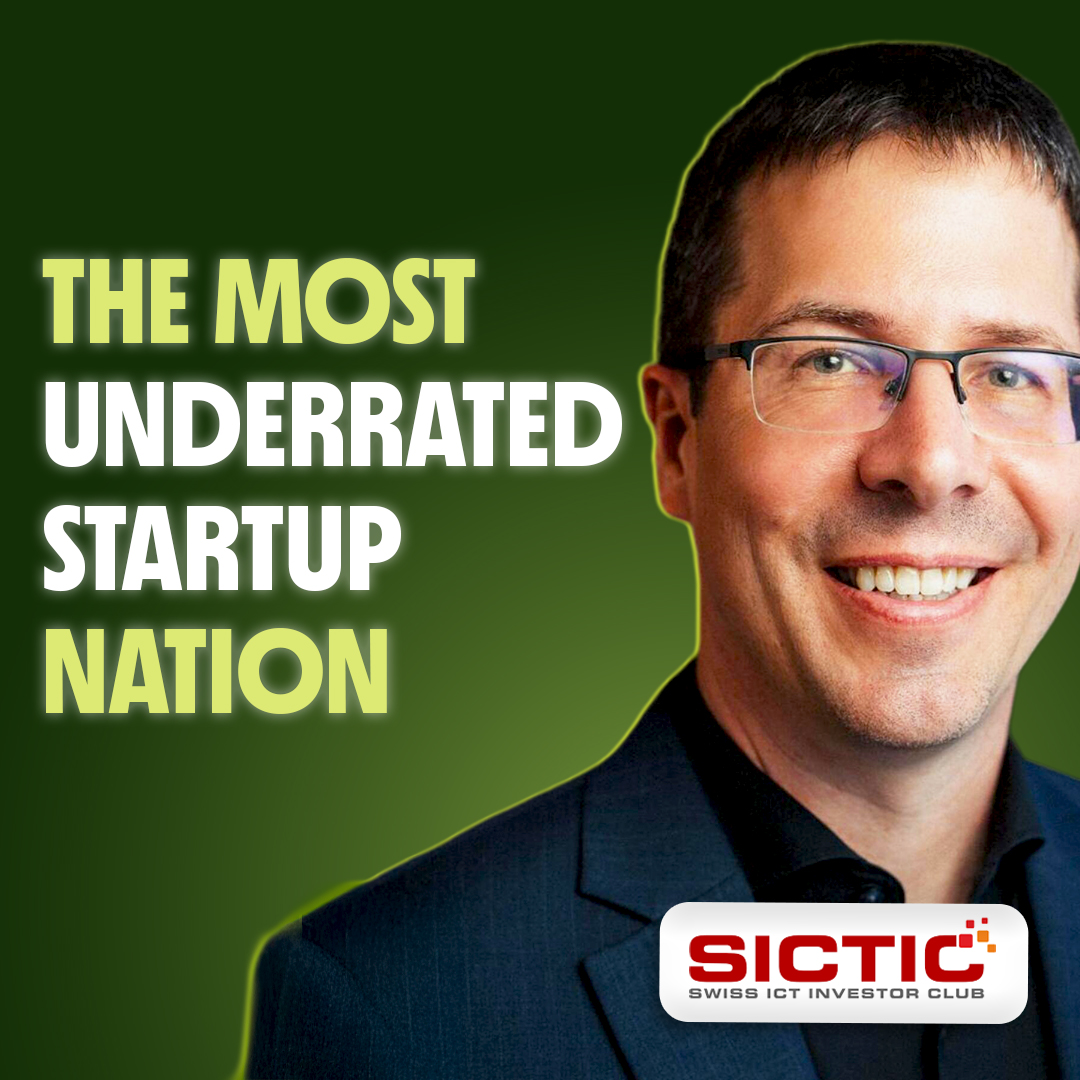
What India Can Learn from Swiss Startups ft. Founder of 9 & Investor in 40 Co’s |Thomas Dübendorfer
Switzerland has quietly built one of the world’s most stable and trusted startup ecosystems.
Thomas Dübendorfer, founder and president of SICTIC, Switzerland’s largest angel investing network with over 500 members and more than 400 startups joins Neon show.
Thomas talks about how Switzerland’s startup scene has changed over the past decade from a cautious investor community to one that now has 58 unicorns across sectors like fintech, AI, crypto, and deeptech.
He explains what Switzerland is doing in AI and commercial research, why a $900 billion economy still invests only $4 billion in startups, why most exits happen through acquisitions rather than IPOs, how Zurich and Bengaluru can build stronger startup ties and what India can learn from a country that builds quietly.
Thomas also shares his own journey: leaving Google, building nine startups (three acquired), and backing over 40 founders as an angel investor.
This episode is a rare inside look at how Switzerland, at the intersection of centuries-old wealth and technology, is building a strong innovation ecosystem.
Watch all other episodes on The Neon Podcast – Neon
Or view it on our YouTube Channel at The Neon Show – YouTube
Siddhartha Ahluwalia 1:07
Hi, this is Siddhartha Ahluwalia, your host at Neon Show, and managing partner at Neon Fund, a fund that invests in the best of enterprise AI companies between US and India corridors, like Atomicwork, CloudSEK, and SpotDraft.
Today, I have with me Thomas Dübendorfer, founder and president of SICTIC, one of the largest angel investing institutions in Switzerland. Thomas, welcome on Neon Show.
Thomas Dübendorfer 1:36
Welcome. Thanks for having me.
Siddhartha Ahluwalia 1:37
And you have built nine companies previously. You left your job in Google, started SICTIC.
It had initially 25 members. Today, there are more than 500 angel investors in SICTIC. You have backed 400 companies, almost like $300 to $400 million deployed.
And you have, I think, a good mix of what the ecosystem offers in Switzerland, plus what you learned in California.
Thomas Dübendorfer 2:02
So yeah, I grew up in Switzerland, did my education here up to the PhD level. What in between, I was back and forth between California and Switzerland. And the ecosystem in the startup terminology, I would say, has evolved a lot over the last 10, 15 years here, especially the investment vertical that we started with our angel club called SICTIC.
We first went just for ICT startups in information and communication technology, or the internet startups, and financial technology startups, or FinTechs. And when we did that back in 2014, basically nobody was thinking about even investing in that vertical in Switzerland, because nobody had a FinTech and nobody had an ICT company. And people still remember the internet bubble from the 2000s, where some internet startups went to the Swiss Stock Exchange and failed pretty badly.
And then for a decade, nobody wanted to touch them anymore. But when we did SICTIC in 2014, the situation was very different. I mean, there wasn’t a lot of funding for these startups, but there were a lot of talents.
The universities really had done an amazing job in building entrepreneurs. There were entrepreneur clubs in its infancy, but people knew that you could write a business plan after doing research. And we had support from the state with Innosuisse, which pays researchers to transform ideas into startups or into new products at SMEs.
Siddhartha Ahluwalia 3:34
And it’s very interesting that today the GDP of Switzerland is almost $900 billion.
Thomas Dübendorfer 3:41
Yes.
Siddhartha Ahluwalia 3:42
And the investments in startups that happened in 2022 overall is around $4 billion.
Thomas Dübendorfer 3:50
Exactly. So it’s basically half a percent of GDP, which really is small. I think we do a lot of research investments as well, also by big industry players, especially in pharma, for example.
But I mean, venture capital is not a thing that you generally hear about in the media here. There’s also no actual big gross funds here, which will do a lot of PR around what’s happening here. There are almost no growth stage funds here.
So most of the gross money, the Swiss startups need to get from abroad. Yeah.
Siddhartha Ahluwalia 4:23
And what has happened also is, Switzerland has been known for five industries globally. Specifically, if I talk about, as from India observing Switzerland, we are known from watches. Switzerland is known for the best watches in the world, the best chocolates, the best tourist destination, mountains, lakes, right?
The pharma companies of Switzerland are well known, the biotech companies, right? So these are the specific areas that Switzerland has been known for.
Thomas Dübendorfer 4:53
Yeah, we are known for wealth management, banks for sure. But the nice thing is we’re quite diversified, right? We don’t do just pharma or just banking or just the chocolate things.
We also do commodity trading and gold and other stuff. So quite a strong footprint and high stability. At the same time, it’s unfortunate people don’t talk about our unicorns, right?
And our innovation. People always say a lot of research, but they don’t talk about commercialization of the research.
Siddhartha Ahluwalia 5:24
Yeah. And I think everybody assumes that Switzerland would have five to six unicorns. But in reality, you have like 58 unicorns.
Thomas Dübendorfer 5:33
Yes, that’s what we found. Unicorns, the companies that had a billion dollar valuation or more in the last 12 years, we found 58 of them where we have a public proof that they reached the one billion valuation. Now, if you go to the page books of the world, you’re going to find six or seven because they don’t really cover Switzerland.
They don’t have enough people to go to every country. And if the country is as small as Switzerland with 9 million inhabitants, they just kind of ignore it. And if there’s no VC giving them the data, how would they know, right?
That’s why we as SICTIC have started to give them all our seed funding rounds, like probably around 400 that we were involved in a unique company. Some of them had multiple rounds together with a news channel called Startup Ticker once a year. Also with SECA, the Private Equity Association, they publish a report of every single round, which we identified.
And we as an angel club for the verticals of FinTech and IST, we contribute a very large number of rounds. In some years, 70% of all deals in tech startups was from us. And without us reporting and without our angels being as active as they are, this wouldn’t happen, right?
But still, the international press doesn’t really pick it up. And international databases, Crunchbase, Bitbooks and others don’t really have it on the radar. But we hope it’s going to change, maybe thanks to this video.
Hope so.
Siddhartha Ahluwalia 6:59
And another important thing which Neon Fund and Neon Show Podcast is making an effort towards is bridging the Indian startup ecosystem and getting Indian and Southern startup ecosystem together, like you can imagine Bangalore and Zurich together. So what is the kind of effort you think is required? Or what understanding of culture is required from the Indian side that we can appreciate about the tech culture, the ecosystem here in startups?
Thomas Dübendorfer 7:31
I think first of all, you need to understand how does such a tiny country like Switzerland, which is smaller than a big city in India, actually work, right? We have less than evidence than New York. Yeah, but we are a country, right?
And we have different language regions. So depending on where in Switzerland you are, the main language is either German or French or Italian or even Romansh up in the mountains. A lot of people don’t believe how much diversity we have here in terms of culture and language, right?
But what you also need to understand is Switzerland is basically influenced a lot by the neighboring countries in terms of culture, values, foods, language, and so on, right? But we have our own law systems and our own values, right? And we always understood we’re small, but we can do things which maybe others cannot do.
And we need to be in a good teamwork with all the others, the bigger neighbors, such that we have a relevancy and they want to rely on us. And one of the core things here in the culture is you need to be reliable, trustworthy, and humble, and of course, also a good team player. Because we don’t have the power to go out and say, this is what we want.
And because we’re big enough, we can just do it, right? We’re always in a position of we need to negotiate such that they kind of need us for the bigger thing. But without us, it will be really tricky.
And at the same time, it’s good for both sides because it should be a long-term relationship. So a lot of things we do is medium to long-term. If you are very opportunistic here, you’re going to fail very badly because society doesn’t accept that.
If you start to do things which is against people in society, they will not trust you anymore. And if nobody trusts you, you’re going to be dropping out of society. That’s why people want to be almost too perfect sometimes.
They think a lot before they do things. Sometimes they also want to avoid risks because if you do something stupid, maybe you lose the reputation, right? And if you have such a small society, then it’s not good to drop out of society, right?
Because there’s no other place you can just go to and start a new life.
Siddhartha Ahluwalia 9:37
Yeah, yeah. So what I learned from you is people appreciate long-term thinking here, long-term relationship. So any company that is looking to expand into Switzerland should not expect quick short-term results.
They need to make investment for some period of time before.
Thomas Dübendorfer 10:01
I mean, it’s all about relationship building, right? I mean, you don’t just jump in and then you have a perfect relationship. It’s about you test the waters and then engage a little and then engage a little more, right?
Yeah. Now, if you want to bring a product to the Swiss market and work with the big companies here, you need to earn the trust first. It’s not enough to have a good product.
You need to have a good relationship and your incentive to do that needs to be longer term, not short term, right? Because here, people expect that you’re a reliable partner, not just today, but also 10 years down the road, right?
Siddhartha Ahluwalia 10:37
I think that’s one thing that I appreciate about Switzerland is whether anybody thinks of banking and anything, the institutions are made to stay.
Thomas Dübendorfer 10:47
Yeah, I think that’s a little bit how Switzerland was coined, yeah. And we also had this thing we need to stick together. So as a group, we can achieve much more than every individual because we are already a small country.
And if you don’t help each other, it’s not going to work. We empower the people a lot by giving them a direct democracy. So we can vote on even if you want to pay more taxes in my community, I can vote on it, yes or no.
So we give a lot of power to the individual by trusting them and say, okay, basically you form your government, you form your rules, but then you have to stick to it.
Siddhartha Ahluwalia 11:21
Yeah. And one thing that I want to share with my listeners, if you can share a little bit about the history of Switzerland and how it became one of the strongest nations in Europe.
Thomas Dübendorfer 11:34
I mean, I’m not a historian, but there’s certainly a few events which have happened, right? I mean, Switzerland was always threatened by big, powerful nations or states or whatever you want to call it. The French people were here, the Russian people, the Austrian people, the Habsburg were here and they all were fighting sometimes basically against each other on our territory.
Like here in Zurich, we had the French people, French army facing the Russian people, right on the two sides of the city of Zurich. And yeah, Switzerland was just in between the two big ones, of course, but it’s still amazing that this has happened here, right? And now the country, of course, understands if we don’t play a good game with all the neighbors, which are more powerful, then it will not have a lot of future.
And I think what made Switzerland successful was basically we had some people which were really pioneers. And one of them was Alfred Escher. He’s the one that incorporated ETH Zurich, incorporated the second largest bank in Switzerland.
And he also made the tunnel projects to the Gotthard. And it all came together. In order to finance the tunnel needed a bank, which was able to collect enough money, not just from within Switzerland, but also from abroad to finance the tunnel project.
And for building a tunnel, they needed engineers. That’s why they needed a strong university. And these three institutions, and this is basically a big project with a tunnel, changed the game a lot.
Suddenly we had the connection to a neighboring country, which was very efficient. Then we could build a very strong railway system based on that. And with the banking sector, we had an international possibility to do fundraising, right?
And the funny thing is the Gotthard tunnel was to the biggest part financed by Germany, not by Switzerland, and also by private people, not by the Swiss state. And that’s pretty surprising. But nowadays, when we look at the startup landscape, 85% of the funding for the venturing comes from abroad.
So it’s the same thing as with the big Gotthard tunnel project. Even now, when we do innovation and commercialize it, we are still very strongly dependent on international funding.
Siddhartha Ahluwalia 13:48
And you have been a tech entrepreneur throughout your life, right? I would say so, yes. Also, my father was an entrepreneur.
So if you can share a little bit about how the tech ecosystem developed, which are the top three or five companies in tech that came out of Switzerland, right? And how are the exit ecosystem also in Switzerland?
Thomas Dübendorfer 14:12
I mean, there are companies which are well known because they do B2C, right? And there are companies which are less known in B2B, right? And I think Switzerland was long term known for doing medtech and pharma things, right?
Like Actelion, for example, very well known, bringing new medication to the market. We were groundbreaking, right? Then we had a huge wave of crypto startups out there.
For example, the foundation of Ethereum is in Switzerland, right? And then we had a lot of ICT startups, which also became unicorns. I mean, for example, we have two backup software companies, which originated here.
We also have a fashion company called Onshoes, which a lot of people talk about nowadays as the competitor to Adidas and Nike. And it’s so amazing that all of these different things came out of the same country, right? Now in tech, I mean, where I’m involved in, I mean, my history with tech, basically after Google, I was working with companies that had to start from scratch.
Just recently had an exit with one of the portfolio companies of SICTIC, where I also was involved in. They were called Beekeeper, and they merged together with LumApps. And at the end of the merger, they had a valuation of $1.1 billion. And now they’re going to work further on, and they want to do an IPO. Currently, they’re just backed by ad funds. So there’s a lot of cool stuff going on for sure.
Yeah, also in AI, we have startups that are less than four years old, already have several hundred million valuations and got large double-digit financing rounds. And we have a lot of international companies in AI. We have OpenAI here, which came to Switzerland.
We have Google. We have Facebook. We have Metso here.
It’s really amazing. Anthropic is here. We have Pinterest just came here just recently.
So really well-known international tech brands have an office here.
Siddhartha Ahluwalia 16:13
Also, can you talk more about AI? What Switzerland is doing in AI, specifically focused on startups?
Thomas Dübendorfer 16:21
Yes, AI. That’s a big topic. Everybody talks about AI nowadays, and they often only mean the large language models and not the rest of AI.
I mean, sometimes people called it neural networks in the past or Künstliche Intelligenz, as we used to call it. And nowadays, I think the hype is all around processing language. The nice thing with processing language is there’s a lot of things you can suddenly automate, which you could not in the past.
Now, I don’t think that Switzerland has a very good position to compete with generic AI, like just basically being the better spellchecker or the better predictive text producer. What Switzerland is most likely quite good at, and also we see it now with efforts like ETH AI Center or the Alps Initiative, where we have the biggest supercomputing in AI in Europe with 1.3 million cores. We build our own AI models for a very specific niche vertical.
Like we go really deep into personalized medicine, or we go really deep into weather risk prediction, or we go really deep into understanding how a lawyer works and how these documents have a different meaning based on what they are framed in, like what’s the legal system and so on. So I think one of the advantages of Switzerland will be because we can do so much research and also bring it into products. We can build explainable AI, where AI tells you why it came to the conclusion.
It’s more scientific AI, I would say, than just general AI for the mass, which is good enough, but it’s not highly predictable, highly reliable, or really explainable. Another thing is we have some companies like Aera and others, which look at safety aspects of AI, like how can you prevent AI from causing damage or doing things in a way that people don’t like what’s spitting out, like shouldn’t AI bots become racist, right? And there’s quite some research going on and also some first applications here.
Also building AI agents which automate things. You need to be sure that the agent doesn’t do things against you or against your business. I think in these specific aspects of AI, we have an amazing talent pool and a lot of research is going on.
But again, I wouldn’t compete against the mass AI, 80% is good enough, because we don’t have the funding and we don’t have the resources.
Siddhartha Ahluwalia 18:47
And can you talk about the exit ecosystem? Is M&A the preferred route?
Thomas Dübendorfer 18:52
Yes. So I mean, Europe and also Switzerland is not very well known to do IPOs with startups.
Pretty much all these are either with buyout funds or private equity or M&A deals. It’s also because many of them, they don’t get enough funding. They don’t get the hundreds of millions of funding, but they get the tens of millions of funding.
And then often an M&A deal is the better path, because if you don’t get the hundreds of millions to go really global with your own Salesforce support and distribution network, then you’re all the joint forces of a bigger player, which already has all of that built up. So I think a lot of the deals were basically formed such that they create a new product, they get traction. Once they have double digit million revenues, they basically look to be acquired.
That’s the classical path. Doing an IPO, it’s possible. A few of them have done it.
Onshores did it, but they did it in New York, not in Switzerland. Others go to the German stock exchanges, Schutt, Carter, Bercy and others. Others go to Nasdaq Nordic.
Switzerland has a stock exchange, but it’s not really well suited for startups, right? And if you don’t have enough revenues, don’t have enough valuation, then no way to even have a chance. And even if you’re listed, then maybe there’s not enough liquidity.
So yeah, typically it’s M&A deals. And often the buyer is from abroad.
Siddhartha Ahluwalia 20:16
And Switzerland is also known for the large family office ecosystem, for example, the district of Zug near Zurich, right? Has the highest number of concentration of family offices globally.
Thomas Dübendorfer 20:29
Local and international ones. We also have multifamily offices, which basically serve multiple families at the same time. We have a lot of people that have just the team here to manage the wealth, basically for family offices.
But the money itself, of course, comes from anywhere.
Siddhartha Ahluwalia 20:47
If you can describe what kind of options for both international and local entrepreneurs and startups are available from these family offices or these family offices also, what kind of options are for the fund managers?
Thomas Dübendorfer 21:02
Yes. So traditionally, family offices, they have a different strategy. They don’t really favor venture capital a lot.
I mean, they go rather in when the company is profitable and when there’s a chance to grow further, a little bit like private equity funds. At the same time, often family offices look at income oriented assets that they want to have in their portfolio, which are also easy to liquidate. So, I mean, some of them, they go into companies which have dividends or they go into real estate or other things where they get yearly payments.
And with startups, they’re just busy. They need the money and they’re still not profitable and they get sold. For many family offices, that’s a red flag.
But there are a few of them which also have some entrepreneurs which created the wealth and often it’s not like the fifth or sixth generation. It’s maybe the second or third generation. Some of them, they are even members of SICTIC.
And they have a small team in addition to doing other investments like the stock exchange, whatever, and real estate. They also want to do some startup investments. What we also have is foundations, for example, Ernst Goerner Foundation, which also explicitly invests into startups, also in growth stage.
They bring 5 to 15 million, for example, into startups. But for them, it’s relevant that a lot of jobs are created in Switzerland because the foundation was built to keep entrepreneurs more successful in Switzerland and also keep the jobs here, but then have an international market from there. But most funding you get for startups is coming from abroad, from venture capital funds.
Siddhartha Ahluwalia 22:42
And where would you rate Switzerland’s startup ecosystem in Europe? Like what would be the ranking in terms of activity, funding inside Europe?
Thomas Dübendorfer 22:53
I think the ranking always depends on what criteria you think you’re best at and then you pick that one. So if you go for the most diverse ecosystem, it’s definitely Switzerland. We have everything that you can imagine.
You find robotics, you find security startups, you find AI startups, financial technology. It’s really true. Pretty much every industry, you can find innovation and you can find startups.
In terms of volume and size, of course, you’re rather small because there’s not so many inhabitants overall. And in terms of gross funding, I think it’s not the right country to expect gross funding from there, where there’s not enough gross funds. But I think the level of innovation is pretty amazing.
In B2B, we have a lot of really valuable companies in terms of intellectual property. They bring a lot of research into the startup and then they have a unique position because nobody else has that research and has the IP. And sometimes they have patents already when they start in the first year, they already have patents.
It’s very defendable. What we’re really bad at, I would say, it’s doing things at scale, at the massive B2C, just cheap and go big. Don’t have the right cost structure here.
And we don’t really have the people that are in this marketing game, basically.
Siddhartha Ahluwalia 24:14
And out of the nine startups that you built, three have been acquired, is that right?
Thomas Dübendorfer 24:21
Exactly. And the other six are still around.
Siddhartha Ahluwalia 24:23
So that’s a very high rate. Can you tell more about your philosophy of founding or partnering as an Angel Plus founder?
Thomas Dübendorfer 24:33
Sure. I mean, why would I incorporate startups when I could also just be an angel investor and not have an active role in shaping the business plan? I mean, in the first three startups, I was very active, right?
I was a chief security officer, a chief technology officer. Then I figured out if I do more of them in parallel, it’s not scalable. And I decided, let’s be a board member.
So at the peak of my direct investments, I was in 14 different boards, right?
Siddhartha Ahluwalia 25:01
Which year was this?
Thomas Dübendorfer 25:02
This was 2021.
Siddhartha Ahluwalia 25:05
OK, that’s COVID, so you had more time.
Thomas Dübendorfer 25:06
Yeah, COVID, I was super busy. Some things were going through the roof, like distance allocation, crazy what was going on.
Others, like doing fish trade for five-star hotels was dead. We had 70 people on the payroll, but no fish trade because the customer was closed. But it was a digital platform and just orchestrating it, we were not fishing.
So it’s always, this crisis always have a good and a bad side. Like if the startup founder reacts fast enough, you can make a big business and adapt. And if you don’t understand that this is a longer crisis, then you’re just going to be exhausted, right?
And the overall in these nine startups, why didn’t they fail? I think they didn’t fail because I picked very carefully who I worked with. And they had a lot of deal flow, so I could be extremely picky.
I wanted to understand the business model. The market needed to be large enough. The founder needed to be outstanding.
We needed to feel the passion. And I always said, I only become a co-founder if I can contribute something more than just a little bit of money and a little bit of my network. I want to have an active role in making it a success.
And yeah, I think if you can choose the ones which are a good fit for what you can bring in, and it’s much more than just the money, because both people can bring money, but maybe if you can bring them the right go-to-market strategy or bring them to product market fit much earlier, or you know the first three customers that you can close and make already more than a million revenue, I mean, if you build traction faster, it’s a game changer, right?
And if you know the people that can help you build traction, and you already know it’s a perfect puzzle piece, you have it in your hand and your network brings the rest, then you increase the chance of success. But it doesn’t mean that some of them might still fail, right?
Siddhartha Ahluwalia 26:57
Any failures among these nine, till now?
Thomas Dübendorfer 27:00
Currently not, no. They’re still all there. And the biggest one has 300 employees, makes 70 million revenues with the SaaS model, and serves the likes of OpenAI and Uber and NASDAQ and UPS and brand management.
So some really good ones, yeah. But there’s some of them that don’t grow fast enough, and then oh, maybe one day we decide it’s not worth to continue. So I think they’re good, but you know, failure is everywhere.
Siddhartha Ahluwalia 27:25
Yeah, and out of the 40 portfolio of direct angel investments you have, what were the criteria of choosing those? And how many are within Swaziland and how many are outside?
Thomas Dübendorfer 27:33
Yes, for me, if I want to have a value beyond bringing the money, we bring smart money. For me, it was relevant that I understand the business they’re in, and that I can have a direct contribution. So I picked them also in a specific space.
They need to be almost often B2B, because if I build a portfolio where I want to have synergies among the portfolio companies, it’s great if they have a similar business model. Because marketing for B2B versus B2C is very, very different. And it’s also where the money goes in this startup is very different, and also how you play it, how you do expansion.
So I tried to focus on startups which had quite unique value proposition, also some dependability. It was hard to copy. And many of them were in B2B, and they had an easy way to go global, because they didn’t need to wait for a lot of regulations.
So I tried to pick business models which had very little hurdles to go international and scale up.
Siddhartha Ahluwalia 28:33
And out of that, how much have companies exited? How many have shut down out of the 40?
Thomas Dübendorfer 28:39
Out of the 40, I don’t have the exact figures. Normally, it was once a year, not mid-year. I think out of 40, I had two complete losses and another 10 exits, which produced money, some of them up to 33 times the investment.
Siddhartha Ahluwalia 28:56
My last question to you is, what’s your impression about India and the Indian startup ecosystem?
Thomas Dübendorfer 29:04
I mean, from India, know, just a little, because I haven’t been there myself. From what I heard from people that grew up in India and went to study, and some of them I met when I worked in California, some others I met in Switzerland, they were consulting banks, for example. I mean, to me, it feels the ecosystem is everything.
It needs to be successful. It’s large enough. It has the bright minds.
It has the willingness of people to do more than what you just have to, because they want to do more. At the same time, I think India is also not homogeneous. So you need to know who you work with, in which region, what works.
And I think doing stuff in the cities and on the countryside is very different. In the end, I think if you want to connect Switzerland and India, you need to build bridges. And for that, you need people which talk the same language on both sides and which have similar values and which are into the long-term game and not just into opportunistic short-term something. And the thing that needs to be a take and a give and first need to give before we take, right.
Siddhartha Ahluwalia 28:56
Thank you so much, Thomas. It’s been amazing to have this conversation with you. We look forward to part two ah in the near future.
Thomas Dübendorfer 30:12
Thanks again.
Siddhartha Ahluwalia 30:13
Thanks again.


Know when new episodes are released. Subscribe to our newsletter!
Explore Playlist



What Top 1% Investors Look For in AI Startups | Umesh Padval, Seligman Ventures, Ex- Bessemmer