



392 / September 10, 2026
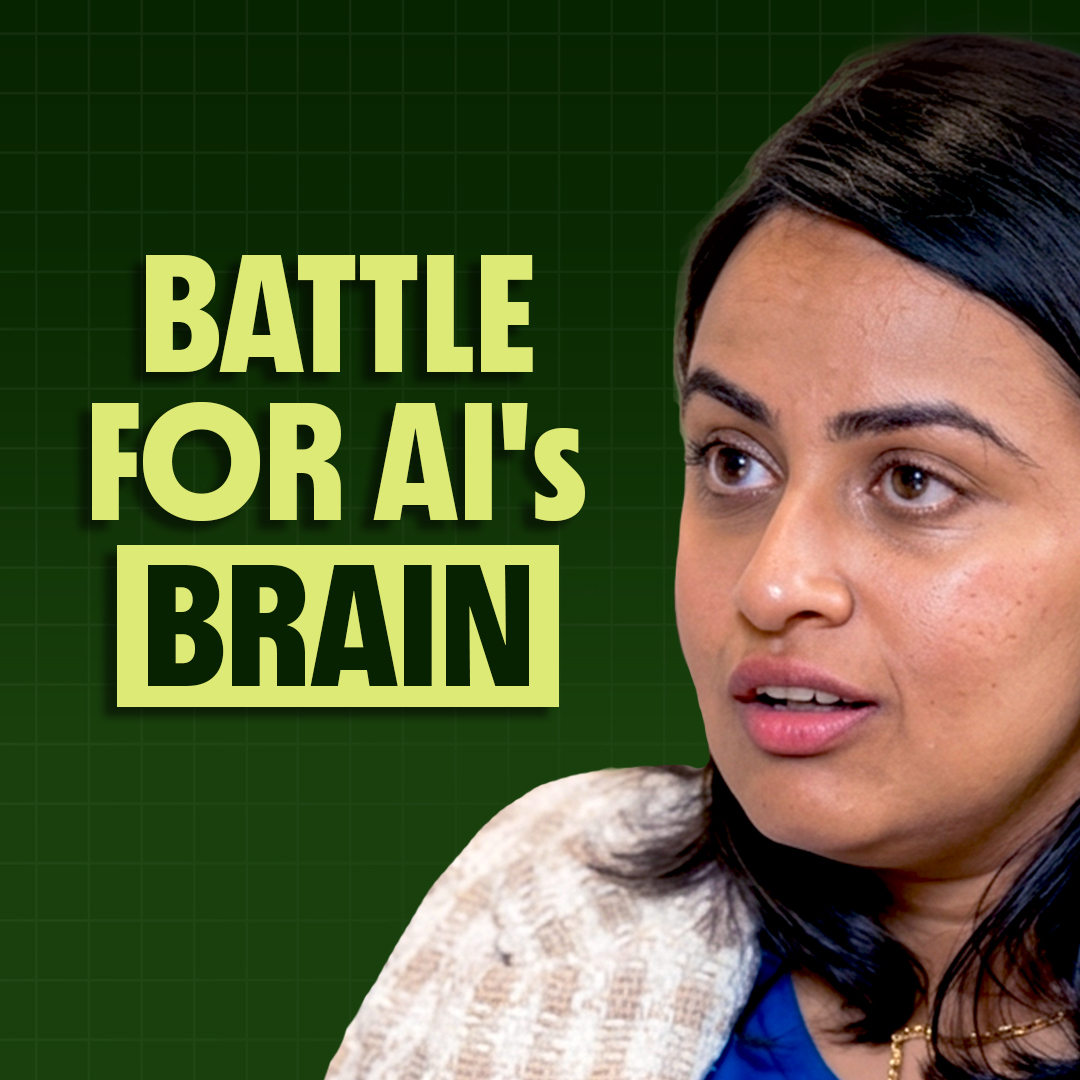
Why The Next $100B AI Opportunity Is Context Engine| Prukalpa Sankar, Atlan
Context has become one of the busiest categories in AI. Every CIO now wants context Engine. Every legacy data catalog and knowledge graph platform has started calling itslef a “context platform”. At the same time reports say that 60% of CEOs say they’ve got $0 benefit from AI.
To understand the nuances, on this episode we have Prukalpa, Founder of Atlan. Atlan started solving this problem back in 2020, long before it became the hottest category. And today it counts 20% of the Fortune 500 as customers with an 85% competitive win rate.
Prukalpa explains how context for agents requires knowledge, expertise, and norms, why Gartner’s “context is king” made the category hot but also created confusion in the market, and why companies now treat context as strategic IP.
Watch all other episodes on The Neon Podcast – Neon
Or view it on our YouTube Channel at The Neon Show – YouTube
Siddhartha Ahluwalia 0:59
Prukalpa, welcome on The Neon Show. Very excited to have you. You are one of the very few entrepreneurs globally who have been working on context in 2019. Bill Gates said back in 1996 that content is king, but you proved that context is king and queen.
Prukalpa Sankar 1:15
Yeah, it actually sometimes feels very surreal because I feel like this problem we’ve been trying to solve for many, many years is now having this moment. I remember when at Atlan, our CDJ blog post said, we want to be the context layer for the modern data stack. And then in 2025, we wrote this blog that said, in the dawn of the internet era, content is king is something Bill Gates said. And we believe in the AI world, context is going to be king. And we scaled the company from doing context for data science and machine learning and analytics use cases to all kinds of agentic use cases, which really started becoming a thing after the reasoning model dropped. And yeah, it feels very surreal because now it feels like the entire world is listening. And we have this massive opportunity to go solve some of the biggest problems that companies are going to face over the next decade.
Siddhartha Ahluwalia 2:19
When was the first time that you used the word context?
Prukalpa Sankar 2:25
2020? And we got to this problem early because maybe a little bit about my journey, I used to be a data leader. So prior to Atlan, I found a company called SocialCops that did a lot of work in data science for social good. And that meant we had these extremely diverse teams, analysts, engineer, data scientists, machine learning researcher, but also economists and public policy folks. And they all had to collaborate together to make a project successful. And as we were scaling these projects, we realized that the biggest gap in this team was the lack of shared context. Lack of shared context about the problem, lack of shared context about the data. Data is really complex when you start making it productionalized. So something as simple as the number on this dashboard doesn’t look right, is a really complicated question to answer because you’re talking about hundreds of systems, data pipelines, metric might have changed, the definition of something might have changed. It’s all these five different people at every stage of the life cycle. And we realized that trust in this team broke down because they didn’t have shared context. So if a number was wrong, you didn’t know if it was because the data engineer didn’t do his job or did the data pipeline really broke because I don’t even know what a data pipeline is. I can’t even see a data pipeline as an end user. And that was the early insight that made us realize that if we wanted these teams to work together really well, you needed to create a way for them to have shared context. And so when we launched Atlan, we launched Atlan as the shared context platform for the data organization. The interesting thing about that was in many ways, we’re now debating the same problem with AI. So with AI as well, the same problem, end users can’t trust the AI. It’s a very interdisciplinary problem at multi-step, multi-people, lots of different domains. And that same problem of humans collaborating on a data science project very interestingly moves over to how we start thinking about agentic outcomes and humans and AI collaborate. And so it’s been really cool to see how the problems become so much more important. So we scaled super-fast from 2020 to 2022 because the snowflake had just IPO-ed and the modern data stack was starting to become this thing. And then a couple of years later, early days of ChatGPT happened and we were very fortunate. We had these early customers. I remember a very large bank here in the US. They told us, you’re the only company that the humans of today will use, but you’ll build the platform for my AI of tomorrow. And I still remember this because they said AI of tomorrow. They didn’t say agents. Agents was not a thing then. But that was when we realized that context was going to become much bigger than data science and every AI use case because humans were the glue for context. Every AI use case, if you want to go towards agentic outcomes is going to need context. And that kind of let the second growth spurt for the company where we transformed into being a context infrastructure layer for AI.
Siddhartha Ahluwalia 5:49
And what I read is that within one year of launching, you had 200 customers across 50 countries. What led to that kind of scale? It’s very unusual for a startup to hit XXX.
Prukalpa Sankar 6:02
Yeah. So there’s multiple things that happened. One was actually because the tools that we built were so hard wrought in pain. You know, it just, we built it out of pain. Like if there was existing product that existed, then it would have been much easier. We would have just bought it. Like we were not trying to, like I think a lot of software, sometimes you start with the thought process that you’re building software because you want to sell software. We were the opposite. In fact, we tried to buy software to solve our own problems. We didn’t want to build software to solve our own problems. And wherever we couldn’t use existing software was where we built our own software. And so I think just that, and then because of this kind of scale that SocialCops had, we just had access to really hard environments and really difficult situations. And when I just say like, how do you deal with this kind of data as a data type, for example, and you’ve done, when at one point we were processing, satellite imagery for hundreds of millions of pixels of satellite imagery a day. So I think that was an unusual background, I think of getting scale like that and then solving problems for yourself. It was also a journey because the interesting journey that we had to go from SocialCops to Atlan was this product market fit journey. And product market fit is about repeatability, not novelty. And we had not built just one internal tool, we had actually built many internal tools. And so the actual journey of figuring out which of those tools are the right tools to pick up to scale as a product market fit journey was one of the hardest sort of first couple of years of decisions that we had to make at Atlan.
Siddhartha Ahluwalia 8:08
So tell us more about the product market fit journey. Very interesting to know that, you know, when earlier, I would say it was a data services company would be the right way to label SocialCops. Yeah. So a data services company to a completely infrastructure company attaining product market fit is also unheard globally. I’ve not seen infrastructure companies usually take three years for build before they can get their first customers.
Prukalpa Sankar 8:35
Interesting. Actually, you’d be surprised, you know, how many companies have come that journey. So DBT was founded like that. It came from a consulting firm called Fishtown. Alltricks was founded like that, came from a consulting firm. Actually, so you’d be very surprised. It’s not, they’re not very popular stories, but you’d be very surprised how many real high quality software products, of course, the Slack story is very well known, but like high quality software products are a bit like that. But I do think you’re right in terms of the speed. Yeah, yeah, the speed and the intra, there’s layers like that, that we would build. So maybe I can tell you how I think about product market fit. And I found that product market fit is a search for truths, not traction. And that’s a really strange thing to internalize as an entrepreneur. So for example, when we decided that we were going to go build tooling that can help every data team in the world, we said, well, this is only going to be powerful if we can go power the most important and the best and the largest scale, iconic teams in the world. That meant that we needed to figure out how to build for that market. And if you studied the journey of any of those teams, or any phenomenal data team in the world, like, you know, they’re, most of them are in the US, like 70% of them are in the US. And then you go to other markets. At that time, that was also where cloud maturity was, data maturity was, et cetera. And so we said, well, if we have to build an iconic company, then that’s the market we have to search. Then the second thing, which was very unusual for us, was we stayed in product market fit longer than a normal company. So normally what founders typically do is they call people that they know and who trust them. And they say, hey, can you please buy my product? And that’s how you get your first 10 to 20 customers. I very specifically did not want to call anyone I knew.
Siddhartha Ahluwalia 10:45
So none of the SocialCops clients?
Prukalpa Sankar 10:48
There was no, in fact, even when we got our first set of investors, not a single investor intro was made for our first 10 customers, which is extremely unusual for like most companies. And our reason for it was because we were searching for truth, not traction. And we knew we could fake traction, you know, like the first 10. Because people, I believe, most people love founding stories. Most people want to help. And most people will find a way if you speak with them and tell them this is the problem you’re trying to solve. They’ll find a way to help you. And that doesn’t mean that they are going to be the right kind of customer for you in the long term. And so we actually ran a very painstaking process of completely reaching out to strangers, cold emailing everywhere, getting our first conversion funnel, figuring out which markets to then. We were a horizontal platform, which was great. You know, VCs love it. It’s actually a horrible go-to-market problem because, you know, where do you start? It’s about repeatability, right? Like a large bank is going to be very different than a small startup in the Bay Area, right? And so how do you find repeatability? Those were the hard decisions we had to take in the journey to our first 10 customers.
Siddhartha Ahluwalia 12:08
And can you tell us, like, I think founders would love to hear, even if you have said it before. How did you find your first 10 customers? And what were you selling to them?
Prukalpa Sankar 12:17
Yeah, so we had a pretty strong thesis about what the product was because we had lived.
Siddhartha Ahluwalia 12:23
And what was that?
Prukalpa Sankar 12:25
So we were basically building, we called it the context layer for a data team, the home for a data team. So we used to say the same way GitHub is for an engineering team. We want to be for the data team.
Siddhartha Ahluwalia 12:36
But data team has a data warehouse also, data lake also. How would you fit in the data stack then?
Prukalpa Sankar 12:44
Yeah, so that was actually a question that a lot of people would ask us, right? Depending on who we speak to. And I’d say 2019 to 2021, people were not really clear about what were going to be the components of the data stack in the market. On the other hand, customers really got it. So when you talk to, like the way I used to talk to data people, when I spoke to data people, you know, we’d say, these are the problems you’ve identified. We should have this slide. And it used to have these Slack messages. And it used to be, which table should I use for this analysis? Number on this dashboard is broken. We don’t know why. And, you know, you kind of go and talk about these challenges because of collaboration between the analysts and engineers and the scientists. And so we used to have this slide of Slack messages. We used to first just validate with them, do you also face these problems? And then we would say, well, would you pay personal money to solve this problem for yourself? Actually, that was our first user insight because we had to build for users, not buyers. Because at that time, there was no buying market. There was just user market. And we almost consistently found that when we spoke to users, analysts, engineers, data engineers in this case, they would say, this was one of the top three problems they would pay personal money for. So that gave us enough insight that first, this was not a problem that only our unique team at SocialCops faced. This was something that all teams, it was a global problem. It was a problem everywhere. So then we had to go from there to say, okay, well, how do we build a buying budget for this? And so in that, we basically ran an outbound campaign to chief data officers, chief analytics officers, heads of BI, like this whole gamut. And we had to figure out who’s going to be ready to buy. And what pain will they have to see to buy for their teams? And we actually should run this very structured discovery exercise around pain, value. We had a hypothesis testing framework. So we actually ran it like a lab. And the intent was to figure out which of these pain points do they care about the most and which persona cares about it the most in which industry. Where are we finding repeatability on pain? And then are they agreeing to a next step? So how many people will just show up on a call with you versus commit time to show up to a demo? And then how many of those would commit to doing a POC? And that was the funnel we measured. And we kept optimizing that funnel. And that became how we discovered our ICP.
Siddhartha Ahluwalia 15:28
So that was a lot of work within one year.
Prukalpa Sankar 15:31
It was a lot of work. I mean, there was a time when I remember actually it was Jan 2020. And we were doing 14 calls a day. And I was still in India then. Which meant that the calls used to start at 3 p.m. 4 p.m. IST. We used to go on till about 2 a.m., 3 a.m. And so actually we built this whole system for how to even manage those calls. Because it wasn’t like back-to-back calls. How do you even manage those calls? So it was quite some… We really tried to go very well. And in retrospect, honestly, I think if we’d gone even slightly later. Because I don’t think what people realize is March 15th, COVID happened. And actually in those insights, we realized we had to rebuild our entire product for the buyer. Meaning the users loved it. But for the buyer to enter, we needed to make some foundational infra changes. So we had to rebuild the entire backend. And March 15th, we stopped getting calls. Because COVID happened. So there was a three-month complete blackout.
Siddhartha Ahluwalia 16:48
Yeah, people were worried about their lives.
Prukalpa Sankar 16:51
No one was ready to take a call with you. If we had been three months late, we would not have existed. Today, we would not be alive. So it always makes me kind of realize how much every… You know, they always say every day matters. But sometimes every day really matters.
Siddhartha Ahluwalia 17:09
And using those insights, you build a product or the product was already built?
Prukalpa Sankar 17:15
So the thesis and the… So there were two journeys to Atlan. The first version of Atlan was built completely user-driven. But in many ways, we built a perfect product. So we got a lot of user love with some early design partner customers. But it was very hard to bring in, give in security requirements and things like that for companies. And so basically March… The thesis of the product remained the same. The core flows remained the same. We just had to rebuild basically the entire infrastructure and the deployment model. So it’s for all intents and purposes, a new product. But the thesis was… The thesis and the core flow stayed the same. We just had to rebuild the way we delivered software.
Siddhartha Ahluwalia 17:59
But you also mentioned that a lot of internal tooling that you build as social cops became part of Atlan. So I’m not able to relate how it evolved building a product from scratch when a lot of the pieces were already built.
Prukalpa Sankar 18:12
Yeah, I mean, in some ways, that was the hard part. Because I think two or three things happen. You build internal tooling. And that internal tooling actually over many years, it gives you these core insights and theses of what works and what doesn’t work. And then you productize it. And then the question is like, what’s the right way to scale this? And then you rebuild. You almost rebuild a new infrastructure, a new scale. I mean, actually, my co-founder Varun always says this. I don’t think software is the… Rebuilding technology is actually the easiest part of this problem. Software itself is fungible. It has always been fungible. I don’t know why people now in AI suddenly are like, oh my God, it was always fungible. It was never that hard to… But building software that people use is the hard part. And that’s a lot of the insights that you generate alongside it. So of course, there were like back-end services, microservices and things like that, that we were able to translate from every version of the product and so on. But you kind of have to repackage and rebuild a lot from a user flow perspective. And in fact, I mean, that was not the last time. I mean, since then, we’ve rebuilt Atlan three times since. And even though it’s like the same user thesis and the market and all of that, you have to keep foundationally reimagining your product.
Siddhartha Ahluwalia 19:33
So for the first few customers, what was the… Again, coming back. What was the use case that you were solving for a data engineer? Since you mentioned that the first few users were individual data engineers and analysts.
Prukalpa Sankar 19:46
Yeah, so two things. So the problem that a analyst and a business person had was that they could not find the data that they could use. They could not trust the data. So when they looked at the data, they would say, what does this column mean? Can I use this column? Is this the right column to use? And so the challenge for the analyst was they used to spend, in fact, about 30-40% of their time just discovering data and playing around with data before they could get to analysis. The problem for the data engineer was debugging. So they spent their entire life where people would call and say, this broke, this broke, why did this break? In fact, like 80% of time of data engineers was spent on debugging things. And the reason they would have to debug things was because things were not connected. So you would actually not know from a database, to a data warehouse, to a dashboard or a data science application, how is data flowing? How is data flowing at a column level? What’s happening? What is changing in the ecosystem? Oh, this one pipeline changed because this core system that somebody else is sending me data from, they changed their API. That changed something downstream. I don’t even know. I don’t even have visibility. So the first problems we solved for these users was we helped them. So what Atlan would do was we would go, we’d connect into your entire estate of systems and tools. We would reverse construct what we call lineage, which is basically a connectivity map down to a column level of how data flows inside your business. And then we opened this up in a very workspace-like environment. So the same way every code profile has a profile on GitHub. We said, okay, what does the data profile look like? Oh, it should be shareable. It should just be a link. I should be able to share that link. It should have my profile of this ecosystem. So I should know frequency and distribution. I should know who owns it. I should know who’s maintaining it. I should just be able to message them right there on Slack. These were the collaboration interfaces we built around the product. That was what our first set of users were buying.
Siddhartha Ahluwalia 21:56
And you mentioned that the product has completely changed two times. So what does the product look like now and who uses it in the organization?
Prukalpa Sankar 22:04
Yeah. So since then, actually, I’d say 50% of our end users are now agents and the rest 50% are humans. So the next big evolution for us as a company was a couple of years later when the early days of GPT happened. And in fact, we were one of the first companies back then to launch an AI product ourselves. So we launched Atlan AI, because our product lent itself very well to AI or AI use case, because we could go and say, oh, we have all your data state. We’ll go auto-document and auto-figure out everything that you need to know about your data state. And that’s when we realized how hard it was going to be to productionalize a true AI system. It was a labor of love, actually. From that time, 2023, Atlan AI, no matter how much we pushed, we couldn’t get to more than 70% accuracy because the models were just not there then. And it’s been a labor of love to get to the autonomous system. We’ve rebuilt our harness like three or four times in the journey of getting there. But that was also when we realized that context was going to be bigger than just something that data users served. It was going to be something that every AI agent was going to need. And so the types of context that they needed was going to be very different. So for example, let’s say I’m a customer support agent. And a customer calls me and says, my order was not delivered today. I need a refund. And I’m really upset with you. I need to go get, you know, I’m going to go on social media and I’m going to complain about it. At this point, if you want to solve this problem for the customer, first you need to know knowledge. You need to know who’s the customer, why are they calling, what happened in the order, you know, what went wrong. But then you also need expertise. Like how do I run a de-escalation playbook? The customer told me social media, that’s a different de-escalation. And then I need norms. What am I even allowed to do as an agent here? Can I refund more than $50? How do I, who do I go to? This is the context that any agent, actually human or AI agent, needs to be able to solve this problem for the customer. Knowledge, expertise, and norms. So if you have to build this in a business, you need to be able to bring together first the map of the business, which is the ontology and how this business works and runs. The tacit knowledge and the expertise in a way that’s encoded for AI to be able to take and build and learn from. And then guardrails and norms that you’re again encoding inside the organization. That is what we call the context layer. And it’s a category that’s now being called AI context platforms. And what we do for customers is we now create this almost shared enterprise brain, I would say. Where it’s the brain, it reads from all your existing systems. It’s pulling from that. It’s using a lot of AI to create the first version of your brain. And then it’s serving all these agents downstream. And then it’s taking traces from all of these agents downstream. And it’s bringing back and improving your core context inside the business.
Siddhartha Ahluwalia 25:25
So today, who would be the other companies that Atlan sits along with or Atlan has replaced?
Prukalpa Sankar 25:34 – 27:06
Yeah, so we typically sit alongside agent orchestration frameworks or harnesses. So customers would use, you know, name it. They would use Google ADK, or they use Landgraf, or they’d use, you know, something from the Frontier Labs and or the hyperscalers. So that, you know, the agent orchestration layer is something that we typically will work alongside. We would work alongside the AI control plane. So this is where, you know, gateway or guardrails or, you know, ecosystems like that would fit. And then there would be existing data platforms and systems of record, right? So this would be Salesforce, Snowflake, Databricks, so on. So those are the ecosystems that we connect into to create the shared. So on one side, we pull, on the other side, we push, and then we bring back and improve this core context layer for companies. What we end up replacing, it’s an interesting question, because it is foundationally a new category. So there isn’t, you’re not necessarily replacing too many things. But what we see customers say is we used to have old-school data management software or data catalogs or metadata management platforms. And these platforms used to basically just like, they’re just built on static data and they’re built for, you know, my human consumers. And so, you know, do I even need that anymore? And that’s basically where they typically, you know, for TCO purposes, you’ll see customers replacing their or retiring their spend on these old-school incumbent products.
Siddhartha Ahluwalia 27:07
Got it. And has any company came in the category of Atlan in the recent one or two years?
Prukalpa Sankar 27:14
Well, in the last three months, it’s the hottest category in the world, because in March, Gartner went on their data analytics summit this year, and they said, context is king. It is going to be the biggest category this year. It, you know, it’s a board-level investment. Go take it seriously. And so since then, in fact, there is, both it’s an amazing moment because I’ve been speaking to a CIO or a CTO or a CBO on a daily basis on, you know, how they should think about their strategies. But on the other hand, there’s a lot of rebranding, right? So you’ll see, you know, semantically, your platforms are rebranding as context platforms and ontologies and knowledge graphs are rebranding as context platforms and data platforms are rebranding as context platforms. The model layers and the agent platforms are saying they have a context layer. So right now, there’s a lot of confusion in the market. You’ll see people starting to approach it from different directions. So on one side, the agent platforms are trying to approach and own parts of it. The, you know, the data side they’re trying to own. So like, there’s a lot of confusion, because I think people have realized how critical context is. It is going to be company IP. It is going to be the true differentiator or the moat in this new world. People have realized that. So there’s a lot of, we’re in the hype cycle from a market perspective. The next year, year and a half, is going to be a lot about execution and which company truly stands out and goes and drives that. I think we’ve been very fortunate to have pioneered this category and, you know, been really building this. When people see what we’ve built, they typically go, oh, wow, this is two years ahead than anything I’ve seen out there. Now, you know, the pressure I feel on a daily basis is, can we go compound that? And can we make sure that we can go really win this at large scale?
Siddhartha Ahluwalia 29:07
So let’s say today, how many of the Fortune 500 would actually have as customers?
Prukalpa Sankar 29:13
About 20% of the Fortune 500.
Siddhartha Ahluwalia 29:15
Already 100 customers from Fortune. And I assume your weeks as a CEO are filled with customer calls?
Prukalpa Sankar 29:27
It depends on the week and the quarter. What I like to do is every quarter, Varun, our co-CEO, so it helps. So we have just more, we have more bandwidth and the ability to do more. But what I like to do is every quarter just say, okay, these are the three biggest priorities that we need to solve. And I try to prioritize my time on the basis of that. But almost always customer facing conversations will be a core part of it. So I will spend at least 20 to 30 percent of my time, if not in some cases much higher in front of customers.
Siddhartha Ahluwalia 30:07
So what are the time that you are spending on building what these days?
Prukalpa Sankar 30:11
Completely random things actually, like I like to build with AI. So sometimes it would be internally, in fact, I made some of the first commits to our internal marketing context layer. So we’ve built something called a marketing OS which powers all our agents and we have about 16 agents and all the humans in our marketing team. So sometimes it would be, you know, building internal tooling for ourselves. Sometimes it will be experimenting on, you know, how to solve certain problems that I’ve heard about and so on. And sometimes it will be like personal AI projects too, like just personal things that make me, like I have now finally gotten to a point where my email is truly autonomous and that took a lot because it was a lot of context engineering that I had to do because I get lots of different kinds of emails and I needed to go read all this context about the company and the company brain and like come back with like the recommendations. So it’s a mix of those.
Siddhartha Ahluwalia 31:08
So why has context become so important for a CIO line item while buying? Earlier context was never in the CIO top 10 priorities or any priority, right? If you try to sell enterprise brain or context. But today every CIO wants a context engine inside and you mentioned that you are also having a call every day with a CIO.
Prukalpa Sankar 31:31
Yeah. So I think what’s happened over the last couple of years is we’ve been in the middle of this AI hype cycle and on one side we all read the model breakthroughs that are happening. And by any measure, we have compounded in intelligence, right? Like last 10 years, we have compounded in intelligence for model 1000x. In the last six months, 2x. Two years ago, it couldn’t pass the bar. Today, if it took a bar, it would be in the top 1% of the test score. So we all read these headlines. But at the same time, you look at what’s happening inside real companies and you say, well, how much impact has this created? I work in the real world. I work with real companies. And they typically say, oh, you know, we had this one project that went into production and all the stats supported like 60% of CEOs say zero financial benefit from AI. Only one out of five projects that we work on actually make it to production. So clearly something’s going on, right? Like there’s cognitive dissonance between what’s happening. I believe the answer actually rests in understanding how humans work. So every time I face an AI problem, I go back to what is going on with humans. So let’s think about how humans perform on the job. Would you say that your best employee is also the person who scored the highest on the SATs? Or would you say that it’s the person who learns the most and takes feedback the best and works the hardest? This is what in the real world we call performance. Performance is real world outcomes that you want to create. And performance is a function of two things. It’s a function of intelligence. But it’s also a function of context. Context is actually what they call learning on the job in a business. And in fact, less than 10% of human job performance is explained through cognitive intelligence. Everything else is context and how you learn on the job and how you act in real life. So what has happened now is over the last year and a half, most companies have tried to adopt AI. And they’ve realized that beyond simple things like helping humans write better email, if they want to actually drive outcomes where AI is able to take off tasks that humans do or really try to push the frontier of what they do, they’ve realized that they need to go invest in the tacit knowledge and the context infrastructure that they’ve actually built for humans. Just think about it. For humans for the last 100 years, we’ve done this. You onboard people. You give them a manager. The manager gives them feedback. They have colleagues. They learn from their colleagues. They make mistakes.
Siddhartha Ahluwalia 34:14
There is first 90-day playbook. How do you make an employee win in the first place?
Prukalpa Sankar 34:17
Exactly, exactly. So we have done this for humans. Now you have to figure out, well, how do I actually do it for my AI and for my agents? And that’s the context layer. The context layer is really about taking what makes your company unique and making it something that can make this AI actually useful and accurate in the world. The second thing that has happened is that people have realized that in this world, where everyone has access to the same models, intelligence is getting commoditized. So you and I have access to the same intelligence. My competitor and I have access to the same intelligence. So they’ve also realized that actually the IT of the company is actually their context and how they build the self-learning loop of what makes their company special and unique. And then how can they learn both from humans and from AI over time to build a self-improving loop or a compounding company or a frontier company in many ways. And so that’s the second thing that’s driving this investment where this investment has gone beyond just an enabling technology for AI. It’s actually become a strategic initiative where CEOs are starting to care about how do I actually manage my context because this is going to be my IP. This is what I don’t want to let model strain on. I don’t want this to become something that is external to my company. I want to make sure that it’s not logged into a single provider. I want to manage it like it’s a true asset.
Siddhartha Ahluwalia 35:46
And so when you used to talk earlier versus now, how is your positioning changed? Let’s say earlier you would have to explain, I assume, that having organizational context through Atlan would bring x losses down or bring x revenue up.
Prukalpa Sankar 36:04
Yeah. So I think what’s changed is that about a year ago, all the conversations I would have would be context is important. You cannot get your AI to be successful. In fact, investing in the orchestration layer or the model layer, that’s the easier problem to solve. Building an agent is easy. How do you actually make it accurate? How do you actually manage your context? That’s going to be the hard problem. And so I had to, I think, do a lot of evangelism about the category itself. What has changed from that to now is that I don’t have to evangelize the category at all. People have realized, in fact, Gartner says that about 75% of accuracy and 50% of cost, which is token usage, is going to be realized gains that are going to come from context for businesses. And so I think that has helped for most companies to realize how important and strategic this investment is. So today my conversations are actually a lot about, well, I am convinced, but how do I do this? If I really want context to become a discipline, the same way I start thinking about data as a discipline in my company, how do I start building this discipline? What does context actually mean? How do I differentiate between different types of context? Where do I start? Then what’s the operating model that I need to go invest in? All technology companies, I think, think that the world revolves around them. They’re like, well, the world is actually like, no, like for most people, they’re not waking up in the morning thinking about your technology. They’re thinking about their business and their business problems and how to get things done. And today a lot of my conversations with CIOs and CTOs and AI leaders has been how do you operationalize context like it’s a true asset in your business.
Siddhartha Ahluwalia 37:54
So probably everything for you is greenfield, right?
Prukalpa Sankar 37:58
It’s very greenfield. Yes, it’s very greenfield.
Siddhartha Ahluwalia 38:02
Which is a great place to be.
Prukalpa Sankar 38:04
It’s a great place to be. So I was talking to a sales rep at Atlan the other day and he said my competition is market confusion, which is a good thing and a bad thing. So it’s a good thing because we have been pioneering this category. I believe we’re the most forward in this category. I think that puts us in this unique position where we can go help customers and help customers do great things, right? I mean, can we accelerate drug discovery? Can we, if we have a customer that’s trying to deploy an AI agent for doctors and can you make sure that that’s accurate? And there’s just the coolness of the problem and if you have to ground this in real truth, you know, the impact you can drive is phenomenal. We get to be a thought partner. Most of our customers tell us we want to be, we want to partner with you, we want to learn with you, which is a phenomenal place to be. It’s also a challenge because it’s not a commodity and in fact the world is trying very hard like especially in the market we live in. I think there are more sellers than there are buyers right now in the market, right? It’s like we’re in the middle of this AI, everything is AI, everything’s trying to sell something AI. And that means that you have to really make, truly be an advisor to a customer on the other side and how do you ensure that in a world where your, you know, the world is changing so fast and how your harness strategy, context retrieval, retrieval is changing every couple of months. So in that world how do you ensure that every single person in your team is truly able to be that advisor to the customer. I think that’s the challenge that comes with it.
Siddhartha Ahluwalia 39:47
And today how much, let’s say compared to one year ago, how much the sales process has become easy?
Prukalpa Sankar 39:59
I suspect that it would depend on the person that you ask, which is again the same, like it depends on what you call easy, right? So it’s a much more strategic initiative. So we have bigger budgets, more important people, we can get to the CIO or the CTO, bigger, more impactful project, right? Like that’s, like you said, like the value add of being more and more strategic over time and like we’re top of mind, like we’re like top three initiatives that people want to find. On the other hand, you are not selling technology. Like, you know, it’s not like someone’s buying a product and you’re selling a product. You are selling them, you’re helping them figure out how they should think about their context strategy, which is a strategic initiative. And so it used to be much like, you know, we at Atlan, this is probably a public number, our competitive win rate is 85%. So if someone tests Atlan against a competing product, we would almost always win. Because we were like, we invested dramatically in product. And so what that meant was that those were pretty easy, right? Like in a different way, in a commodity buying cycle, you can basically say, check, check, check, check, check, check, check, check, check, check. I have more checks than you. Versus saying, okay, well, are you sure you understand what’s different between this and this? And here’s how you should operationalize your strategy. That’s in some ways a harder conversation to have. So I would say it depends on who you ask on whether it’s easier or harder.
Siddhartha Ahluwalia 41:37
So are you helping build RFPs then?
Prukalpa Sankar 41:40
Absolutely. We’re influencing. I mean, I don’t really know if there are RFPs per se anymore, because again, the category is too early. But we’re spending a ton of time evangelizing the category, building the market for the category, shaping what we believe the category should be. How should you think about evaluating a category? How should you evaluate a POC? What does it take to get to success? All of those are things that we’re shaping today as we work with our customers.
Siddhartha Ahluwalia 42:10
So Atlan is truly an AI-native product, right? But you mentioned that you have built an AI-native organization to make the customers AI-native, right? So first of all, what do you mean by AI-native? The term is being used and abused a lot. And then discuss about the process of how do you make that?
Prukalpa Sankar 42:29
Yeah. So the way I like to think about this is, you’re a truly AI-native company, if you operate like the technology truly existed today. And you are ready to reimagine everything. I actually am recently starting to call this a frontier company, where you are ready to reimagine the process, the foundational process. Why does this even exist? Why do we do this this way? Human roles, teams, team structures, who reports to who, leveling structures. You have to foundationally reimagine how you operate as a company to be truly AI-native or on the frontier. Versus I think, the other option of it is you could say, hey, this is how I do things today. I’m going to go slap on AI a little bit on top of it. And I could do that really well, I could get a lot of productivity just doesn’t mean that I have truly imagined what my company could be, depending on where the technology exists today. And so when we started this journey, I remember right after the reasoning model dropped, and we had this realization that the world was going to change again. So we wrote this memo. And we said our company needs to be able to be the most AI-native company on the planet, for us to be able to take customers there. And we want to embark on this journey to become truly AI-native. And since then, I would say we’ve gone through broadly, three stages of that transformation. And the third layer is I think, where we’re starting to enter now, which is this idea of a frontier company or a truly self-improving company where you can have fleets of agents that are going and doing their job. At the same time, they’re collaborating with humans, humans are managing these fleets, multi-human collaboration. One of our biggest realizations has been that humans will always be the center of AI. And how humans expand their creativity and their thinking through this is what is going to actually drive the next wave of this. And so but there’s still AI is a very single player game. It’s not a multiplayer game. So how do you help it become a multiplayer game? This is actually also where the context layer, not to make a plug, but like really comes alive. Because for example, I write a skill in my function. Like for example, I’ve written a company positioning skill. The company positioning skill also feeds into our BDR outbounding skill, which also feeds my customer success. Now, let’s say I have updated my product positioning skill. How does it feed the downstream context on these? Same, I have a competitive intelligence agent. Technically, that should be taking and learning to improve the code positioning, how do you build those loops? And then who’s responsible for it? Because there’ll still be a human who’s responsible for product marketing, there’ll still be a human that’s responsible for it. So then which human is taking accountability on this?
Siddhartha Ahluwalia 45:45
Who’s responsible for the agent?
Prukalpa Sankar 45:48
Who’s responsible for the agent? Who’s responsible for the context behind the agent? Those are all the deep problems that need to be solved. And this is really what we call the sort of like this utopia of self-improving company. And I think this is actually what people don’t realize about AI. A lot of people today think about efficiency AI. But I think the most beautiful thing that AI can do is it can break down this weird organizational silos that was created over time because of human inefficiency. Think about it. You have heard from a customer that from a something went wrong or like this is feedback that you’ve heard about the market. But typically, as companies go, by the time that feedback comes back to product and then it comes back to strategy, you are talking about a year of a decision-making process. Now, then by the time it takes from the strategy to feedback into product and to the customer, you’re talking about at least another. This is for the fastest company that exists in the world. You can flip that. You know, like the most, I had a customer the other day tell me this, we’re helping them with their customer support agent with their context layer for it. They said, actually, my vision is that the customer shouldn’t even need to call. Like today, we are trying to optimize the call center. But actually, the long term is that the customer shouldn’t have to call. I should already know what is broken. I should already be able to go fix the network issue that is happening. And I should be able to bring all these two to actually just completely self-learn and improve the loop. That’s what we think of as the third. I’d say we’re in early stages of entering that in some of our functions today. And we’re on the quest of rebuilding the entire company in that way.
Siddhartha Ahluwalia 47:36
Got it. So, have you heard about how the Frontier Labs are building their teams?
Prukalpa Sankar 47:44
Absolutely. Yeah, we spend a lot of time learning from how the Frontier Labs are building their teams, how some of the companies that are operating at the Frontier are building their teams and building their internal tooling and workflows and so on.
Siddhartha Ahluwalia 47:59
Is it similar to what they’re doing?
Prukalpa Sankar 48:03
Yes, I’d say. I mean, I think there’s, you know, it depends on which part of a Frontier Lab you’re talking about today, because, you know, they’re also building in some version of organized chaos today. But I’d say this idea, if you talk to the top 10 AI native companies out there in the world today, many of them are starting to think about, and you’ll see this actually, in the last two months, you’ll see some things, right? Like, you know, Block opened up Buzz, which is a multiplayer game. You know, CrowdStrike recently started talking about multiplayer. Ramp talked about Glass, which is their internal marketplace for how to share skills across the ecosystem. So you start seeing across the most Frontier companies, this idea of AI as a colleague, needing a common context layer, needing to build tooling and infrastructure for multiplayer ecosystems. So you’ll start seeing those kinds of things operate. And then people are reimagining roles. For example, we have reimagined roles inside Atlan. Like, for example, we say, in the old world, they used to say T-shaped human. Pick one thing and go deeper. We believe in this next world, it’s, you know, it goes from T to E-shaped to, you know, M-shaped to, you know, you’re almost V-shaped actually, right? And this is the interesting part we’ve realized. Actually, as AI nativity increases on one side, like if you think about the axis of impact, certain human skills also become much more important. So when AI raises the bar, judgment, taste, being a force of nature, these are all human skills that actually become far more important on the human skill axis. And actually, unfortunately, we’ve not pushed humans. Like, if you think about it, how many people have been given feedback that they need to improve their judgment?
Siddhartha Ahluwalia 50:02
Yeah, I know. Don’t hear that.
Prukalpa Sankar 50:04
Right. And so, for a long time, humans have not been pushed intellectually or taste. You don’t have taste, you have to improve taste. You never heard pre-AI, because it was okay pre-AI.
Siddhartha Ahluwalia 50:17
Yeah, because everybody was so busy in the busy work.
Prukalpa Sankar 50:19
Exactly. I think now we are being pushed as humans and humanity to be able to go learn. And these are all things you can actually, if you look at the best people in the world and why do they have judgment like this? You ask them what books they read, you ask them what newsletters they follow, you will be able to reverse construct why they have judgment. So there’s ways to reverse construct. This is just that humans have not been pushed for a long time and it’s been okay. And now those things have to, on one side, you have to scale your AI nativity, on the other side, you have to scale your human skills and judgment. And those are, I think, the things we have to figure out, which is, and so you might have seen this, we recently launched something called Atlan Frontier or Becoming Frontier, which is like, we’re opening up all our experiments, how we are learning, how we’re thinking about orgs. And in fact, the core purpose is, there’s right now a lot of AI theater going on. So people only share the good things about AI. Nobody shares the experiments that went wrong and I made this mistake. And so what we’re trying to do is we’re trying to bring the conversation back to how do you build orgs around AI? And how do you actually build and learn together? Like the learnings we have today, we’re very open to changing our minds six months later, maybe we tried something and it actually doesn’t work at all. And that’s been a core part of who we are trying to be and really push the thinking of how you rebuild orgs in this world.
Siddhartha Ahluwalia 51:46
Got it. And it will be very interesting to note how at each round, you mentioned that investor always happened inbound. How did you meet those investors? And what made you choose those investors?
Prukalpa Sankar 51:58
Yeah. So one of the things that we were very fortunate about was that our space and our category became extremely hot starting 2021, which is, so a few things happened, Snowflake IPO, because of that, there was this big explosion of data ecosystem. And there was a lot of venture capital money that flew into the ecosystem, which is a good and a bad thing, you know, like AI, the same things happening actually right now with AI. So there’s a good, which is there’s capital and there’s innovation, there’s also a bad because a lot of people start founding companies for the wrong reasons. Like I know, I literally know of people who have been given $5 million by VCs and said, please go start a company, right? Like, why don’t you start a company? But what that did for us was, it gave us a lot of inbound interest where people would start reaching out from fairly well reputed firms and would typically be like high quality people. Because if you searched for anything about our category, we would show up right on top. And that became my way of starting to get to know more people in the ecosystem. Because one thing that was really unique about our journey was Atlan was not born like a typical Silicon Valley company. We were at the time in India. And we were competing against the best and the best of the world. And most of the best and the best in the valley were born in the valley. They have lived in big tech in the valley, and we were not that company. Which meant that in every moment, we had to show up, like we were 2x of what anyone else would do. We had to earn everything by working twice as hard and showing up.
Siddhartha Ahluwalia 53:47
Earning your seat at the table.
Prukalpa Sankar 53:49
It was not given to us. We didn’t look and feel like the company that was supposed to win in this category. So we knew that we would be scrutinized more, like the quality of our product would be scrutinized more, the quality of our website would be scrutinized more, like how we had copy would be like, all of these things that make a company were all things that we had to put a lot of heart to, to make sure we punched above our weight in every moment. And so as I would meet these people, actually, I would not, I would just talk to them. And I would ask them about the market. So I would typically introduce myself. And then after that, I was just like, I would just learn. And then I would ask them for help. So my favorite questions was, I would say, well, okay, how can I leverage you? How can you help me? You know, are there customers you can introduce me to? And then my favorite question used to be, who are the smartest people that you know, that you’ve had the best conversations with, and they would tell you some list of names. And then I’d say, oh, wow, like, can you introduce me to this person? Someone gave me that tip early on. And it has been one of my best questions. And, you know, the reality is out of everybody that I spoke to, maybe out of the five that I spoke to, one person would make intros.
Siddhartha Ahluwalia 55:06
Yeah, would not.
Prukalpa Sankar 55:08
The conversion, yeah, the conversion rate of this is not very high. But of the five people, one person would make intros. And that firstly allowed me to expand my network, because I would meet from a credible person, I would meet another credible person who you know, and so that just allowed me to just meet people in non-fundraising ways. I would just meet them, I would learn, I wanted to learn about these things. We were very curious. I was mostly trying to learn about company building, what people saw, I was trying to learn at every one of those stages. And what that meant was that every time we were raising, we just already knew who we wanted to raise from, we have seen them, some of them have made customer intros, we have won those customers. Actually, every round that we closed, when we raised from an institution, the institution had helped us close some customers.
Siddhartha Ahluwalia 56:01
Just as example, how did Waterbridge round happen?
Prukalpa Sankar 56:05
Waterbridge is the only unique one, because they were our seed check. So they happened before even Atlan existed.
Siddhartha Ahluwalia 56:12
So how did they find you?
Prukalpa Sankar 56:14
They were an intro. So Pankaj Jain from 500 Startups was a investor at SocialCops. And Pankaj introduced me to Manish from Waterbridge. And we were still SocialCops, so we were not actually Atlan then. And I remember meeting Manish and we showed him some of the work we were doing. And then I basically, and we were not raising. In fact, SocialCops was profitable, so we were never going to raise. And so what I ended up telling Manish was, look, we built all this internal tooling, and we think that there’s possibly a product that we might want to build that is right in this market. And so we’re thinking about whether we want to do that. And I always joke to Manish because I say, I have no idea why you decided that you wanted to invest in us. He has a different version of the story. And he said that he saw just a spark and we knew these problems deeply. But Manish basically said, hey, I’d like to put in a seed check. And what was interesting, because when I spoke to Manish was, I said, well, I really don’t know how this is going to go. And are you still going to be along with us in this journey? And the journey that we did, because that was really important to me. And that’s basically how Manish came in.
Siddhartha Ahluwalia 57:30
So the company got formed at that point in time only?
Prukalpa Sankar 57:32
Yes.
Siddhartha Ahluwalia 57:33
It was a Singapore HQ company?
Prukalpa Sankar 57:34
Yes, yes, yes.
Siddhartha Ahluwalia 57:36
Amazing. And then Manish connected to Peak?
Prukalpa Sankar 57:42
How did Peak happen? No, it was, the way Peak happened was when we launched Atlan publicly, Ashwini from Mastry Den had reached out to me and she said, hey, I love what you guys are doing. And I’d known her before. And she said, listen, there’s just one, because Mastry Den had been one of the only other companies in India that had built infrastructure and AI and so on. And she said, there’s one investor that you have to speak to. And it’s Roy from Peak 15, Sequoia back then. And so you should definitely meet Roy. And I remember meeting Roy and we had this great conversation. We were not ready then, we were still early. So we kept in touch. And then about six to nine months later, it felt like we were going to be ready. And then that’s when, I think there were two batches into Surge. And Surge had, they were starting to scale Surge. And we said, okay, this might make sense. Let’s go into Surge.
Siddhartha Ahluwalia 58:42
And then next was Insight, I assume.
Prukalpa Sankar 58:44
Insight was our series A, yes.
Siddhartha Ahluwalia 58:46
And that also happened by some introduction?
Prukalpa Sankar 58:50
No, Insight was an inbound that had happened. That was around the time that our space had started to get hot.
Siddhartha Ahluwalia 58:58
In 2021.
Prukalpa Sankar 58:59
In 2021. So I ended up speaking to someone at Insight through an inbound. And we were starting to scale and win customers and so on. And we had gotten preempted. So actually, we were very, I was not actively raising then. And so I had the standing call with this person at Insight. And we were negotiating at that time. And I said, hey, I don’t know, we’re possibly going to raise another round. And Insight came in super fast to come in. And Teddy, our partner there was just a phenomenal investor. I always joke about this. The other series A that Teddy had done at that time was Viz. No pressure. So yeah, but Teddy was phenomenal and so we decided to battle with Insight.
Siddhartha Ahluwalia 1:00:03
And similarly, the next round GIC and Meritech happened?
Prukalpa Sankar 1:00:06
That was a series C. The next round was Salesforce Ventures, Peak and Insight co-led that round and then the round after that was GIC and Meritech.
Siddhartha Ahluwalia 1:00:18
I assume all of them would have been largely inbound because by the time Atlan was already in the category.
Prukalpa Sankar 1:00:24
Yes.
Siddhartha Ahluwalia 1:00:25
So, founders in India were listening to this podcast. Now, their questions would also be around the initial 0 to 10 GTM or 0 to 10 milli-hour GTM. What are the things that you can share that worked in? And this is probably the last question that we have on the podcast. We’ll have to conclude with this. What would be your learnings on it? What would be your advices?
Prukalpa Sankar 1:00:52
I would say, firstly, breaking the journey between 0 to whatever 1, 2, 3. And then the next phase is important because the first phase is actually truly product market fit and you’re in a search for truth, not traction. I would advise founders to take as long as it takes. Because product market fit is the only thing in the world you can’t force. It just takes as long as it takes. And holding yourself to the journey of making sure that you are finding truths and not searching traction because otherwise what happens is, so you see that two places where companies break, right? You either never find product market fit or you find product market fit, but it’s an average product market fit. And so you peter out at 5 million or 7 million because you can’t scale beyond that. And trust me, it’s really hard. Imagine you get to 7 million, then you’re like, I have to rebuild everything. Then it’s even worse. So you’d rather stay and iterate and experiment in the early days and then very quickly go from 1 to 10 and 10 to 100. That’s kind of the second mental model. And then maybe the third one, and this is specifically to founders in India, play the biggest game that you can play. Play for the biggest problem that you can go after. Play for the right market. Don’t do easy. Go after the hard problems and then do what it takes. If that means you have to move countries, move countries. If that means you need to prove through work, sometimes you just have to learn to prove through work and you have to show up. You have to earn your seat in the table. Well, go earn your seat in the table. And everything else tends to work out.
Siddhartha Ahluwalia 1:02:45
I mean, specifically today, what is true is founders, especially a CEO being technically very robust is a necessity.
Prukalpa Sankar 1:02:57
Maybe. I mean, I don’t even know what that means anymore.
Siddhartha Ahluwalia 1:03:00
For example, earlier, let’s say there was a version when you were selling SaaS, right? Maybe till 2020. The core personality was that the CEO was a great GTM girl or a guy, and the CTO used to be, again, extremely nerdy girl or a guy. But I think, at least what my observation in some of our recent best companies is, both the folks are technically at par, equal. It’s just that one decides to take the role of a CEO, and the other decides to take the role of a… You can’t be a person who hasn’t built products, hardly built a product, not a product manager, to build products and be a CEO of a…
Prukalpa Sankar 1:03:46
I mean, yes, but I think that’s also true just for anybody. I don’t see what role you can do without building anymore. I think everybody is a builder. I don’t think that…
Siddhartha Ahluwalia 1:03:55
But a sales guy don’t need to be a builder, right?
Prukalpa Sankar 1:03:56
Well, I actually think they do. I think if you’re trying to sell to the frontier, how are you going to have a conversation with a customer who’s talking to you about the difference between model gateways and three harnesses and memory systems? How are you going to have that conversation? Why are they even going to talk to you?
Siddhartha Ahluwalia 1:04:13
So do you look for these kinds of sales guys?
Prukalpa Sankar 1:04:15
I definitely expect them to build. I don’t think it’s the first skill. So I think in sales, for example, force of nature is a really important human skill.
Siddhartha Ahluwalia 1:04:25
What do you mean by force of nature?
Prukalpa Sankar 1:04:27
Force of nature. Like managing the humans and our best salespeople will just never stop. There was this one time when we had a deal where it was stuck in procurement and there was a procurement person and we weren’t getting into that. The procurement person was not calling. Someone was out of office. And this guy just found this person’s number on the internet. And just the procurement person, they randomly had a cold call online and say, can you move this? It’s in your queue. It’s like, who are you talking to? And so there’s just truly being a force of nature. I think that’s a really important skill. I think problem discovery, like leading with the problem and understanding the problem is really important. So like sales, for example, you’re absolutely right. I think it’s one of those careers where some of those human skills are really critical. And of course, I would think of those human skills differently for someone in product or engineering, like their judgment or taste will be more important. But and of course, the expectations of how you build with AI will be different there versus here. But absolutely, I do think everybody is a builder. Everybody should be building. And I think the lines are blurring very, very fast. And this is actually not just me. The best CEOs I speak to, Fortune 100 companies, they are building. The other day, I actually had like a CIO who told me like the reason context became really important for them was because their CEO was on cloud code and public company. That that too in, you know, not a tech place, not like you would not think very traditional industry. And he wrote a skill and he said, you give me my reports like this. And so then the whole team has to go. And then the best CIOs I know are coding and they’re building. In today’s world, you can’t be a leader and not be pushing your team. I truly believe that you have to be in the leaders. And the bar is so low. There’s no excuse. It’s so easy. There’s no excuse to not set up and build yourself today. It was much harder five years ago. And so I think that’s true for everybody, not just for founders. Of course, for founders, it’s more important than for others.
Siddhartha Ahluwalia 1:06:42
So again, coming back to the question, your first advice for founders trying to build for the global market, specifically for the U.S. market from India is find your product market fit really, really hard. Like it’s the truth that you cannot escape. You cannot fast track it. If it takes three years, four years, whatever it takes, you know, invest that time.
Prukalpa Sankar 1:07:02
Take your time.
Siddhartha Ahluwalia 1:07:05
What about the second part, which is the scale?
Prukalpa Sankar 1:07:11
Go after repeatability. So find the bottleneck to repeatability. So the best advice somebody told me was the bottleneck is not sales. It’s demand generation and pipeline. So find what is the channel, like find the two things you need to drive for driving repeatability and scale and find what is repeatable. And the second there would be, you have to keep the bar high. So taste, judgment, quality. At this time, you’re probably, it’s a competitive world. In many ways, you have to be able to punch above the weight. And I think just keeping, pushing the bar high on that personally, even though you, I mean, I think the challenge that India has is that India doesn’t have the ecosystem that the Bay Area has. In the Bay Area, you had Adobe that passed to Google, who passed to Facebook, who passed to, you know, like there’s just this like legacy of learning. We have a much shorter legacy of learning in India. But today learning is the easiest thing in the world, right? Like you can learn from anyone and anything. People respond to cold emails, people respond to Twitter DMs. It’s just the most beautiful world to build. So hold your bar high and it might not feel like you’re there today. It might, you know, it might feel like it’s too far. But if you just hold your bar high, then I think you’re already better than 99% of the world.
Siddhartha Ahluwalia 1:08:38
Well, thank you so much, Prukalpa. I really enjoyed our conversation. Learned a lot from you.
Prukalpa Sankar 1:08:43
Same here. This was amazing.
Siddhartha Ahluwalia 1:08:44
Thank you so much again for making this happen.
Prukalpa Sankar 1:08:46
Awesome.


Know when new episodes are released. Subscribe to our newsletter!
Explore Playlist

How AWS, AngleList and Now AI Killed The Old VC Playbook | Nakul, Audacious
Which SaaS Companies Will Survive Anthropic and OpenAI? | Tim Guleri, Sierra Ventures
The Unusual Strategy That Helps ArmorCode Grow 100% YOY | Nikhil Gupta