



379 / July 7, 2026
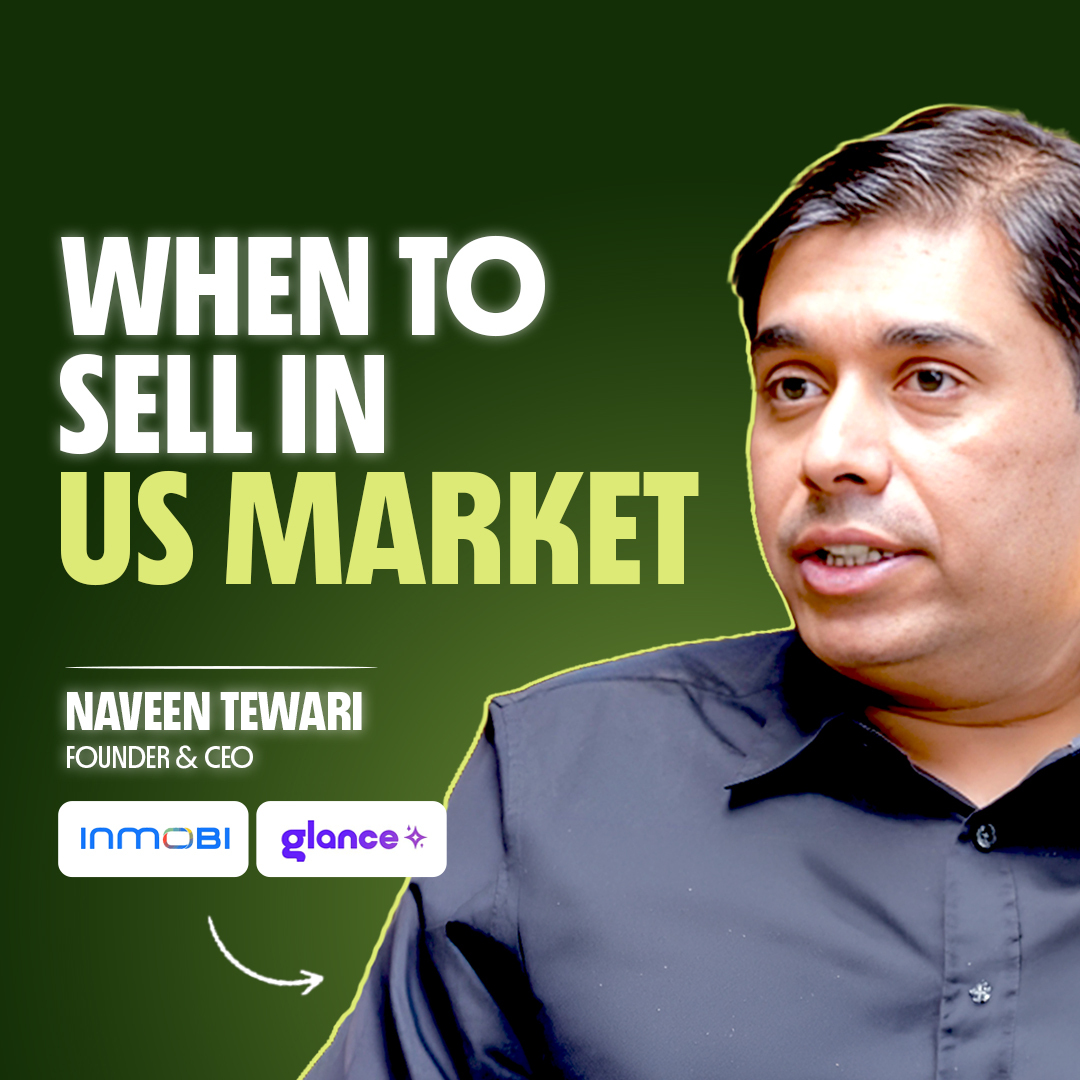
He Built “GPT For Shopping” And Got 450M+ Users | Naveen Tewari
Most founders build one unicorn. Naveen Tewari built two.
InMobi started with a simple bet: mobile would become the world’s most important computing platform, and advertising could make it free for everyone. Every Indian VC said no.
Naveen flew to San Francisco on a maxed-out credit card and returned with a $7 million round from Kleiner Perkins and Ram Shriram. Later came a $200 million investment from Masayoshi Son. Overnight, InMobi became India’s first unicorn. Then he did it again.
Glance, built quietly inside InMobi over three years, is now one of the fastest-growing consumer apps in the US, with more than 10 million monthly active users in the US.
The thesis behind both companies is the same. The world’s most powerful technologies, first mobile and now AI, only reach masses when someone figures out how to pay for them. Naveen believes advertising is that mechanism, and that InMobi is uniquely positioned to subsidise AI access at population scale, just as it helped subsidise mobile a decade ago.
If you want to understand how one founder from India has quietly helped shape two technology eras, this episode is for you.
Watch all other episodes on The Neon Podcast – Neon
Or view it on our YouTube Channel at The Neon Show – YouTube
Nansi Mishra 0:57
Hi, Naveen. Welcome to the Neon Show. I’m so excited to have you with me today. And as I told you that you have been one of our dream guests since we started in 2018. Every year I would message you. So it feels so nice to be sitting.
Naveen Tewari 1:10
I am so excited to be here. I must tell you. Very happy to be here. And congratulations on all the success. Your podcast is doing really well. Very big. Very excited to be here.
Nansi Mishra 1:18
Thank you so much. And you have an amazing journey. Started with mCoach, then pivoted to InMobi, built Glance, raised from SoftBank. Then raised from Reliance Jio. So very excited to cover all of that in today’s conversation.
Naveen Tewari 1:35
Let’s dive in.
Nansi Mishra 1:36
Yeah.
Naveen Tewari 1:37
Let’s go.
Nansi Mishra 1:37
So we’ll start with your origin, the original journey, like four guys from IIT Kanpur, sitting in a one bedroom house in Mumbai, building mCoach. Like how it all started. What made you, you know, start?
Naveen Tewari 1:56
I don’t know what made me start or made all of us start. I think the reason why you start is not a logical reason. You don’t do entrepreneurship because it fits a logic. It is an illogical choice. Like you built your own company. There’s no logic to you build a podcast. There’s no logic to this. There’s no logic to like doing things that are not so easy to do. Right. And so it’s very hard to know why one does what one of these are. And so you just go for it. And the way I think about this is there was that moment in our life when we just went for it. And I think of it as saying we are still going for it. Because just going for it may not seem logical, but it is exciting. And I think that excitement is what one looks for. You only are going to live once. You know, live it to the fullest of whatever you want to do. And I say this today because I can say it.
Nansi Mishra 3:00
Yeah.
Naveen Tewari 3:01
And it sounds like, oh, my God, it’s very profound. That’s not the point. The point is, you have to, maybe the point I’m trying to drive is when you start doing it, you know, it becomes like a nasha. And then you keep doing it.
Nansi Mishra 3:15
Yeah, once an entrepreneur, always an entrepreneur.
Naveen Tewari 3:18
It’s very hard not to be one, right? Because it is fun.
Nansi Mishra 3:21
And how did you convince the other three of them to join you?
Naveen Tewari 3:27
I think convincing is not the right way to say it. I think everyone was already either on the edge or somewhat trying to figure it out in their own little ways. We just came together, right? That’s a better way to say it. Everyone was excited about doing something. And, you know, what happens again in the journey of entrepreneurship, it’s like, like everybody’s looking for some support. Let’s do it together a little bit. I’m more scared alone. So I was more scared too. So it’s like, let’s do it together a little bit. Come on, let’s do it together. So then you kind of start to come together. Can I speak in Hindi, right?
Nansi Mishra 4:09
Yeah, yeah.
Naveen Tewari 4:09
Otherwise, no. So, you know, so anyway, so, you know. Everyone is scared. Then they say, let’s do it together. Now we’ll be scared together. I mean, what’s wrong with that? So I think we came together. We all knew each other very well. So we came together. And it’s been a journey of a lifetime together. We have fought. We have worked together. We have laughed. We have had highs. We have had lows, you know. And in the early days, the high and the low and the sadness and the fights and the happiness is all of that in a day. We are spaced out here. But, you know, in the early days, all in a day. So I’m so glad that we came together. Again, serendipity plays a big role in why you come together. In, you know, one of my founders, Mohit. He was living in the Bay Area. And I said, yaar, aajao. Teen din baad hi writes, aa raha hu.
Nansi Mishra 5:05
And I’m like. Bahut hi solid conviction hai.
Naveen Tewari 5:09
Haan, matlab, nahi, yaar. Matlab, can you imagine? And then I got worried. Yaar, yeh to… Sachme aa raha hai. Sachme aa raha hai. Yeh to sab chhod ke aa raha hai. He said, main ghar chhod doonga. Main gaadi chhod doonga. Main aa raha hoon. Haan, yaar, yeh kya ho gaya? Yeh to aa gaya. Main to bas poocha tha.
Nansi Mishra 5:28
But idea discuss ho raha tha uss time pe.
Naveen Tewari 5:30
Nahi, usko kuch nahi pata tha. He did not care about the idea. He did not care about anything.
Nansi Mishra 5:35
What was he doing?
Naveen Tewari 5:37
He was working for, I think, Virgin Mobile, you know, one of the carriers. Wo aa gaya. And you’re sitting there, you’re like, shit. Abhi kya karu main? Because now, you know, and I say, this is getting real.
Nansi Mishra 5:52
Yeah.
Naveen Tewari 5:53
Because, you know, and these are just examples of, you know, why you come together. The core of that was not ki, oh, he has a different skill set than somebody else. It’s trust. And that, you know, that is how these things come together. It’s like, you know, I trust you. I think, you know, I trust you. You trust me. I think we’ll have some fun, you know. And I say this today in hindsight. You know, in that moment, the feeling is very different.
Nansi Mishra 6:21
What drove you at that point in time?
Naveen Tewari 6:24
What drove me?
Nansi Mishra 6:25
Like, why would I do it? Now, you know, and like, we are second time founders that first time they did it for money, want to do something big in life. Second time, they do it for purpose. Like, now looking back, what do you think? Why did you do it?
Naveen Tewari 6:43
Very hard to know why you did it. Okay. Part of it is, you know, I was for a brief period of time, I was a venture capitalist. And so, and I was just, you know, in college, in business school. And, you know, and I would go and meet founders. And actually, I was an intern at one of the, you know, tier one venture capital firms. So I would go meet these founders. And I realized that there are two things that are happening. One is, like, they’re really thinking about the world differently. Not in a straight, linear fashion. They had non-linearity in their thought. That was very exciting. And nobody knew whether it was true or untrue, whether it’s going to happen or not. But it felt like that set of people, for some reason, had gotten themselves the license to dream crazily. And I said, I also want that license. What is this linear, you know, today we will do this, tomorrow we will do that, day after tomorrow it will all be okay. You know, what is this? And on the other side, I’m not listening to their pitches, right? I’m listening to them speak because, you know, apparently I have money to give them, right? As a venture capitalist. And they are, you know, for all the goodness in their hearts, they’re asking me, yeah, how do you think about doing this? And I have no answer. I have bookish answers because I’ve read some books, right? So I can give them some bookish garbage that I’m trying to give them. And I’m like, I’m finding myself very shallow, right? And you realize that I cannot be, I have to do this. If ever I have to be here, which is not to say that I wanted to be VC. But it’s like, that is what I want to do. I want to have a, you know, a playground that has no limits. That has no limits. I didn’t have the notion of what no limits means then, okay? I felt the notion of no limit is slightly better than what you have at a corporate environment.
Nansi Mishra 9:03
Yeah.
Naveen Tewari 9:04
But I think the beauty of entrepreneurship is the ability to redefine no limits again and again and again.
Nansi Mishra 9:14
In their own context.
Naveen Tewari 9:15
Absolutely. And I believe this ability to have no limits is what entrepreneurship is about. It’s the journey of entrepreneurship. Why you keep, why does one remain doing more and more and more as an entrepreneur is because what they’re effectively doing is they’re redefining the no limits limit. They’re redefining no limits. And you kind of keep going for it. And at some point you’re like, wait, I can even go for that. What is the worst that’s going to happen? I’m just not going to get there. But at least I have the freedom to go for it. And I think that freedom, that no limits got me excited.
Nansi Mishra 10:05
But it’s just so difficult to do that in your early 20s. I have to say that.
Naveen Tewari 10:12
I don’t know what one had to lose. Well, I’ll tell you one other thing. And I’m pretty sure a lot of the entrepreneurs are out there. If you’re very logical about things, you’re not an entrepreneur. If you are like one of those who’s, you know, doing this SWOT analysis or doing a two by two and, you know, analyzing and paralyzing, you’re not an entrepreneur. Because an entrepreneur is effectively looking at an opportunity, not with the probability of conversion. An entrepreneur looks at the possibility of a conversion. If the possibility exists, you’ll go for it. And that is the whole difference between an entrepreneur mindset, an entrepreneur, not an entrepreneur. It’s the probability to the possibility. And I believe, I look for people who go after the possibility. You know, I can hang around with you folks who deal with probability, but I don’t enjoy it. Possibility is what you need in people around you because that redefines limits.
Nansi Mishra 11:28
So your friend came from US and then you started working on M-Code. Can you just talk about more about M Coach and how you pivoted from M Coach to InMovie then? What all happened?
Naveen Tewari 11:39
You know, in India those days, our belief was that, a wrong belief, but the belief was that, you know, a lot of communication of our country will actually extend on the SMS rails. And the reason for that, well, it’s, well, okay, let me step back. The belief that was correct for us was that a lot of consumption or communication would happen on the mobile rails. Okay. The incorrect one was that will happen on the SMS rails. And so we went down the path of saying, okay, let’s build a system that in fact makes the SMS communication layer free for users. Because in those days, 2007, 2008, SMS had a cost attached to it. So we said, what if you are able to subsidize the cost of communication of SMS? There will be more communication. What we realized very, very quickly, which is not so hard, that that’s not a very effective communication rail, and trying to make it more threaded so that it can be longer and everything is not something that the carriers really control. And so that was one thing where we realized, you know, it’s not really the rails to go after. But then we realized that, wait a second, because iPhone had just come out, we were able to bet on a belief that internet communication, consumption will slowly shift on mobile platform and beyond the rails of SMS. The assumption at that point of time was that it will happen mostly in Asian markets, because the US already has a much more powerful platform of personal computing. And so therefore, there is no reason for mobile computation to kind of overtake the PC communication, the PC platforms. And so therefore, we started in India, by the way, and we said, okay, this is the place to build this, because what was we effectively trying to do? Effectively, when you build an advertising platform, you’re effectively making a medium free. That’s like, how do you bring something into the hands of the population scale is when you make that close to being free. And so that has been our purpose is to pick a medium and make it available to the population. Of course, we were partly wrong in our assumption to say, we were right in the assumption that mobile will kind of be a big one. We were wrong, that will only be Asia. And therefore, we expanded ourselves to not just be in India and in Asia company, but a global company. And of course, we know we today know where it is. And so therefore, our purpose has always been as an advertising platform to pick a medium that we think should go after that, that we believe should be in the hands of the pop, you know, of the world’s population and go support it. So today, outside of the internet, being on mobile rails, it’s artificial intelligence. So we actually believe that artificial intelligence will not be something that consumers will pay for.
But still it needs to it is so such a powerful technology that the cost of inference has to be paid for by somebody. The cost of these foundation models has to be paid for by somebody. So who’s going to pay for this consumers are not going to pay for this. And so therefore, we believe that we will be one of the few players in the world who will fundamentally subsidize artificial intelligence in a way that drives the adoption of artificial intelligence into every possible, you know, element of a human’s life across the world. So that’s what drove us. That’s what drove our launch of M-Coach to the launch of InMobi in Asia first, and then scaling that across the world. And now how we think about InMobi’s, you know, future is driven on, you know, how to make AI accessible to everybody on the planet.
Nansi Mishra 16:05
But do you think that slowed down the journey for InMobi that initially you were just focused on India, Asia?
Naveen Tewari 16:12
The India focus, no, actually, on the contrary, no. So India focus was there only for six, nine months. We expanded ourselves to Asia, you know, parts of Africa also at that point of time, by the way. I actually think on the contrary, it was without a design. It was not a strategically designed decision, I’ll tell you that. It was driven of the belief that, you know, the mobile computation would, mobile rails would be bigger in Asia was the driving factor. The outcome that we did not really envisage was that there would be nobody else doing, not really anybody else doing this in Asia. So we had a free green field run to scaling ourselves. And we did that for four years. Almost four years.
Nansi Mishra 17:09
From 2000.
Naveen Tewari 17:11
Well, 2007, 8 to 2011, 12. It was only in 2011, 12 that we said, OK, let’s go to the US. And therefore, in that time period, whereas in the US, there were like a bunch of companies that were coming in and saying, OK, we will do, build the, you know, the mobile advertising platform for the United States. They were fighting with each other. Somebody was getting funded. Somebody else was not getting funded. Somebody was getting shut down. Like there was like a lot of, a lot of stuff happening there. We had nobody doing anything to us. And we were just like off on our own, building this out, scaling. So therefore, when I think about this, when I speak to a lot of the entrepreneurs who start companies, there is no bigger market than the US. So there is no disagreement on that. But maybe the path to get there can actually be different than the traditional path of just thinking to say, hey, you have a company, you know, let’s go to the US. It could actually be that you could actually go out. And it depends on the context of the company, just to be fair. But you could go out into, you know, kind of expand yourself into the whole of Asia, expand yourself into Europe, expand yourself.
Nansi Mishra 18:22
Can you talk about categories, like which type of companies you would advise that you have to be in the US from day zero or one, right? Or for some companies, you start from India, build for other global markets and then aim for the US, like how in movement?
Naveen Tewari 18:36
I would actually say that if you have, let’s take SaaS companies to begin with. You could actually say, I am going to build for the first three years, I’m going to get to a minimum level of scale, possibly by working in across Asia, Australia, Japan, Korea, Europe, and don’t touch the US. What happens in that period is it takes very less amount of capital. But you could actually make scale your business. And at that point of time, you could actually say, I have enough momentum and scale for me to actually go launch myself in the US in the biggest possible manner. Now, there are scenarios in which it may not work. Like if you have the most innovative product out there, and you think that the only set of customers who you can go after are the ones who are going to be the cutting edge customers, then you might actually start a better, it’s better to start off in the US. But I actually think it’s a more capital efficient model if you actually build your scale elsewhere, and then use the momentum and get into the US. But something for, I would say entrepreneurs to explore for sure.
Nansi Mishra 19:51
But would you do it differently now? Like the path you followed?
Naveen Tewari 19:55
No, I did not. Like when we built Glance, no, when we built Glance, we did exactly the same way. We built Glance first in India, we took it out into Asia, we kept on working on the product, the product was not fine enough. So you could iterate on the product. That’s the advantage, by the way, that you get like because the competitive nature of the market in the US is unforgiving. And so therefore, what you try to do is to say, okay, let me build my product. You know, I know it’ll have it’ll go through cycles of improvement. I will learn a lot. Let me do that in markets where my cost is low. And so when we build Glance, we did exactly the same thing. And then when we thought it’s absolutely ready last year, we took it into the US. And it’s scaling beyond our belief today in the US, beyond our belief.
Nansi Mishra 20:48
Can we talk about some numbers for Glance?
Naveen Tewari 20:50
Think about Glance as, what is Glance firstly? Glance is an agentic shopping platform. We are effectively adding intelligence in shopping. Think of it in a very crude way, GPT for shopping. Okay. But driven by, not driven through text, because text is a very primitive way of communication, usually used for knowledge workers. Shopping is a phenomenon that the population uses. And so therefore, the product is built on visuals, a visual dialogue. So the outputs are very visual in the manner. And so as we launched this in the US, it’s not even been, I think it’s been nine or 10 months that we launched. We are loving it. We’ve never seen. And the reason why that is so good is because the time when we launched, for that time, we had a near perfect product. Yes, the product has a lot of new things that we can add to it. But it was better than any other product that was even remotely close in the market at that point of time until date. And that’s the advantage that you basically get because the cost of my testing the product in Asian markets was about a 10th lower than the cost it would have had if I had to do the same thing in the US at that point of time. And so therefore, your cost of initial scaling and testing, and by the way, India is a great country for that. Why? India is a combination of a very developed set of users, which represents their global citizens. You have a large middle class that resonates with a very large portion of a developing economy across the world. And you also have a set of users who represent a lower strata from an economic perspective that also can use your product. And you can realize where your product fits, where you need to make more changes. And you can do that at scale and then go out there and scale it. And so we, you know, Glance is a great example where I did it again. And it was done exactly the same way as we built InMobi. And we do every product that way, by the way, every product we launch first. And the advantage of launching first in India also is that Indian consumers gets the first product.
Nansi Mishra 23:19
Yeah, we hosted Unicommerce CEO Kapil on podcast and he said, in India, a product is pressure tested before it goes out.
Naveen Tewari 23:27
Exactly. And every category of users, pressure tested.
Nansi Mishra 23:33
Yeah. And Glance was incubated inside InMobi.
Naveen Tewari 23:36
Oh yeah, absolutely.
Nansi Mishra 23:37
In 2015, it started. But the product was finally out in 2017, if I’m not wrong.
Naveen Tewari 23:43
Finally, it was out in 2018. But yeah, it was incubated in-house, built, built, built.
Nansi Mishra 23:52
What happened in those two, two and a half years?
Naveen Tewari 23:55
We just iterated on the product. We have so many iterations of Glance that we threw away. We would test it, test it, test it. There was, you know, it was a team of five, six people held in a room. And I personally would spend time with them every few days, because we were very convinced that we would build something what today looks like Glance. We would build something phenomenally different. So we were very excited. Innovation excites our company, by the way. If you go out in Mobi, one of the themes that you would see is that we love innovation. What is innovation? Innovation seems very esoteric or exciting, but innovation at the core of it is failures. In order to get that one great output, you have to be willing to fail many times. I’ll tell you one story. I had a very public failure with a product that I launched ahead of Glance called Meep. It was a very public failure. I was down for months, if not years. I had, you know, you had these, you know, New York Times came out with an article on us on the day of the launch, and it was dead on arrival with the way they kind of positioned this, because then the whole media picked it up and said, OK, this is garbage. Maybe it was not that big a garbage, but maybe it was a garbage. But it was painful.
Nansi Mishra 25:35
You got hyped because you publicly quoted a number that one billion dollar outcome from that one experiment and then.
Naveen Tewari 25:44
Possibly. Maybe I was naive, right? Maybe I was overexcited. Possibly. Maybe I did not even quote a number. Maybe the number got quoted. You know what I mean?
Nansi Mishra 25:54
It happened a lot InMobi.
Naveen Tewari 25:56
Yeah. No, we would get quoted on a number. Maybe we would not quote so much because I think people are very kicked about like, you know, big numbers coming out. So we’ve been very careful now. We don’t we don’t say big numbers. We don’t say numbers anymore. Easily. But going back to that, you know, it was scary. It was scary. But then you kind of realize and if you take the cricketing analogy, right? If you basically go out and you’re supposed to bat aggressively, you are supposed to get out many times. You’re supposed to bat aggressively. It’s easy to say it in hindsight. But in the moment when you’re going through it, when everybody externally and internally is looking at you and say, OK, you know, nice try, you really went for it. But ha ha, it is, look at it. We told you so. Now, we told you so is fine. I think we have to, like, figure out how not to let I told you so bother you. But we get very bothered by it.
Nansi Mishra 27:04
Yeah, in that moment.
Naveen Tewari 27:05
In that moment, right? That the moment essentially becomes trying to prove them wrong versus to realize that you’ve got to do this again because this is the journey. I am far more comfortable at it because I failed a few times trying to do this than I was when I was failing for the first time. And I can really, I would not be surprised if, I would not have been surprised with myself if I had given up at that point.
Nansi Mishra 27:34
But when we failed, how, what was going on in your mind? What were you thinking as founder?
Naveen Tewari 27:41
You know, there are two kinds of failures. One is like, you know that you fail and a handful of people know that you fail. And then there is a New York Times level failure, right? There’s a difference. Pressure is too much. The scrutiny is too much. Everybody asks all the right questions, right? All the things like, oh, you should be focused. Oh, you know, this is B2C. You, you know, you’re a B2B founder. You cannot do B2C. Oh, you know, you have, you did not really think it through. Oh, you do not have it in you to essentially build, you know, an innovative product. You can build a software, enterprise software product. You know, all of those things. And, you know, if you kind of think about it, logically, they’re correct. It kind of goes back to the question of, you know, probability to possibility. And, you know, all of what they were saying was probabilistically correct. It’s, it holds true in a natural scheme of things. But, you know, you’re not built, you’re not wired to follow that rule.
Nansi Mishra 28:40
But you said it took months.
Naveen Tewari 28:42
Years, probably. It was hard. I’m telling you. I was questioned by everybody. Everybody. It was hard.
Nansi Mishra 28:50
So like that SoftBank round happened. They put in 200 million dollars. And right after that fundraise, InMobi became Unicorn overnight. Do you think that fame, because you were the first Unicorn from India, fame somehow…
Naveen Tewari 29:12
Got to me?
Nansi Mishra 29:13
No. It created a lot of pressure or it helped you in that? Like when you look back, what role it played?
Naveen Tewari 29:21
Why is that important? I’ll tell you. Because we were starting to get great talent to come and work with us. To me, the biggest advantage of that was, like, amazing, amazing, amazing people moved to say, we’ll work with you. So that was the biggest, I would say, the biggest gain. Where it did not help or cause the pressure, we did not realize that we had to grow much faster. In our, not as a company, but as individuals because the company was growing really fast. What is the point? The point is we did not realize what would it take for the company to scale from a billion dollars to you know the next big milestone. We did not realize what it would take and we did not solve for things that we had to solve for like we created an organization with a lot of layers. We created a system with a lot of processes. What is the issue with a lot of layers? What is the issue with a lot of processes? Layers create innovation. Innovation does not happen but we are a tech company at global platforms. We have to innovate. We have to bring products out at a fast pace. My organization grew from 200 to 800 people in a year. I thought we would ship 4x the products. We shipped nothing. Nothing. My attrition before the round happened was you know very very very low. My attrition in the company after the round happened within two years I don’t know like 40% and so it took a few years. By the way, you have to realize there is nobody who can tell you stuff. There was nobody who has done this five years ahead of me and like Hey Naveen, don’t do these five things because we made these mistakes. There was nobody telling us that. So everybody was learning along with us. We were also learning. Everybody else was learning. So it was one of those things that you learned on the job.
Nansi Mishra 31:54
There were not many examples for you and the company was growing so fast or do you think now the founders have a lot of examples so they wouldn’t make the same type of mistakes?
Naveen Tewari 32:06
Both. Both. Exactly right. So at the time at the point of time we were doing this there are no example of anybody else who could come and say this is the right thing to do.
Nansi Mishra 32:13
Yeah.
Naveen Tewari 32:15
And today I hope people are not going to make the mistake that we made. I hope they don’t and I believe they are not because there are enough and more people who can tell them here are the 20 areas we screwed up on. You don’t you screw up the 21st not the first 20. So yeah.
Nansi Mishra 32:31
A lot of other interesting things happened that really set the example for other entrepreneurs like let’s talk about that meeting that happened in SF when a lot of Indian VCs said no to you. You went to SF on your maxed out credit card to meet Kleiner Perkins. Tell us about that meeting.
Naveen Tewari 32:54
This is 2008 time frame. You realize like if I told you earlier I was part of a venture fund. So I knew a lot of people in the venture community. I knew almost everybody in the venture community. So I went to India and I started to talk to people to say hey here is what we are doing. Do you you know can you fund. So everybody knew me so they would really invite me into there. So we talked to them but the challenge everybody had was I think India was not ready to take technology risk. India is not was not a place then for innovation. So everybody was looking for a model that has been proven in the U.S. and then you bring them to India. So I would ask them to say hey here is what’s going to happen on mobile and here’s how the you know in internet and everything the computation fundamentally would move to the mobile phones and therefore we are building something that would subsidize this consumption and computation. And people would say no it is never going to happen on mobile phones. They would look at me almost laughingly to say this is never going to happen in India. It’s never sorry it’s never going to happen in the world. It’s only real. And so I think I did like 40 such meetings. I was so pro in hearing a no that I would know I would sense a no way before the no is coming. I was used to it but we were running out of money. You know we had I’m so thankful to the early people that we had. I went to them and I said I have no money. What do we do and you know not that anybody else had money like in our teams right. So but everybody said what do you think. I said yeah I need three months maybe I’ll make it happen but you know how do I get three months or two or two or three months and you know that’s what trust is all about right. There was no logical reason for any one of them to basically say here is you know why don’t we start you know putting all of our credit cards on the table. Let’s start to pay every bill through our credit card. Let’s max it out. We’ll pay the interest rate on it later on. It’s a very high interest rate doesn’t matter. So and suddenly I’m looking at these guys it’s not that any one of us had any money but everybody’s credit cards came out. We ran the company for the next 90 days on those credit cards.
I had no not enough money to go to the U.S. We bought our ticket in a very like fancy way on credit again and flew to the U.S. Again you know it was one of those things which you know today when you think about this I remember there was a there was some company that was getting formed and you know they they wanted to start an OTA the travel you know for they were building an OTA for like premium travelers and so Abhay my co-founder and they were they just launched so my and they only wanted to like talk to the CXOs. So Abhay my co-founder became my assistant and he called them up and said hey you know my CEO wants to travel and you know what are the terms and what can it work and they and they of course said look we only book you know business class and first class flights and we don’t book anything else and of course of course of course my CEO does not travel anything else anyway and then they’re like oh okay great great great so you know and then they asked started to ask him all the questions and the only question he was interested in was the payment terms. He did not really care about anything else so now they’re asking him and you know hey what kind of a wine does he like and Abhay and I’m sitting next to him by the way of course like we’re eagerly listening if I get a ticket or not right and he’s like I don’t care anything is fine just say anything and they are trying to ask they’re being very precise because you know according to them it’s not just the red and the white you had to basically give a deeper answer we had no idea what to give anyway so all of that happens we get a ticket I travel I’m at the airport my ticket is eight lakh rupees eight lakh rupees and my bank account has 20,000 this 2008 my bank account has 20,000 rupees my meaning the company’s bank account mind that maybe similar about the company’s bank account like some 20-30,000 rupees and I’m sitting there saying what if I could resell this ticket right now change it for an economy ticket I am pretty sure I’ll make four five lakh rupees my company would run for another three months it didn’t happen it didn’t happen anyway so that’s those are like the things that you do and of course we reach to the U.S. and you kind of again start going now in the U.S. the conversation changed because in the U.S. it was like of course everything is going to move to mobile but you’re in India how do we fund an Indian company because there is no Indian company that has ever done this so I again started to get nose but the reason for the nose was different so I felt a little better so I continued my my thing and of course you know the beauty of fundraisers you don’t need everybody’s buy-in you just need one person to say I think I trust you and that happened to be you know Kleiner Perkins and Ram Shriram.
Nansi Mishra 38:32
What was your pitch to them?
Naveen Tewari 38:34
My pitch was exactly the same that I was doing throughout by the way the idea was that look we will build a mobile advertising platform for driving you know you know driving this for Asia and they really bought that thesis and we did say that at some point of time in future we may come to the U.S. but we think Asia is the landmine of you know of this growth and therefore we want to want to do this and they truly bought that thesis and they said yeah that’s the right thing to do now here’s what happened remember I have twenty thousand rupees yeah I don’t have a return ticket it was a one-way ticket I don’t have a return ticket I have no money to go back I’m staying at a friend’s place and I’m going from place to place to place to place just pitching and getting a no I still remember this day to this day I walk into you know for the second meeting I walk into second meeting with Kleiner and Ram it’s happening in Ram’s office I’m making my first pitch to Ram I make the pitch I think 10-15 minutes into it he’s like I like it we are going to fund this we are willing to give you seven million dollars okay but here’s the issue with the seven million dollars I have twenty thousand in my bank account I am multiplying the seven million to come up with what that does it really mean and I’m lost okay I’m lost and he says drop the pitch I get it this is brilliant we are going to together Kleiner and Ram we were you know we’re going to put in seven million dollars tell me your product strategy and scaling strategy I had none because by that time I was so desperate to just like get money that my ability to have a plan which was beyond survival did not exist I don’t know what I said I have no clue I’m pretty sure I said whatever could get me out of that room without screwing it up that was my only thing that I was trying to do at that moment and I remember coming out of that meeting walking towards the my rented car I got into my car and I passed out for three hours I you know in life you have these moments when the pressure in the news with your co-founder no because it was middle of the day for me in the US and so they would have all been I had no I and I may have called them but I woke up three hours later in the car two or three hours later I just passed out it was one of those things in life where you you know I’ve been you know you’ve been trying to build a company for now by 2008 almost three years you know I had a bunch of attempts they got shut down shut down shut down and so you you know you just have like all and then suddenly you realize that the it hit me the world’s best venture capitalists have just funded us and that is non-trivial that has to mean something and I think you know I can never forget that moment of my life because you know it was like you can it gave you the ability to then you know exist.
Nansi Mishra 42:36
So this was part of this 15 million dollar round.
Naveen Tewari 42:39
This was this is series A then I had one more round series B led by them itself.
Nansi Mishra 42:43
Okay and the next round was this.
Naveen Tewari 42:45
Series C.
Nansi Mishra 42:46
Softbank.
Naveen Tewari 42:46
Softbank.
Nansi Mishra 42:47
A similar story would love to hear it from you because like Varun also said in his interview that this story has multiple versions but when I heard it from you it was just amazing. So would love you to share this story again.
Naveen Tewari 43:02
You know the we were raising our series C generally speaking and you know we were out here talking to a lot of the investors we had very decent interest we in fact had somebody give us a term sheet to say hey we will give you 45 million dollars 40 or 45 million one of those I think 40 million.
Nansi Mishra 43:24
I’ll just stop you here what all happened from that series A to series C like in terms of numbers revenue what all you built.
Naveen Tewari 43:32
Series A to series C you have to realize at the end of that series A we all got together and said guys we are destined for something. You know the whole point I talked about you know you change the definition of no limits so we changed it to say here is what we have to go for. So we were just on a hyper growth trajectory series A to series B. I know our series A was I think some 20 22 million dollars of market our valuation. Series B was 120 million dollars. It was just like it was a rocket ship. It was crazy. We were launching country after country after country. We were just like we were doing things that had never been done before. We were doing things like launching building a product from India to the world. Building product in India. Hiring the best engineers possible. We were going country after country like the like we would land in countries that we had only seen on maps. We would land there. We would like open our office. We would like hire people. People will come together and we would say okay let’s go for it and we would just and we would make mistakes but we were just moving so fast that any mistake was fine. You know you would the pace would correct it and so now we were reaching this pace that we had appetite for growing much more and so we went out and said hey we need like you know 40 50 million dollar round. So we had a term sheet for 40 million dollars by a very you know reputed private equity fund and then somebody met me and said you should go meet Masa. I’m like who is Masa?
Nansi Mishra 45:33
This was 2010 or 11.
Naveen Tewari 45:36
2011. So who’s Masa? I don’t know. I never heard of him. So well he runs SoftBank. I said what’s SoftBank? Well it’s the biggest carrier in Japan and you should you must go see him. He said you know I don’t know. I said no no no you must go see him. So I said okay but you know I cannot go because visa for Japan in those days used to take four weeks. So I said by that time I think my deal will get done. So they were part of his team his office. So they’re like okay can we suggest one thing. I said okay what?
Nansi Mishra 46:14
So this guy was part of SoftBank’s team.
Naveen Tewari 46:16
His team and he met me in India and he loved our story and he’s like okay you must meet Masa and I said okay I will but it’s going to take him four weeks but you know etc etc right. So he says okay do one thing. Can we do all the due diligence that we need to do ahead of time? And I was like wait a minute you want to do due diligence but you’re not like you don’t even know whether you’re going to invest into us. Say yeah not a worry let us let us do this and it’s our cost. So okay I anyway had everything ready by the way because I was you know trying to raise. So they they kind of jumped in and they started to look at everything. I think they had like some 30-40 people put on job for the next 30 days okay. So now I reach Tokyo. Mohit my co-founder and I kind of both go to Tokyo and we’re like okay.
Nansi Mishra 47:10
Mohit is the one who left job.
Naveen Tewari 47:11
The one who left his job right. So now we were we are in Tokyo with like you know we have a weekend to kind of hang around so we you know roam around Japan a little bit. We go to his office. Now I’m on my way to his office. I’m just by the way in all of this I’m just excited about being in Tokyo like because I know I have a term sheet like I think it’ll be okay. So now I’m in Tokyo. I’m going to his office and I know I’m reading about Masa on my phone okay. And I kind of see a very different thing that he’s constantly doing which is he’s not he just like I kind of realized it didn’t hit me but I kind of see the kind of investments he had done whether it was Yahoo or like it was like or Alibaba right. It was like major investment. So what I do is I go to his office. It’s like a football field size like very big boardroom okay. Some like 50 seats on both sides and you know typical Japanese style you know you sit on one side the other team sits on the other side you know Masa sits at the head of the table and you know I start to speak and share our story and you know Masa is listening listening listening kind of zones out a little bit in between then comes back in and you know and then he’s like what are you really building Naveen? What is this? What is this? And I’m like I want to build one of the largest advertising platforms. I think globally it’s required. He then goes quiet. I’m like maybe I answered it completely wrong. It’s like I should have been more practical real like something oh I want to do this and that and then he’s like I want to invest money. How much are you how much do you want? Now I had come prepared with everything to say 50 million dollars completely prepared and I’ll say 50 because I had a 40 million dollar term sheet 50 looks good. I said 250 and then he goes quiet again and he’s like why do you need 250? And I’m like Masa if I have to try and build something at global scale I need to do these four things. They were not planned four things but they were the four things that I always thought to myself at that moment that I want to do. Mohit was sitting there was completely goes berserk. He’s like what is like his facial expressions kind of go haywire and you know Masa negotiates a little bit and says I’ll put in 200 and that was it. We negotiate the valuation for a little bit and that was it. What I realized is I don’t think this was about like in now when I look at it’s not about of course I was very lucky to be there and to do this but you have to find people who believe in your vision and you have to be able to have the ability to ask what it what would it take? Why do you want to work with them? Since then that has been our approach. It has more failures with it also because you know if I go to ask somebody else to say hey I need 200 they may just throw me out of the room in that time period. But I think we need to be able to find people who believe in the bigness of a vision and of course we now know him what he has done in the world. I had not known this at that point of time. Today it’s a well-documented story on what a phenomenal investor he is, how visionary he is and how he thinks about the world very differently from anybody else and so yeah I felt very lucky.
Nansi Mishra 51:33
What do you admire about him the most?
Naveen Tewari 51:36
Think about it like ability for him to push the envelope and to think big beyond anyone else can imagine. That people can call him crazy for. Does not get perturbed by it and goes for it. That is unbelievable. I saw the same thing.
Nansi Mishra 51:55
He is known to push his founders to think bigger.
Naveen Tewari 51:59
It was exactly the same. I would see him every three or six months in Tokyo and after the first 10 minutes of looking at the business and it’s the numbers and whatever. He would just be harping on one thing is like what would it take to change the scale 3x? What would it take to change the scale 5x, 10x? He was not trying to give me the answer. He was trying to figure out what it would take and I would not have the answer till I would come back maybe three months or six months later because I would have to do a lot of figuring it out. But I realized that in those moments when you have to take a risk, what is the point in taking a small risk versus going for it and that’s what I learned from him. There is the effort required for doing something decently big to doing something magnanimously big is not that different.
Nansi Mishra 53:11
Meanwhile, what all changed in Indian VC ecosystem? How was it in 2007, then 2011?
Naveen Tewari 53:20
By 2011, you had the early stage venture capital starting to come into India. So that was there for sure. You had a lot of companies now getting funded at series A, series B level. You did not actually have anybody look at large scale 200 million dollar, 100 million dollar investments coming in at that point of time for sure. Feel very happy that we kind of kicked it off and then of course in 2015, 16, 17, 18 you had like billion dollar rounds that started to happen in consumer businesses. Correct, incorrect doesn’t matter, but at least the scale of investments were of that nature that started to happen. So, I think the large scale investment thesis kicked off probably after a round and that was a great thing. So, I think the VC venture business growth stage capital business started to change in new age economy.
Nansi Mishra 54:12
And going back to your, you said somewhere in the middle of the conversation that people questioned you that you were a B2B founder. You have no idea about B2C, how to operate a B2C company. You did both, right? Both are unicorns, most celebrated unicorns. What did you learn running a B2C company that you did not know when you were just operating InMobi?
Naveen Tewari 54:44
Great question.
Nansi Mishra 54:47
How different it is?
Naveen Tewari 54:48
It is different. You have to think differently about B2C and B2B. In B2C when you think about what you are trying to build, you almost have to think about whether you would use the product or not. That’s the way I think of it. In B2B, the right way to build a product is go and talk to 25 customers of yours, take their input to a certain extent and then build a product that not necessarily just fulfills what they’re asking but solves the problem in a big way. The imagination required in building a B2C product is very different than a B2B product. In a B2B product, you have to be perfect. You have to be solid in what you deliver because you’re giving it to an enterprise who is very, very… In B2C, people are looking for innovation and fast movement. Those are two different skill sets, different ways of approaching engineering. That took a little bit of time for us to capture. I think we as a company now do both of these things and do both of them really well. I actually believe large organizations, corporations, etc. will exist at intersection of B2B and B2C. Therefore, founders should figure out how to do both of them. If there are a lot of B2C founders, they would gain a lot by building a B2B skill of their own business so that they can actually connect the two. Whatever they’re trying to provide into the consumer world, they should be able to provide to the enterprise world or vice versa. I think that works really well. It’s been fascinating to build both of these companies. Different way to approach them, but they’re not that complex. It’s not that complex.
Nansi Mishra 56:47
Can you list down 2-3 points that can be challenges or relatively easy to build this versus for this company?
Naveen Tewari 56:57
In enterprise, when you build, if you have done your research well, you will be in the zip code of what the customer is looking for. Therefore, in an enterprise world, you have to do a lot of upfront research, talk to customers, really think about what problem they have and therefore build for them. Then you can co-build with them. That allows you to essentially have a higher chance of success. In B2C, you cannot talk to anybody, generally speaking. What you would do is, you would build something, launch it and realize it’s bombing. It’s totally crashed. You have to have the ability to come back and fix it very quickly and launch version 2. That may again bomb. You have to have an organizational capability where research does not matter, innovation matters and pace matters. Here, predictability matters. What matters is your research and the solid, the definitiveness and the depth of what you’ve built. When you try and transpose this to each other’s world, then you are basically doing bad for both of them. I think keeping them separate, recognizing these 2 things will allow you to build something in that world. You have to put the product out. It’s very, very scary to put a product out in front of a consumer because you get public lashes.
Nansi Mishra 58:31
Both InMobi and Glance are super successful now. But in that journey, can you share some anecdote where you felt that InMobi or Glance is no more an ambitious startup? It’s becoming a truly global product from India and you’re successful in what you have been trying to achieve.
Naveen Tewari 59:01
I am not there yet. You have to realize, you have to change the no limits.
Nansi Mishra 59:11
Is there any number? There’s no number.
Naveen Tewari 59:15
I’ll tell you, we believe we are building one of the finest advertising platforms that will scale to bring AI in the hands of everybody in the world. We will support that AI’s distribution, AI’s scale out. We’ll support it. How do you think AI, who’s going to pay for AI? Consumers do not pay for stuff. We think we will play a very big role in building software that will subsidize access to AI for the world. We want to be one of the top platforms to do this in the world. That’s the mission that we would sit with on the InMobi side. On the Glance side, our mission is to bring Intelligence in the way the world shops. We want to change the way the world shops. We fundamentally think that if the world, if as you bring intelligence into the way you and I shop, it will change, bring about ripple effects across the supply chain, value chain. Manufacturing will get impacted. Individual brands will have a place in front of the consumer without having to do unnatural things. They should focus on their craft because the intelligence of the machine will be able to identify these individual brands from Kolhapur, Meerut, wherever, so that they can be discovered by people across the world because realize the machine is now trying to find the right product for you. It will change the way supply chain of the world will function. We will be one of the top players in the world in making that happen.
Nansi Mishra 1:01:06
But for now, the intra-cost is too high.
Naveen Tewari 1:01:09
And we have advertising as a mechanism that we understand how you can smartly use to subsidize that access to consumers. In the world of AI, as we launch Glance, what is our biggest cost? Our biggest cost is inference cost. Every interaction that you do with Glance and try to use the intelligence of Glance to search for products and to look for products, there is an inference cost. In order for it to be at a population scale, I must be able to figure out how to cover for it. Because we have such a beautiful monetization machinery in the form of InMobi, we are able to bring these two things together and make it happen so that the consumers have access to intelligence for shopping without having to pay for it. And that is a business model that we have cracked. There are not that many consumer scale companies that have their inference cost covered through some business model that is at a population scale. So we feel very kicked about being able to do this, being able to reach not billion dollars, but billion users this time with our product. A billion, we want to make sure a billion people in the world use our product to find intelligence, to use that intelligence and change the way they shop.
Nansi Mishra 1:02:26
Thank you so much for your time. I thoroughly enjoyed our conversation. Have a few more questions.
Naveen Tewari 1:02:32
I truly enjoyed this. So thank you so much for inviting me and enjoy this conversation.
Nansi Mishra 1:02:36
Thank you so much for your time. And you came from Belandur, really means a lot.
Naveen Tewari 1:02:41
Anything, anybody travels or anybody in Bangalore is always a great thing. That means I was looking forward to be here.
Nansi Mishra 1:02:47
Thank you so much. Really appreciate it.
Naveen Tewari 1:02:48
Thank You


Know when new episodes are released. Subscribe to our newsletter!
Explore Playlist
Why The Next $100B AI Opportunity Is Context Engine| Prukalpa Sankar, Atlan
The Unusual Strategy That Helps ArmorCode Grow 100% YOY | Nikhil Gupta