



354 / January 23, 2026
From Startup to US IPO in 5 Years: Kanwal Rekhi’s Historic IPO of Excelan
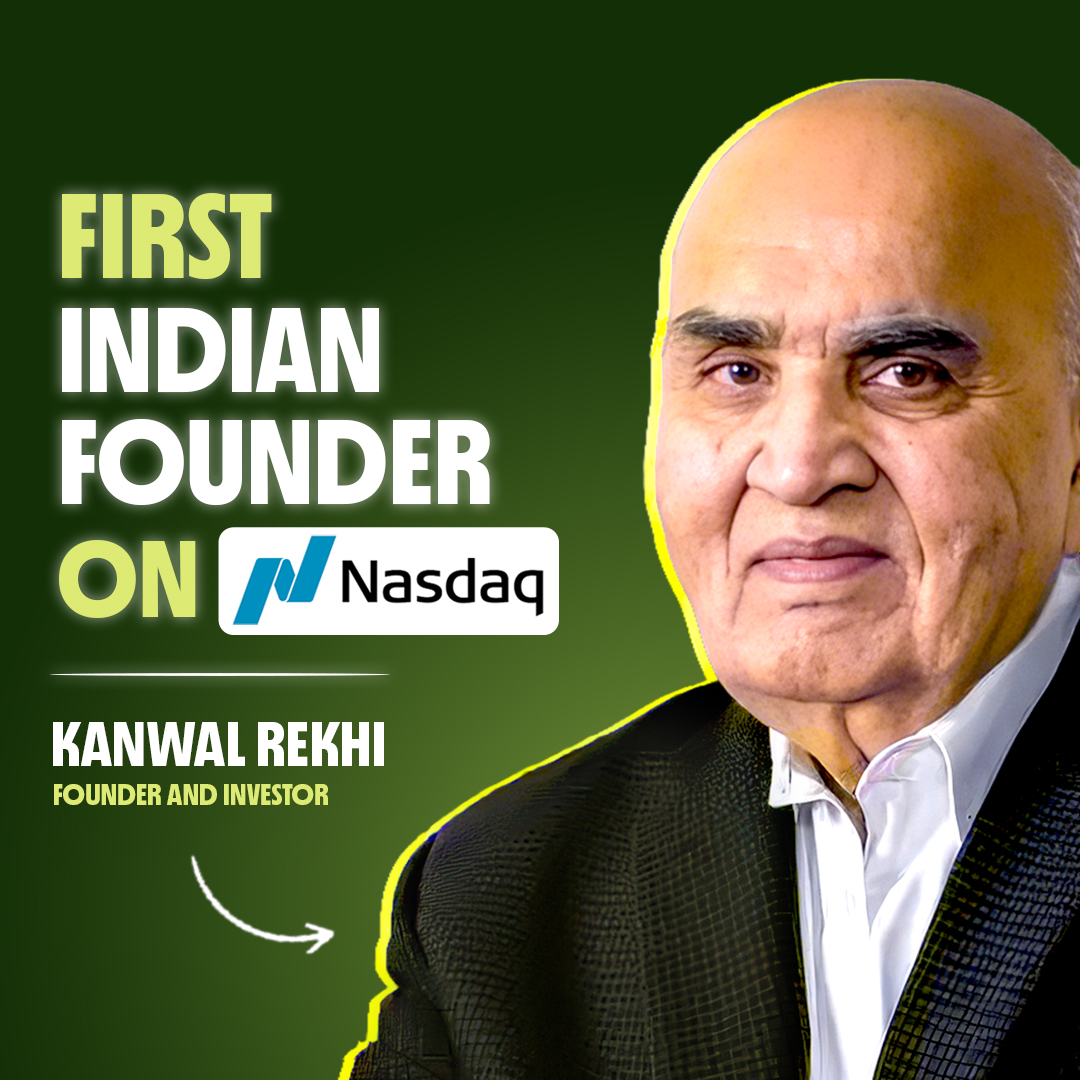
Kanwal Rekhi first came to the US in the 1960s. He took his company public on Nasdaq in 1987.
As a young Indian in the US, he was laid off from his first three jobs. That experience pushed him towards entrepreneurship. At the time, Indians were known and hired for technical and mathematical skills, not as founders building companies on US soil.
But Kanwal and his co-founders decided to bet on themselves. They faced rejection from nearly 50 investors before one VC agreed to invest $2 million for 50% of the company. In just five years, the company went public.
From being appointed CEO overnight to being removed by the board two months before the IPO for a more “wall street-acceptable” CEO, this is a story of many firsts.
After Excelan, Kanwal co-founded TiE in 1992 and has mentored tens of thousands of entrepreneurs. Beyond a personal story, Kanwal Rekhi is a turning point in how Indian founders came to be seen in Silicon Valley.
Watch all other episodes on The Neon Podcast – Neon
Or view it on our YouTube Channel at The Neon Show – YouTube
Nansi Mishra 01:13
So, we’ll start this conversation with your son. And what did Ben say when you started TiE? When you had limitless options to do so many things and then you started TiE, like what was the idea behind it?
Kanwal Rekhi 01:29
You know, so I was not quite 50 when we started TiE. 1993, 92, 93. I was 48.
You know, I didn’t plan to make it my full-time job. I wanted to take a year off. I thought maybe I’ll take a year off.
I had been working for 27, 26, 27 years, non-stop, no vacations, you know, type of thing, right? But I got pulled in very quickly because I had been focused on myself, my career, my competition. And America is a very competitive place, very competitive place.
And, yeah, so, yeah, India liberalized in 91. And people started to talk about, hey, maybe it’s about time. And around that time, we met, yeah, seven, eight of us met, you know, for the first time, you know, I had a chat with Suhas Patil.
Suhas was another entrepreneur in the valley. He had done serious logic. And we started to compare notes.
And one thing became very clear. We all had a very lonely journey. We had nobody who encouraged us.
We had no mentors. We had nobody to talk to, you know, and nobody had any faith in us. Nobody believed the Indians to do what we were trying to do.
And so, you know, Suhas said, you know, it shouldn’t have been that lonely. And from there, maybe we ought to become the mentors. Maybe we ought to become, you know, the role models.
Maybe we ought to inspire our people to become entrepreneurs. So, the idea came that, yeah, let’s hold a workshop for entrepreneurs. The TiE is not quite formed yet.
And so, we announced a workshop for entrepreneurs, you know, and we had a informal thought, you know, we will do some presentations and we’ll have the breakout sessions. And we thought maybe 100 people will sign up. 500 people signed up.
Nansi Mishra 03:56
Oh, my God. Which year it was?
Kanwal Rekhi 03:58
Ninety-three.
Nansi Mishra 03:59
Ninety-three.
Kanwal Rekhi 04:00
500 people signed up. Oh, my God. Yeah.
We have to be a little bit more structured, a little bit more disciplined.
Nansi Mishra 04:09
And they were all Indian-Americans? They were all Indian-Americans? Where was this happening?
Kanwal Rekhi 04:13
Oh, these were all Indian-Americans. You know, this was the thought of inspiring, encouraging our people to become entrepreneurs. Several of us were done fairly well.
And we had come together for the first time. So, that event went very well. And 500 people showed up, you know, and today’s event, words spread very rapidly.
Yeah, this is great. So, now we had to say, what’s next? We have aroused people.
We cannot leave them, right?
Nansi Mishra 04:49
Yeah.
Kanwal Rekhi 04:49
And so, we started to hold monthly meetings. And TiE evolved very quickly out of that one. And so, halfway through that year, people from Boston said, yeah, can we do the same thing in Boston?
Why not? You know, here’s our logo, here’s our bylaws, here’s what we do. Don’t do it.
So, Boston started to hold meetings. Southern California, LA, yeah, same thing. Before we knew people from Bombay, Bangalore, Delhi, we want to do the same thing.
12 chapters formed just like that. So, it wasn’t something that we were pushing.
Nansi Mishra 05:35
The first community for entrepreneurs.
Kanwal Rekhi 05:38
Yeah, it was self-forming. You know, so I tell people now, it’s like the old saying by Victor Hugo, the idea whose time has come. Nobody can stop it.
So, this was an idea whose time had come. And this thing was spreading like a wildfire. Fire has to be there.
And then, yeah, we came to India in 98, 99. We brought about a dozen people. And we had a seminar held in Bombay and Delhi.
And it was titled Entrepreneurship and Wealth Creation, Silicon Valley Style. And it talked about the Silicon Valley phenomenon. That was the first time anybody talked about that in India.
And, you know, the workplace government was very receptive to what we were saying. And, yeah, we engaged with them. And we talked to them about, you know, the laws, especially the venture capital laws.
So, they passed a law to allow the FVCA, Foreign Venture Capital Asset Clause, right, which made it very easy for people to invest in India. And, you know, it’s still there, but it’s not as easy as it was earlier, you know. And then, you know, we talked about the Diet policy.
Nansi Mishra 07:09
Yeah, you wrote a very provocative article that made even then Prime Minister Vajpayee call you, right? Let’s talk about the tough love that you showed to India.
Kanwal Rekhi 07:22
Yeah, DOT hatao, desh bachao.
Nansi Mishra 07:24
Yeah, let’s talk about that.
Kanwal Rekhi 07:25
You know, there’s a story in the book I wrote, you know, that when I went to see Prime Minister, he had given a speech, IT is India’s tomorrow. Yeah, and this is around 2000, IT is India’s tomorrow. And I said, you know, if IT is our future, then we need to do something about our telecom infrastructure, you know, because we have a really ancient telecom monopoly by the government.
And, you know, IT is the, you know, lifeline of the IT industry. And then he says, batayie kya krein. Yeah, simple request.
And we took that to mean, you know, tell us what to do. We went back, yeah, and we formed a group at Stanford University. Yeah, it can be come up with a determination to, you know, what they should do.
So I came back, you know, the suggestions, and I went to see the IT minister, yeah, Ram Vilas Paswan. And he tells me, you know, you shouldn’t worry about the telecom policy, you should worry about India’s number one problem. And but what is that the population problem?
He tells me, I should spend my energy helping solve India’s population problem. So I said, Why are you worried about population? You are not the health minister, you are the telecom minister.
And he said, in any case, you know, the telecom policy is our national defense issue. Yeah, we will never change it. So why are you worried about national defense?
You’re not a defense minister either. And then, you know, as I was leaving, he says, you know, you’re wasting your time. We will never change it.
Nansi Mishra 09:17
He said that?
Kanwal Rekhi 09:17
Yeah, yeah. And, and that’s when I wrote that, that op-ed.
Nansi Mishra 09:22
And then that call happened?
Kanwal Rekhi 09:24
Yeah. And, you know, Prime Minister read that, yeah, that op-ed. And he told me that, yeah.
And, and, you know, the policy was very simple. Don’t sell licenses, revenue share, you know, let anybody and everybody start a telephone company, 7% revenue share. It was a two-phase policy.
It wasn’t very complex policy. And they adopted the policy. You know, he, the Prime Minister replaced Ram Vilas Paswan and put Pramod Mahajan as the Minister of Telecom.
Within a week after he became minister, they adopted our recommendation. That day on April 1st, 2001, there were 1 million mobile phones in India, and there were 17 million landlines. One year later, there were 83 million mobile phones in India, and 17 million landlines.
And we have never looked back. Yeah, well, we shouldn’t, I shouldn’t say we never looked back. When the Manmohan Singh government came in place, you know, they had this tie, you know, from, from, I’m trying to remember, Dayanidhi, Dayanidhi Maran, yeah, he would give him the tie combination, and he changed the policy back to the license sale. I don’t know if you remember the 2G, 3G standard.
Nansi Mishra 10:51
Yes, yes, yes.
Kanwal Rekhi 10:52
You know, when they went back to the old policy of selling licenses, you know, when you sell licenses, people have to bribe you to make sure they get the licenses, and that’s what happened. And so it, so there was a hit for a while there. And, but by, enough change had happened, you know, the telecom, you know, telecom network in India is pretty good now, right?
Nansi Mishra 11:14
Yes.
Kanwal Rekhi 11:16
Without that, you wouldn’t be able to do most of the entrepreneurship.
Nansi Mishra 11:19
Yes, yes.
Kanwal Rekhi 11:20
Yeah, then, yeah, that was done under the TiE umbrella. Yeah, this policy change was recommended, even though I took the lead, but it was a TiE effort.
Nansi Mishra 11:32
And sir, you have also mentioned that when you, even when you left India, Indians were always talented, Indians were skilled, but they were not confident. So do you think it’s now changed, or it’s the same pattern that’s continuing?
Kanwal Rekhi 11:48
Well, see, the confidence part was very straightforward. You know, we had been under the British thumb for a long time. You know, I was born in 1945, you know, and India was dirt poor, right?
And IITs were new. You know, I went to IIT, IITs were new. The best you could hope to do after you left IIT, if you stayed in India, was to become a management trainee.
Tata was top-notch, you know, DCM, you know, or any of the other companies, you know, management trainee was the option. And there was no design work, and there was no engineering work to really speed up. So, we had to go to America, and of course, there’s no tradition of Indians as engineers and scientists.
So, you know, confidence comes from doing it, right? And so, our generation had to keep their head down.
You know, the brand India in 1966-67 was very simple. A land of snake charmers, and a land of betters. Yeah, the notion that we have top-notch engineers coming out of India was laughable, right?
So, we had to keep our head down. Yeah, we have to take the abuse, but slowly and steadily, you know, we built our reputation, you know, by doing, making it happen at universities. You know, professors noticed that Indians were doing really well, and then at jobs in early 70s.
By mid-70s, 75, 76, both universities and industry were starting to see, you know, that Indians are pretty good in what they do. But then a new, you know, brand started to emerge. You know, these guys from India, you know, they have this mathematical gene, you know, they are smart with numbers, you know, but, you know, they are not managerial material.
You know, they cannot sell market, you know, be a general manager, be entrepreneurs, only because nobody had done it.
Nansi Mishra 14:08
Yes.
Kanwal Rekhi 14:09
You know, it wasn’t that we had done and we have failed. We were not getting any promotions into management brands. We were not being hired into non-technical brands, you know, sales and marketing.
Nansi Mishra 14:22
It was confidence issue and it was opportunity issue.
Kanwal Rekhi 14:25
Yeah, yeah. So, when I was only 35, 36, and I realized that I had reached the top of the ladder in, you know, technical field, you know, yeah, I’m not moving into management brands, and, you know, it started to scare me that, hey, I’m only 36, 37, and this is all, you know, I can do in my life. I’ll have to stay here for the rest of my life, yeah, unless, you know.
So, when I talked to my boss about, you know, moving into management, he was pretty clear. He said, you know, yeah, yeah, I’m not, I’m not sure that you would be in that. You’re very good at what you’re doing.
We’re paying you a good salary, but we’re not sure that white people, I mean, it’s something that would work for the Indians.
Nansi Mishra 15:25
Yeah.
Kanwal Rekhi 15:25
Yeah, yeah. So, yeah, and that was sort of, you know, true in the sense that it had not been tried. So, eventually, you know, you have to say, oh, yeah, I got to try to see, you know, if I, you know, I can make it happen.
And so, it was 1982, you know, yeah, that we decided to try overhead. 1981 was the year sort of world changed IBM PC data announced, you know, the first time there’s a professional machine on the desktop of the office workers backed by IBM. You already have the mainframes, you already have the mini computers, the super micro computers using units were becoming available.
You have all these machines, you know, based upon a new microprocessor technology. And, you know, we stretched our head and said, you know, the hotspots of these machines, data is spread all over. If you’re going to have a machine on your desktop, it will have to access the data stored on the mainframes and mini computers.
And so, why don’t we go to the network teams? We networked all these machines. Yeah.
So, back in 82, you know, we were the pioneers in the network teams.
Nansi Mishra 16:51
But it happened multiple times, right? Even when I was reading in the book only, that when you were raising funds, you got rejected by some 50 investors, right? So, we would love to hear that John Barshe from eBay Partners story.
I loved reading it. So, I’m sure people.
Kanwal Rekhi 17:10
The venture capitalists are risk takers.
Nansi Mishra 17:16
Yes.
Kanwal Rekhi 17:17
But they take the risk, they understand and quantify. And they can price that risk into the valuation. An Indian entrepreneur was an unknowable, unquantifiable risk.
So, you know, again, the same issues that I mentioned earlier, you know, well, they are not sales and marketing people. The white senior guys will come and work for them. Yeah.
So, that was a bit unknown. But again, yeah, like I said, venture capitalists are risk takers. And one venture capitalist, John Barshe, I mentioned, yeah, he looked at us and said, this is a damn good business plan.
I love the way you guys are thinking. But there’s no businessman in the team. Why don’t you go find a businessman and I’ll fund it?
You know, sir, we don’t want to have a businessman. We are the businessmen. We want to do it ourselves.
And he says, yeah, stubborn, aren’t you guys? I said, yes, yeah, we left our jobs to do it, not to become employees. And he says, you know, why haven’t Indians been entrepreneurs?
They’re smart people. He’s doing some loud thinking. Yeah, they’re smart people.
Has anybody tried one? No, sir, nobody’s tried one. I said, why not?
Then he says, maybe it’s time to try one. So, yeah, he’s doing loud thinking in front of us. You know, you’re doing up and down and emotionally.
Then he says, you know, tell you what, I’ll make you one offer. And yeah, you have 15 minutes to decide. And I don’t want any sass from you guys.
Yeah, I’ll give you $2 million for half the company. And yeah, we thought that was a very fair offer. And yeah, it was unmarked.
And we said we don’t need 15 minutes. We don’t even need 15 seconds. Yes, sir, we’ll take that offer.
And yeah, that’s how John funded us. And John made over 100 times his money. Only because he left early.
Because the other people who stayed here, they made maybe 200 times their money. Yeah, one who takes the Nobel merger and all that. Yeah, so the story is not complete.
We got funded in 82. So there were three of us founders, you know, myself, IIT Bombay guy, a little bit rusted, you know, he didn’t speak English very well, not very polished. You know, we had a Naveen Jain, you know, PhD from CMU, gold medalist from BITS Pilani, you know, a little genius in software.
And we had a third guy, Dr. Inder Mohan Singh, IIT Kharagpur, you know, PhD from Yale, very polished, you know, Doon school, you know, and very articulate. So he was the CEO, I was the back room person designing the hardware. And Naveen was writing software and Inder was supposed to be raising money and managing sales and marketing.
Both were done, but nobody’s buying them. Yeah, 18 months passed, you know, and sales are not materializing. Yeah, yeah, John Bosch and the other board members are very upset.
Yeah, yeah, yeah, yeah. Eventually, you know, you’ll read the detailed reasons in the book, Inder got fired by the board, you know, and because John Bosch was feeling a little bit bad. He said, I should have never taken the risk on you guys.
Yeah, I knew that, you know, you guys don’t sell and market. And that was true, right? So Inder gets fired.
And then he looks at me and says, you know, why don’t you run the company while we don’t find the CEO? And by the way, don’t spend any money. And, you know, and, you know, and instantly no more money for you guys.
So, you know, so he walked out and here I had the company, Inder is done. And I thought Inder was, yeah, was not doing a good job myself. You know, Inder was dooms to Jameen Das, almost royalty, not used to doing any work with him.
Yeah, he grew up, you know, having servants. And so he was like six hours a day, seven hours a day. And here I’m working 12 to 14 hours a day, right?
So after he was let go, I took over and very quickly, very quickly turned the place on. Why aren’t people buying our stuff? You know, is there no market for what we have?
We are, there’s a market. Is there competition which has a superior product than us? No, there’s no competition.
Have we priced it right? You know, price is pretty reasonable. Why aren’t they buying? Yeah, yeah. Do they know that we have this to sell? And everybody looked around, you know, maybe not.
And so I said, why don’t we advertise? Now we don’t have much money. We have seven, eight months worth of cash.
I said, why don’t we spend, take some money and advertise? And everybody says, you know, yeah, we don’t have enough money. I said, but we don’t die in seven, eight months.
Why don’t we take two months worth of cash and advertise? And that two months of cash to advertise made all the difference. In the book, I have that ad that I ran.
Within two months of the ad running, the phone started to ring and a product started to fly off the shelf and we never looked back.
Nansi Mishra 23:29
Wow. But that day, how did you feel? Because the board didn’t have confidence in you.
Kanwal Rekhi 23:34
Oh yeah, the board didn’t have confidence because we weren’t selling. Yeah, yeah. Nobody was buying.
And all of a sudden, we are selling like, yeah, there’s no tomorrow. The board had a lot of confidence after that one. All of a sudden, the image changed overnight.
And so, yeah, until you have done it, you haven’t done it. You have to prove it. John Barsh had a famous line to me when I tried to tell him that, hey, we are doing well.
He says, yeah, yeah, show me the numbers. But I don’t have the numbers yet. And he said, yeah, yeah, yeah, yeah, yeah.
Spare me the story. Show me the numbers. And I have never forgotten that one.
So when the numbers started to happen, I told John Barsh, I have numbers for you. And he said, are these real numbers? I said, don’t talk to the CFO.
The CFO was a white guy. He talked to the CFO and the CFO said, yeah, they’re all real numbers. We have real money in the bank.
So that’s what it takes. You have to show, you have to make it happen in numbers.
Nansi Mishra 24:42
That’s how not just you guys, John Barsh also made history with this investment, right?
Kanwal Rekhi 24:48
Yeah, yeah, yeah. Even with that, we have proven that we can design, we have proven we can sell and market, right? We are going to go public.
Yeah, we are going to go public towards the end of 86. Yeah, yeah. Will Wall Street accept an Indian CEO?
Nansi Mishra 25:16
Yes.
Kanwal Rekhi 25:17
Yeah. What if our IPO fails because Wall Street doesn’t like the Indian CEO? And yeah, so the board is telling me that, yeah, we are going to have to put a CEO here who looks like a Wall Street CEO, acceptable CEO.
Yeah, this is like a star from the central trusting. So we hired this guy from HP. He was general manager of a division and did more.
So he got hired two months before the IPO as a CEO. Yeah, so I had to step aside. And, you know, John Barsh asked me, do you want to be rich or do you want to be a CEO?
I want to be both. He said, well, you have to choose. I want to be rich, right?
Yeah, then I’ll do it on my own. And so I had to step aside and did more, became a CEO. I did more, turned out to be not very good.
You know, six months after the IPO, he was fired by the board and I went back to become a CEO a certain time. And yeah, so it never looked bad after that.
Nansi Mishra 26:30
But how do you feel like when in that moment, you’re not the first choice?
Kanwal Rekhi 26:37
You know, so they were not being malicious.
Nansi Mishra 26:42
These are the moments when you feel lonely.
Kanwal Rekhi 26:46
So you always come back to the basics. Are they being malicious? Are they being rational?
Yeah. John Barsh had given us the money when nobody else would. And now he’s turning the money and he’s worried about, yeah, he was the one person who made a decision to give us the money, but on Wall Street.
Lots of people will have to decide. And they don’t know me from Adam. Yeah.
So the logic was impeccable. Yeah. We all have put in effort.
This is finally working. Yeah. And John Barsh told me, once you have made money, you can go do your own startup.
Yeah. And yeah, do whatever you want to do. But if you haven’t made the money, IPO fails.
Yeah. Yeah. Yeah.
You’ll be nowhere. So, yeah, I felt a little bit cheated. Yeah.
But it didn’t last very long. Eight months later, I was about to be a CEO. And in many cases, yeah, they did more.
They were totally dependent upon my thinking. Anytime he made a decision on his own, it turned out to be not very good. When you are a general manager at a large company of a division, you’re not a financial center.
Nansi Mishra 28:12
Yes.
Kanwal Rekhi 28:12
Somebody else is doing the financial plan. In a startup, you know, the founder, CEO has to be a financial center. And that was a problem.
Yeah. John was not, I mean, Richard Moore, he was not able to make a risky decision that I was able to make. I made a decision to advertise, you know, and use the cash, steal cash.
Right. Yeah.
A thing like that. Yeah. Yeah.
Trapper guys are not able to do.
Nansi Mishra 28:48
The company went public in the year?
Kanwal Rekhi 28:50
1987.
Nansi Mishra 28:51
Okay. And when this merger happened with Novell?
Kanwal Rekhi 28:58
Yeah, in 1989.
Nansi Mishra 28:59
I think in just seven years, you took the company to public.
Kanwal Rekhi 29:03
Five years.
Nansi Mishra 29:03
Five years. It’s quite.
Kanwal Rekhi 29:05
It took off like a rocket after advertising and never stopped growing. My theory was everybody would need networking. Everybody has a desktop PC.
Everybody has a mainframe business. Everybody has many computers. So this is not a vertical product.
This is a horizontal product. Everybody would need it. So my advertising was very much focused on.
If you need to transfer files, if you need to access data, if you need to do remote applications, I have a solution for you.
Nansi Mishra 29:43
Yes.
Kanwal Rekhi 29:44
There are a few more nuances. We were lucky enough to pick the right technologies. The technology that we backed and picked at the time became the technology that the internet uses, Ethernet and TCP IP.
So there were some smart and lucky decisions which helped. The pricing. I talked about the pricing as the value pricing.
The cost has nothing to do with the price at which you sell, especially software. What is the price of software? You look at the customer and say, what is he doing now?
What is he spending now? Then you say, how much discount he has to be given from what he’s spending now for him to try my stuff. I looked at the digital computer at IBM and what they were doing.
How were their pricing? So they were not selling the hardware and software. They were selling a network connection as a whole package in a box.
I said, okay, we can bundle our hardware, our software, everything you need, the transceiver, the cable, the wire, the screws in a box. We digitally had priced them at $30,000. And I priced mine at $14,995. Yeah. Yeah. The same stuff was being sold at $2,060 when I became a CEO.
And all of a sudden, you know, I priced them at $14,995. And everybody thought, yeah, yeah, yeah, I’m being silly. But that price stuck.
Nansi Mishra 31:34
Yes.
Kanwal Rekhi 31:35
That price stuck. And all of a sudden, you know, business is happening. We are selling this stuff, you know, and margins are great.
You know, I had, I promised, you know, the customers money-back guarantee, 100% satisfaction. If it doesn’t work, I’ll send out a person to make it work for you guys. Yeah.
So, yeah, there was enough margin for all that. And, you know, stuff was reliable. It worked.
You didn’t have to return any money to anybody. So then, yeah, the board saw that, yeah, you know, I had gone from being an engineer nerd to a seasoned CEO. Yeah.
So there’s a chapter in the book talking about the CEO. There were no mentors. Nobody to help me.
So I was always going back to first principles, you know, using the logic. Yes. Why aren’t people buying?
So I’ve told people that first principles are a wonderful way to analyze and resolve a problem.
Nansi Mishra 32:45
So I’ll go back to my question. We were talking about Indian founders or Indian-American founding teams. And because we also invest in Indian founders, and they are eventually selling to global markets, mostly to Indian-U.S. markets. And most of the follow-on rounds happen with, you know, American VC funds. So how do they now see Indian founding teams? Because founders are still advised to have one white guy in sales team.
Kanwal Rekhi 33:20
So now it has become more situational.
Nansi Mishra 33:24
Yeah.
Kanwal Rekhi 33:24
It’s more situational because if you’re selling in an American market, you should have American employees also. They may be part of your team. Because you’re sitting in India, you’re too far away from the market.
And, you know, eventually, my VP of finance was a white guy. My VP of marketing was a white guy. My VP of sales was a white guy.
I was Indian CEO. The thing is, we have broken the barrier. We have broken the barrier.
We have broken the draft ceiling where Indian CEOs have become acceptable to the American investors, American employees, American senior people. So what happens is a lot of people who have never been to America, they are CEOs of the company here, and they are expanding to America. There are cultural issues.
There are cultural issues. There are nuances that you have to be aware of. So having Americans as a part of your team is a smart strategy.
The Infosys, Wipro, TCS, they’re going through a change now. TCS, if you’re going to sell to all the American corporations, all the work you’ve done in India, all the sales people in India, Americans start to wonder, you know, how are we benefiting, right? So eventually, you have to have, you know…
Nansi Mishra 35:05
It’s the right set of…
Kanwal Rekhi 35:06
Yeah, determination, right?
Nansi Mishra 35:08
So eventually, I think this is the pattern Indian founders are now following. They start in India, set up their tech team, and then six months in, the founder moves to…
Kanwal Rekhi 35:18
Founder moves to the U.S., hires the sales and marketing people over there. So let me give you a rational reason for that one. When you have a Delaware corporation, you’re seen as an American company.
Under the American law, the qualified small business team, there’s a huge tax benefit. When you invest in a startup in America, there’s a huge tax benefit. $10 million of your capital gains are tax-free per investor.
So if you’re a fund, let’s say you’re a fund, you have 10 LPs. $100 million worth of your capital gains are tax-free.
Nansi Mishra 36:03
Yes.
Kanwal Rekhi 36:04
They apply at the investor level, not at the fund level.
Nansi Mishra 36:07
Fund level.
Kanwal Rekhi 36:08
So all of a sudden, the U.S. taxes disappear. When you are a Delaware corporation, nothing has changed. But looking from a customer’s perspective, a lot of customers still have a bias from buying from overseas companies.
Nansi Mishra 36:26
What stops India to have that kind of structure?
Kanwal Rekhi 36:28
Let me give you the full argument. Some customers have policies not to buy from overseas. Some crucial technology.
But they’re buying from an American company, even though it’s a paper shell.
Nansi Mishra 36:43
Yes.
Kanwal Rekhi 36:44
So both investors and customers are happy.
Nansi Mishra 36:47
Yes.
Kanwal Rekhi 36:48
But all the jobs, all the IP, it’s been done in India.
Nansi Mishra 36:52
In India.
Kanwal Rekhi 36:52
So at this time, the Delaware corporation has got stiff to Indian borders.
Nansi Mishra 36:58
Yes.
Kanwal Rekhi 36:59
If your customers are in the U.S., if your investors are in the U.S., you’re much better off interpreting Delaware. It doesn’t matter if India would like you to have the headquarters here.
Nansi Mishra 37:11
Yes.
Kanwal Rekhi 37:12
I don’t see the benefit. I don’t see the rational reason for that. No, it’s mostly emotional reason.
If I can raise the money from American investors, I can hire all the Indians to do all the jobs that are here. Yeah. I can sell to the American customer the technology I’m producing in India.
Why wouldn’t I do it?
Nansi Mishra 37:34
Yes. Not just for startups, for funds like us also. So we are also Delaware HQ fund.
And we raise money from people who are pretty excited about Indian startup ecosystem, Indian market. They want to be part of it, but they’re still not sure about sending their money to India. So their money is in U.S. only or they’re sending their money from Europe to U.S., but they’re still investing in Indian talent, right?
Kanwal Rekhi 37:59
So India’s future is entrepreneurs. India’s future is entrepreneurs. We have 200,000 entrepreneurs.
Can we have 1% of Indians become entrepreneurs by 2047? 10 million plus entrepreneurs. If you have 10 million entrepreneurs, almost all the problems are solved.
You don’t, you’re trading wealth, you’re trading jobs in India. How are they funded? Almost is immaterial.
If I have 10 million entrepreneurs and each that’s $100,000 worth of capital, that’s $1 trillion. That’s $1 trillion. Yeah.
It’s not going to come from the savings of Indians. We need to have laws that roll out the red carpet, get rid of the red tape for all the world’s savings to flow to India to invest in our entrepreneurs. So when I was telling Jayapali, why aren’t you telling me to come to India directly?
Give me the same benefits that you gave me to Mauritius. I was telling him to get rid of the capital gain taxes. We weren’t paying any capital gain taxes in India when we came to Mauritius.
Why can’t we get rid of capital gain taxes? Our goal is to have 10 million entrepreneurs who will create 200 million jobs. It doesn’t matter where the capital is coming from.
And let the Indian investors participate. Let the foreign investors participate. You know the old saying by Deng Xiaoping, the guy who transformed China.
It doesn’t matter if the cat is white or black. As long as he catches mice.
Nansi Mishra 39:50
What did he say to you? What did he say when you asked for the…
Kanwal Rekhi 39:54
He shut down the Mauritius route. Instead of opening up the Indian route, he shut down the Mauritius route. Right?
That’s what hr did. And when I said, you know, why are you not charging the speculators on the stock market, sattebaaz, and you’re charging me for the startup? He put the taxes on them.
He didn’t give me the relief. So it turned out to be a disaster. I shut up my mouth shut.
I thought he was a good friend. I was very close to him, I thought. But what he did was stupid.
The 95% of money to India was coming through Mauritius. That had been happening for almost 30 years. Almost 30 years.
And all of a sudden he shuts down taxes. The foreign investments in India have basically dried up. Yeah.
We need to use all the savings in the world to further our cause. Support our entrepreneurs. There’s not enough risk appetite in India to fund all the entrepreneurs that we need to have.
We need to… Our tax money will be made from income taxes and GST. You know, we should not bedrudge the risk. Yeah, you’re making money.
They lose money on five companies and they make one big hit and you tax it away, right?
Nansi Mishra 41:29
Yes.
Kanwal Rekhi 41:29
Yeah. So, you know, the notion that Richard and Richard… Yeah, I hear that from time to time.
Richard and Richard, yeah, is fine as long as he’s creating jobs in India. Our need is jobs.
Nansi Mishra 41:48
So Indian startups are doing quite well. What do you think about what’s happening on policy level?
Kanwal Rekhi 41:57
So the startups are doing really well because Indian entrepreneurs are very, very good. Entrepreneurs are very, very good here. And they are fast learners.
They are learning fast. Policy is getting better. I don’t want to say policy is static.
Policy is getting better. You know, they have lowered the GST lately. They have redefined the small company size.
But they are still incremental thinkers. They are still incremental thinkers. They are not clear thinkers.
You know, I talked about earlier, you know, when we were socialists, you know, we were half-assed socialists. You know, we didn’t agitate and invest in health care of the population. Now we have been capitalist, you know.
We are still being half-assed capitalist. Let the capital flow. Let the capitalism happen.
Let the 10 million entrepreneurs emerge. We don’t need to do anything for the entrepreneurs other than step out of their way. Let the capital flow.
You know, and then have this message like I have. Can we have entrepreneurs emerging in second, third, fourth-tier cities? Can we have entrepreneurs emerging in villages?
So, this thing here, Thrust, you know, is a town already, yeah, rural entrepreneurship center in Nizamabad. The goal is to see if we can jumpstart entrepreneurship in the villages, third-tier cities, fourth-tier cities. Again, this is a non-profit thing, and it’s doing really well.
Yeah, it’s been up for two years, and the building was finally up, so I came here to inaugurate the building. We have an entrepreneur.
Nansi Mishra 43:48
It’s in Nizamabad.
Kanwal Rekhi 43:50
Yeah, Nizamabad. We have an entrepreneur who came from one of the villages and went to IIT Bombay, went back to his village, and realized the tools used by his parents, his uncles in the villages, were very primitive. He set about to redesign the tools they were using, plough and other things.
All of a sudden, the income started going up in the villages. They are a lot more productive. Now, 70,000 farmers within a 100-mile radius are using these tools.
Nansi Mishra 44:24
Wow.
Kanwal Rekhi 44:26
He has a business of 5 crore revenue this year, and he expects to be 50 crore revenue in about two to three years. Unfunded. He got a few thousand dollars from us.
He used our labs. Unfunded. Now, he’s dreaming big.
He thinks he can use solar power to have battery-powered tools. He can provide. He’s dreaming big.
How can he help his village? That’s the idea. Can we have entrepreneurs who are using the latest technologies to solve the local problems in their villages?
They don’t have to be Unitrons to be successful. Can we provide them $50,000, $100,000 worth of capital?
Right? The whole idea of trust is can we replicate this model to all the states? When I talk about 10 million entrepreneurs, I’m thinking a lot.
We have this Unitron venture-backed entrepreneurs. We have this micro-entrepreneurs. Some of those will emerge as very big entrepreneurs.
We should… India’s brand, I told you, was snake charmers and betters. India’s brand now is a technology and entrepreneurial powerhouse.
We should own that brand. We should be proud of that brand.
Nansi Mishra 45:57
That’s a shift you now see. You left India in the year 1967. Right?
Because you were highly educated. The working opportunity was not there. What has changed?
Kanwal Rekhi 46:12
Let me tell you. In 1965, the last change in America. Sputnik was launched by Russians, and they beat America into space.
Americans said, Oh, my God. We are behind the Soviet Union. They could put a nuclear bomb up there, and we are in trouble.
We need to speed up. We don’t have enough scientists. We don’t have enough engineers.
They changed the laws, opened the gates. Please come. We are coming out of IITs.
We don’t have jobs in India other than becoming management trainees. America says, Please come. So we went, and we made the best of the situation.
Pentagon was down full circle six years later. The Americans don’t think they need foreign engineers. I’m not saying that they’re right, but they don’t believe they’re shutting the road down.
But at the same time, the opportunity has transferred to India. You don’t have to go to America to get a job. You can become an entrepreneur here.
You can become the global capability centers that have been set up left and right. So you don’t have to go to America, and you’re not welcome anyway. So I tell people, you know, nobody has a birthright to go to America.
Indians don’t have a birthright to go to America.
Nansi Mishra 47:41
And I saw a lot of people, entrepreneurs, who built scaled ventures in India, people who chose not to go to India because by that time, there were opportunities, right? When you graduated, there were no opportunities. But for these people, there were opportunities, and they chose to stay back in India and made big businesses.
Kanwal Rekhi 48:01
India has transformed since I left India. I mean, 1991, India turned around. It started to become more and more capitalist, more and more free market.
So I tell this story also. When the British finally were taking over Delhi in 1800, India was 25% of the world’s GDP. We were the largest economy.
We were the most creative, most entrepreneurial people in the world. British didn’t come here to teach us anything. They came here to loot, right?
When they left in 1947, Indian GDP was only 2% of the world’s GDP. They had bled us dry, right? But the tragedy of India is from 1947 to 1991, our GDP further went down from 2% to 1% of the world’s GDP.
Because we pursued the surplus policies. Our founding fathers got the politics right, but they got the economics wrong. So we turned the ship around in 1991, and 34, 35 years later, we are about 3.5% of the world’s GDP. So instead of 1% in 1991. So we’re growing faster than the world, we’re doing bad. So I tell people, we are already the number four economy in the world.
And if we don’t do much, we’ll be number three pretty soon. We’ll be number three when we overtake Germany, maybe in two, three years from now, right? Are we happy being number three?
Should we try to be number two?
Nansi Mishra 50:04
We should.
Kanwal Rekhi 50:05
Should we try to be number, are we happy being number two? Or should we try to reclaim our rightful place of being number one that we were in 1800?
Nansi Mishra 50:15
Do you see that happening?
Kanwal Rekhi 50:17
I see that happening, not in my lifetime. But if we, we are smart people. If we put our faith in our entrepreneurs, we made it possible for 10 million, 20 million people to become entrepreneurs.
I see 50 years from now. India, we will definitely overtake China. We will definitely overtake China.
China has done really well. But China is very brittle. A lot of pressures are built in China.
Chances of an explosion happening within China are fairly high.
Nansi Mishra 50:55
What do you think about our strength as compared to China?
Kanwal Rekhi 50:59
So I write in the book and I also write in my blogs. There’s a real-time experiment taking place. Two countries, India and China, became free around the same time, 1947, 1949.
One is messy, bottoms up, democracy, resolving, emphasizing freedom. Other is disciplined, tidy, top-down, focused on efficiency, China. They’re growing.
China raced ahead. They were both in nonsense till about mid-’80s. But China was not that much better than us, coming into 1990, 1991.
But China became very disciplined, very focused, and they have raced ahead. They drew 10% plus for 30, 40 years. We didn’t.
Now they are four to five times our size. Here we are. I want to make two points.
Here we are. We are very flexible. We have resolved most of the problems and issues.
There’s no internal tensions in India. There are always some, some in the world, but nothing like China. You go to Chennai, you go to Kerala, you go to Punjab, you go to Bengal, you see peace and quiet, tranquility.
Now we’re starting to become more entrepreneurial. China is very tense, very tense society. So over a long period, I tell this to my American friends, do you think India, which has adopted American values of democracy, rule of law, and pluralism, would win or not?
If India loses and China wins, you have no right to tell anybody to become a democratic, a pluralistic rule of law society. Chinese model is superior. It’s proven.
This is a real-time experiment. When I put it to them like that, they sit back and notice. I say India is proving that American set of values are valid, and you can use them to develop.
If you look at the world, Western countries, America, Europe, their wealth is somewhat in the garden. America has slavery. Slaves didn’t get their due.
That capital that used to build America. Europeans, for sure, looted French, Dutch, English, went and had the Talonies and brought the wealth home. India, if it develops, and it’s developing rapidly, will show the world that it will be the role model for the rest of the world.
The American values, definitely in a large, very diverse country, which was dirt poor at the time of independence, which was illiterate, was able to build slower than China. When I come back to these things, my basic thought is India is a noble experiment.
Nansi Mishra 54:52
What worries you about India?
Kanwal Rekhi 54:55
I worry about nonsense, coming out of BJP sometimes. I worry about, I saw that story about that kid from Netherlands being killed in Dehradun. We are Indians.
Somebody asked me yesterday, the day before yesterday in Telangana, why are you doing this in Telangana? Why do you feel for us and not your Punjab? Why don’t you do this in Punjab?
I looked at them and said, we are all Bharat Mata’s children. My reference point is not Punjab. My reference point is India.
How do we make it happen? The beauty of India is diversity. I go back to the basic, spirited Punjabis.
You have cerebral Madrasis. You have literary Bengalis. You have businesswala Gujaratis.
You have a Khichdi, which has all the components, all the elements that you need.
Nansi Mishra 56:05
Now with inter-caste marriages, inter-religion marriages, at least as new age people, I find it even more beautiful.
Kanwal Rekhi 56:16
I had inter-racial marriage, inter-national marriage, inter-religious marriage. My wife was a white Episcopalian. But her side had a German, Swiss, English, American charity.
Now my children are half Indian, part Swedish, part German, part English, part charity.
Nansi Mishra 56:44
How did your family react to your marriage? They were obviously very happy by the time you made it.
Kanwal Rekhi 56:50
No, no, no. They were not very happy.
Nansi Mishra 56:53
I remember how you discussed…
Kanwal Rekhi 56:55
Married in 1971. When she came with me to India in 1973, my father was not happy. When I married in 1971, I turned my hair.
But when we came to India in 1973, my father almost fell in love with my wife. All of a sudden, his perspective changed. I’m happy, happily married.
She is happy. We are doing well. Where is the problem, right?
Miya Biwi Raji.
Nansi Mishra 57:28
Kya krega kaazi.
And how do you look at the India-U.S. relationship now?
Kanwal Rekhi 57:36
So India is going to be now as rich as America eventually. We got our economics right. We have our politics right.
So it’s a matter of time, whether it’s 25 more years, 30 more years. India is growing much faster than the U.S. The U.S.-India relationship has been very mutually beneficial. The U.S. needed people. India sent people. We helped them win the Cold War. We brought the knowledge back.
We brought the inspiration back. The Indians are now growing. The U.S. gave us the nuclear status 20 years ago, right? So there was a clarity. India is on our side. President Trump has a different mindset.
But the dependence of the U.S. on Indian talent is fairly absolute. The U.S. produces 75,000 engineers a year. India produces close to 3,000 crores a million engineers a year.
China produces 10 times more engineers than the U.S. If the next Cold War is between the U.S. and China, the U.S. will not have the heft, demoderated heft of smart people to fight China. China is only two-thirds of America’s size. China is not that far behind economically.
China is growing faster than America. China will overtake America by 2035. It may or may not happen, but if the trends hold, China will be bigger economy than the U.S. Europe and the U.S. put together don’t have heft. So it’s in their interest to make sure India stays on their side. If India joins forces with China, which is very unlikely, now two-thirds of the world’s population is on one side with Russia. So it is in the U.S. interest. So I think President Trump is not a strategic thinker. His base is very narrowly focused, but the U.S. cannot do without Indian entrepreneurs.
Nansi Mishra 1:00:09
India has the highest tariffs.
Kanwal Rekhi 1:00:12
Yeah, the tariff, we’ll see how long that lasts. We’ll see how long that lasts, yeah. So they thought they could grow some muscle in India.
I wrote a blog about that one. India didn’t allow anybody. India stayed independent, non-aligned.
In the 50s when we were very poor, we were dirt poor, and we chose to be non-aligned rather than become America’s ally. India is much farther ahead. It’s not going to be anybody’s ally.
It’s not going to become the lackey of anybody. So the Americans are realizing that, by the way, that they may have overplayed their hand with respect to India. $50 billion worth of exports to the U.S. is one percent of India’s GDP. It’s not going to force India to change this.
We need our freedom. We’re not going to let anybody tell us what to do, right? Yeah. And so I think the US is realizing that. And yeah, we just need to let it play out.
Nansi Mishra 1:01:30
In your book you mentioned how when IITs were opened, people started going to US and every year the number was increasing and it’s the same reason, people were educated, they wanted to use the skill set that they’ve developed and then that’s why they were going, so it was not…
Kanwal Rekhi 1:01:48
Yeah, you know, what’s his name? Dewang Mehta, the president of NASSCOM, he gave a speech one time, he says, you know, we worry too much about brain drain. Yeah, brain drain is much better than brains in the drain.
Yeah, yeah, he said, so the word he used is the brain circulation. Yeah, our brains went, we didn’t have the higher learning institutes like Harvard and Stanford and MIT and our brains got sharper and sharper and we brought that thinking back to India.
Nansi Mishra 1:02:28
Yes, so people who went to US, when they started coming back, they build better companies or people who chose to stay, they also did well because by that time we started doing well, like overall ecosystem evolved. And then people who didn’t come back, they were also, they started finding ways to give back to the community.
Kanwal Rekhi 1:02:49
Yeah, we started by saying, you know, how come you didn’t do a certain startup, you know, why did you do TiE? I got something, you know, I saw the impact that I was having in India. So what happened?
When I came to India, first time for non-family visit in 1993, 1994, that’s when I decided to give IIT my first donation. Buildings were not painted, buildings were, they had plaster falling apart and they had no budget in IIT budget for the maintenance. So I asked the director how much money will it take to paint these buildings and how much repair those buildings.
And he looked at me and said 15 lakhs. And I did my calculation, 15 lakhs, $50,000. Yeah, it was 30 rupees to dollar.
So I don’t, let me check for $50,000. They weren’t able to cash check for three years. IITs were not set up to accept any donation or any money from anybody other than the government of India.
That was a law. I had to go to Delhi, talk to the government.
Nansi Mishra 1:04:13
Which year was this?
Kanwal Rekhi 1:04:15
94, 95, 96 in that time frame. I had to say, why would you not let me give money to IIT? Yeah.
And so, you know, so they were worried about, yeah, if we did the money, you will dictate what they can do. I said, I’m not asking for anything other than to paint the building and repair the building. Yeah.
Yeah. And so it took a change, an act of parliament for them to accept the $50,000.
Nansi Mishra 1:04:43
Where do you see India in AI?
Kanwal Rekhi 1:04:46
I think India will be the biggest winner in AI. India will be the biggest winner. For the same reasons India was a very big winner in IT.
When core fundamental technology like AI, Internet happened, everybody has to adopt it. All the American companies will have to adopt it. All the European companies will have to adopt it.
They don’t have the demographic heft. Who’s going to do it?
Nansi Mishra 1:05:15
Any Indian AI company that you’re following or excited about?
Kanwal Rekhi 1:05:22
So we have companies. We have companies. Again, they are Delaware Interoperated, but they are all Indian companies.
They literally traveled the Scispace. Scispace emerged about four or five years ago to help, you know, the research papers for the pharma industry, for the universities, for the technology. The way that research is being done and published is unbelievable.
Nobody can keep track of all the research in his own field. So they came up with the AI engine to read all the research papers in the world. Now you can deal with the Scispace and say, tell me all the research which has been published in this area and give me the summary.
They are becoming very, very popular initially at the universities and now in pharma companies and the industry. I don’t have to sit and spend 99% of my time reading papers. So I can set up the agents, any paper published in my field, send me a summary of what’s going on.
So Scispace is doing very well. We are doing very nicely.
Nansi Mishra 1:06:51
Are you one of the investors?
Kanwal Rekhi 1:06:53
Yeah, we are the investors. How much is the revenue this year? $10 million?
(Third voice) 1:05:51
No, there is an excess of it.
Kanwal Rekhi 1:07:04
Fifteen already. Fifteen million dollars of revenue.
And yes, we are a double entrepreneur every year. We are very profitable.
Nansi Mishra 1:07:13
We are also investors in one of the cybersecurity companies. It’s called CloudSEK. So they are doing 11 million ARR.
And very recently one U.S. state fund has invested in them. And that makes them the first company in India in cybersecurity that is funded by U.S. state fund.
Kanwal Rekhi 1:07:30
So we are, I am not active at Inventus as much as I was before. I’m still a partner there. But I’m much more active at Silicon Valley Quad.
Silicon Valley Quad is a super way of doing the angel investing. We have four of us. A quad is four of us.
Me, Raju Reddy, Bibi Jaddish and my daughter, who are the quad. But we have about 30 other investors who give us the capital. We don’t charge any P&K.
But we are doing the seed level and pre-seed level investments.
Nansi Mishra 1:08:12
So all are AI startups?
Kanwal Rekhi 1:08:14
Well, most of them are.
Nansi Mishra 1:08:19
And the companies are in India-U.S. corridor?
Kanwal Rekhi 1:08:22
India-U.S. corridor. But our requirement is Delaware interoperation is required because we want to take that benefit.
Nansi Mishra 1:08:31
Similar to Neon fund because we are also Delaware fund. And we want companies to be incorporated in U.S. so that we raise money in U.S. We deploy in U.S. only.
Kanwal Rekhi 1:08:42
We should talk sometime. But this Silicon Valley Quad is a way for people to participate in this Silicon Valley phenomenon. At least investing is very risky.
Seed level especially. I don’t know what level you invest in.
Nansi Mishra 1:08:59
Seed stage.
Kanwal Rekhi 1:09:00
Seed level investing. So most of them will fail. So you need to have a large portfolio.
Nansi Mishra 1:09:07
We have invested in 60 companies so far.
Kanwal Rekhi 1:09:10
So what we said also, angels are not able to provide you enough capital. Two, fifty, half a million. Entrepreneurs spend half their time chasing money.
And so we, the Silicon Valley Quad phenomenon, says how can we provide two to three million dollars to the fresh entrepreneur? So he’s set for 18 to 24 months. And so he can get to his product market fit and then go out to the VCs to raise money.
That’s our theory. Get the leverage of other people’s money without getting the Italian fee. We are doing our own investments.
So we have a good capital base to do better deals, give them more capital. And entrepreneurs love it because it frees them up for 18 to 24 months.
Nansi Mishra 1:10:11
So the model is like venture capital only, just that you don’t charge management fees.
Kanwal Rekhi 1:10:17
So each year is a new special purpose vehicle.
Nansi Mishra 1:10:22
And how big is the fund every year?
Kanwal Rekhi 1:10:26
Fifteen, twenty million dollars. And we do six to eight deals.
Nansi Mishra 1:10:32
Decent side seed state check.
Kanwal Rekhi 1:10:40
We would like you to stay with us every year, but we have to commit for one year because we need to know how much of the pool we have. So we are going to build. The goal was to do six to eight deals a year indefinitely.
And we have done 27 deals, maybe 28 deals now.
Nansi Mishra 1:11:01
Very interesting. It’s just so amazing to see you being so passionate about the space, the people, the ecosystem.
Kanwal Rekhi 1:11:08
Yeah. I love the entrepreneurs. I told you there was a spiritual experience.
You know, you’re doing the tie. You know, we framed it as India’s second economic freedom movement. I am 80.
If I didn’t do this, then what will I do? My goal is to stay fit and stay intellectually engaged, stay productive.
Nansi Mishra 1:11:37
I’ve been very inspired to see you traveling to all these cities. You were in Calcutta, you were in Jaipur, you were in Hyderabad. I was also in Hyderabad.
Kanwal Rekhi 1:11:45
We were in Chennai the day before yesterday. We were in Calcutta yesterday. We are in Bangalore today.
And the day before, Chennai. We were in Hyderabad. We are going to 12 cities in a little over 30 days in India.
What’s the alternative? Should I stay? Do so, do so.
Watch TV.
Nansi Mishra 1:12:18
I’m sure people like you can’t do that. We hosted C. Rangarajan sir on podcast. He is former RBI governor.
He was 92 when we hosted him on podcast. And he was, we did this interview in Madras School of Economics. And people told me who closely work with him that till very recently, he would come to office every day.
And he had just finished a book. So we were doing this interview covering his book also. And the parting message from him was, we’ll see you when I finish my second book.
Kanwal Rekhi 1:12:55
So a reporter asked Winston Churchill when he turned 90, that I hope to see you when you turn 100. And Winston Churchill looked at me and said, yeah, you’re healthy enough to be around 10 years from now.
Nansi Mishra 1:13:16
That’s the energy you need.
Kanwal Rekhi 1:13:22
I feel blessed. I feel blessed as a person. Where I started from in my life to where I went.
Nansi Mishra 1:13:30
And sir, you often talk about first principles in business. How do you now apply them in life? Because my experience is pretty small.
Kanwal Rekhi 1:13:47
You can apply first principles everywhere. It’s a fundamental way of thinking. Break down the problem into its element and then tackle each element.
When I tell the entrepreneurs, your early employees are not employees. Your early employees are your partners. They are taking the same risks that you are taking.
If you think of them as employees, you’re not rewarding them for the risks they are taking. And eventually, you’re going to lose them. Because at some place, they will get smart and say, hey, we did the work and he took all the rewards.
You do bad. So we require in our Silicon Valley companies, hopefully 20% of the equity reserved for the employees.
Nansi Mishra 1:14:50
If you can just list down four or five things that help you build conviction when you are evaluating a founder. Just two or three things.
Kanwal Rekhi 1:14:59
Very quickly. If you are hung up on the valuation in the beginning and you’re spending six months a year to raise money, you’ve been foolish. You’ve been left behind.
You could double, triple value if you took the money and started to build the stuff. So the entrepreneur who starts to hang his hat on valuation, I’m not able to convince him within minutes. He’s not thinking clearly.
His decision-making is along that line. He’s in a struggle with other things. The entrepreneurial journey is making a large number of decisions.
And the sum total of those decisions is your success or failure.
Nansi Mishra 1:15:47
Yes.
Kanwal Rekhi 1:15:48
And if you’re making dumb decisions at this level, where you’re not able to do valuation, a million dollars, we are putting two and a half million dollars, we pay you off for 18 to 24 months. If you don’t see the value in that.
Nansi Mishra 1:16:07
Yeah.
Kanwal Rekhi 1:16:11
I’m also very focused. Since we are a seed-level investor, I know we are not building a company in the money we are investing. We are enabling you to become a VC ready.
Nansi Mishra 1:16:24
Yeah.
Kanwal Rekhi 1:16:25
So my whole focus and my whole advice to the entrepreneur is, can we… Now you told me a story. Can we make that story partially real using our money?
So we can go to a VC and show him what we have in 10G, Z3, 4X, 5X, for that stuff. So they have all the energy. I don’t want you to be thinking long term.
Can you get the minimum product ready? Can you get two, three design partners? Can we get one to do paint as well?
So let’s focus on that. Let’s not worry about building a billion dollar company. You get back to the basics.
Nansi Mishra 1:17:11
So basically the clarity we need from entrepreneurs, like what do we, what do they do with the money that we are giving in the just next one year, let’s say.
Kanwal Rekhi 1:17:21
But that one year value has to be of usefulness. I dispense with long term thinking. We will worry about building a billion dollar company when we get the money.
But let’s take this baby step and see if we can get our story sharpened, get some data points on our story, some validation points. So we can do it at the 10 million dollar funding.
Nansi Mishra 1:17:50
Thank you so much, sir. It was an insightful discussion for me also. And since we share a lot of common things when it comes to investing, like we also come at seed-stage. We also invest in companies that are incorporated in the US, invest mostly in enterprise AI.
So got to learn a lot from you.
Kanwal Rekhi 1:18:11
Yeah, we should find ways to do some joint investments.
Nansi Mishra 1:18:16
Thank you so much, sir, for your time.


Know when new episodes are released. Subscribe to our newsletter!
Explore Playlist
Which SaaS Companies Will Survive Anthropic and OpenAI? | Tim Guleri, Sierra Ventures
Why The Next $100B AI Opportunity Is Context Engine| Prukalpa Sankar, Atlan
The Unusual Strategy That Helps ArmorCode Grow 100% YOY | Nikhil Gupta