



339 / October 28, 2025
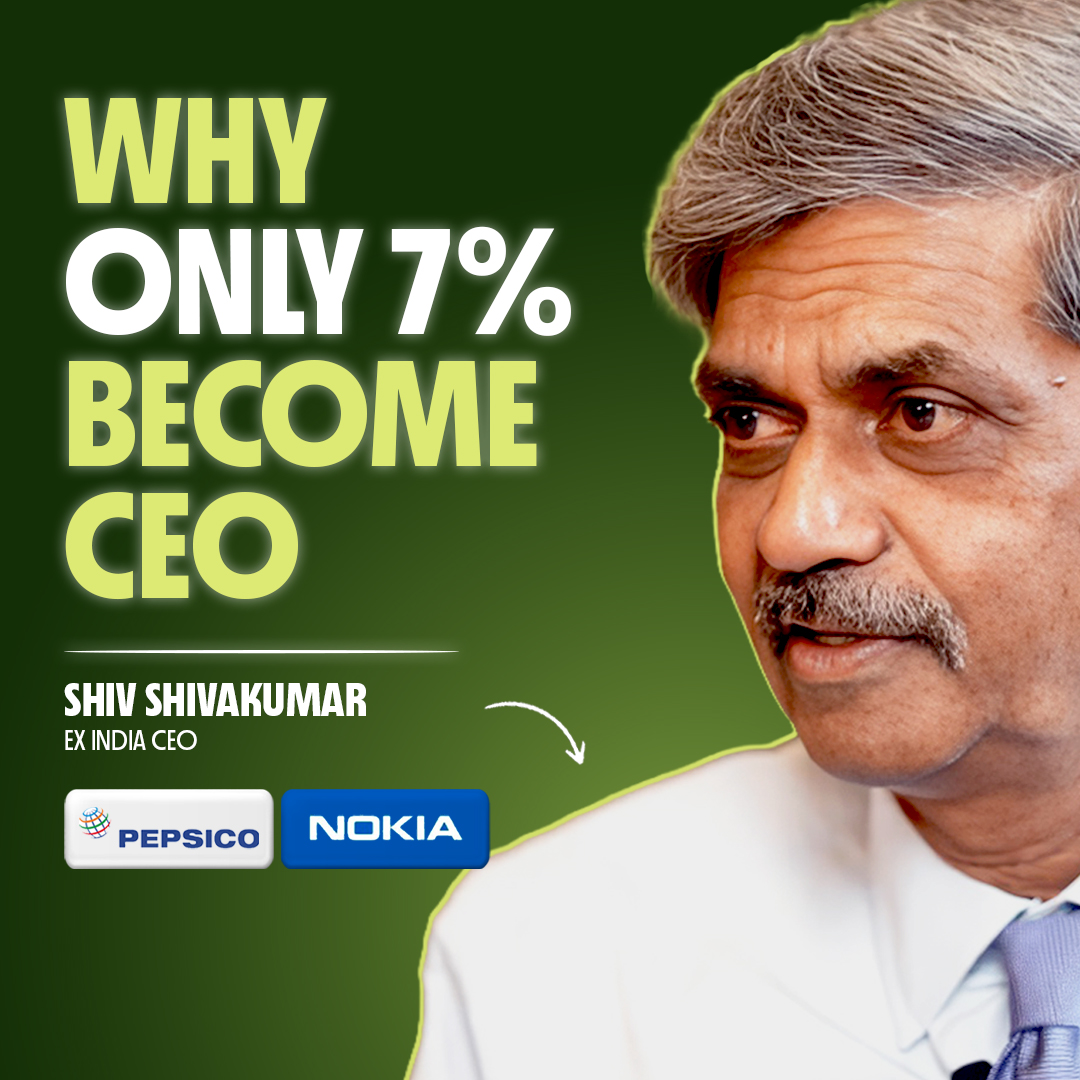
How a 20-Year CEO Thinks, Prepares & Leaves a Legacy | Shiv Shivakumar, Ex-CEO Nokia & PepsiCo
How do the best CEOs think, prepare, and leave a lasting legacy?
Shiv Shivakumar, former CEO of PepsiCo and Nokia reflects on decades of leading some of the most iconic companies. He shares insights on what makes a great leader, from the mindset required to the qualities that define people with a fighter’s instinct.
Shiv explains why commitment and curiosity often matter more than degrees or pedigrees, and why only about 7% of those who aspire to be CEOs actually become one. He also discusses how to navigate co-founder disagreements, knowing when a company needs you, and how to hire the right people for lasting impact.
Through stories from his own journey leading companies across sectors, Shiv highlights why unit economics, honest market sizing, and investing in innovation rather than cutting prices are critical for founders. He also emphasizes the importance of understanding culture, asking the right questions, and building trust in shaping a company’s success.
Whether you are an aspiring founder, a manager, or simply curious about how leadership works in practice, this conversation with one of India’s most experienced CEOs is for you.
Watch all other episodes on The Neon Podcast – Neon
Or view it on our YouTube Channel at The Neon Show – YouTube
Nansi Mishra 0:56
So, Shiv, thank you so much for joining us on Neon Show.
Shiv Shivakumar 0:59
My pleasure, Nansi. What a journey and what a story you have to tell more than what I have to tell.
Nansi Mishra 1:05
So, Rama Bijapurkar said about you that you are a person with fighter’s instinct.
Shiv Shivakumar 1:10
Oh, I see. When did she say it?
Nansi Mishra 1:12
I read in one of the articles.
Shiv Shivakumar 1:13
Okay.
Nansi Mishra 1:14
What is fighter’s instinct?
Shiv Shivakumar 1:16
Okay, let me put this. First of all, thanks to Rama for saying that. The thing about a fighter’s instinct, the way I would look at it is, never ever think that you are not good enough for something, number one, that’s very important.
So always, if you want to reach your potential, you have to shoot above your potential, number one. The second thing about a fighter’s instinct is, when you go in, you say, look, what does it take to, you know, make this work? I won’t use the word win.
What does it take to make it work? And third, a fighter’s instinct, as I understand it, is something that if you have a setback, you come back from the setback. Those are the three components of, you know, what I would regard as maybe resilience plus ability to, you know, grind it down and make it work.
A lot of people, what happens is, Nansi, they tend to blame the external circumstances. So, if something doesn’t go well, okay, this didn’t happen, karma, that happened, no. A fighter’s instinct is one way you focus on the things you control and you maximize that and you don’t worry about the things you don’t control and let that go.
That’s what I would, you know, respond in terms of your question.
Nansi Mishra 2:40
And in your journey, you have been fighting, just talking about fighters instinct. You have been a fighter for the last many, many years. How do you feel internally, like you have been in CEO role for more than 20 years.
Before that also you were with Unilever for 19 years. How do you feel when every day is difficult for you and the coming years are also difficult?
Shiv Shivakumar 3:02
The thing is, you must enjoy the journey. You must enjoy the challenge. I won’t say a fight.
Nansi Mishra 3:07
How do you enjoy?
Shiv Shivakumar 3:08
When you say fight, people think it’s physical, I would say the challenge, okay. How do you enjoy it? By being prepared, by thinking about it deeply, by looking at the future, by talking to people who can see the future, by looking at industries which have happened, etc.
I can tell you one of the biggest fights I had in that sense, challenge, was in Unilever. When I was in personal products and the shampoo category, everybody in the company from the chairman downwards to my predecessor who was still in the company, they all did not agree with what me and four of my people were saying is the future. Not one of them.
Why? They were very comfortable with the past. And that’s what I say in the book, that one of the biggest sins of a CEO is past forward.
You think that the past will repeat itself. We said the past will not repeat itself. This is the new price point strategy.
This is what we need to do. They didn’t agree with us. It was a fight day in and day out.
And a lot of the people are thinking, these guys don’t know what they are talking about. But today I can tell you 20 years later, those guys had no clue what they were talking about. Me and my team, those four or five people could see the future.
That price point strategy which we put in 2003-4 is valid even today. Now that is the test of legacy. That is the test of thinking.
So when you say, challenges are daily, that gives me pride. That gives me pride to say, we took on a company which was unwilling to change, but we were right. So whether it’s Rajnikant Sarnave, Saket Gore, Rukmini Mitra, these are the people who along with our ecosystem, we could see where that market was headed.
The guys who ran it in the past didn’t see it. And that is the mistake of every single management team. You always think you know the business basis, 20 years of experience, you just repeated yourself 20 years over.
Look ahead. If you look ahead, then the challenge is very big.
Nansi Mishra 5:07
And what was exactly happening with this shampoo category?
Shiv Shivakumar 5:11
Because there was low price competition coming in. And because we had good margins, people said, hey, if we go into these kind of price points our margin will drop. But we said the penetration will go up dramatically, you’ll make much more money.
And don’t worry about it. And we are well placed. But for six months, they pushed us back.
Okay, six months later, they asked us to do it, they said, okay, fine, because whatever they were saying was wrong, whatever we were saying was right.
Nansi Mishra 5:34
They still waited.
Shiv Shivakumar 5:35
They still waited.
Because they were hoping against hope that they were right, they were dead wrong. And when we did that, the first quarter when we put this whole strategy in place, we grew 43% volume growth.
Then all these characters shut up.
Nansi Mishra 5:50
And how would you prepare in those days?
Shiv Shivakumar 5:52
I would just look at the data, I would just look at the thing saying, is there anything which I have a bias towards? Because one of the things about developing a hypothesis, Nansi, is you can get very caught up in your hypothesis and be blind to it and not see the blind spots in it. So I would constantly look at the data and constantly scan to say, hey, what I’m saying is in the best interest of the company, it is not about me.
So when you suspend anything which is accruing as a benefit to you, and you say, hey, I’m working in the company’s best interest, and this is the right thing to do, then you’ll work very differently. So every day of the challenge, I remember we had a horrible meeting with the CEO and the board, really horrible meeting. Short of those guys told us, you have no clue what you’re talking about.
In hindsight, I will tell all of them, they had no clue. That’s why they were talking like that. And that evening, I went out for dinner with them.
It was a terrible meeting, really bad. So I took my team out and said, hey guys, are you confident that what you’re saying is right? They said, yes.
I said, don’t worry. The day will come when they’ll come back and tell us that what we’re saying is right. You don’t need to worry.
As long as you’re very sure in your heart of hearts that you’re doing the right thing. So it’s easy to say inspire people, but when they’re down like that, when the CEO and the board has dressed them down, it’s not easy. Then one day at a time, one day at a time, one day at a time.
Three months later, the same CEO and the board called us back and said, okay, do what you want. And I tell you, when the people walked out of the room, every single member of my team said, Shiv, they had no clue for all this time. Finally, they are able to see the light.
Now that’s what happens when you are not able to tell the truth to your people. If only the CEO and everybody else had said, go do what is right, it’s a very different thing. Rather than saying, go do what I’m telling you is right.
Nansi Mishra 7:55
But I think in today’s time, you can’t afford to have, you know, afford to take this much time because things are changing drastically.
Shiv Shivakumar 8:03
That’s a great point. That’s a great point you make, Nansi. Today, the information and the insight logic, that pyramid is upside down.
Today, young people have much more information and insight on everything to do with technology and the impact of technology. In fact, the higher up you are on the value chain, the lower is your link with technology. So by definition, you rely on them, no more.
Because in the past, you came as a CEO to a meeting to dispense what I call capsules of wisdom. Okay, 20 years ago, the CEO in the companies that I worked in would come to the meeting to say, okay, this is what I think will work. And we’d all dutifully write down and go back.
Today, that does not do. It’s quite likely the CEO has no clue what’s going to happen. So you have to orchestrate it.
You have to ask different people, you have to say, okay, what’s your point of view? You have to engage with people. Okay, you have to make, one of the things I used to do, I would say, okay, now we’ve thought about this.
Whatever we’re thinking about, whatever we’re doing, will this surprise competition is the question I used to ask. Then people would say, no, I don’t think so. Then I think we’re wasting our time.
If you’re not going to be surprising competition, which means there’s no advantage, okay, forget it. Then I would say, divide the meeting into two and say, this is what we’re saying, hey guys, these four, five guys on the right side of the table, can you poke holes at this argument? And let’s say guys on the left side of the table, can you say why this is the best thing that we should be doing?
So you have to collectively get the brainpower of everybody at the table so that you can come to the best combined decision. I’m still not saying it will be correct.
Nansi Mishra 9:45
Yes.
Shiv Shivakumar 9:45
Remember that. Because groupthink is a dangerous thing. And that’s why, as I write in the book, the art of asking great questions is very, very important.
So when you don’t know something, if I’m your boss, Nansi, I don’t know something, and I think you also don’t know it, then it’s a futile discussion we are having. If I don’t know something and I think you know it, then it’s my art of asking great questions to get that knowledge out of you onto the table.
Nansi Mishra 10:14
Yes.
Shiv Shivakumar 10:14
Okay. So I think that’s the kind of thing which you need to do. There is absolutely no substitute for collective high IQ power coming to the table.
There’s no substitute.
Nansi Mishra 10:27
And it’s also not just technology and how you gather information in today’s time. It is also about consumer. The consumers are also changing.
Shiv Shivakumar 10:35
Dramatically. You are the consumer.
Nansi Mishra 10:36
Dramatically. Like, I think I am old now.
We have Gen Z also, and we are just in talks with Myntra that maybe we will soon host someone from their team, and how they are now building for Gen Z, because the clothes they wear, the language they talk in, everything is changed.
So it is changing from in all the categories, the content that you write, the social media as a brand you should be on, what kind of clothes you should be designing, what kind of influencers you should onboard, like now brands are choosing influencers over traditional celebrities. So a lot of things are changing.
Shiv Shivakumar 11:13
I know the Tata’s have launched a Gen Z apparel brand here in Bangalore, they are test marketing it. I don’t know how the results are, it’s very early days. But the trouble with every generation is, you can’t age, that’s the danger.
So if you target only for Gen Zs, they age, remember, in 5-10 years’ time. So you have to be relevant, like we used to say, it’s not about age, but are you young at heart? That’s what it is.
And if you are not able to straddle that as a brand, then you will die with each generation. And that is the problem with a number of brands, which have been built in the past for a particular segment or whatever it is. Let us take the great brands of the past, which I don’t think have moved to the same level, because they were stuck with their existing customer base.
Mysore Sandal soap in Bangalore, Rajaji Nagar, great soap. But they were stuck with their set of consumers, Medimix, set with their consumers. So those are the kind of challenges that..
Nansi Mishra 12:17
You have to evolve.
Shiv Shivakumar 12:20
You have to keep your core, but you have to be relevant to other people also. If you are not getting new customers and new consumers, then you are in trouble.
Nansi Mishra 12:28
What are the new brands, like in some of the interviews, you call yourself a brand person. First of all, what do you mean by that? And then what are the brands that you really like in today’s time?
One thing that you have learned.
Shiv Shivakumar 12:42
When I say I am a brand person, I tend to look at brands and I tend to look at their consumers and what are they doing, how are they talking, etc., etc. Is there consistency in the strategy in what they are saying, what they say and what they do are very different things for most brands. Is this brand a flavor of the day, a tactic of the day?
Is this brand about promotion? 90% of the brands in India have gone down the tube because of excessive promotions. 90%.
And the biggest sin category is Apparel. In Apparel, you buy one, you get three free. You buy two, you get five free.
What are you doing? Then you might as well have a commodity. So, I think brand consumers love brands.
Naomi Klein wrote many years ago, called the no brand world not true. 20 years later, it is still true. People reach out to brands.
Why do people reach out to brands? People reach out to brands for security, for guarantee, especially poor people. If somebody is poor, he is buying a car, he is buying a phone, he is buying a phone worth 30,000 rupees, it is possibly two, three times his monthly income.
For him, he wants to be very sure that the product is there. So I always say rich people buy brands for vanity, to show off, poor people buy brands for security. Okay, so only by looking at consumers constantly and asking yourself, why does this happen?
So I try to track as many innovations as possible, etc. I have great respect for Uniqlo, outstanding company. I think the way they brought technology to Apparel and what they are doing.
I have great respect for a company called, a brand called Rare Rabbit, in apparel, in the last five, six years, they have done a fantastic job.
Nansi Mishra 14:37
What do you like about them?
Shiv Shivakumar 14:38
I think the product, the quality, okay, what they have stuck with, great stuff.
I think Jockey was doing a great job in the Apparel business for quite some time, but I think today they might be getting diffused. Another brand, since we are discussing Apparel, another brand I have a hell of a lot of respect for is Manyavar. They opened up the ethnic Indian market.
Now imagine they did that 10, 15 years ago. Now this is where a good marketer, a brand person will correlate. Now you see Manyavar, he sells Indian ethnic clothes, he is not selling suits.
Now one data point if you look at over the last 10, 15 years, nationalism is growing everywhere in the world. Proud of being an Indian is off the charts, proud of being Turkish is off the charts. And how does that represent itself?
In the songs you choose, in the clothes you wear, in the language you portray, in the food you eat. So, whether Manyavar saw it or not, but I can see that okay, they hit the sweet spot. That’s a great marketing story.
Nansi Mishra 15:40
And I also love the campaign that they had. So Amitabh Bachchan was in that ad and I think the campaign called, taiyaar hokar aaiye. That’s how they introduced ethnic wear, that lot of people would come wearing formals or especially men.
They would wear shirt and they will attend the parties. So that’s how they were introducing all these ethnic wears, that taiyaar hokar aaiye. So it was an amazing campaign.
Shiv Shivakumar 16:06
Now if you actually look at it, the whole apparel business was selling suits. Now suits are there for two occasions, which everybody knew. One you get married in a suit, no longer true, so Manyavar broke that.
And second you interview in a suit, that has not changed. But I personally believe a smart company will be one which will say, let’s have an ethnic Indian day.
Nansi Mishra 16:28
Yeah. Like in women category we have saree.
Shiv Shivakumar 16:32
Yeah.
Nansi Mishra 16:33
So women wear saree and I really like it when I see.
Shiv Shivakumar 16:37
So let’s take saree since we are on apparel. One of the biggest unmet needs for poor women on sarees is faster drying sarees. Because a number of those sarees are polyester sarees.
They wash it. They want it to dry fast. You know, now only when you talk to consumers and you realize the impact.
And that’s what I love, which is talking to many different people on many different categories and asking them, why do you do what you do? Like one of the things I always ask everybody, every brand owner I meet is, why did you choose this brand? Therein lies a story always.
Nansi Mishra 17:14
Yeah. There is one very famous saree brand called Suta. So started by two sisters, Sujata and Tarini, hence the name Suta.
It’s called Suta Bombay. And they now have store in Bangalore also. So they also solved one of the core problems that women like me, they want to wear sarees because you would see a lot of government employees who are women wearing sarees and judges and doctors.
And you know, when you are in IT, you wouldn’t see because you can say that the life is hectic. Other women also say that, but I don’t know why we don’t wear sarees, but now we want to wear, right? But the problem for us is that you don’t know how to drape.
So they sell these pre-draped sarees.
Shiv Shivakumar 17:59
Absolutely. I was just going to come to that.
Nansi Mishra 18:01
And we want fashion also because we don’t want old style blouses. So you can mix and match blouses and they’re doing quite well.
Shiv Shivakumar 18:09
Absolutely. You know, the other thing about clothes today, which if you’re, nobody’s saying it, but I think somebody should do it because young people are on Instagram. Young people are on, you know, posting so much, you know, in a phone, the camera feature is the biggest used feature now.
One of the things, you know, is people don’t want to be seen in the same shirt or whatever it is in the next picture. So if you go for a wedding today, you don’t want to repeat the saree in the next wedding.
Nansi Mishra 18:39
I don’t know why that happened.
Shiv Shivakumar 18:41
But that is true. That is human instinct. It’s human emotion.
Nansi Mishra 18:45
And those are the most expensive clothes.
Shiv Shivakumar 18:47
Absolutely right. Only boring guys like me wear the same pants. I know that I’m wearing the same pants.
Nansi Mishra 18:52
I’m okay with that. I messaged you before the interview.
Shiv Shivakumar 18:54
You messaged me saying, will you come in formal? I said, yes, I will be.
Nansi Mishra 18:57
Okay. I was trying to nudge you. Come in a t-shirt.
Shiv Shivakumar 19:03
Failed attempt. So, I think there are so many innovations which are possible in a simple, in a category called apparel. Whether it’s sarees, you know, every single category, like there again, if you look at it, there are no standard sizes for men and women today.
So somebody who can develop a good size thinking, like I think Biba did a very good job of that as an example. Okay. So there are so many points which can be solved, pain points of the consumers.
If you think like that, then I would think you’re a brand person. If you don’t think like that, then you’re a manufacturing person, because then you say, I have this pen, I’ve manufactured it, sell it. For example, let me take this, the Faber-Castell pen.
I love pens. I don’t write with fountain ink pens. So I bought this Faber-Castell pen, 50 rupees.
Their CEO is a friend of mine, chap called Partho Chakrabarti. After I used it, it’s a very light pen. So I wrote to him, I sent him a message saying, you know what, if you increase the grammage of this thing, the plastic by another few grams, it’ll give it a little more weight, which gives the cue of a pen, a roller ball pen.
Otherwise, when I feel it, it feels much more like a ball pen. I said, as a regular user of pens, that’s how I feel. So then he said, okay, I’ll get his technology team to look at it, etc.
But that’s what I mean by, do you really get into…
Nansi Mishra 20:26
Small things, yes. And do you know about this company story, Dormios, it’s the stationary brand. I think it is what it’s called.
It’s a public company, they make pencils. And I had no idea about this company, that an Indian company and a public company and doing extremely well in stationary category.
Shiv Shivakumar 20:48
In stationary, I was in Sri Lanka about three months ago. I saw a pencil brand, which is made from newspaper waste. Fabulous.
I said, what a story. Now imagine what people are thinking. That’s a great sustainability story.
Okay. One of the companies which I visited in Sri Lanka is a company called GRI Tires.
Okay, they make tires for the whole world. They have a sustainability tire, it’s green in color, it’s called the green tire. Again what a great story.
Think about it. So there are obviously very creative and very smart people everywhere. As long as you question, as long as you’re willing to learn, you pick up these things.
Nansi Mishra 21:26
So we will now talk about your book. So, you have recently written the CEO Mindset, what do you mean by this CEO Mindset or Mindset?
Shiv Shivakumar 21:36
Good question. You know, when I go to business schools, and that’s where the idea of this book started, I asked my question, how many of you want to be a CEO? 90% of the hands go up or 95% of the hands go up.
And then I looked at empirical data. If you look at empirical data of mid-size to large-size companies, not startups and people who start their own company, about 5 to 7% of the batch makes it to CEO. That’s it.
So I asked myself, why is it that 95% of people want to be a CEO, but only 7% get there? So what explains this 85, 87% gap? And then I thought, look, you don’t become a CEO when you’re given the CEO role.
You have to display that mindset for a number of years well before that. And that mindset is what I call the Charlie Mindset, C for communication, H for holistic thinking, A for absolute standards, R for being reflective, L for legacy thinking, I for investing in people and E for ethical execution. Right from day one, if you are practicing elements of this, then only bad luck can stop you.
If you don’t practice these elements, you need a hell of a lot of luck to get there. So I would say, develop the CEO mindset before you aim to be a CEO.
Nansi Mishra 23:06
Any CEO that you admire the most?
Shiv Shivakumar 23:09
There are lots of people in my career that I’ve admired. I’ve said this before. So one of the early people I admired a lot was a chap called Robert McNamara.
Now McNamara was the CEO of the Ford Motor Company, till President Kennedy called him and said, now come and be my Secretary of Defense. And he was involved in the Vietnam War, a great guy. Then he went on to be the chairman of the World Bank.
So he’s one of the few guys in the world who has worked in private sector, government and public sector. That’s rare. Non-profit, when I say public, non-profit.
So McNamara was outstanding that he was, when I used to read about him, when I was in college, starting my career etc., almost everybody would say, he would easily be the best prepared person in the room. He would read every single document. That’s a habit I ingrained from McNamara.
Now the other good habit of McNamara is, after he finished his term, the Vietnam War, everybody got pasty, everybody got egg on their face. He wrote a lovely book called In Retrospect, where he said, what went wrong? Why did we go wrong with the Vietnam War?
That requires a lot of reflection and a lot of humility to say, I was wrong. And McNamara says, the reason why we went into the Vietnam War was, we assumed that Vietnam will go the communist route. He said, nobody sitting in President Kennedy’s Oval Office asked a very simple question, why should Vietnam go communist?
And so therein, I took a big lesson saying, stress test your assumptions. You might assume the wrong thing, which is quite often the case in many boardrooms. Stress test that assumption.
So I learnt a lot just reading about McNamara and I never met him or never corresponded with him. Peter Drucker was somebody who had a great influence on me because I always liked reading his books, the simplicity of it etc. There’s a lovely story from Peter Drucker book, which is…
Nansi Mishra 25:16
Can you talk about his profile also?
Shiv Shivakumar 25:18
Yeah. Peter Drucker is the guru of management, full stop. Nobody has been anywhere near that pinnacle.
But here’s the story. Peter Drucker was an Austria management guru. He writes a book called Adventures of a Bystander, many years later, and he explains why he became a consultant or a teacher.
He says, he was the head of the parade carrying the flag, obviously a symbolic pride gesture. He said, about one kilometer into that, I realized, I don’t like carrying this. He said, he gave it to somebody else, remember he’s a 15 year old boy, he said, I gave it to somebody else.
I stood on the pavement and I watched the parade go by and he said, I realized then that my biggest strength is observations of being a bystander. Then Drucker did fantastic work as a consultant with General Motors. So three things in the 1930s when he did this book, three things which are valid even today.
He was the first guy to enunciate MBOs, today what you know as MBOs is a Drucker innovation. He was the first guy to talk of span of control. But he said, there he was a little wrong, he said the maximum span of control for anybody will be eight.
Today, in a tech world, you can go to 15, 18, in PepsiCo I had some 18 people reporting to me. And the third thing which is a Drucker innovation is the concept of a profit center.
Nansi Mishra 26:50
Okay.
Shiv Shivakumar 26:50
So these are three innovations of Drucker which have stood the test of time. So I used to…
Nansi Mishra 26:56
And how old you were when you were reading about these people?
Shiv Shivakumar 26:59
Teenager, whatever it is. And I wrote to Drucker. So IIM Calcutta, all my classmates used to rip their living daylights out of me.
I would write to all the professors, I would get response from them, I would get their articles, I have written to Michael Porter, I have written to Benson Shapiro, Yeram Venn, Peter Drucker, everybody. You name a professor of that time, 80s and 90s, I have written to all of them. And all of them would send me the articles and I would furiously read.
Nansi Mishra 27:24
How would you find out these people?
Shiv Shivakumar 27:27
Those days you went to…
Nansi Mishra 27:28
You read a book and then…
Shiv Shivakumar 27:29
Correct. You went to the Journal of Market Research or went to the Journal of Marketing or Advertising Journal or whatever it is. So I corresponded with Drucker for a number of years.
He was kind enough. Now imagine, I am a student, I am a low-level area sales manager in a company. I write to him.
He used to respond and even better, he actually offered, he said, do you want to come to Santa Clara and spend a week? Now imagine as a young area sales manager going to your boss, those are not the days of sabbatical and saying, you know what, I want to take a week off to go and attend Professor Drucker’s courses. They would have possibly sacked me.
You have a job, stay with him. I wrote to Jack Welch, I have a lot of Jack Welch articles, everything that he spoke about. So a lot…
Nansi Mishra 28:16
You were a total nerd.
Shiv Shivakumar 28:17
Huh?
Nansi Mishra 28:18
You were a total nerd.
Shiv Shivakumar 28:19
Not a nerd.
I would say, go back to that question you asked on Fighter, go back to that question you asked on how do you stay ready every day, energy every day for the future world. If you don’t stay relevant, see how can one learn? I can learn on my own.
I can learn by watching you. I can learn from the really great guys and say, hey, what did they do? Okay.
What Welch has done in his 20 years as CEO, you can convince it into good learning in a week or two, as long as you are bothered about. Okay. So I would say more than a nerd, I had a fascination for insights and knowledge from people who succeeded and failed and were willing to share that.
And that’s the same philosophy I brought to the workplace. I would share liberally with everybody. Every article I read, I would photocopy it and give it to my team, you know, in the resume.
Today, every article, good article I read to the boards and the executives, I send it to them. I read a book, I make a summary, I send it to everybody.
Nansi Mishra 29:26
That’s how you would train your team also.
Shiv Shivakumar 29:28
Absolutely.
Nansi Mishra 29:30
And I heard you saying somewhere that one of the regrets you have, like you don’t have any regret, you said, but then the next line you said was, if I have to talk about one regret, I would say that I never went out and worked.
Shiv Shivakumar 29:44
Went out and worked early.
Nansi Mishra 29:45
Early. And you were talking to these professors and you had access and what happened?
Shiv Shivakumar 29:52
I agree.
See, but the company I worked in, Unilever, they said, look, we have enough opportunities for you here. Okay. So, I stayed. That’s it.
It’s a matter of trust. And as I said, thanks to Prime Minister Narsimha Rao and Dr. Manmohan Singh, the opportunities opened up so many, not one or two, look at the number of industries which have come up right now. Okay.
So India is and was a great land of opportunity. So I didn’t go abroad. I went abroad much later when I was leading emerging markets for Nokia out of Dubai.
That was fulfilling, great fun. But if I had gone in my thirties, that would have been a very different thing, a different learning.
Nansi Mishra 30:32
I read Indra Nooyi’s biography and she was just talking about how she got into IIM Calcutta and then eventually how she became part of PepsiCo and I was just talking to myself thinking, why was she not here? Why did she move? And then I thought maybe we didn’t have enough opportunities for person like her back in time.
Shiv Shivakumar 30:56
Yeah sure. So I would say that’s what they say, the brain drain. Till about 80s, even my batch, we were a small batch in IIM Calcutta of 97 odd people. Half the people went to America and elsewhere.
Okay, so the general feeling was that there is not enough opportunity to showcase your potential and your talent in a market like India. Okay, but I think that has changed today. Okay, now each thing has a reason also.
The earliest brain drain was actually from Tamil Nadu. Okay, today if you look at the number of aged, you know, old age homes, they are all in Tamil Nadu. Because now these kids there, they cannot take their parents there because there is no health security etc.
So, there is a huge need which has come up.
Nansi Mishra 31:45
Senior care.
Shiv Shivakumar 31:46
Absolutely, the elder care has become a very big market thanks to that brain drain, as an example. Now, that’s what you go back as a brand person, you have to correlate events to say, okay that happened in the 90s, 80s, this elder care business is taking off now. Okay, that’s a simple.
Nansi Mishra 32:03
America always had this problem, but because it is part of their culture, the kids would move out. It doesn’t matter if they are in the same city. But in India, it is a new problem because it’s not like kids still don’t want to live with parents, it’s like they are not there in the city.
Shiv Shivakumar 32:19
Absolutely right. Like today, if you look at it, see, we talk of brain drain, we saw a number of people leaving us. In the last three, four years, every election in every big country, many people have lost on a simple topic called immigration.
You just saw what’s happening in UK, a huge movement anti-immigration, big crowd all over the center of London. Now, I personally believe you will see a lot of talented Indians coming back. A lot of talented Indians will say, hey, there is good opportunity in India, maybe there was some kind of opportunity in this country, but maybe India is worth trying.
Nansi Mishra 33:01
Especially entrepreneurs have started coming back.
Shiv Shivakumar 34:02
Absolutely. Many times when I would get CVs from US or UK or wherever it was, wanting to come back and join. When I interviewed those people, there were two, what I call crossroad points.
The first crossroad point is my parents are getting old, I want to come back. I need to take care of them. Whatever I have done is enough, fine, but I want to come back.
If I got a good job, I am willing to relive it. The second crossroad point was my kids have become teenagers. I need to make up my mind whether they grow up in this culture or I bring them back to India.
So, these are the two crossroad points that I saw.
Nansi Mishra 33:47
I think, there is one more perspective. People went outside, they earned lots of money, achieved a lot in their career, but now they want to have an impact also. And then I think that is also one of the…
Shiv Shivakumar 34:05
You are right, but that is a different reason, which is now they are well settled, nothing to worry about.
Nansi Mishra 34:11
They cannot create an impact in those markets.
Shiv Shivakumar 34:14
But nothing to worry about, they are well-heeled. In these first two cases, there is a genuine need they have that, look, my parents are getting old, my teenage kids, I need to make up my mind. The third one, you have reached a level at the top of the pyramid, you say, look, now I am going to happily come back, I want to give back to society.
That is a very deep…
Nansi Mishra 34:33
We see a lot of people in that category.
Shiv Shivakumar 34:36
That is very true. You are absolutely right, absolutely, 100 percent.
Nansi Mishra 34:39
I heard and I was reading the book and I really liked this one point that you mentioned, that there are four common P’s to avoid when…
Shiv Shivakumar 34:49
Bad habits, go on.
Nansi Mishra 34:50
Politics, pettiness, procrastination and personal ego. Which one of the four P’s has been the hardest to vanish?
Shiv Shivakumar 35:01
You know, the hardest always I have found is, you prepare very well. I tend to prepare very well and go for all meetings. You do all the work, etc., and people just procrastinate. The ability to influence that when you know that it is the right thing to do, is a very frustrating experience. So, you can call it a combination of others procrastinating and your ego not accepting that, hey, you know, I am well prepared, trust me, that I am looking ahead and telling you.
When I look back at my decisions over the last 20 years as a CEO, I could say that nine times out of ten I was right and that is a pretty good strike rate. So, that gives me the confidence all the time. Yesterday I was in a board meeting, we are talking about the structure.
Now, the structure, the head of the nominations committee was clear that this is the structure, I was pretty clear. But the other seven people of the board had a different point of view. So, we had to go through a full process for an hour to convince them, to give them lots of logic, etc., why it is so. Now, what happens when you are prepared, when you have experience and by and large you want to do the right thing for the institution is, the answer comes to you intuitively. So, when the answer comes to you intuitively, there is certain pride in saying that answer comes to me intuitively. But also there is a certain ego which says, why can’t the others see it?
Why can’t they see what I am able to see? And that is real frustration for all leaders, especially entrepreneurs. For a number of entrepreneurs, they come to that intuitive led, you know.
Nansi Mishra 36:45
That is how they start.
Shiv Shivakumar 36:46
That is how they start. But trying to convince investors, trying to convince their team, etc., is a long haul and they say, yeah, why are you arguing, let us go. That is one of the biggest challenges and I have gone through the same thing through my career.
Nansi Mishra 37:00
And how do you solve this problem, challenge in hiring?
Shiv Shivakumar 37:05
There is no challenge.
Nansi Mishra 37:07
Because nobody would want to work with, you know, wrong set of people.
You always find yourself solving petty problems with those people.
Shiv Shivakumar 37:15
Agreed. See, let me look at it the other way around. If you are going to a company to be hired, the first thing I would tell you is, Nansi, please get your background, ref check on the culture of the company.
That is all. Do not get swayed by a CEO who talks rubbish, who make grand plans, five years you will be here, ten years, do not get carried away by that. Because a lot of CEOs promise and do not do anything.
Do not get carried away by HR managers telling you, you are the next best thing Nansi since sliced bread. Do not get carried away. Be grounded.
Do your own check in terms of what is the culture of the place. Talk to ex-employees. Go to Glassdoor.
Check all that. There is so much information available. Once you know that this is the culture of the place, for example, the culture can be very aggressive, focus on results, hire and fire company.
If you are extremely ambitious, you are willing to take that risk, by all means go. Nothing wrong in it. On the other hand, if you are a sedate company, takes too much time, cannot decide, sleepy, and you have a fire in your belly, you are not going to change that.
So, I would say to any young person, do your homework on the culture of the company, even before you go for the interview.
Nansi Mishra 38:36
We have one founder, he is part of Neon only. His name is Vijay Rayapati and we were talking to him and he mentioned that after the interview, they do anti-interview also, where they tell candidate that like this is the culture and these are our expectations. Because in the interview, you always ask about the other person’s expectations, like what is your expectation from this company.
Say after the interview, they do anti-interview also. This is how we operate. These are the values we have and we do not operate like any other company where people work 9 to 5.
We are working almost all the time. So, there is no shock when they join.
Shiv Shivakumar 39:16
No, okay, I will come to that, but that is a very good way of doing it. It is like Shackleton, what did Shackleton post? He said, want people for this expedition, return not guaranteed, you might die.
But people signed up, still joined, they said okay, this is a great journey, it is a great thrilling experience, so what, I will take the odds. Now the thing is, what you said, we work till 10 o’clock in the night, etc. The situation of the job market today, Nansi, is people want a job.
They will say yes to all of that. The moment they have a job, they will crib like mad. They will say, I have no life.
They were told that there is no life in this company. At least the founder, whoever you are talking about, he has been honest enough. I need to go out with my girlfriend, I need to go out here, I need to have this, doesn’t work.
That’s when the stress starts.
Nansi Mishra 40:12
Do you think it has started happening more frequently now, like people are more impatient?
Shiv Shivakumar 40:17
It’s not impatient, no, it’s not impatience. I would say what I see is that young people believe they have a lot more opportunities today than ever before. So if I have a lot more opportunities, I don’t need to suck up to Nansi, Nansi the boss.
I can tell Nansi, fly a kite, I am off. I know my value, I know my worth and I will get something else there. So I always tell young managers, have great commitment.
If you have that commitment and the company is not repaying it in whichever manner and right you believe you deserve, you are awesome. If it doesn’t, you move on. So today the number of industries, the number of opportunities are so wide that young people have that inherent confidence of taking risks with their careers, which wasn’t true 20 years ago.
Nansi Mishra 41:05
I think this is like you said somewhere that leave a legacy. I think this is what you mean. Like even if you are with a company for two years and you are maybe building a startup after this, at least for those two years, stay committed to company.
Shiv Shivakumar 41:20
You know.
Nansi Mishra 41:20
Because when you leave, you are leaving a legacy behind.
Shiv Shivakumar 41:24
Absolutely. I had a wonderful management training in Hindustan Unilever called Paul Patchett. He was my area management trainee, he was my area sales manager, he was my brand manager, he was my marketing manager.
He did a wonderful job. For whatever set of reasons, things didn’t work out between him and his boss in Hindustan Unilever and he left. He went and joined a company called Mother Dairy.
Yesterday I was on a flight with Nagarajan, who was the ex-CEO of Mother Dairy and he was talking about Paul Patchett and he said, Shiv, I have never met Paul. He said, but everybody in Mother Dairy swears by all the good workers. Now, this is 10 years, 15 years after Paul has left the company.
Why? He always worked for the institution. Okay.
Now, how many Paul Patchetts are there in a company?
Nansi Mishra 42:14
Very few.
Shiv Shivakumar 42:15
Absolutely right. So, if a company loses somebody like Paul, they are stupid. I would never want to lose somebody who has high commitment, who does what is right for the institution.
It would make me cry to lose that guy. Why would you lose him?
Nansi Mishra 42:30
Finding such people is also very difficult.
Shiv Shivakumar 42:32
Now, imagine when people’s legacies, somebody gives Nansi a farewell and forgets her tomorrow morning. Here is a guy who has left 15 years ago, they still remember him. Why?
He did the right things. He was committed more than anything else to the company and its future. That one quality, if people had, you will always do it.
Nansi Mishra 42:51
But how to find these people? Like in hiring, as you said that they would say yes to everything that you need. What do you look for in those people?
Shiv Shivakumar 43:01
They need that innate curiosity. They need that essential drive. They would need a fifth gear, third gear.
Many people are in gear three, some people are in gear four, but these kind of guys are in fifth gear. They want to make a difference. And next, they are humble enough to accept their mistakes and say, hey, this did not go well, but I am willing to change course and I am willing to move forward again.
So, they have resilience. So, those are the type of people.
Nansi Mishra 43:29
But these are the things you see when they join.
Shiv Shivakumar 43:32
No, you can ask them various questions.
Nansi Mishra 43:34
Like, for example, if you can just…
Shiv Shivakumar 43:36
For example, you ask somebody, what has been your biggest disappointment in life so far? Check what the person says. For example, if I ask you, hey Nansi, what is your biggest disappointment in life so far?
You could say, hey, you know what? See, when I started, I wanted to go to Harvard. My dream was Harvard, but I could not make it because my financial circumstances did not allow me to do.
Now, you are telling me a raw truth. But you are saying fair. I aimed big.
I was aiming for the moon. I did not get there, but I am on my way. Maybe one day there will be a case study written on Nansi in Harvard.
You never know.
Nansi Mishra 44:20
And what are the other questions? Because I find it truly, it is a good point. What can be the other questions?
Shiv Shivakumar 44:28
Other questions?
Nansi Mishra 44:28
You can check, you can do background verification, you know the college they have been to, but how do you judge a character? Because we now have close to 60 companies and hiring is one of the biggest challenges they have. So, how do you hire the right kind of candidates?
Shiv Shivakumar 44:44
So, the other question to ask is, what is your learning style? There are some people who learn by watching others. There are some people who learn by themselves.
So, a question to ask is, are you a decimal point manager or are you a whole number manager? How do you take targets? What targets have you set for yourself?
When you are a decimal point manager in a company, you keep debating with your boss whether your target should be 5 percent or 5.4 percent. Useless exercise. Absolutely waste of time.
So, in most MNCs, a budget setting exercise is an exercise in minimalization. What is the least I can get away with? In Indian owner driven companies, the paper goes to the Indian owner, he will scratch and say, this is the number I want, it goes back, end of story.
The owner’s ambition determines how you stretch. So, now, if you find people quibbling about their targets, he doesn’t have that risk yet. He says, doesn’t matter.
To me, I have never worked in my career looking at my target. My target is an outcome of my commitment. If I am committed, it will happen.
If I am doing damn good work, it will happen. The two, three years in my career where the results were terrible, not because I was not committed, because the circumstances were such, that’s okay. I don’t blame the circumstances.
So, always look for what I call the full number manager, not the decimal point manager. And if you are able to see that spark in that person, wanting to do well, willing to accept, you know, failures.
Nansi Mishra 46:20
You talk about background also like.
Shiv Shivakumar 46:23
Background doesn’t matter.
Nansi Mishra 46:24
Doesn’t matter.
Shiv Shivakumar 46:25
No, it doesn’t matter. I am honest and I am saying this into the camera for you. I have never bothered about whether this guy is from an IIM or an MBA or this or that.
Never bothered. I only look for results. Can this guy work with people?
Can this girl work with people? Can they produce results? Never in my consideration has been a degree.
Nansi Mishra 46:46
This has been the advice from so many.
Shiv Shivakumar 46:48
I have always done that. You can check with anybody, anybody who has worked with me. I have never hired for a degree.
Nansi Mishra 46:54
Like lot of emphasis on value system. And what kind of value system the person has. It has lot to do with background.
You don’t agree with that?
Shiv Shivakumar 47:07
Difficult to judge. You know, difficult to judge. In this world, like for example, you see the number of fraud cases which are happening.
CEOs are doing it. CXOs are doing it. Look at the number of people.
Today I was talking to somebody in the verification business. They verify candidates for first job to IT companies, banks, etc., etc. I asked him, you know, Hey Ravi, if you interviewed 100 people, the company asked you to interview 100 people, do their background check, they have checked everything, etc., university degree and you send the papers up, how many go wrong?
He said 5 to 7 percent. That’s a hell of a lot for a start, for a startup thing. So now, how do I judge the value of that guy or the values that he professes?
If 7 percent of those degrees are fake or 7 percent of what he said on TV is wrong. So I think we live in a world where puffery is the norm. Leaders claim puffery.
Everybody exaggerates what they do. Facebook, Instagram.
Nansi Mishra 48:16
Because there is lot of noise. So they feel that they can cut the noise if they…
Shiv Shivakumar 48:20
It’s full of, let’s take forced peer pressure, which makes you behave like that. We live in that world. So, how much is authentic, how much is not?
If you remember the, I think it was the day of the Jackal, the Fredrick Fawcett book, where he said 50 percent of this book is true, 50 percent of this is fiction. It’s for you to figure out what is fiction, what is true. It’s like that today.
Most CVs are like that.
Nansi Mishra 48:47
Yeah, and that is why it’s just so difficult to find the right people for your business. Even find friends.
Shiv Shivakumar 48:56
That’s a great point. In fact, one of the things we see…
Nansi Mishra 49:00
Because it hardly connects with…
Shiv Shivakumar 49:02
Correct. One of the things we see in organizations is people are saying, I don’t have a best friend at work. I don’t have a buddy at work.
That is a problem. And hence, I believe, and I’m saying this, and I’m saying this next week in Dubai also, focus on relationships at work, especially in this work from home, hybrid, this, that, etc. We’ve taken our eye off relationships at work.
And I think relationships at work should not be that I scratch your back, you scratch my back. That is not a relationship. A relationship is when it works for the company.
We are friends, but in the interest of the company. We are not friends just because we like each other, the company go to hell. We are not friends that in a meeting you sit and say, yeah, I agree with you.
That is not friendship.
Nansi Mishra 49:51
Lot of our, like, the podcast that we have, so most of founders watch this podcast. So, for them also, it’ll be a valuable lesson from you, how to build the relationship, because they have multiple stakeholders. They have to build a relationship with investors.
You know, sometimes apart from investors, we have angel investors also who are ex-founders, who we want to work with closely to learn from them. How do you build a relationship with them?
Shiv Shivakumar 50:20
See, every relationship finally has an endpoint called trust. And the value of a relationship and the path to trust is about transparency. I also work with founders.
The first advice I’d give founders, all of you out there, tell the truth to your investors. I cannot tell you how important it is. I don’t know about your numbers.
I believe at least 50 percent of founders massage the data and the numbers before they come to the investor. At least, they want to make it look good.
Nansi Mishra 50:55
Yes.
Shiv Shivakumar 50:56
That is wrong in my book. If you tell the truth, you might be better off. Because when you massage the data, you are living to the next meeting, that is all.
It will only get worse, number one. Number two, if you are a bunch of founders, have very clear agreement on how you will handle disagreement. Suppose you have an invested company, Nansi, there is a CEO, there are three founders.
They must have a charter which says, if we disagree on this issue, we will go to Nansi, or we will go to somebody, and we will take that as the final one. Quite often, egos come in the way and founders start…
Nansi Mishra 51:36
Yeah, I think 75 percent of the companies fail because of co-founder or founder conflict.
Shiv Shivakumar 51:41
Absolutely right. Because, see, when you are friends, when there is no business involved, there is no money involved, there is no reputation involved, yeah, you shoot the breeze, you go drink beer, you go for a cricket match, you go for a movie, that is a different life. When suddenly you start managing a company as founders, suddenly you say, hey, my opinion is better than yours, I think I am right.
So, if you do not know how to resolve differences, and this is true even for family companies, okay, that is the second one. Third one I would say is, for all founders, build a capable team below. These are the three things you must be very clear about.
If you are not clear about this, you are gone, okay, then you need luck to see it through. These are in your control.
Nansi Mishra 52:24
But for founders, either you have the equation with them, or you do not have. You cannot build it when you are not able to connect with the other person.
Shiv Shivakumar 52:34
Then do not have him as a founder.
Nansi Mishra 52:37
Yeah, that is where they do like, they break up and…
Shiv Shivakumar 52:40
Absolutely right.
Nansi Mishra 52:41
75 percent of the startup…
Shiv Shivakumar 52:42
75, you said, my sense seeing the founders, I was at 50 percent, saying 50 percent…
Nansi Mishra 52:48
I think YC quoted this number, so maybe global number.
Shiv Shivakumar 52:51
Yeah.
Nansi Mishra 52:51
And any other advice for them, because you work with many startup founders, what are the other issues they have?
Shiv Shivakumar 52:57
In my book, your unit economics must turn out right, as simple as that. Now, cut to the chase, etc., you know, in one of the jobs I did, we met at least 200, 300 founders, long discussions, etc. Simply, what is the state of your unit economics?
In fact, many businesses you can scale up, the more you scale, the more you lose money. That is not smart, okay. So, if your unit economics are not right, if the capability in the team is not right, then it is a problem.
So, how big is the addressable market? And when I say addressable market, being honest about what is possible. See, a lot of people paint India 1400, you know, it does not work.
Be honest about the addressable market, okay. If you are talking the middle class of India, that is about 400 into 430 million people, max, cannot be more than that, as simple as that. Now, you can figure out various ways, but do not go and sell a pipe dream to people.
Nansi Mishra 54:00
What are the common mistakes founders make when they pitch to people like you?
Shiv Shivakumar 54:04
I think the common mistake they make is, they overestimate the size and potential of their idea, dramatically, okay. They underestimate the rigor in getting the margin structure right, okay. They underestimate the capability needed to move an organization forward.
That is what I have seen with all my interaction with founders.
Nansi Mishra 54:32
You have recently met any founder who you really liked, like talking about startup founders.
Shiv Shivakumar 54:38
Oh yeah, like, for example, P.C. Mustafa. I am on his, I am on his board, he has also contributed to the book. So, we went there as advent to pitch money to him to saying, hey, would you be needing money?
He said, no, Shiv, I do not need capital now, and he told the advent team. But he said, hey, do you come to Bangalore? I said, yes, I come, I visit my mother regularly, I am a Bangalore boy.
He said, every time you come, why do not you drop in and let us have a chat. So, when I went first time, he said, Shiv, why do not you talk to my team about how to set up a B2B business. Second, how to talk to them about how to set up an innovation council, something else, that is how the relationship started.
Four months later, he said, hey, Shiv, why do not you join my board? Now, the good thing about P.C. is, I always tell him the truth. If he says, this is the idea I have, I tell him, look, P.C., this will not work, I do not think so, from whatever I have seen. But I am willing to tell you the truth, it is up to you, it is your decision, it is your money.
Nansi Mishra 55:30
Is there any example you can share?
Shiv Shivakumar 55:32
There are lots of examples. For example, let us take, what are we doing in coffee, as an example. A decoction is okay, anything else, unlikely.
Milk and dairy is a tough business.
Nansi Mishra 55:45
No, no, I was talking about I.D., because I.D. Anyway, I am talking about I.D., I am talking about I.D. only.
Shiv Shivakumar 55:51
For example, I.D., I personally believe the biggest area of the future is innovation in I.D. When I say innovation, a whiter batter, vegetable infused batter, high protein batter, those are the ideas that we need to pursue, not price. A lot of founders, the other mistake they make is, the first sign of rough weather or turbulence, they cut price. In fact, I would say the first sign of turbulence, invest in innovation, more, get something new to the table.
Because in every troubled times, if you do the same thing again, the comparative benchmark is the same. If you try something new, you are setting a new benchmark.
Nansi Mishra 56:33
Like I.D. has been innovating a lot for the last many, many years. Started with batter and now they have in batter only lot of varieties, like they have ragi batter also.
Shiv Shivakumar 56:43
Absolutely right. That’s the kind of thing we should do.
Nansi Mishra 56:45
Earlier I would see people in South India consuming I.D., now I see in Delhi also, I think they are the number one.
Shiv Shivakumar 56:51
PC has done a fabulous job. But again, he is an entrepreneur who has lots of ideas. He needs capable professionals like me to say, hey you know, we think this will work, this might not work.
It’s our job to tell him, even though he is the chairman of the company and the owner of the company.
Nansi Mishra 57:08
What are the other companies you are serving? Penguin is.
Shiv Shivakumar 57:12
For example, Penguin is another discussion. I think the business model in publishing needs to change. We have more authors in India than bookstores.
Think about it. We have more authors in India than bookstores. There are 5200 bookstores.
Live authors, we have at least thousands, 10,000, all languages put together. We have a fundamental business model issue, nobody makes money. Authors don’t make money.
Nansi Mishra 57:41
And we still have book culture, but I am still not sure about.
Shiv Shivakumar 57:49
The economics are not good. So, I won’t give you the ideas which are, I have recommended to Gaurav of Penguin, a very different way of thinking about the business model of publishing. He said, Shiv, this is an interesting idea.
I will talk to my team. I have left it with him. I won’t signal it because.
Nansi Mishra 58:05
Maybe next time.
Shiv Shivakumar 58:06
Yeah, it is confidential. So, I think he should look at it.
So, it is a very different industry. And I am scratching my head to say, when is a, I have seen an industry when there are more people on this side rather than on the middle side of it. It is amazing.
Like if you take FMCG, there are 11.3 million outlets in FMCG. We don’t have 11.3 million companies doing FMCG. Okay, or producing goods.
Here we have 5200 middlemen and we have 10,000 authors. So, the chicken’s neck is very, very tight. So, if your book does not have traction, you are dead on day one.
Now, how many authors, how many publishers realize that, how many are willing to tell the author that. Now, since you are talking, almost every founder is writing a book right now as I speak to you. Every founder.
Nansi Mishra 58:59
Every founder, every influencer, every thought leader who is quite done with.
Shiv Shivakumar 59:06
Every founder is ghost writing a book. Sorry, I must correct myself.
Nansi Mishra 59:11
No, I totally agree with you.
Shiv Shivakumar 59:12
They have got a writer. I think that is wrong. This book, every word, every sentence is written not by me, not by ChaTGPT, not by any ghost writer.
I have written this. I take pride in it. So, if you want your voice to come across, you must write.
Nansi Mishra 59:28
But I think publishing houses also, they don’t have any issue with it.
Shiv Shivakumar 59:32
It is not, I think, see it is like this. That is a great point.
Nansi Mishra 59:36
Because I see leading publishers only publishing books that are not written by…
Shiv Shivakumar 59:41
That is a great point you make. You know, in my whole career, there is only once, when I was away in America, when I was in PepsiCo, that a circular had to go from me, or a message had to go from me. And somebody in the comms department at Hoover drafted and sent it out.
I can’t tell you, somebody wrote to me saying, Shiv, I know this is not written by you. It is not your style. And he said, look, as an employee, I expect my CEO to write to me.
Only once it happened in my career. But it is a great lesson. It was a great learning.
So, think about it. If I am an entrepreneur, I would like, the reader would like my voice. Not Nansi writing a book and me proofreading it and saying yes or no.
My voice must be there.
Nansi Mishra 1:00:29
And that is how you decided the topic of this book also, that you were also thinking about emerging market and the market that you have operated in. And then you finally decided to choose this topic.
Shiv Shivakumar 1:00:43
Absolutely.
Nansi Mishra 1:00:45
Because whenever you would go to, I have heard you talking about this, that every time you go to these colleges, people would ask you more of the questions that you have answered in this book.
Shiv Shivakumar 1:00:56
Absolutely. So, the same logic applies for presentations, a lot of CEOs outsource their presentation to a junior manager, do not do that, it is your voice, when somebody else does it, it is not your voice, it is a voice over, a voice over is very different from a voice, most CEOs want to, are doing the voice over business, do not do that, I would not do it, I have never outsourced my presentations to anybody, I do it myself, number one, I have never repeated a presentation in 30 years of my life, ever, so you must take pride in your personal brand, if you do not take pride in your personal brand, then your personal brand is not worth the value. Now, imagine, you work for me, you are making my presentations, I go and do this presentation and on LinkedIn people say, great presentation sir, you are telling everybody, I made it, this guy is a joker, credit is mine, I put that slide in, I put that word in, you have lost respect for me, people do not realize that.
Nansi Mishra 1:02:02
So, the ex-CEO of Ponds India, V. Balaraman said that Shiv distributed Nokia among Indian consumers in HUL distribution style, like what did he mean by it?
Shiv Shivakumar 1:02:15
Yeah, that is very good point, Mr. Balaraman is one of my mentors, he lives a few blocks down here. The biggest strength of FMCG companies and the early great FMCG distributed companies were ITC, were Union Carbide, were Hindustan Unilever, so you had products, you did not have advertising, so you had to go to village by village, show them reels, actually show people, this is a soap, this is how it works, this is a lather, nothing will happen to your skin, wash it off, now it is fine. So you had to demonstrate on the village street, a number of these things.
So that was the old model of distribution.
Nansi Mishra 1:02:58
That is why they will place all these trainees in all these geography.
Shiv Shivakumar 1:03:02
But today that model is severely disrupted with Q-commerce and E-commerce etc., severely, which the same old legacy companies have not woken up, which is another point of disruption. When we started Nokia, a small company, we recognized that, you know, the networks coming out, we had to go to the villages and the small towns etc., when we went there, we recognized that people were more worried about the service of the phone than the phone brand itself. So first we had to start the service end, before we went to distribute.
Number two, when we had to distribute, we had to go with a SIM card in tow, because going on our own was no use, because finally the consumer needs a SIM card plus this. So that is the kind of distribution efforts which we did in order to penetrate. So we went from about 40 distributors to about 400, we went from, I think, 10-15,000 outlets to more than a lakh outlets or 2 lakh outlets, which is more outlets than China mobile phone industry.
So that is what he means. He was also, he was also on the advisory board of Nokia.
Nansi Mishra 1:04:06
And one of your mentors.
Shiv Shivakumar 1:04:07
Yes, and he knows these things, remember, that’s why he said it.
Nansi Mishra 1:04:12
And one more question I have for you, that you led companies in three different industries, telecom, FMCG, and a conglomerate, and you said that a CEO should work in different sectors. Why is that?
Shiv Shivakumar 1:04:28
Because if you are, if you only work in one sector, you have blinkered, because that’s the only thing you learn in life. Only if you are a great learner, which is rare, rare, rare, okay, will you go out of your orbit. If you work in different industries, you learn very different business models, you learn very different trade, you learn very different tricks, and you learn very different management approaches.
Nansi Mishra 1:04:55
And you unlearn also.
Shiv Shivakumar 1:04:56
You unlearn. Then you realize, for example, when I went from FMCG to telecom or etcetera, I realized that FMCG distribution was overrated, useless thing in these kind of industries. In these industries, product mattered, innovation mattered.
In FMCG, innovation did not matter, they all talk about it, but there is no innovation. So that is what I mean by, then suddenly you are in an industry like mobile phones, where if half, 40 percent of your sales do not come from new models launched that year, you are dead. It is over.
So, all your effort is focused on building that innovation pipeline, okay. In FMCG, very rarely do you reduce price, government reduce GST, you reduce price. In cell phones, within a week of launching a product, you reduce price, because you are driving for scale.
Now, the management of the channel and the trust that the channel has in you, that they will buy knowing that next week there could be a price drop, is a different exercise, compared to the trust they have in an FMCG brand. So you learn so much by operating in different industries.
Nansi Mishra 1:06:00
So how was your experience with, Nokia was different from PepsiCo and Unilever, PepsiCo and Unilever were similar?
Shiv Shivakumar 1:06:09
Similar yet dissimilar, because the categories are very different, food and this thing. Nokia was easily the best company I have worked in, I have no shame in saying that. A wonderful bunch of people, great culture, okay, in Nokia, what mattered was, you did what is right for the company.
Earlier you were talking about, you know, how do you ensure that people work for the institution, who can speak up. You know, in 2010, when Nokia had its reorganization, one engineer, we used to have 860 blogs in Nokia those days, okay, not today, 15 years ago. One of the engineers of R&D wrote in a public blog, okay, saying, this reorganization is like reordering the chairs on the Titanic, imagine.
His boss Nicholas Sowden, who was the chief operating officer, came to, you know, visit us in Delhi. I was running India then. So in the car journey, I said, hey Nicholas, this guy David has written this.
You know what Nicholas said, yes Shiv, I need to tell him that, you know, it is good to have this thing, but just think about what you are posting, that’s all. He never said, I will pull him up, how dare he say this. In a way, that guy was commenting on his boss and the management team, but they took it in their stride saying, he is saying it in the best interest of the organization, because he said it does not mean I am an idiot, he is free to have his opinion.
Ask yourself, how many management teams, how many companies can have that culture? That culture is one of magnanimity.
Nansi Mishra 1:07:43
Any company in India, where you would see…
Shiv Shivakumar 1:07:45
No chance,
Nansi Mishra 1:07:46
I also think so
Shiv Shivakumar 1:07:47
Not by a long while.
That’s a very different culture, you know, the Finns are very different people.
Nansi Mishra 1:07:53
Why don’t we have this culture in India?
Shiv Shivakumar 1:07:55
Society is different, like in Finland, you can retire at age 55 with 65% of your last month’s salary. First kid 800 euro, second kid 1200 euro, the country gives you. Education is free till PhD, you only pay for PhD, it is a very different society, that’s what it is.
You know, it is so transparent a society that, you know, my boss Olli Pekka Kolosua, he is also a golfer. He had gone to Germany and he had bought back one extra club, and the customer said, Mr. Olli Pekka, you have already bought many clubs, so we have to fine you for this. Now, that’s the nature of that society.
You know, here imagine, a politician or a CEO or anybody who is well connected, one club, he will bring 100 clubs and nobody will say anything. But in that country, they said, Olli Pekka, you pay the fine, so Olli Pekka paid the fine, went, but it became news next day, saying CEO of Nokia bought one extra club, forgotten. Then people say, okay, move on.
So that’s the kind of society it is. So there’s a lot of background there. There are some parts of India which are there, some India.
Nansi Mishra 1:09:14
You write in the book that how to develop a CEO mindset, right? And I was also reading it somewhere that you said, I really liked it, that you said, there are times when you need your company, right? When you need your company, you expect support and empathy from your company, right?
And there are times when your company needs you.
Shiv Shivakumar 1:09:44
Correct, 100 percent.
Nansi Mishra 1:09:46
And then you need to outperform, you have to do exceptionally well. Can you just talk about it?
Shiv Shivakumar 1:09:53
So your career is going well, you’re fine, okay? And you know, everything is going well, no worries. Let’s take, you have a health problem, you have something else, okay?
And that’s when you require the support of the company. Let me give you an example. You know, my father passed away in an air accident.
After knowing that, I was in Bangalore that day. I had come from Chennai. There was a training program I was supposed to address.
Neeraj Varma was the head of training there. I went to the training program after I got to know that my dad had passed away in an air accident. I did the training program.
One hour, I finished. I told him this what’s happened, but I will do my program. I did that one hour, came back.
Came to the office. I got a call from Anand Bhatia, who was a director and CEO. He said, Shiv, I heard this.
If you need to take a charter flight also, that’s fine. You and your family to go to this place where your, you know, dad’s accident happened. Don’t worry about it.
Now, it’s not that I would do it. But the fact that he could say it, that’s when I needed it most. So, in your moments of vulnerability, when you are down emotionally, when you are down badly, that is when you need the company to support you.
You know, for example, take sport as an analogy. When a team is down, what does the manager do? There is a lovely clip of Al Pacino, you know, in that movie, I think it’s called something, Sunday, where he is trying to motivate his team at half time saying, look, look at the guy to the left, look at the guy to the right, they will die for you.
You get life one inch at a time. That one inch matters on the ground there. What are you willing to do for that one inch?
He says, look at me, I am a spent force. I am a drunkard. I have lost.
I pushed off people who loved me. But don’t let that happen to you. That’s when you inspire and motivate people.
So, every time a team is down, every time a company is down, you need that external force. When does a company need you more? When they are going through a transformation.
You know, in Unilever, you know, we are going through a tough time. There are times I have taken a train with Vaishali Banerjee, who is to be then with JW, I have taken a bus, sorry, with Vaishali Banerjee and others in the team. We have taken a bus to Hyderabad.
We have taken a bus to Vijayawada for market work and meetings. Forget a train, because we felt the company needed that. So, when company needs you, when, for example, cost cut, when company says, let’s cut cost, how many people truly say, okay, I am committed?
It is a great thing. Not many people do. So, when the company needs you, you have to stretch that extra.
Nansi Mishra 1:13:01
And that’s how you leave your legacy, right?
Shiv Shivakumar 1:13:03
We talked about it.
Nansi Mishra 1:13:06
All the small things that you do.
Shiv Shivakumar 1:13:08
Absolutely.
Nansi Mishra 1:13:09
Like this one is not the small, cost cutting one. But there are other things you do. Like when the extra work is there, you don’t say that this is not my work, right?
Do it. You understand that the other person has left and company needs you. You have to do it.
Or the company is growing. If we talk about startups, that there are so many startups, they have no idea that maybe in the next three months, they grow like anything and then they can’t manage things. They’re continuously hiring, but the work is also exploding, right?
Then you need those five to ten folks. You can just.
Shiv Shivakumar 1:13:41
So, when I was running a category, Archana Bhaskar, who was the CHRO of personal product, she came to me and said, Shiv, we also want you to handle Kimberley Clark, the Cortex brand, this thing, etc. Please advise them, Rajiv and his team, you know, Anita and her team and Anupam Bhukan. I said, sure.
The company needs a stretch, so what? But you don’t use that as a bargaining chip, is my point. When you do that, then you’re a mercenary.
You do it in the best interest of the company. That’s when the company needs you. But if you go back and say, hey, you know, I did this, now please pay me extra, then you’re not doing it for the company, you’re doing it for yourself.
Nansi Mishra 1:14:22
And you always want to, you know, do more for that person, right?
Shiv Shivakumar 1:14:26
Absolutely.
Nansi Mishra 1:14:26
And you want to move mountains for those kind of people.
Shiv Shivakumar 1:14:29
Absolutely.
Because, you know, the company did a lot for me. I was one of the most trained managers in Unilever. I owe them that.
Irrespective of what I’ve said about some of the guys not understanding the future, it was a great company at that point of time. I owe a lot of my thinking to the way I was shaped and I was trained.
Nansi Mishra 1:14:50
And that’s how you also build the relationship, right?
Shiv Shivakumar 1:14:53
Absolutely right.
Nansi Mishra 1:14:53
You may leave company at one point in time, but people stay with you, right?
Shiv Shivakumar 1:14:57
Yeah. And you reflect on it.
And you be honest about what was good about the company and what it didn’t work.
You need to have that ability to be honest. Which is the point I made about McNamara.
He had that in him. Imagine the whole world said, Vietnam, war, you’re a stupid guy.
Nansi Mishra 1:15:12
Yes.
Shiv Shivakumar 1:15:13
For him to write a book to say, yes, I was wrong. And this is the reason I was wrong. That takes a great amount of intellectual instinct.
Show me how many CEOs stand up and say, I was wrong.
Nansi Mishra 1:15:23
Would do that, yes.
Shiv Shivakumar 1:15:24
Now, here’s a guy who’s done three of the biggest roles in the world. He stands up and says, I was wrong. That’s rare.
Nansi Mishra 1:15:32
I really love that example. So just have one parting question for you, Shiv. I think I have taken a lot of your time.
Shiv Shivakumar 1:15:38
No worries.
Nansi Mishra 1:15:39
So in the world of AI, a lot of things are changing. Almost everything is changing, I would say, right? When it comes to business, what’s that one thing that people are not seeing?
Like, if I put it in one line, what has changed about business that no one is talking about?
Shiv Shivakumar 1:15:57
I think the more, the one thing which people are not recognizing to the same degree, the more technology you have, the more AI you have, the more anything you have, the more the emphasis on soft skills and person-to-person interaction. Take email as an example. It is supposed to be the ultimate collaborative device.
The more email has come, people now broadcast to the world, nobody sits down and talks to each other. One of the biggest features used in email is BCC. To say, look, I am the greatest.
I do not agree with Nansi. What she is saying is not right. Why do you do all that?
So we are in the danger of losing that eyeball-to-eyeball contact and relationship as more and more stuff come onto the table with technology. That’s my biggest worry. So I think, I personally believe in a future world, we will hire for soft skills and train for hard skills.
In the past, we hired for hard skills and trained for soft skills. I think that’s it.
Nansi Mishra 1:16:57
That is a great point. I have never thought about it that way.
Shiv Shivakumar 1:17:01
Fantastic.
Nansi Mishra 1:17:02
Thank you so much Shiv for your time.
Shiv Shivakumar 1:17:03
Thank you, my dear.


Know when new episodes are released. Subscribe to our newsletter!
Explore Playlist
Why The Next $100B AI Opportunity Is Context Engine| Prukalpa Sankar, Atlan
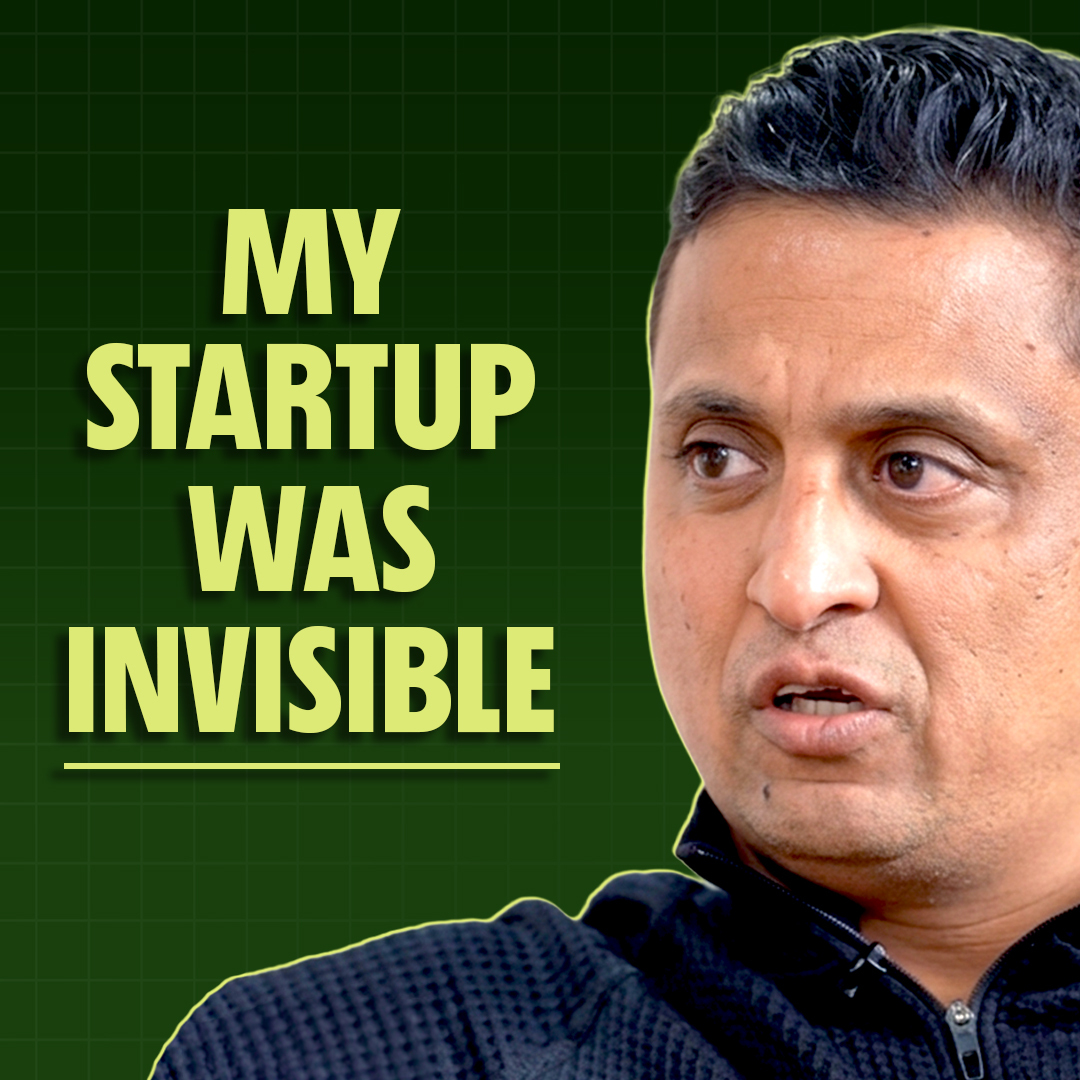
The Unusual Strategy That Helps ArmorCode Grow 100% YOY | Nikhil Gupta