



352 / December 30, 2025
Best of 3500 Minutes from Top Founders & Investors in 2025
Best of 3500 Minutes in 45 Minutes.
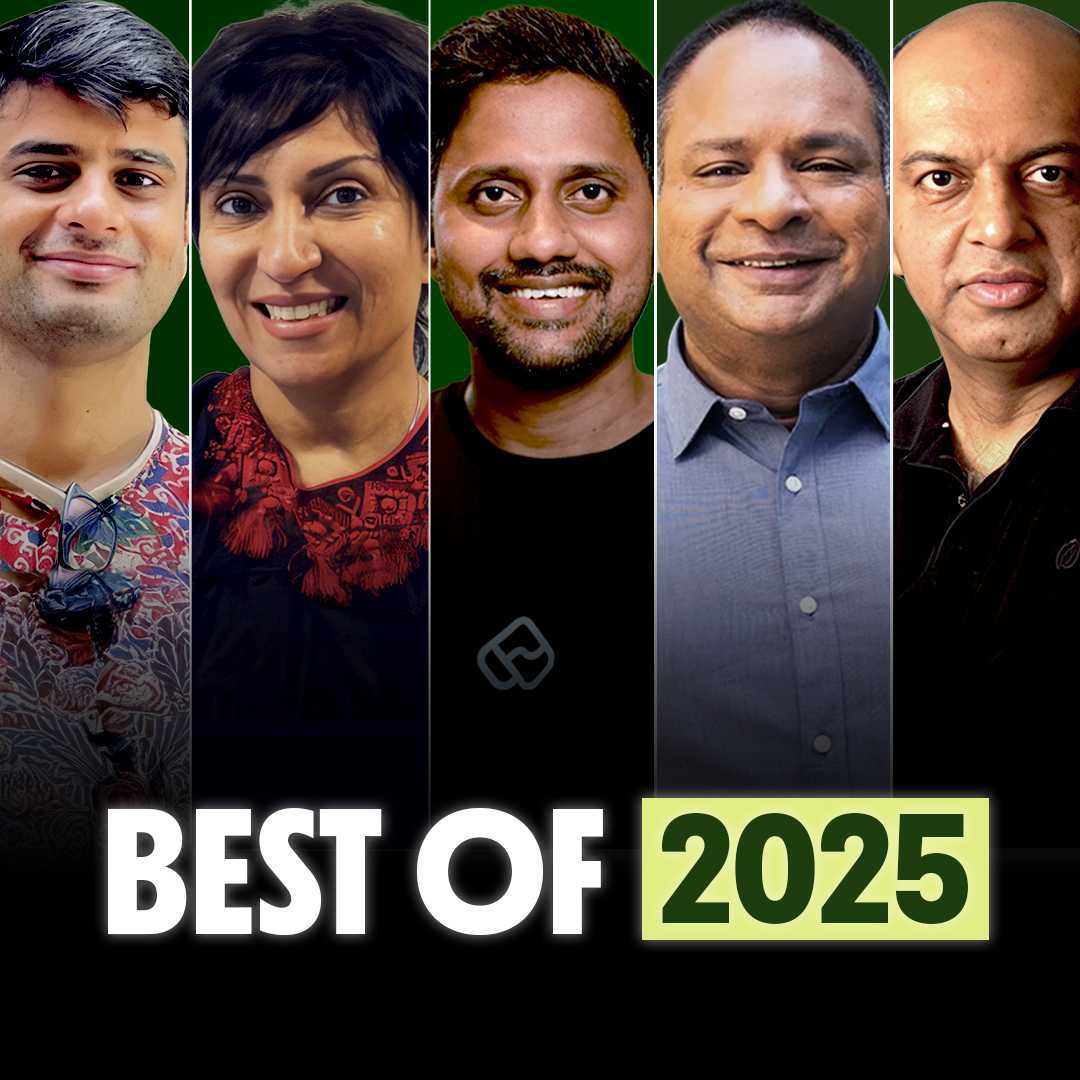
2025 was a great year for The Neon Show. 60 episodes, 72 guests, and thousands of minutes of insightful conversations on everything around building a business.
You’ll hear perspectives from Founders scaling companies across the world, sharing the real challenges behind building high-growth startups; Investors on how they spot opportunities and make bold bets; and Ecosystem leaders who have navigated multiple cycles and understand what truly lasts.
This episode is a carefully curated highlight reel. The sharpest ideas, boldest bets, and timeless lessons that defined this year. Watch it for clear takeaways to carry into 2026 on building companies that last for decades.
Watch all other episodes on The Neon Podcast – Neon
Or view it on our YouTube Channel at The Neon Show – YouTube
Siddhartha Ahluwalia 1:29
Startups should start as cults. Why?
Paras Chopra 1:31
Yeah, I know cult as a word ends up being a little controversial. But what I meant by cult was that everyone should have the same value system. So to dissect this, when people talk about diversity, I think it’s important to question that yes, diversity is good, but diversity of what kind?
So what I write in the chapter, diversity of experiences is very valuable. So if everyone comes with a different history of what they know, and obviously as a team, you know, a lot more than what you would know individually. But a diversity of value system very early on in startup is not important, not important.
I mean, it’s actually detrimental. And what I mean by value system diversity is that, for example, if some people, some people value first principles thinking, but other people value the intuition, then if you put these two people together, they’ll never end up agreeing about anything. Because they end up seeing world from a very, very different point of view, and they value very different things.
And in a startup, and this is, I think, diversity of value systems are great for democracy if you’re running a country. But if you’re running a startup like a democracy, you’ll never end up making any decision with fast enough speed that a startup requires. So what you really want in a startup is a core group of people who have very, very similar value system so that you don’t end up spending time and energy in aligning them.
But yet, all of them ideally should have very different life experiences, so that you are learning from all of them. So that’s what I meant by cult. And this is what happens with cults.
If you see cult of any kind, even people who love iPhones, a lot of them are very similar value system. And if you put all of them together, they’ll end up agreeing on things, whether they agree on right or wrong thing is separate matter, but they’ll not waste a lot of time in just debating what their value system should be in the first place.
Avnish Bajaj 3:39
First time founder archetype is completely fearless, you know, very much run fast and break things, classic YC kind of a playbook. And they will create tremendous value, they will disrupt a lot of things, take Zepto as an example. Now, how that company ultimately does, we’ll see in terms of capital efficiency, but it has woken up everybody.
And it has changed the mindset. It’s like when Bhavish came, started Ola, right? So first time founders will really disrupt markets.
What experienced founders do differently, they generally don’t take market risk, right? They will go after deep markets. It’s much easier to build businesses in deep markets, okay?
Having built a company once, they will typically be very profit driven. So they will chase deep profit pools. Now, if you are saying that the market is deep, so I’m not taking market risk, and the profit pools are existing, so you’re not taking that risk, toh fir karna kya hai?
So what they spend a lot of time on is thinking distribution. You know, there’s this famous debate in the US, does product matter or does distribution matter? Right?
Basically, both matter. But a lot of people say distribution matters more than product. Second time founders actually end up thinking more distribution than product.
So they’re much more GTM led, and stuff like that. I’ll tell you two, three other things. Very different archetype.
First time founders get off the ground very fast. When I first started working with experienced founders, I used to say, nothing happens in six months.
Siddhartha Ahluwalia 5:20
Yes, I mean, nothing happens in 24 months.
Avnish Bajaj 5:21
But when it happens, it is suddenly with the bank, right? If you think about org building, product banana hota hai, org banani hoti hai, toh usme sab org ke liye inke baas followership hoti hai. Often they will start as three, four co-founders or they will start as two, three co-founders with a team of 10.
That you take out such a significant risk from the business. So I think, like I said, it takes both types. I will tell you, experienced founders tend to be really good custodians of your money.
And I don’t know if you’ve mentioned it before on your podcast, have you explained what, I’ve heard product market fit. What is founder market fit?
Siddhartha Ahluwalia 5:59
Founder market fit is basically, I am a founder, this is the market that I understand. Do I see my own personality suited for this market for 20 years, basically? Like for example, if you say traditional dhanda businesses, right?
Why a businessman would give his son the key to? Because the son has been sitting on the galla for the first 20 years of his life, since he was a baby. So there is some natural tendency, ya galle pe chipkega ya nahi chipkega, right?
Aur galle pe nahi chipkega, then it’s obvious to the businessman, for example, the keys from Dhirubhai Ambani went to Mukesh Ambani. But nobody knows that Mukesh Ambani, since 10-12 years of age, was spending time with his father in those field meetings. So that I consider to be the founder market fit, a market that founder calls comfortably is his own.
Vijay Rayapati 6:53
One of the remarkable insights when you look at really good companies like Amazon, Microsoft, Google, even Oracle, the leadership tenure, especially senior leadership tenure is, as I said, anywhere from 7-8 years to even 15 years. So the longer the senior leadership stays with the company, the more the company can take attacks, literal attacks, adapt to change. Because in history they say, right, when you’re going to a war, it’s okay if you have an army of new soldiers, but you need some veteran generals, right, who have fought, who know how to organize, etc.
I think most companies, even I personally have experienced, I think we underestimate the talent that we have, we overestimate the talent that we want to bring. The board always thinks this people, this is the biggest job this person is doing, tells the founder that go out and look at people. I think consistently I felt the talent that has seen ups and downs, as Khadim was saying from day one, has seen the evolution of the company, can actually be a much better general than even a new general who has won wars, right.
I think you need some new people for sure, but the ability to retain the core team for that long and ability to grow some of them as years grow is also a big inspiration.
Siddhartha Ahluwalia 8:34
So you’re saying it’s in the specialized and complex workflows that startups have to tap in. But then the question there is, you know, all these companies, all the startups are built on top of these model companies, right. And these models are also learning what are the workflows that these startups are doing.
And we have seen in the past, for example, with what happened with Windsurf, right. And there are more examples that these model companies are now launching their own vertical applications.
Ashu Garg 9:03
So look, that’s, you know, it’s a full circle the way we started off 30 minutes ago, which is every startup in the AI application space, every, you know, services, software startup has to first and foremost internalize that their vendor is also their competitor. The model provider is both vendor and competitor. And that’s a hard place to be.
And they are actually educating their vendor on how to compete with them. You know, that’s the inherent challenge. And so if you recognize that challenge upfront, then you have to start thinking about what is the data that you’re not going to send to the model provider?
What is the data for which you’re going to use an open source model versus a closed source model? What is the role of reinforcement learning in sort of post training of a model for a customer specific situation? If I connect this back to sort of where we started off, we’re seeing an explosion of entrepreneurs and even the coding has gotten commoditized.
Technical skills have not. So in some ways, the founders today that I see being successful are more technical than the founders in the SaaS world. Which also means that repeat entrepreneurs who grew up in a less technical world are struggling with the technical complexity.
They’re struggling with the pace of change on technology.
Siddhartha Ahluwalia 10:25
Does this also mean that if you have distribution muscles in the SaaS era, they’re not valid in the agentic era?
Ashu Garg 10:32
You know, life is never black and white, so I wouldn’t say it’s not valid. But I definitely think that the power of distribution in SaaS does not apply one to one in the agentic era.
Siddhartha Ahluwalia 10:44
Can you share an example why?
Ashu Garg 10:47
Look at Salesforce. An incredible distribution machine, it’s the best B2B sales and distribution machine that has been created in the last 25, 30 years. Look at how that agentic, you know, agent force, agent Einstein, agent whatever, agent Salesforce, like I don’t think their product is doing that well.
Siddhartha Ahluwalia 11:09
But who is eating their lunch right now?
Ashu Garg 11:11
You know, I think there’s dozens of companies. Look, today, change takes time. I think there are dozens of companies that are poised to eat Salesforce’s lunch.
But those companies, despite the distribution disadvantage, are positioning themselves to do so. Now, could Salesforce buy a few of them? Could Salesforce reinve…
Nothing, I won’t rule it out. I mean, I don’t think we should ever assume that the value of distribution is zero. I just think in a world where disruption is rapid, distribution alone is not sufficient.
Product innovation becomes far more important.
Kiran Darisi 11:51
The same thing we did when Atomicwork, we started, the first thing we didn’t actually talk about, even though I know Vijay for a decade, we didn’t say that, OK, let’s start Servicenow, competitor, right? So what we did is, first we said, we are all at the same age, again, 37 this time, right? 12 years in Freshworks and 37 I am.
And we said, can we exist as co-founders? Because we were in a long term, long run, right? We need to actually be compatible with each other to even run.
At that point of time I’m in Hyderabad, he’s in Bangalore, Parsu is in Chennai. So what we did is we actually did around 10 meetups in person and started brainstorming about ideas. The thing is, where we can say whether we can exist as co-founders or not, the thing is, we need to negate the ideas of the others, but still stay in the same room, right?
The thing is, you can say no, no, no, for my tech point of view, product point of view or the market point of view, but still don’t say that, get out of the room, right? So that is something we think. So that is one which stayed.
Then after that, we say that, OK, we are not killing each other, right? So then let’s actually start. Obviously, that’s the second thing we can do.
Then we started discussing about what to build. We have a few ideas, etc. But there was the one which actually stuck with us when Freshworks went to IPO.
The kind of internal processes you do or the amount of contact switching an employee does is like humongous, right? So that’s the pain area. We took it where the companies can able to give instant support to the employees to get their work done is what we took as a problem statement and tried to attack it.
Right. One thing changed is in Freshworks, it’s predominantly you take freshers and then train them so that we will actually teach the skill. And we actually tell for freshers from coming from B-Tech, we won’t say that you are a developer, you are a marketer or a sales guy, etc.
It all depends on what he’s comfortable with, what we teach is skills so that they can able to apply. But Atomicwork, we are building for enterprises. We wanted both, which is somebody experienced.
They already actually had all this up and down straight, which is like you can build high down all these things so that they know this is how companies work. And the second one is the freshers who can be trained on the skills. And the third one is we all did inbound in Freshworks.
Everything is, we are working from Chennai suburbs, Keelkattalai and say nobody knows where we are. People need to just sign up, put their card, buy it and go. That is how the entire product has been built.
The subscription management system at that point of time, there is no charge fee. I built that subscription building and that thing. I am like maybe first pseudo product manager for charge fee to actually build the product and replace.
Now, in coming to Atomicwork, this thing we actually say a digital sales is how it is in 2010, no more actually valid in 2020. Now, completely changed in terms of how we need to do the digital sales. Now we became more outbound.
Our product managers are outbound. The sales is outbound. We don’t spend any money in Google digital ads.
So that is how we actually built that entire thing from product, engineering, sales, go to market everywhere, those functions on it. The last one, when I started Freshworks along with Girish and Gang. So I was doing both DevOps and as well as the product engineering.
Whenever the app is down, I always think this is the last day of the company. So it’s like everything is gone. Maybe from tomorrow there is no company.
I can’t go in, etc. But Girish always used to tell an example of BMW, even after 100 years, the company exists. And even if you drive the BMW now, you get the kick of driving it.
Right. But at the time I was so young, I can’t say that, oh, can we have this company for a decade, even after a decade? It is like 15 years, right?
Freshworks is still there. They are doing $800 million of revenue. We started Atomicwork in a nature saying that, OK, companies will exist multiple generations.
You need to build for it. The pillar should be there so that it can be able to exist for multi decades of it. That’s a stark contrast for me.
Like, OK, you unlearn, re-learn.
Siddhartha Ahluwalia 16:42
Sergey Brin, co-founder of Google, said about, you know, the late Professor Rajeev Motwani. Today, whenever you use a piece of technology globally, anywhere, there’s a good chance a little bit of Rajeev Motwani is behind it. And you and Rajeev have been the founding stakeholders of Google.
Right. Your late husband, Professor Rajeev Motwani, mentored Google founders, Sergey and Larry, and he co-authored the PageRank paper. I was very proud for India that, you know, among the best technologies in the world that has changed the world, right, we have an Indian who built or contributed to the technology.
Asha Jadeja Motwani 17:21
Yes, the DNA of Google is Rajeev Motwani. That’s the DNA. And every Indian should know that.
Siddhartha Ahluwalia 17:27
And what role did Rajeev play in the entire formation of Google?
Asha Jadeja Motwani 17:31
So first they wrote the paper, right, the PageRank and Anchor Text algorithm.
Siddhartha Ahluwalia 17:35
It was a PhD paper.
Asha Jadeja Motwani 17:37
It was a PhD paper and they were all authors at that time and they knew that they had a search engine. But remember, this was a search engine, which was like 12th or 13th. There were many more search engines already there.
Right. So, I think the, and I think they had gone to Vinod Khosla at one point and said that, look, we have a very interesting search engine, which is, you know, which is churning out best search results. And this time it was only released on Stanford campus, but the results were excellent.
And I have a feeling that Vinod had made an offer to buy out this, you know, budding little search engine for half a million dollars or something, you know. And people were tempted at that time because nobody had the money in those days. And, you know, people were like, OK, five hundred thousand dollars, a lot of money, you know, why not take it?
Right. So, that was also there, but that said, I think the company never considered, you know, selling out and ended up incorporating the company and, you know, getting small seed capital from Andy Bechtolsheim, Ram Shriram, Andy Cheriton, David Cheriton was also, Professor Cheriton was one of the seed investors. Rajeev was not a seed investor.
He was a founding stakeholder. So they gave him shares, you know, as a founder. And the journey was that once the company was incorporated and they had, you know, eight, nine, ten people, they moved to 165 University Avenue.
If you go there, you should go get a coffee there, actually, because it’s really a nice, you know, there’s a cafe right there. That’s where the company started. And that’s where they had an office with, you know, 20 people or so.
And Rajeev would go there and they would all be talking of the algorithms, such algorithms was their main, you know, topic of discussion in those days. And also they were, another topic of discussion in those days at 165 University Avenue was, you know, buying those servers from Fry’s Electronic Shop. They used to buy those servers, put them together in a stack, put it in a closet and wire them up.
And there used to be a lot of excitement about it. People would, you know, they would call Rajiv and say, come, come quickly, because we have this thing running now. This is a very techie, very nerdy thing to do.
But those were the days of innocence, right? When, you know, they were so thrilled that people were beginning to use their search engine. And once they released it from Stanford campus, that even the outside world loved it.
And it was only word of mouth. They never, they never advertised it. And people loved it.
So that was the excitement in those days. And then I think first few, you know, key actions were who were the people they were going to hire for marketing, for business development and stuff like that. All that started happening after they moved out of 165 University Avenue.
Siddhartha Ahluwalia 20:37
Sanjeev, how do you define, now you have been part of so many journeys with founders, Policybazaar, Zomato, define the working relationship between a founder and an investor, both in light terms and serious terms.
Sanjeev Bikhchandani 20:50
You see, one thing we understand is nobody ever becomes an entrepreneur because he or she is looking for a new boss. So if as an investor, you go in and say, it is my money, my company, that simply won’t work. It’s the founder who’s there 24-7 doing the blocking and tackling.
You are going in there once a month and you’re talking to on the phone twice a week. You’re maybe doing it twice a month, max. Very often the meeting is in your office, not in the investing company’s office.
So you’re not even there, they’re coming to you. So you’ve got to have faith and confidence and you’ve got to be patient. Now, if you select the right entrepreneurs to back, hopefully this will be the right way to work.
But if your selection was bad in the first place, then even if you’re parked there 24-7, you can’t make a difference. So, you see, the secret of early stage investing is actually to invest behind founders and teams and companies that are going to succeed anyway. Maybe make 2% difference.
But you’ve got to be humble enough to recognize that. So, you know, any investor who says this is my company, I’ve succeeded it. That’s humorous.
It doesn’t work that way. So, actually, if you’re telling me Policybazaar will not succeed, that’s not true. They are going to succeed anyway.
We are fortunate we went in. Likewise for Zomato, likewise all other companies that are working, not working, whatever. So you’re essentially trying to back good entrepreneurs and you’re hoping they succeed and you’re nudging them here, nudging them there.
So, you help where you can help, where you’re requested to help. You can’t give instructions or directives. You can make suggestions.
And if somebody is thinking about the business 24-7, which is what the founder is doing, because that’s his job, and you’re thinking about that business only half an hour a day, you know, he or she, the founder, is probably in a better position to take the final call.
Siddhartha Ahluwalia 23:25
How is the global macro on AI, let’s say OpenAI, DeepSeek, affecting your AI thesis and investments?
Alok Goyal 23:37
So, at least we are very excited about the developments, Siddhartha. We are a bit more cautious today on the infrastructure side. I think that train is moving so rapidly that even if, let’s say, you want to solve a problem, it is not clear whether that problem will stay a problem in another six months or a year itself.
So the stability of the problem being solved itself is not clear at this point in time. But the beauty of the current AI wave is that the same API is available to a developer in San Francisco as the one in Bangalore or in Chandigarh or in Pune or in Chennai, all at the same time. In that sense, it has gotten democratized, which if you might remember was not the case with cloud.
Cloud started happening in late 90s. AWS came in 2006, which means that there was almost a 10-year period where if you wanted to do something on the cloud, you build your own cloud, which was a very hard bar to pass. So today, that being democratized, at least on the application development side, that’s available to everyone.
Our companies in India can actually benefit from these developments at the same time as anyone else. And I think the interoperability has gone up. The number of companies in our portfolio who actually came back and said at the beginning of this week that they have already tested their products with DeepSeek also is mind-boggling.
I mean, it’s actually in some ways, I worry about all the LLM companies as to how low the switching barriers are. But that’s great news for application companies and we are very bullish on most applications in the world being rethought in the coming years. That’s one big area.
The other thing which is exciting, Siddhartha, is that AI by virtue, particularly in the enterprise world, being good enough is actually not good enough. Why? Because imagine that you are asking a machine to do a banking transaction.
And you say that I am right 90% of the time. That’s very high accuracy. I mean, you’re doomed.
You have to be 100% correct. As we all know, and while a lot of these chain of thoughts and multi-agent systems are all coming into place, but the reality is that every step has a certain finite percentage of errors. You aggregate that error percentage when it goes to, let’s say, 20 steps or 30 steps.
Actually realize how low the accuracy is of many of these tasks. What that means is that you need humans as a backup. And we are very bullish in this era of companies that are combining AI as well as humans to be able to deliver the outcomes, which I think India is in a very unique position to be able to deliver.
The last part, Siddhartha, is that, as we are seeing today, the new version of GitHub Copilot got released. India has the second largest number of developers in the world. And we believe that we will see a lot of developer-centric tools also come out of India.
We have some in our portfolio as well. But that’s the other area that we are actually very bullish on.
Nansi Mishra 26:46
What are the common mistakes founders make when they pitch to people like you?
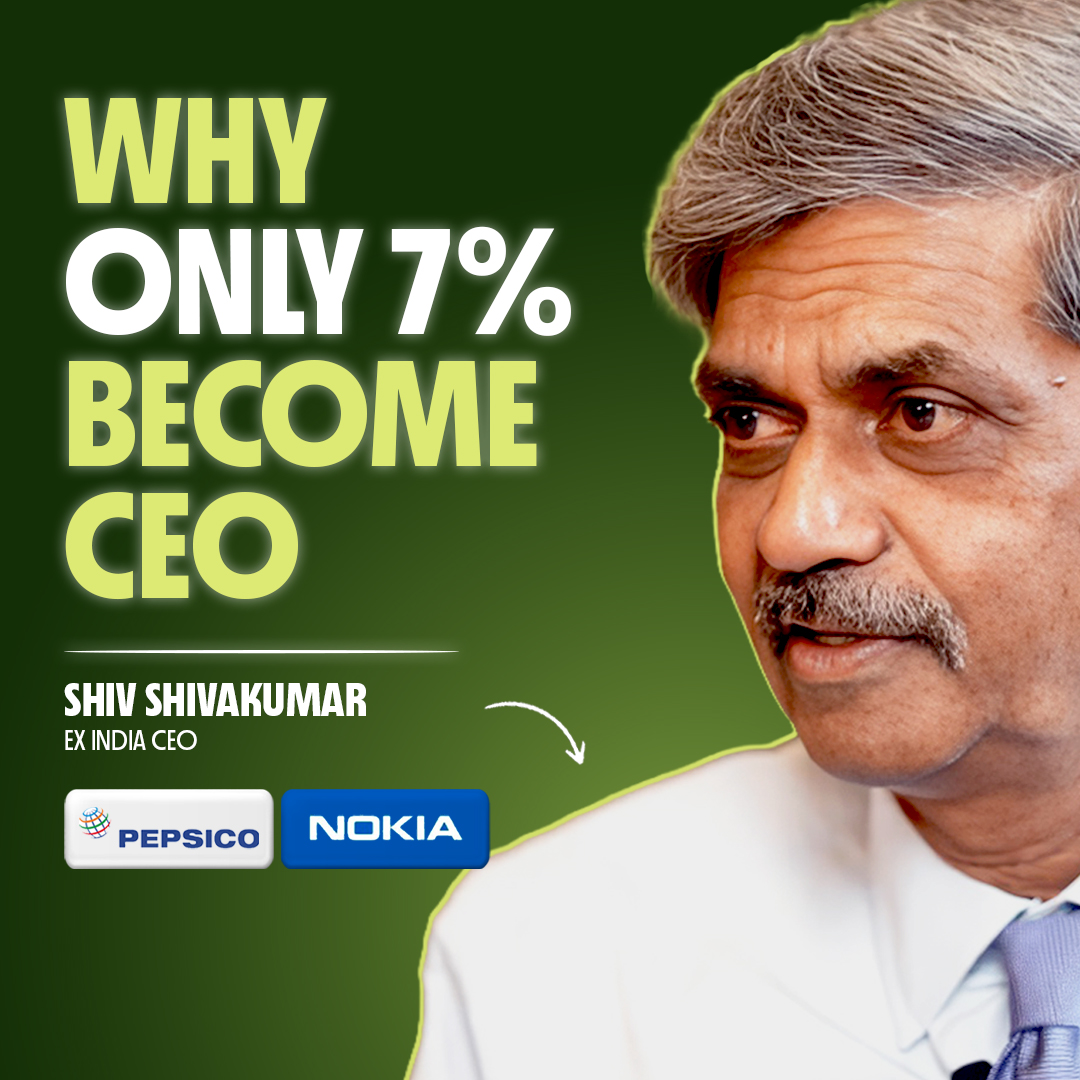
Shiv Shivakumar 26:50
I think the common mistake they make is they overestimate the size and potential of their idea. Dramatically. They underestimate the rigor in getting the margin structure right.
They underestimate the capability needed to move an organization forward. That’s what I have seen with all my interaction with founders.
Nansi Mishra 27:18
And any other advice for them because you work with many startup founders. What are the other issues they have?
Shiv Shivakumar 27:24
In my book, your unit economics must turn out right. As simple as that. Now, cut to the chase, etc.
In one of the jobs I did, we met at least 200-300 founders. Long discussions, etc. Simply, what is the state of your unit economics?
In fact, many businesses you can scale up, the more you scale, the more you lose money. That’s not smart. So, if your unit economics are not right, if the capability in the team is not right, then it’s a problem.
So, how big is the addressable market? And when I say addressable market, being honest about what is possible. See, a lot of people paint India 1400, you know, it doesn’t work.
Be honest about the addressable market. Okay, if you are talking the middle class of India, that’s about 400-430 million people, max. Can’t be more than that.
As simple as that. Now, you can figure out various ways, but don’t go and sell a pipe dream to people. If you are a bunch of founders, have very clear agreement on how you’ll handle disagreement.
Suppose, you have an invested company, Nansi. That’s a CEO. There are three founders.
They must have a charter which says, if we disagree on this issue, we’ll go to Nansi. Or we’ll go to somebody. And we’ll take that as the final one.
Quite often, egos come in the way and founders start… See, when you are friends, when there is no business involved, there is no money involved, there is no reputation involved. Yeah, you shoot the breeze, you go drink beer, you go for a cricket match, you go for a movie.
That’s a different life. When suddenly you start managing a company as founders, suddenly you say, hey, my opinion is better than yours. I think I am right.
So, if you don’t know how to resolve differences, and this is true even for family companies. That’s the second one. Third one, I would say, is for all founders, build a capable team below.
These are the three things you must be very clear about. If you are not clear about this, you are gone. Then you need luck to see it through.
These are in your control.
Siddhartha Ahluwalia 29:38
One important factor that I want to discuss is, Indian companies are always talking about ARR in B2B space. And even when Indian companies acquire other Indian companies, ARR becomes the bottom line. Essentially, we are a very new ecosystem in B2B acquisition.
Even in B2C, nothing has happened except Flipkart, Myntra, and a few like Flipkart, Phonepe deals. So, why ARR at early stages is not the right metric to measure the product or the company?
Saurya Prakash Sinha 30:08
Yeah, I think I’m going to get a lot of flake for this. But generally I feel, I think more than revenue, what I would more index on is product shape and product usage. Because revenue is your lagging metric.
Sometimes you can have a lot of revenue, right? But maybe you might just cap out at 5 or 6 mil right over there. And we have a lot of companies which are around that.
So, I think the place where I generally try to, I think, now index more on is your product shape needs to resonate very well with the customer. And essentially, its business process. You should be able to fit in very, very well, right?
And that gets reflected in essentially your usage. So, if the usage is high, you can always put a price to it over there. So, I think what I would index a lot more or what I would ask an early stage company or a seed stage company is how is the usage of the product, right?
How many people are using it? How many times are using it? How many times they’re downloading reports, right?
Right. So, those are the things which would be more strong signals to me. Because your pricing can change, right?
I remember at some point of time, we were charging x pricing. At some later point of time, we were also charging 3x pricing right over there. In some cases, you might also charge a lesser price right over there.
So, I feel, I mean, it’s a lot more important to index specifically on the usage part. And maybe I think an ARR question in the early stage might not be the right question. I mean, once you are confident on your product shape, right?
So, then you can talk a little bit more about how do I accelerate the revenue, where you work on your pricing, where you work on your packaging, right? But the initial days are more about, you know, how do I essentially, you know, figure out a product, which is creating enough value for the customer, right? And which is getting enough customer love, right?
Siddhartha Ahluwalia 32:01
If you have to advise a B2B SaaS founder building right now from zero, and the goal is to build a 10 mil ARR company, which geography would you advise today to go in?
Raviteja Dodda 32:15
See, if anyone can build, if anyone can target and crack the US, they should go and crack the US market, right? It’s a large software spend market.
Siddhartha Ahluwalia 32:26
Wouldn’t you say, like, if you have to put an approximate number, it could take like 10 to 20 million to reach 10 mil ARR in the US market?
Raviteja Dodda 32:34
Yeah, yeah, for sure. I think more like 20 plus.
Siddhartha Ahluwalia 32:37
And to reach that in the India market, how much would it take? Between 5 to 10 mil?
Raviteja Dodda 32:43
See, I think, firstly, you need to look at the category that you need to operate in, because it’s not, see, for us, our category helps us kind of have large ACVs, even in India.
Siddhartha Ahluwalia 32:54
Let’s say large categories like ITSM.
Raviteja Dodda 32:57
ITSM or even like, maybe if it is like something on the customer service standpoint. So there, I mean, yes, I mean, it obviously has a lower spend.
Siddhartha Ahluwalia 33:06
In India, it would take between 5 to 10 mil, kind of?
Raviteja Dodda 33:09
Yes, yes.
Siddhartha Ahluwalia 33:10
Isn’t it better to give a counterintuitive view to founder, that hey, scale to 10 mil ARR in India in 3 to 4 years by spending 5 to 10 million dollars, and then raise large amount that you did, and then go to the US market?
Why is it the entire ecosystem is saying one thing, go to the US on day zero?
Raviteja Dodda 33:28
See, I think there are two multiple ways to look at this, right? If you do that, I mean, so if you’re able to, if you’re seeing, what it would mean that if you’re seeing traction in India, and you’re able to kind of do that, firstly, it will take a meaningful amount of time, right? By the time, so there’s someone in the US who is doing something similar to you, and is also kind of scaling it.
So they would have captured larger market share. So when you then have to kind of go to the US market, so firstly, I mean, yes, in India, you can get to 10 million, or even 20 million, or even 30 million. Again, it depends on what kind of company that you’re building.
If you’re building a venture backed company, so that means that you’re, you’re basically kind of looking at, okay, how can I build a hundred million dollar or multi hundred million dollar ERR company, right? Which means that, like you might, you would, you would kind of like, your growth would come down at some point, if you’re just focusing on Indian market. So that’s where I mean, if you’re in the US, if you’re able to kind of even get to like 10, you’re able to still maintain, because the same market that you’re, you just need to kind of continue to invest more into the sales engine and marketing engine.
And because it’s a larger market, right? So, yes, you, you again need to put in a lot more hard work at the point of time, once you have scaled up in India, and then US. But there are some, but, but what you could do is that sometimes it might be harder for people to kind of access US market.
And then all like rather, they just need to first get the broad market fit, right? Okay, I have a product, whether it’s of value or not, but I have access to good network in India, right? So that kind of sort of initial PMF, like a zero to half a million dollar business or zero to one million dollar business, you can try to do it in India.
And then quickly kind of focus on the US market, if there is clearly different opportunity in the US market, right?
Siddhartha Ahluwalia 35:21
But then it’s harder because the founder won’t get money to get, if the founder has gone from zero to one million dollar, they will not get VC money to do it in the US market because they would have to prove the zero to one again in the US market to get serious VC money.
Raviteja Dodda 35:35
So you need to get those sort of investors who kind of understand, you just need to find that one investor who understands that, hey, this product that I have done in India, it works in a lot of opportunities similarly in the US, and I can invest. Yes, there are like, and that’s where for us, like there has been hard choices and hard challenges, right? The problem is like once you take VC money, like you need to keep showing growth.
Siddhartha Ahluwalia 35:59
Yeah.
Raviteja Dodda 36:00
But at the same time, so that means that you need to keep making investments in your core market. And at the same time, you still need to do the new market, and which both require founders’ attention. And that’s been the biggest challenge for me in the last 10 years, right?
Because you want to keep growing, you need to keep getting your numbers ticking. But at the same time, you need to get your new markets happening, right? And that’s where you alone can’t do it.
So that isn’t you need people who can be like, act like founders and work like founders and can take that baton for you. So that’s, and the lesser the number of markets, the lesser the challenge. I mean, I think there is definitely opportunity across the overall Asia, which is like India plus the near shore of Asia, but which means that you need to crack a lot of markets.
But in any space, the US market is very noisy and very tough. So there’s that nuance, right? Is your category in the US?
What is the stage? And that also kind of defines whether you should just focus on outside the US. I mean, there’s enough opportunity, but it’s going to be more challenging and more fragmented markets.
But still, there’s a lot of opportunity outside the US as well.
Ashish Toshniwal 37:20
One of the biggest pivots, which a lot of people don’t talk about is as the founder CEO, have you been able to fire yourself and rehire yourself in another role?
Siddhartha Ahluwalia 37:35
Did you do it?
Ashish Toshniwal 37:36
That I think was very difficult, unnatural. And I don’t think any founder CEO can scale a company until they do this. And this was actually a big learning.
In fact, what happens is when you hire great people, and you’re the founder CEO, there will be a window of time when you are like, man, all these people are so much better than I am. What am I supposed to do? And like the job I was doing, now they are doing it.
What is my role now? And that is actually a great tipping point for you to work on the biggest company challenges, rather than work on the same role over and over again.
Siddhartha Ahluwalia 38:23
And you ran the company for six more years before the final acquisition of 350 million happened. Tell us more about that part.
Ashish Toshniwal 38:29
Yeah. So, one of the biggest things I believe in is even when you are successful, you have to go through the pivots. Okay.
And even if you’re a scaled company, there is competition, your services will get commoditized, clients will be confused. Why do I use you? You know, versus like three other competitors.
iOS engineering was one of the hottest skills, like AI engineering yesterday in 2009, 10, 11, 12, 13. Right? Like hiring them were almost impossible.
Right? What started happening around 2017, 18, you know, when you are offering something which used to be hot, a lot of people get into the market and clients are confused. Why would I hire you versus this company, which is offshoring everything and giving me such a great price?
So, what we did was, our strategy was, there are two types of competitors, right? One is only US, their services are great, but they’re very expensive. And one is they’re offshore, you know, they’re very cheap, but their services are not good.
And our strategy was, how do we, you know, come up with a strategy which is in sync with big clients, Fortune 500 clients. In fact, in one all hands, I was so frustrated that I told the entire company, look, if we don’t have repeat business, we don’t have a business.
Siddhartha Ahluwalia 40:03
This is after the acquisition.
Ashish Toshniwal 40:04
This is around the acquisition. Because we were getting a lot of inbound clients, but the strategy is, if let’s say your first SOW is at 100K, how do you grow to 1, 2, 3, 4 million? And, you know, if the client turns out at like less than a million, well, then there’s a heavy cost involved in like bringing on a new client, right?
And that became a cornerstone of our business. In fact, some of the clients have stayed with us over 6, 7, 8 years. And each account was worth maybe over $70 million, you know, sometimes over a 7, 8, 9 year period.
Siddhartha Ahluwalia 40:47
That was same iOS services?
Ashish Toshniwal 40:50
No. So that’s the thing, right? Like when it comes to pivot, so early on we were iOS engineering, iOS design, you know, which heavily got commoditized.
So when we saw two competitors, one is very expensive, but good. One is very cheap, but not good. Our whole positioning was, and this was in sync with what big clients needed.
So all these Fortune 500 clients, they were feeling the pressure by one of the big tech or some startup in the valley who’s like heavily funded that they’re going after them. Whether you’re in healthcare, retail, doesn’t matter. It’s either Amazon, Apple, or some heavily funded startup.
So what was the common theme across Silicon Valley startups and some of these big companies, especially like Apple, was great experience. And, you know, some of these Fortune 500 clients, whether the bank, retail, healthcare companies, I think they had decent teams, but they were not able to crack great customer experience on mobile, web, the whole connected landscape. And our positioning was that you want to work with YML if you want to like build a startup within a Fortune 500 company.
And our mission became, we export Silicon Valley to the world where Silicon Valley is not a zip code, but it’s a mindset. And it’s a combination of innovation, design, engineering, and how do you deliver things fast rather than, you know, taking years. So that was the positioning.
And that actually helped us gain clients and stave off competition. And, you know, that pivot..
Siddhartha Ahluwalia 42:38
But still it was a services company building web and mobile apps. So how did you differentiate?
Ashish Toshniwal 42:44
So from mobile, how we differentiated was that we have a design team here in Silicon Valley and design is such a thing, it’s very hard to offshore because it’s so cultural. Just imagine if, you know, someone has not experienced Disney and they have not experienced how healthcare system works or they have never bought an automobile insurance in their life, they can never connect with these companies. And these were our clients, some of the biggest ones.
So what we realized, this is so cultural that we can offshore. And we built 150 people design team here in Redwood City and customers loved it. And where customers wanted to work with us for our design team, and they stuck around, you know, because our engineering team was good and they were delivering at a cost-effective price and it was sustainable.
And we became almost like a startup within, you know, a Fortune 500 company.
Bhaskar Ghosh 43:55
What happens next? Do you build this out as a software business? One of the key thesis that we are all thinking about is we’re going a little bit out of the box when it comes to software.
It’s reasonable to start reconsidering whether a pure software business will scale here. It is reasonable to start asking, if you sell pure software into these industries, how much of the economic pie will you get? It so happens, if you look at most of these industries, they don’t spend most of their money on software.
So the question to ask is, are we envisioning that these services companies themselves will be mostly software and AI? So that’s where things get murky. That’s where things get exciting.
It is reasonable to assume at some point in time in the 5, 7, 10 years that might happen. Question is, how does this industry start innovating and kind of transforming itself? One of the bets a lot of us are making, a lot of them from Silicon Valley, some funds from New York are making, is you’re saying, I will now take over these legacy services businesses and I’ll own the business, I’ll run it also.
It so happens, I’ll also bring in my software to run it in an AI first way, software first way. This is the whole concept of roll-ups that is being played out in the context of AI services thesis. And I am personally looking at it in a big way.
We have done some investments, whether it’s in, let’s assume, I think, in the area of cloud data migration or in the area of MSP IT services, in the area of legal, in the area of clinical trials. We have gone and started thinking about maybe the company which has been building software till now should be owning the services companies. And a lot of the large funds are making progress there, if you think about it.
Then we come to the point where the Silicon Valley founders, these technical founders, now start buying these companies. Something you and I talked about is what next, what happens now? Well, the simple narrative is you buy enough revenue base, enough scale, then you insert AI into it in a judicious way, making certain assumptions around digital transformation of the business itself, that there is enough software that you can replace.
And then you basically expand margins. Or you expand top line also, because you can do things better. Let’s assume you want to buy 1, 2, 3 of these companies.
I think the part where our discussion got really interesting is what is the nature of this business you are getting into? It so happens, if you sit down and think about it, this is not a pure software business anymore. You have written great software, you have this great tech team, you have sold a bit of software, let’s say, into design partners, then you went and bought 2 of these design partners.
Assume that. And you bring in like 100 million dollars of revenue, but you also inherit 700 people, random number. I think the new thing for us, Silicon Valley folks, what we see is, who are also builders like us, we both build companies, we incubate, but we also invest massively.
I think the nature of the firm, of the company which will do this, will fundamentally change. Because you need these deep operating chops to go run these companies now. Do you keep the old founder of that company?
Does she or he stay on with incentives? Are they excited to increase margins? Do they want their company, their services company to become tech first?
These are the deeper questions that I don’t think Silicon Valley Venture has grappled with, or Silicon Valley founders have grappled with.
Somesh Dash 47:35
But the thing I’m seeing with Aravind and some of the other AI entrepreneurs, we had a forum last fall here nearby, where we brought a lot of our AI founders, and Bipul Sinha, another founder I worked with, he put it really well, where he said, you can’t take an AI product market fit for granted. Every six months, you’re rediscovering product market fit, whether you’re a startup or you’re a large company. What you really want is to A, use AI tools.
In Aravind’s case and all the other entrepreneurs, they’re utilizing the very tools that they’re building. The second thing is, you want to have lean teams of doers. You want to keep it agile, because speed is everything right now.
The models are changing. We’re sitting here only 24 hours after GPT-5 came out. But here’s a question.
Do we think in three years, OpenAI and Anthropic are going to keep doing launch parties for each model? No, at that point, it’s just going to be a product release. You’re not going to see behind the scenes which model.
Is it five? Is it 15? Is it 25?
That’s not going to matter. It’s a little bit like iOS and Android. They didn’t do huge launch parties after a while.
I mean, Apple, I guess, did, but Google didn’t. At some point, it just becomes, as a consumer, hey, the product is going to extract out the best model for my use case. But I think what he did that was really amazing.
If you look at the launches of some of the vertical products, whether it’s finance or sports, it was keeping the teams lean, focusing on getting production code out quickly. I think there’s this issue that a lot of startups have where they want to be perfectionists. Because if you think about our education system, to do well in the United States or India, education kind of moves you to trying to be a professional.
You’ve got to get into the best schools. You’ve got to get good grades in everything to get into a good college. So it causes you to be a generalist.
But actually, what Aravind and other founders have showed me is that it’s better to find the specialist in Category A, the specialist in Function B, put them together in lean teams, and then just start innovating and trying and having honesty about what’s working and what’s not. Look, for every product that comes out of any great company, whether it’s Discord or Snap or Perplexity, there’s five that don’t make it. And you have to have that courage to fail, to experiment and fail.
And when you see the early signs of success, you double down as quickly as you can and start reinvesting the growth engine into those products that have promise.


Know when new episodes are released. Subscribe to our newsletter!
Explore Playlist
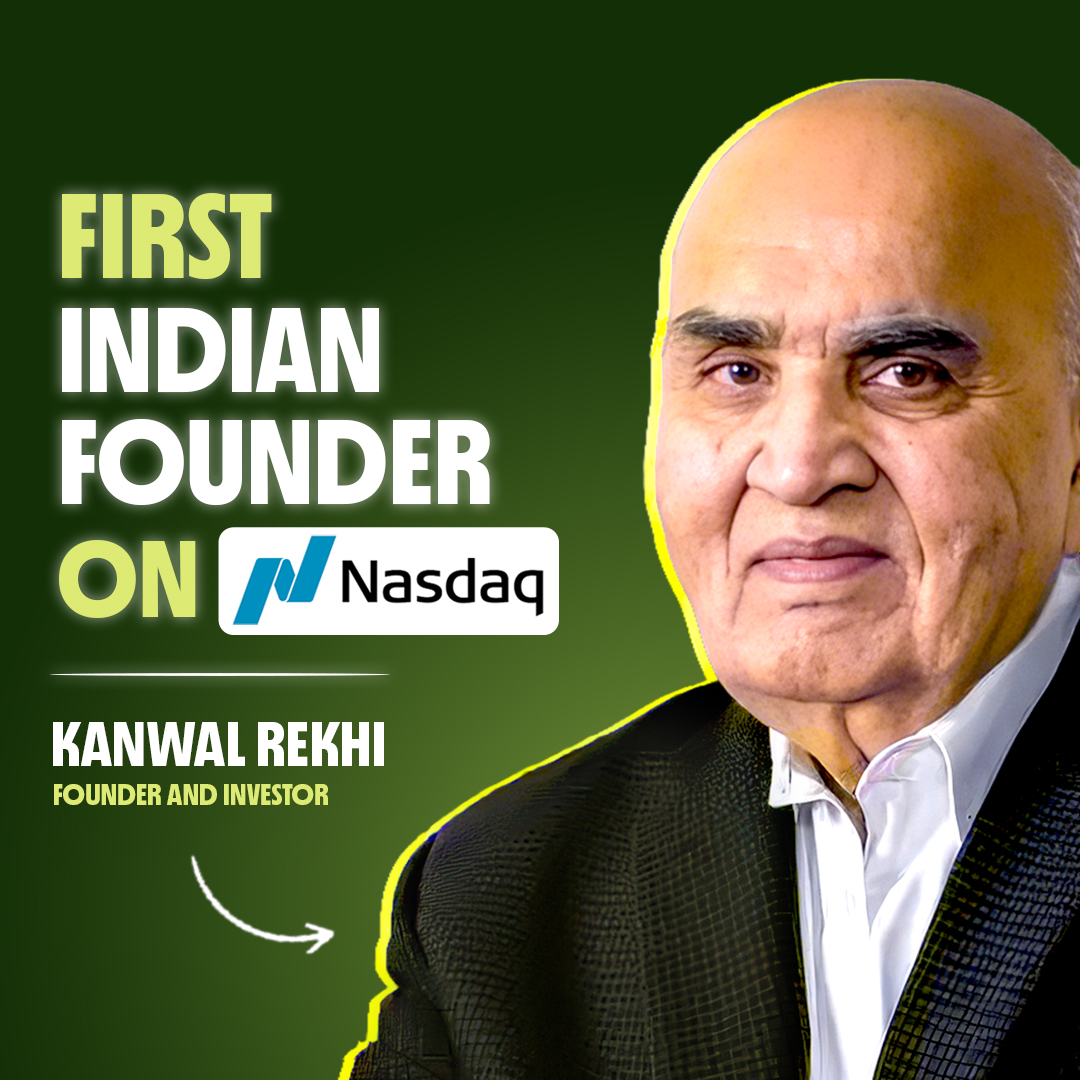
From Startup to US IPO in 5 Years: Kanwal Rekhi’s Historic IPO of Excelan